Sourcing Disclosure: Licensed Bangladesh Global Sourcing Specialist facilitating global access under Named Patient Regulations.
Expert-reviewed clinical data for prescription-only medicine.


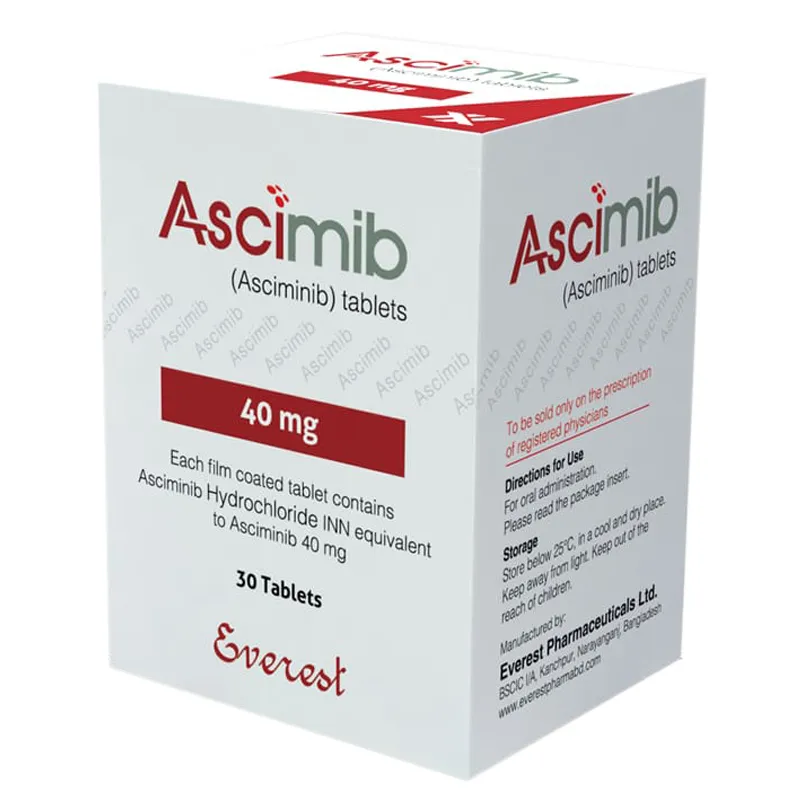
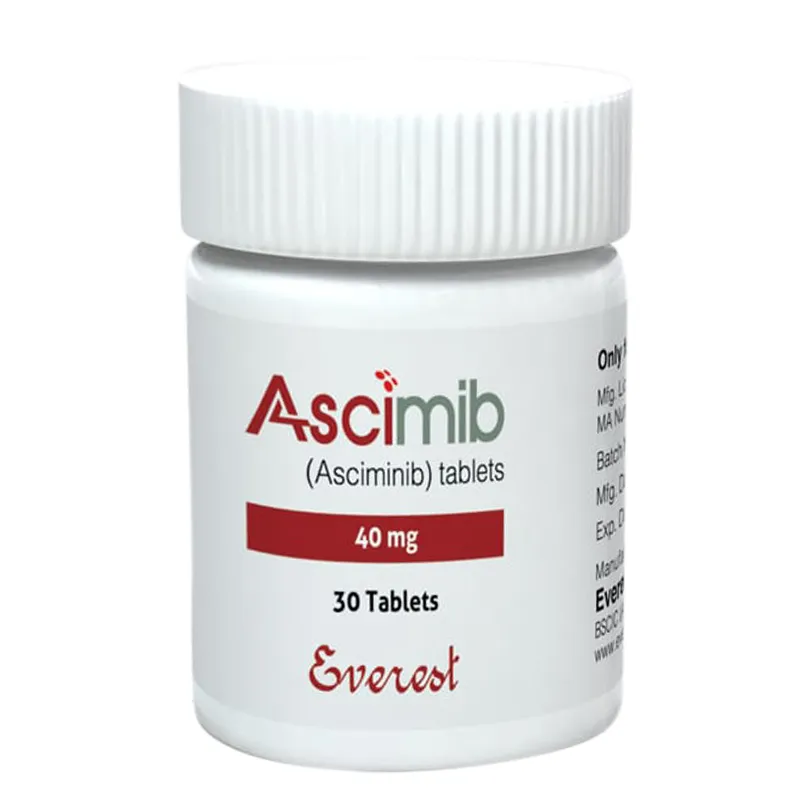
Ascimib 40 mg (Asciminib) Tablet | STAMP Inhibitor in PH+CML
Manufacturer: Everest Pharmaceutical, Bangladesh (WHO-GMP Certified)
Brand name: Ascimib
Generic Name: asciminib
Therapeutic Class: Kinase Inhibitor (STAMP Inhibitor)
Clinical Indication: Philadelphia chromosome-positive chronic myeloid leukemia (Ph+ CML) in chronic phase
Available strength: 40 mg
Pack size: 30 Tablets
- WHO GMP Certified
- Reviewed By Medical Expert
- Batch Examined in Lab
Ascimib 40 mg contains the active molecule asciminib, formulated as a 40 mg oral tablet. It belongs to a specialized class of targeted therapies known as kinase inhibitors. Specifically, it is utilized to treat Philadelphia chromosome-positive chronic myeloid leukemia (Ph+ CML) in the chronic phase. Asciminib is typically prescribed when a patient’s disease has shown resistance to, or when the patient has experienced severe intolerance from, at least two prior tyrosine kinase inhibitors (TKIs). It is also highly effective for a specific subset of CML patients whose leukemia cells express the T315I mutation, a genetic alteration notoriously resistant to many standard therapies.
Expert Insight: A Note from Dr. Salma Elreedy
“In my clinical practice at Sphinx Cure, the introduction of STAMP inhibitors like Asciminib has been a turning point for patients who have exhausted traditional TKIs. I often see patients who feel discouraged after failing drugs like Imatinib or Nilotinib, or those struggling with the T315I ‘gatekeeper’ mutation. What I observe in the clinic is that Asciminib’s unique binding mechanism—targeting the myristoyl pocket—not only overcomes resistance but often does so with a much more manageable side-effect profile than older multi-kinase inhibitors. When I transition a patient to Ascimib, my primary focus is ensuring they understand the ‘Fast-State’ protocol; adherence to the empty-stomach rule is the single most important factor in achieving the Major Molecular Response (MMR) we see in the ASCEMBL trials.”
Clinical Data and Safety Management Guide
When discussing asciminib in the consultation room, patients and their families usually have specific questions about how the drug works and what to expect. Here is a breakdown of those core clinical realities.
Q: Who exactly is the candidate for Ascimib?
A: According to the FDA approval label, Ascimib is indicated for two highly specific adult patient populations:
Adults with newly diagnosed or previously treated Philadelphia chromosome-positive chronic myeloid leukemia (Ph+ CML) in the chronic phase (CP) who have already been treated with two or more tyrosine kinase inhibitors (such as imatinib, dasatinib, or nilotinib).
Adults with Ph+ CML in the chronic phase who test positive for the T315I mutation. Which is verified through specialized molecular biomarker testing of blood or bone marrow prior to initiating the drug.
Q: How does asciminib actually work against CML?
A: Standard TKIs work by binding to the ATP-binding site of the BCR-ABL1 leukemia protein, blocking it from signaling cancer cells to multiply. Asciminib works differently. It is a STAMP inhibitor (Specifically Targeting the ABL Myristoyl Pocket). It binds to a completely different part of the protein called the myristoyl pocket. By attaching here, it forces the BCR-ABL1 protein into an “inactive” shape, shutting down the leukemia cell’s ability to divide. Because it targets a different physical location on the protein, it can bypass the resistance mechanisms that block older drugs.
Q: What is the dosing schedule, and how should it be taken?
A: Dosing depends entirely on your specific CML status and mutation profile:
For Ph+ CML post-2 TKIs: The standard dose is either 80 mg taken once daily, or 40 mg taken twice daily (approximately 12 hours apart).
For the T315I Mutation: The required dose is much higher to override the mutation: 200 mg taken twice daily.
Administration Rules:
Dietary Restrictions: You must take Ascimib on an empty stomach. Do not eat food for at least 2 hours before taking the pill, and wait at least 1 hour after swallowing it before eating. Food significantly alters how the drug is absorbed into your bloodstream.
The “Fast-State” Protocol
The bioavailability of Asciminib is heavily impacted by food.
The 2-1 Rule: Patients must avoid food for 2 hours before dosing and 1 hour after.
Why? High-fat meals can significantly alter the plasma concentration, leading to unpredictable drug levels and increased risk of either toxicity or sub-therapeutic dosing.
Missed Doses: If you take it twice daily and miss a dose by more than 6 hours, skip it. If you take it once daily and miss a dose by more than 12 hours, skip it. Never double up to catch up.
Q: What are the primary side effects, and how do we manage them?
A: We group adverse events by how often we see them in the clinic.
Common Side Effects (>20% of patients):
Upper respiratory tract infections: Practice good hand hygiene and avoid crowded areas during cold/flu season.
Musculoskeletal pain: Mild over-the-counter pain relievers can be used, but clear them with your oncology team first.
Fatigue and Nausea: Maintain strict hydration. Take periods of rest throughout the day.
Skin Rash: Keep your skin moisturized with unscented, hypoallergenic creams. Avoid prolonged, direct sun exposure.
Serious, Actionable Adverse Events:
Myelosuppression (Low Blood Counts): The drug can lower your platelets and neutrophils. We will run complete blood counts (CBCs) every two weeks for the first month, then monthly. If counts drop too low, we will pause the drug until they recover.
Pancreatic Toxicity: Asciminib can elevate lipase and amylase enzymes. You must report sudden, severe abdominal pain immediately.
Cardiovascular Issues: Hypertension (high blood pressure) is a known risk. Monitor your blood pressure at home twice weekly and report sustained elevations above 130/80 mmHg.
Adverse Event Reporting Warning: Always report new or worsening symptoms to your treating physician immediately. Do not attempt to manage severe side effects (like chest pain, severe abdominal pain, or bleeding) at home.
Clinical Alert: Patients must monitor blood pressure at home. Report any reading sustained above 130/80 mmHg to your oncology team immediately.
Q: What is the clinical trial data supporting this drug?
A: Asciminib is backed by robust data from landmark trials:
The ASCEMBL Trial: Published in Blood, this Phase 3 trial compared asciminib to bosutinib in patients who failed two or more TKIs. At 24 weeks, the Major Molecular Response (MMR) rate was 25.5% for asciminib versus 13.2% for bosutinib. Long-term follow-up at 96 weeks showed an MMR of 37.6% vs 15.8%, proving its superior efficacy and durability.
The ASC4FIRST Trial: Presented at recent major hematology conferences, this trial evaluated asciminib as a frontline therapy against standard TKIs, showing an impressive 67.7% MMR at week 48 compared to 49.0% for investigator-selected TKIs, alongside a much more favorable safety profile.
Precautions & Special Populations
Pregnancy & Lactation: Asciminib can cause fetal harm. Female patients of reproductive potential must use highly effective contraception during treatment and for at least 3 days after the final dose. Do not breastfeed while taking this medication.
Pediatric & Geriatric Use: The safety and efficacy in children have not been established. In patients aged 65 and older, no overall differences in safety or effectiveness were observed compared to younger patients, but closer cardiovascular monitoring is advised.
Hepatic & Renal Impairment: No dose adjustment is required for patients with mild, moderate, or severe renal or hepatic impairment.
Storage & Cold-Chain Logistics: Ascimib does not require cold-chain transport. Store the tablets at standard room temperature (20°C to 25°C). Keep the medication in its original packaging to protect it from moisture.
Manufacturer Trust & Global Access
Everest Pharmaceutical Quality Assurance
Ascimib is manufactured by Everest Pharmaceutical. Everest operates under strict adherence to WHO-GMP (World Health Organization – Good Manufacturing Practices) guidelines. Ascimib undergoes rigorous bioequivalence testing to ensure that its pharmacokinetic profile (how the body absorbs, distributes, and clears the drug) matches that of the innovator brand, Scemblix. This ensures patients receive the identical clinical benefit.
Global Access & Named Patient Importation
How to Access Ascimib Globally
Ascimib (Everest Pharmaceutical) is a generic version of Scemblix®, manufactured under WHO-GMP standards. It is available for international patients via the Named Patient Importation framework.
Regulatory Authorization & Jurisdiction
Origin: Dispatched from Dhaka, Bangladesh, under the Directorate General of Drug Administration (DGDA) export guidelines.
Legal Framework: This product is provided for personal use under “Named Patient” or “Compassionate Use” regulations. Users must comply with their local customs (FDA Personal Importation Policy in the US or similar EMA provisions).
Ordering Process
Upload Prescription: Must be from a licensed Hematologist-Oncologist.
Medical Necessity: Provide a brief “Letter of Medical Necessity” (Template provided upon request).
Pharmacy Verification: Our lead pharmacist verifies the batch and documentation.
Secure Shipment: Dispatched via temperature-monitored courier (7–14 days).
N.B: users must consult their local customs and border protection agencies, as importing restricted pharmaceuticals is heavily regulated and can lead to confiscation or legal action.
Frequently Asked Questions (FAQs)
1. Can Ascimib interact with my other daily medications?
Yes. Asciminib is an inhibitor of certain liver enzymes (CYP3A4, CYP2C9) and transporters. It can dangerously increase the blood levels of certain statins (like atorvastatin or rosuvastatin) and other medications. Always provide your oncologist and pharmacist with a complete list of everything you take, including herbal supplements.
2. How long will I need to stay on Ascimib?
3. What happens if Ascimib stops working for me?
4. Is it safe to drink alcohol while taking Ascimib?
5. How quickly does Ascimib start working?
Related products

Prostaxen 60 mg Tablet (Apalutamide) | Nonsteroidal Androgen Receptor (AR) Inhibitor
Consult Pharmacist for PriceSelinex 20 mg Tablets (Selinexor) | Selective Inhibitor of Nuclear Export (SINE)
Consult Pharmacist for PriceEnasinib 50 mg Tablet (Enasidenib) | IDH2 (isocitrate dehydrogenase-2) inhibitor in AML
Consult Pharmacist for PriceAvapag 20 mg (Avatrombopag) Tablets | Thrombopoietin (TPO) Receptor Agonist
Consult Pharmacist for Price