Sourcing Disclosure: Licensed Bangladesh Global Sourcing Specialist facilitating global access under Named Patient Regulations.
Expert-reviewed clinical data for prescription-only medicine.


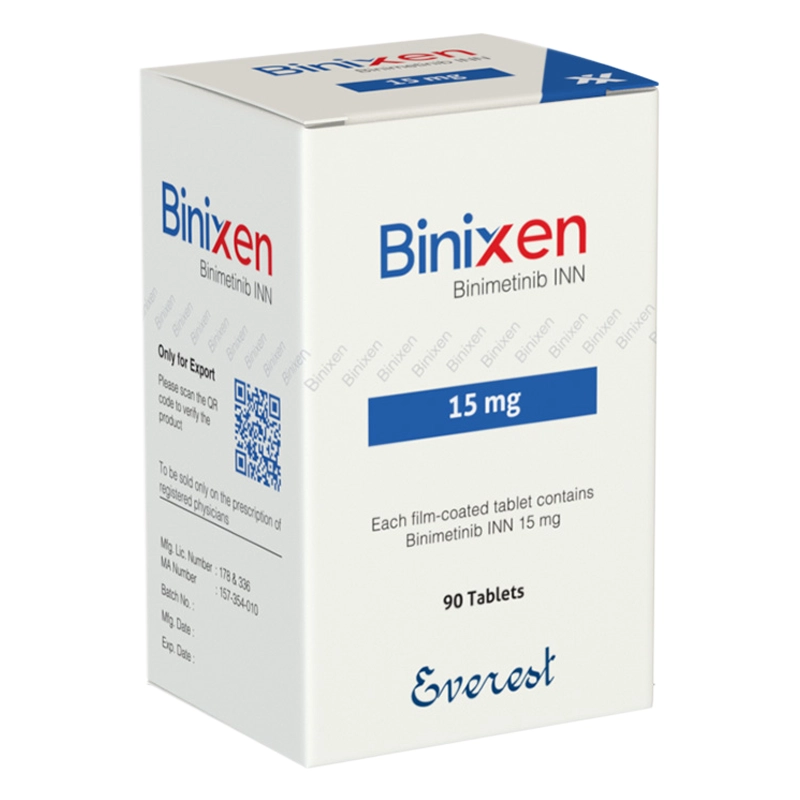
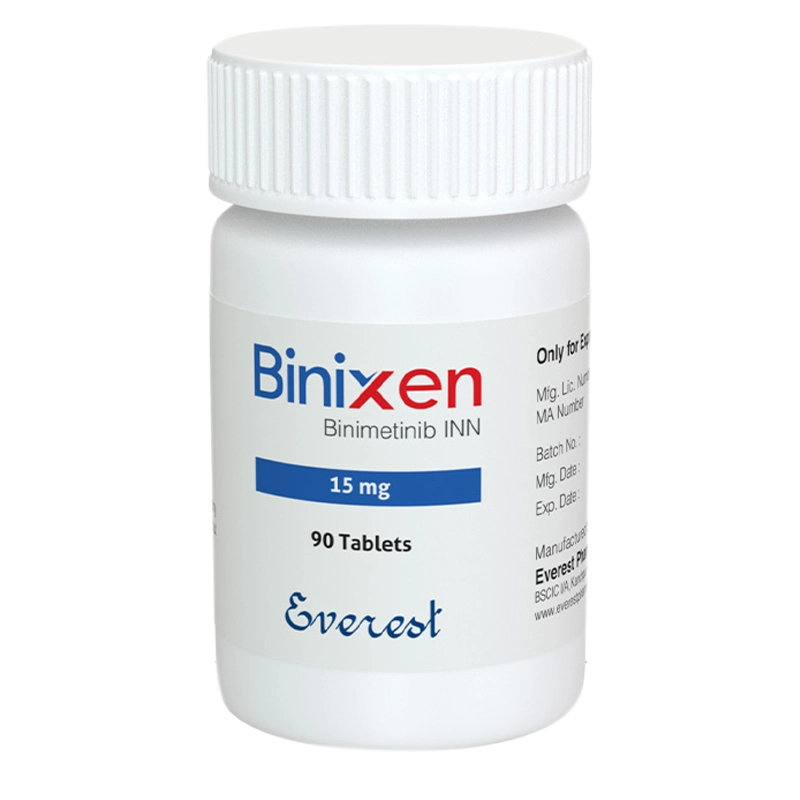
Binixen 15 mg Tablets (Binimetinib) | MEK Inhibitor
Author: Salma Abdel
Brand Name: Binixen
Generic Name: Binimetinib
Therapeutic Class: MEK Inhibitor in Lung Cancer
Clinical Indication: For Melenoma & NSCLC
Available Strength: 15 mg
Pack size: 90 Tablets
- WHO GMP Certified
- Reviewed By Medical Expert
- Batch Examined in Lab
Medically Reviewed by Dr. Salma Elreedy, MD (Clinical Oncology)
Last Updated: March 2026
Classification: Prescription-Only Medicine (POM)
Prescription-Only Notice: This medication requires a valid prescription, confirmed biomarker testing, and rigorous clinical monitoring.
Comprehensive Product Summary
Binixen (Binimetinib 15 mg) is a highly targeted, oral prescription medication classified as a kinase inhibitor. Specifically, it functions as a MEK inhibitor. Binixen contains similar active pharmaceutical ingredients to the innovator brand Mektovi.
In clinical oncology, we utilize binimetinib not as a standalone treatment, but as half of a dual-therapy regimen. It is prescribed in combination with a BRAF inhibitor (such as encorafenib) to treat specific subsets of advanced cancers—primarily unresectable or metastatic melanoma, as well as metastatic non-small cell lung cancer (NSCLC). This medication is exclusively indicated for patients whose tumors test positive for a BRAF V600 genetic mutation.
Deep Clinical Data: Oncologist Q&A
Who exactly is a candidate for Binixen therapy?
Oncologists does not prescribe binimetinib for all melanomas or lung cancers. You are only a candidate if a molecular tissue or liquid biopsy confirms that your cancer cells carry a specific mutation which has been approved by the FDA (October 2023).
For Melanoma: Your tumor must have a confirmed BRAF V600E or BRAF V600K mutation, and the disease must be unresectable (cannot be removed by surgery) or metastatic (has spread to other organs).
For NSCLC: Your tumor must have a confirmed BRAF V600E mutation and be classified as metastatic.
How does this medication work at the cellular level?
To understand binimetinib, you have to look at the MAPK signaling pathway—a chain of proteins in your cells that communicates signals from a receptor on the surface of the cell to the DNA in the nucleus.
In cancers with a BRAF mutation, the “BRAF” protein is stuck in the “on” position, constantly telling the cancer cells to grow and divide. While we use a BRAF inhibitor to target that specific broken switch, the cancer often finds a workaround by using downstream proteins called MEK1 and MEK2.
Binimetinib is a MEK inhibitor. By prescribing it alongside a BRAF inhibitor, we are blocking the pathway at two distinct cellular nodes simultaneously. This dual-blockade effectively shuts down the cancer’s ability to bypass the primary drug, delaying treatment resistance and shrinking the tumor.
What is the standard dosing and administration protocol?
Standard Dose: The recommended dose is 45 mg taken twice daily. Because Binixen comes in 15 mg tablets, this means taking three (3) tablets in the morning and three (3) tablets in the evening, approximately 12 hours apart.
Administration: You can take the tablets with or without food.
Missed Doses: If you miss a dose, take it as soon as you remember. However, if your next dose is due in less than 6 hours, skip the missed dose entirely and resume your normal schedule. Do not double the dose.
Vomiting: If you vomit after taking your tablets, do not take an additional dose. Wait until your next scheduled time.
What are the primary safety concerns and side effects?
Because this drug alters cellular signaling, it carries specific toxicities that require close monitoring. We generally group these by their clinical focus:
Ocular Toxicities: Binimetinib can cause serous retinopathy (fluid buildup under the retina) or retinal vein occlusion.
Actionable Advice: You must report any blurred vision, halos, or visual field changes immediately. We require routine ophthalmologic exams during your treatment
Cardiovascular Risks: It can cause a decrease in your Left Ventricular Ejection Fraction (LVEF), meaning your heart may not pump blood as efficiently.
Actionable Advice: We will order an echocardiogram before you start the drug, one month in, and every 2 to 3 months thereafter.
Musculoskeletal Issues: Elevation of an enzyme called CPK (creatine phosphokinase) is common and can indicate muscle breakdown (rhabdomyolysis).
Actionable Advice: Report any unexplained muscle aches, weakness, or dark-colored urine to your care team immediately. Ensure you drink at least 2 liters of water daily to support renal clearance
Cutaneous Reactions: Rashes and skin toxicity are frequent.
Actionable Advice: Apply fragrance-free, thick moisturizers daily, avoid prolonged sun exposure, and use a broad-spectrum SPF 50 sunscreen
What does the clinical trial data show regarding efficacy?
The approval and clinical integration of binimetinib are grounded in rigorous Phase III trial data:
The COLUMBUS Trial (Melanoma): Published in The Lancet Oncology, this landmark study evaluated patients with BRAF V600-mutant melanoma. Patients receiving the dual therapy of encorafenib plus binimetinib achieved a median Progression-Free Survival (PFS) of 14.9 months, compared to just 7.3 months for those taking vemurafenib alone. The Overall Response Rate (ORR) was 64%.
The PHAROS Trial (NSCLC): This study established the efficacy of the combination in metastatic lung cancer, demonstrating deep, durable objective responses in both treatment-naive and previously treated patient cohorts.
Precautions & Special Populations
Hepatic Impairment: Because the liver metabolizes Binimetinib, patients with moderate to severe hepatic impairment require a dose reduction. The adjusted protocol is typically 30 mg (two tablets) taken twice daily. Baseline and ongoing liver function tests (LFTs) are mandatory.
Pregnancy and Lactation: Binimetinib exhibits embryo-fetal toxicity. It can cause severe fetal harm. Female patients of reproductive potential must use highly effective, non-hormonal contraception during treatment and for at least 30 days following the final dose. Breastfeeding is strictly contraindicated during therapy and for 3 days after the last dose.
Storage Logistics: Binixen tablets are stable at standard room temperature (20°C to 25°C). They do not require cold-chain refrigeration. Keep them in their original blister packaging to protect against moisture.
Manufacturer Trust & Global Access
Quality Assurance: Binixen is manufactured by Everest Pharmaceuticals, a highly regulated facility operating out of Bangladesh. The manufacturer adheres to strict WHO-GMP (World Health Organization – Good Manufacturing Practices) standards. The formulation undergoes rigorous comparative dissolution and stability testing to ensure strict similar efficacy to the innovator product (Mektovi), guaranteeing that the active pharmaceutical ingredient (API) performs identically in a clinical setting.
Global Supply Chain:
Recognizing that targeted oncology medications are often unavailable or subject to severe delays in certain regions, Binixen is accessible to international patients through global distribution networks. This operates strictly on a “Named Patient” basis or via personal importation regulations. This legal framework allows patients with a valid, specialist-issued prescription to access the medication when it is not yet locally approved or accessible in their home country, utilizing temperature-controlled logistics to ensure the drug’s structural integrity upon arrival.
People Also Ask
Can I take Binixen by itself without the other medication?
No. In clinical practice, binimetinib is highly susceptible to acquired resistance if used as a single agent for BRAF-mutated cancers. It is explicitly formulated and approved to be taken concurrently with a BRAF inhibitor like encorafenib.
Will this medication cause me to lose my hair?
Unlike traditional systemic chemotherapy, MEK inhibitors typically do not cause complete alopecia (hair loss). Some patients may experience mild hair thinning, but total hair loss is rare.
Are there dietary restrictions while on this protocol?
While you can take Binixen with or without food, you must avoid grapefruit and grapefruit juice. This restriction is primarily driven by your companion drug (encorafenib), as grapefruit inhibits the CYP3A4 enzyme in your gut, which can lead to dangerously high concentrations of the medication in your bloodstream.
How long will I be taking this medication?
Targeted therapies are not administered in a set number of “cycles” like traditional chemotherapy. You will continue taking Binixen and its companion drug daily until either the cancer begins to progress (develops resistance) or you experience unacceptable toxicities that cannot be managed through dose reductions.
General Medical Disclaimer: The clinical information provided below is strictly for educational and informational purposes. It does not replace a formal consultation with your primary oncologist. Binixen is a potent targeted therapy and must be administered under the direct supervision of a qualified medical professional.
Related products

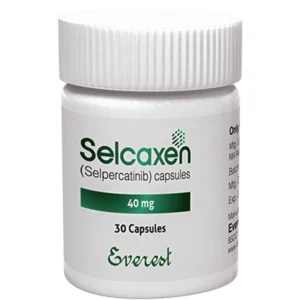
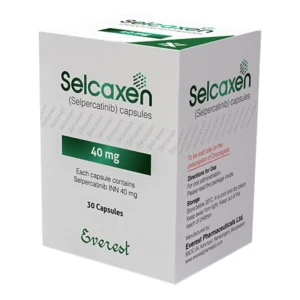
Selcaxen 40 mg Capsule (Selpercatinib): Clinical Profile and Treatment Overview
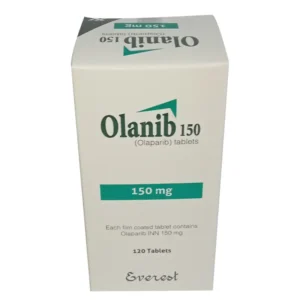
Consult Pharmacist for PriceOlanib 150 mg Tablet (Olaparib) | Clinical Overview Of A PARP Inhibitor
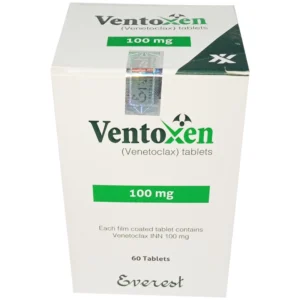
Consult Pharmacist for PriceVentoxen 100 mg (Venetoclax): Clinical Profile and Venclexta Alternative
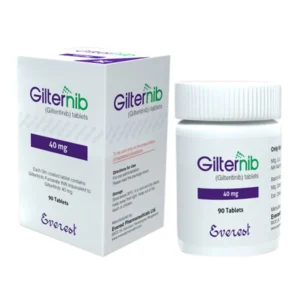
Consult Pharmacist for PriceGilternib 40 mg Tablet (Gilteritinib) | FLT3 Mutation Inhibitor
Consult Pharmacist for Price

Reviews
There are no reviews yet.