Sourcing Disclosure: Licensed Bangladesh Global Sourcing Specialist facilitating global access under Named Patient Regulations.
Expert-reviewed clinical data for prescription-only medicine.


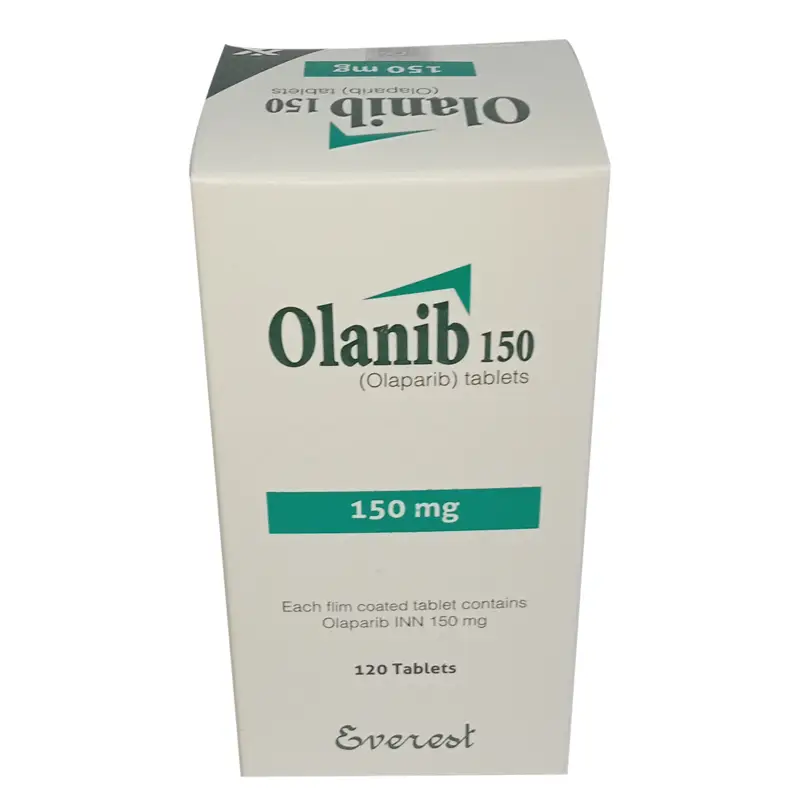
Olanib 150 mg Tablet (Olaparib) | Clinical Overview Of A PARP Inhibitor
Author: Salma Abdel
Brand Name: Olanib
Generic Name: Olaparib
Therapeutic Class: PARP Inhibitor
Clinical Indications: Ovarian Cancer, Brest Cancer, Pancreatic Cancer, Prostate Cancer
Available Strength: 150 mg
Pack’s Size: 120 Tablets
- WHO GMP Certified
- Reviewed By Medical Expert
- Batch Examined in Lab
Medically Reviewed by: Dr. Salma Elreedy, Clinical Oncologist, Sphinx Cure Oncology Center
Last Updated: March 28, 2026
Disclaimer: The following information is for educational and informational purposes only and is not intended as a substitute for professional medical advice, diagnosis, or treatment. Always seek the guidance of your oncologist or other qualified healthcare provider regarding medical conditions or treatment protocols.
Olanib 150 mg (Olaparib) is a targeted therapy used to treat specific types of advanced cancers, including ovarian, breast, prostate, and pancreatic cancers. Unlike traditional chemotherapy, Olanib is a PARP inhibitor. It works by blocking a specific enzyme (PARP) that cancer cells use to repair their DNA. When this repair system is blocked in cells that already have a BRCA1/2 mutation, the cancer cells cannot survive.
Precision Medicine: Designed for patients with specific genetic biomarkers (BRCA or HRD positive).
Convenience: Administered as an oral tablet, reducing the need for clinical infusions.
Goal: To extend Progression-Free Survival (PFS) and delay cancer recurrence.
What are the primary clinical indications for Olanib 150 mg Tablet?
Olaparib is used across several clinical scenarios, specifically targeting tumors with homologous recombination repair (HRR) deficiencies. According to FDA and EMA guidelines, indications include:
Ovarian Cancer: Maintenance treatment for advanced epithelial ovarian, fallopian tube, or primary peritoneal cancer in adult patients who have responded to platinum-based chemotherapy.
Breast Cancer: Treatment for germline BRCA-mutated ($gBRCAm$), HER2-negative metastatic breast cancer in patients previously treated with chemotherapy.
Prostate Cancer: For metastatic castration-resistant prostate cancer (mCRPC) with specific gene mutations ($BRCA1, BRCA2,$ or $ATM$) after progression on hormone therapy.
Pancreatic Cancer: First-line maintenance for $gBRCAm$ metastatic pancreatic adenocarcinoma.
Mechanism of Action: How does Olaparib target cancer cells?
The human body relies on two primary pathways to repair DNA damage: the PARP enzyme (for single-strand breaks) and the Homologous Recombination (HR) pathway (for double-strand breaks).
Olaparib works as a PARP inhibitor. It blocks the PARP enzyme, preventing it from repairing single-strand breaks. In normal cells, the HR pathway (often powered by BRCA genes) can fix the resulting double-strand breaks. However, in cancer cells with BRCA mutations or other HR deficiencies, this backup system is broken. The accumulation of unrepaired DNA damage leads to “synthetic lethality,” causing the cancer cell to undergo apoptosis (cell death) while leaving healthy cells relatively unaffected.
Dosage and Administration Protocols
Standard Adult Dose: The recommended dose is 300 mg (two 150 mg tablets) taken orally twice daily, for a total daily dose of 600 mg.
Method: Swallow tablets whole. Do not chew, crush, or dissolve. Olanib can be taken with or without food.
Renal Adjustment: Patients with moderate renal impairment (CLcr 31-50 mL/min) typically require a dose reduction to 200 mg twice daily.
Missed Dose: If a dose is missed, take the next dose at the scheduled time. Do not double the dose.
Pharmacist’s Clinical Perspective: Unique Value of Olanib
Olanib, manufactured by Everest Pharmaceuticals, is bioequivalent to the innovator brand, Lynparza. A critical clinical distinction for Olanib is its tablet formulation stability. Unlike earlier capsule versions, the 150 mg tablet provides higher bioavailability, meaning patients can achieve therapeutic blood levels with a lower “pill burden” (typically 2 tablets twice daily).
Storage Note: While Olanib is stable at controlled room temperature ($20°C$ to $25°C$), moisture is the primary enemy of the Olaparib molecule. Always keep the tablets in their original blister packaging until the moment of consumption to ensure chemical integrity.
Safety and Efficacy: What does the clinical data show?
The clinical authority of Olaparib is established by landmark Phase III trials documented on Clinicaltrials.gov and published in the New England Journal of Medicine (NEJM):
- SOLO-1 Trial (NCT01844882): In the first-line ovarian cancer maintenance setting, Olaparib reduced the risk of disease progression or death by 70% in BRCA-mutated patients compared to placebo.
- OlympiAD Trial (NCT02000622): In metastatic breast cancer, Olaparib demonstrated a statistically significant improvement in progression-free survival (PFS) over standard chemotherapy, with a 42% reduction in the risk of disease progression.
Side Effects and Safety Protocols
Based on safety data from the FDA, EMA, and ASCO, Olaparib has a well-defined profile that requires proactive management:
Common Adverse Reactions
Gastrointestinal: Nausea (affecting up to 77% of patients), vomiting, diarrhea, and decreased appetite.
Constitutional: High-grade fatigue and asthenia (weakness).
Hematological: Anemia is the most frequent laboratory abnormality. This often requires temporary dose interruptions, dose reductions, or red blood cell transfusions.
Significant Clinical Risks & Monitoring
Myelodysplastic Syndrome/Acute Myeloid Leukemia (MDS/AML): This has occurred in approximately 1.2% of patients, typically following long-term exposure. Your oncologist will monitor a Complete Blood Count (CBC) monthly during the first year of treatment and periodically thereafter.
Pneumonitis: A rare but serious lung inflammation. You must seek immediate clinical evaluation for any new or worsening respiratory symptoms, such as shortness of breath, fever, or a persistent dry cough.
Venous Thromboembolism (VTE): Blood clots, including pulmonary embolism, have been observed in clinical trials. Report any sudden leg swelling or chest pain immediately.
Drug Interactions (CYP3A): Avoid strong or moderate CYP3A inhibitors (e.g., grapefruit juice, Seville oranges, or certain antifungals). These can significantly increase the concentration of Olanib in your blood, escalating the risk of severe toxicity.
Precautions for Special Populations
- Pregnancy and Lactation: Olaparib is embryo-fetal toxic. Females of reproductive potential must use effective contraception during treatment and for 6 months after the final dose. Males with female partners must use condoms for 3 months after the final dose.
- Hepatic/Renal Impairment: While mild impairment requires no adjustment, severe hepatic or renal impairment generally precludes the use of this medication.
Storage Data and Environmental Stability
Olanib 50 mg & 150 mg tablets are stable at room temperature and do not require 2°C to 8°C cold chain refrigeration. However, environmental control is essential for clinical efficacy.
- Standard Storage: Store at controlled room temperature, 20°C to 25°C (68°F to 77°F).
- Protection: Keep in the original container to protect from moisture and light.
- Transit Integrity: Professional pharmaceutical exporters utilize climate-controlled logistics to prevent the tablets from being exposed to extreme heat or humidity during international transit, ensuring the molecule remains stable.
Manufacturer Quality Assurance
Olanib is manufactured by Everest Pharmaceuticals. In the landscape of international oncology, manufacturing transparency is the foundation of patient trust. Everest Pharmaceuticals operates under strict WHO GMP (World Health Organization Good Manufacturing Practices) and ICH guidelines. Their facility is designed with high-tech air filtration and pressure differentials to prevent cross-contamination, ensuring every batch meets international standards for molecular purity and bioequivalence to Lynparza.
Global Access to Olaparib
Navigating the acquisition of advanced oncology medicines internationally requires strict adherence to legal frameworks. Patients can access Olanib 50 mg & 150 mg through verified pharmaceutical exporters under “Personal Use Importation” rules.
A valid prescription from a licensed oncologist is a mandatory requirement. Most national drug authorities (such as the Health Ministry or DGDA) permit the legal importation of life-saving medicines when they are not available locally or when the generic equivalent is significantly more accessible. This process ensures the patient receives the necessary treatment while remaining under the formal supervision of their medical team.
Patient Support FAQs
Is Olanib 150 mg exactly the same as Lynparza?
Yes. Olanib contains Olaparib, the identical active pharmaceutical ingredient found in Lynparza. Because it is manufactured under WHO GMP standards, it is clinically bioequivalent, meaning it targets the PARP enzyme with the same efficacy and mechanism.
Can I switch between Olaparib capsules and tablets?
No. Olaparib tablets and capsules are not interchangeable on a milligram-to-milligram basis due to differences in bioavailability. You must strictly follow the dosing instructions for the specific formulation (tablet or capsule) prescribed by your doctor.
What should I do if I miss a dose of Olanib?
If a dose is missed, take the next dose at its regularly scheduled time. Do not take a “double dose” to catch up. If you vomit after taking your tablets, do not take an additional dose; simply wait for the next scheduled time.
Are there foods I should avoid during treatment?
Yes. You should avoid grapefruit, grapefruit juice, and Seville oranges (often used in marmalades), as they can increase the amount of Olaparib in your body, potentially increasing the risk of side effects.
How often will I need blood tests?
Your oncologist will typically require a “Baseline” blood count before starting. During treatment, you will likely have blood tests monthly to monitor for anemia or other changes in your blood cell counts.
Related products

Ventoxen 100 mg (Venetoclax): Clinical Profile and Venclexta Alternative
Consult Pharmacist for PriceVelpanex (Sofosbuvir + Velpatasvir) 100 mg + 400 mg | HCV Direct Acting Antiviral
Consult Pharmacist for PriceCapivast (Capivasertib) 200 mg Tablets | Advanced Breast Cancer Therapy in AKT Mutation
Consult Pharmacist for PriceGilternib 40 mg Tablet (Gilteritinib) | FLT3 Mutation Inhibitor
Consult Pharmacist for Price

Reviews
There are no reviews yet.