Prescription required. We facilitate access to medicines already prescribed by your treating physician. We do not provide medical advice or diagnoses.


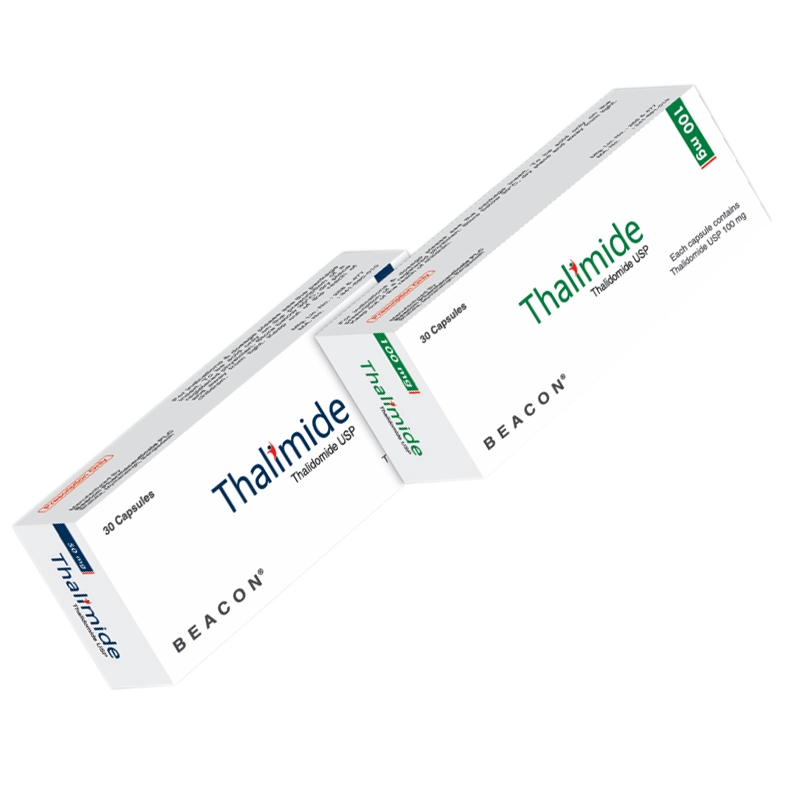
Thalimide 50 mg & 100 mg (Thalidomide)
- Used for: Newly diagnosed multiple myeloma, in combination with dexamethasone. This is the indication this page and this category are built around.
- Availability: In Stock
- Shipping: Express Global Shipping (7-14 days depending on region).
- Requirement: Valid prescription from a licensed healthcare provider required.
✓ WHO GMP Certified
✓ Reviewed By Medical Expert
✓ Batch Examined in Lab
Need Patient Access Support?
Our team provides verified global sourcing assistance to help you navigate international shipping and prescription requirements safely.
Thalimide is a generic version of thalidomide, made by Beacon Pharmaceuticals in Bangladesh. It is the original medicine in the drug class that later produced lenalidomide and pomalidomide, and it is still used today, combined with dexamethasone, for newly diagnosed multiple myeloma. As a Thalomid alternative supplied through the Named Patient Program, it is available to patients outside Bangladesh who hold a valid prescription. Thalidomide carries the same rigorous pregnancy-prevention requirements as its newer relatives, plus a side-effect profile of its own, described in full below.
⚠️ BOXED WARNING
The FDA label for thalidomide carries a boxed warning, the strongest warning a medicine can have, covering two risks.
Severe birth defects. Thalidomide is a powerful human teratogen. Even a single dose taken during pregnancy can cause severe, life-threatening birth defects, and mortality at or shortly after birth has been reported in about 40% of affected infants. Thalidomide must never be used in pregnancy. Pregnancy must be excluded before treatment starts, and two reliable methods of contraception are required afterward.
Blood clots. There is a significantly increased risk of deep vein thrombosis and pulmonary embolism in myeloma patients taking thalidomide with dexamethasone.
⚠️ Pregnancy Prevention: Read This First [TEMPLATE-CORE]
This is the most important safety section on this page, and it applies to both men and women. Thalidomide is the drug this entire safety framework exists because of.
Thalidomide can cause severe birth defects or death of an unborn baby from a single dose. There is no safe dose in pregnancy.
If you are a woman who could become pregnant:
- Two negative pregnancy tests are required before treatment starts. The first is done 10 to 14 days before, the second within 24 hours before the first capsule.
- Once treatment begins, testing continues weekly for the first 4 weeks, then every 4 weeks if your periods are regular, or every 2 weeks if they are irregular.
- You must use two reliable methods of contraception at the same time (one highly effective method such as an IUD, hormonal contraception, tubal ligation, or a partner’s vasectomy, plus one additional method such as a condom or diaphragm), or abstain completely from heterosexual sex. This applies starting 4 weeks before treatment, throughout treatment, during any break in treatment, and for 4 weeks after your last capsule.
- If you develop sudden severe neutropenia or thrombocytopenia (both are known risks of this medicine), an IUD or implant may carry a higher risk of infection or bleeding at insertion or removal. Discuss the safest contraceptive choice with your prescriber given this.
If you are a man taking thalidomide:
- Thalidomide passes into semen. You must use a latex or synthetic condom for any sexual contact with a woman who could become pregnant. This applies during treatment, during any dose interruption, and for up to 4 weeks after your last capsule.
- This applies even if you have had a vasectomy.
- Do not donate sperm during treatment.
Everyone taking thalidomide:
- Do not donate blood during treatment or for 4 weeks after your last capsule.
- Do not share your capsules with anyone, ever.
- Keep capsules in their blister pack until the moment you take them. If a capsule is broken or a woman who is or may become pregnant comes into contact with the powder inside, wash the area immediately with soap and water. If anyone is exposed to a patient’s body fluids, the same precaution applies, and gloves are a reasonable extra step.
- Each capsule’s cap is printed with a “Do Not Get Pregnant” warning logo. This isn’t packaging decoration; it’s there because a single capsule matters.
About the THALOMID REMS program
In the United States, thalidomide can only be dispensed through a restricted programme called the THALOMID REMS, which requires certified prescribers, certified pharmacies, and a signed patient-physician agreement.
That programme is a United States regulatory system. It does not govern Named Patient Program supply of a Bangladeshi generic, and we are not able to enrol you in it.
The pregnancy testing and contraception requirements above exist because of what this drug does, not because of American paperwork. They apply to thalidomide from any manufacturer, in any country. Your prescribing oncologist is responsible for managing them. If you have not been given a pregnancy prevention plan, ask for one before you start.
What Is Thalimide (Thalidomide)?
Thalimide contains thalidomide, the same active ingredient as the originator product Thalomid, in capsule form. It is manufactured by Beacon Pharmaceuticals in Bangladesh under WHO-GMP quality standards and supplied internationally under Named Patient Program (NPP) frameworks.
Thalidomide was first approved by the U.S. FDA in 1998, decades after its withdrawal from other markets in the 1960s over birth-defect harm, and its return to the market came with the strict distribution controls described above built in from the start. That approval history belongs to the originator molecule and to branded products such as Thalomid. Thalimide itself is not an FDA-approved product; it is a generic manufactured to WHO-GMP standards and made available through the Named Patient route to patients in countries where it is not locally registered.
Available Strengths: Full Dosing Coverage
Unlike some medicines in this category, there is no supply gap to disclose here. Beacon’s 50 mg and 100 mg capsules combine to reach every dose the label specifies:
- Multiple myeloma: 200 mg once daily is reached with two 100 mg capsules.
- ENL (see Uses below): 100 mg to 400 mg once daily is reachable entirely in 50 mg increments across both capsule strengths.
Two Things Worth Knowing Before You Start
No dose adjustment is needed for kidney problems. Thalidomide is barely cleared by the kidneys at all; under 3.5% of a dose leaves the body unchanged in urine. The label carries no renal dose-adjustment table, unlike some other myeloma medicines. This matters because kidney impairment is common in myeloma at diagnosis.
Dosing in liver impairment has not been studied. This is different from saying no adjustment is needed. No clinical studies of thalidomide in patients with liver impairment have been conducted, so if you have significant liver disease, this is a conversation to have directly with your oncologist rather than an assumption to make either way.
How Thalidomide Works
Thalidomide’s exact mechanism is not fully understood, but its target is cereblon, the same protein that lenalidomide and pomalidomide act through. By binding cereblon, thalidomide alters which proteins the cell marks for destruction, with effects that are immunomodulatory, anti-inflammatory, and anti-angiogenic (reducing the blood supply tumours rely on).
In myeloma, thalidomide is associated with an increase in natural killer cells and in cytokines linked to immune activity against cancer cells. It is not given alone in myeloma; it is combined with dexamethasone, and this combination is what the approval is based on.
Thalidomide Uses: What Thalimide Treats
Thalidomide has two FDA-approved uses, and they are unrelated to each other.
Newly diagnosed multiple myeloma, in combination with dexamethasone. This is the indication this page and this category are built around.
Erythema nodosum leprosum (ENL), a painful skin and nerve complication of leprosy (Hansen’s disease). Thalidomide is approved for the acute treatment of ENL’s skin manifestations, and separately as maintenance therapy to prevent and suppress ENL from recurring. It is not approved as the only treatment when moderate to severe nerve inflammation (neuritis) is present alongside ENL; a corticosteroid is typically added in that situation. This indication is entirely separate from cancer treatment, and we mention it here for completeness since it is a genuine, on-label use of this medicine, but the rest of this page and our sourcing focus is built around the myeloma indication. <details> <summary><strong>Clinical trial data (for readers who want the numbers)</strong></summary>
Figures below come from the current FDA prescribing information.
Study 1. An open-label trial randomised 207 patients with newly diagnosed myeloma to thalidomide plus dexamethasone or dexamethasone alone, for four 28-day cycles. The response rate, based on paraprotein measurements, was 52% with the combination versus 36% with dexamethasone alone.
Study 2. A placebo-controlled trial randomised 470 newly diagnosed patients to thalidomide plus dexamethasone or placebo plus dexamethasone. This trial used a gradual dose increase, starting at 50 mg and escalating to 200 mg by the second cycle, rather than starting at the full dose immediately; treatment continued as tolerated until the disease progressed.
Discontinuation rates were notably higher on thalidomide than on the comparison arms: 30% versus 16% in Study 1, and 37% versus 15% in Study 2. This is not a reason to avoid the medicine, since it remains an effective and widely used option, but some patients will need a dose change or an early stop. That is a normal part of treatment with this drug, not a sign that something has gone unusually wrong.
These are originator-drug trials. Beacon has not published independent bioequivalence data for Thalimide that we have been able to verify. As a generic containing the same active ingredient, manufactured to WHO-GMP standards, it is expected to perform comparably. We make no bioequivalence claim. </details>
Thalidomide Dosage and Administration
For multiple myeloma: 200 mg once daily, taken orally with water, preferably at bedtime and at least 1 hour after the evening meal, in 28-day cycles. Dexamethasone is given at 40 mg daily on Days 1 to 4, 9 to 12, and 17 to 20 of each 28-day cycle.
Taking it at bedtime is a practical instruction, not a formality: thalidomide frequently causes drowsiness, and taking it before sleep means the sedating effect happens while you’re already meant to be resting.
For ENL, acute treatment: 100 to 300 mg per day, up to 400 mg per day for severe reactions, taken once daily at bedtime or in divided doses. Patients under 50 kg generally start at the lower end of the range. Treatment continues until the active reaction has settled, usually at least 2 weeks, then the dose is tapered down in 50 mg steps every 2 to 4 weeks.
For ENL, maintenance: the lowest dose that controls the condition, with tapering attempts every 3 to 6 months in 50 mg decrements.
About Missed Doses
The label does not specify what to do if a dose of Thalimide is missed. Rather than guess, contact your oncologist for guidance specific to your situation if this happens, instead of assuming a rule that applies to a different medicine also applies here.
Dose Changes for Side Effects
Treatment is interrupted for constipation, drowsiness, or peripheral neuropathy, with a lower dose considered when it resumes. For more serious (Grade 3 or 4) side effects, your oncologist may reduce the dose, delay treatment, or stop it, based on clinical judgement. Angioedema, anaphylaxis, a severe (Grade 4) rash, skin peeling, or blistering are reasons to stop thalidomide permanently.
Monitoring During Treatment
Nerve symptoms. You should be examined monthly for the first 3 months of treatment, then periodically after that, specifically checking for early numbness, tingling, or pain in the hands and feet. Your oncologist may also use a nerve conduction test (measuring sensory nerve action potentials) at the start of treatment and every 6 months afterward, to catch nerve damage before you’d notice it yourself.
Blood counts. Treatment should not start if your neutrophil count is already below 750 per cubic millimetre. Blood counts are monitored on an ongoing basis afterward, and watched for both low neutrophils and low platelets.
HIV viral load, if applicable. In patients who are HIV-positive, thalidomide has been associated with a rise in viral load in at least one controlled trial. If this applies to you, viral load is typically checked after 1 and 3 months of treatment, then every 3 months.
Heart rate. Thalidomide can cause a slow heart rate (bradycardia) and fainting. Report either promptly.
Warnings and Precautions
Beyond the boxed warning above, the label describes the following.
Peripheral neuropathy. This is the warning that most distinguishes thalidomide from its newer relatives, lenalidomide and pomalidomide. Nerve damage affects 10% or more of patients, can be severe, and may be permanent. It usually develops after months of use, though it has occurred after shorter treatment too, and the relationship to total dose isn’t well defined. Symptoms can appear or worsen even after stopping the drug, and recovery can be slow or incomplete. If you develop numbness, tingling, or pain in your hands or feet, tell your oncologist promptly; usually the drug is stopped once drug-related neuropathy is confirmed, to limit further damage.
Drowsiness and somnolence. Very common. Avoid driving or operating machinery until you know how this medicine affects you, and avoid combining it with other sedating medicines (see Drug Interactions) or alcohol without medical advice.
Dizziness and low blood pressure on standing. Sit upright for a few minutes before standing up from lying down.
Heart attack and stroke. In a clinical trial of previously untreated myeloma, ischemic heart disease occurred in 11.1% of patients on thalidomide plus dexamethasone (including a 1.3% rate of heart attack) and stroke in 2.6%, compared with 4.7%, 1.7%, and 0.9% on placebo plus dexamethasone.
Blood clots. The risk described in the boxed warning is substantial: in one controlled trial, venous thromboembolism occurred in 22.5% of patients on thalidomide plus dexamethasone versus 4.9% on dexamethasone alone. Report shortness of breath, chest pain, or leg swelling immediately. Your oncologist will weigh whether preventive anti-clotting treatment is appropriate for you.
Do not combine with pembrolizumab. In two randomised myeloma trials, adding pembrolizumab to a thalidomide analogue plus dexamethasone increased deaths. This combination is not recommended outside a clinical trial.
Low white blood cells and low platelets. Can require dose interruption or reduction. Watch for signs of bleeding such as unusual bruising, nosebleeds, or blood in stool.
Severe skin reactions. Stevens-Johnson syndrome, toxic epidermal necrolysis, and DRESS have all been reported and can be fatal. Any spreading rash, blistering, peeling skin, or rash with fever needs prompt medical attention.
Seizures. Reported in postmarketing use, mostly in patients who already had a seizure history or risk factors for one. If this applies to you, mention it before starting.
Tumour lysis syndrome. Can occur in patients starting treatment with a large amount of disease in the body. Monitored closely in this group.
Hypersensitivity. Angioedema and anaphylaxis have been reported. Thalidomide is stopped permanently if either occurs, and is not restarted.
Increased HIV viral load. Seen in HIV-positive patients in at least one controlled trial. Monitored as described above if relevant to you.
Contraindications: pregnancy, and known hypersensitivity to thalidomide or its ingredients.
Thalidomide Side Effects
Common in myeloma (20% or more): fatigue, low calcium, swelling, constipation, sensory nerve symptoms, breathlessness, muscle weakness, low white cell counts, low neutrophils, rash or skin peeling, confusion, reduced appetite, nausea, anxiety or agitation, weakness, tremor, fever, weight loss, blood clots, motor nerve symptoms, weight gain, dizziness, and dry skin.
Common in ENL treatment: drowsiness, rash, and headache were each reported in roughly a third or more of patients across the ENL trials, generally mild to moderate.
This is not a complete list. Report new or worsening symptoms to your treating physician rather than adjusting your dose yourself.
A Note for Older Patients
In the large placebo-controlled trial, just over half the participants (52%) were 65 or older, and 15% were 75 or older. This age group had higher rates of several side effects, including atrial fibrillation, constipation, fatigue, nausea, low potassium, deep vein thrombosis, high blood sugar, pulmonary embolism, and weakness, compared with younger patients. Since myeloma is more common with age, this is directly relevant to a large share of the people who take this medicine, and it’s a reasonable thing to discuss with your oncologist if you’re in this age group.
Drug Interactions
Sedating medicines. Opioids, antihistamines, antipsychotics, anti-anxiety medicines, and alcohol can add to thalidomide’s own sedative effect, and this combination should be avoided.
Medicines that slow heart rate. Calcium channel blockers, beta blockers, digoxin, certain H2 blockers used for heartburn (such as famotidine or cimetidine), lithium, tricyclic antidepressants, and some anaesthesia-related drugs can add to thalidomide’s bradycardia risk and should be used cautiously alongside it.
Medicines that cause nerve damage. This includes bortezomib, amiodarone, cisplatin, docetaxel, paclitaxel, vincristine, disulfiram, phenytoin, metronidazole, and alcohol. Combining any of these with thalidomide can add to the risk of peripheral neuropathy. This is directly relevant if you are on a bortezomib-containing regimen (such as VTd), since both drugs carry their own neuropathy risk; your care team will factor this in when monitoring you.
Hormonal contraceptives. Certain other medicines (including some HIV medicines, rifampin, phenytoin, and St. John’s Wort) can reduce how well hormonal contraception works. If you’re relying on hormonal contraception as part of your two-method requirement above and take any of these, you’ll need two other effective methods instead.
No significant interaction has been found with digoxin or warfarin at a single-dose level, and thalidomide itself is not broken down by, nor does it affect, the liver’s CYP450 enzyme system, so the kind of interactions common with many other cancer medicines are not expected here.
Tell your oncologist about every medicine, vitamin, and supplement you take, including anything prescribed by a different doctor.
Storage and Handling
Generally stored at room temperature, 68°F to 77°F (20°C to 25°C), with brief excursions to 59 to 86°F (15 to 30°C) acceptable during transport.
Keep capsules in their blister pack until the moment of use. Keep away from children and from anyone who is or may become pregnant.
Thalimide vs Thalomid: How This Generic Thalomid Alternative Compares
| Thalimide (supplied here) | Thalomid (originator) | |
|---|---|---|
| Active ingredient | Thalidomide | Thalidomide |
| Strengths | 50 mg, 100 mg | 50 mg, 100 mg, 150 mg, 200 mg |
| Manufacturer | Beacon Pharmaceuticals, Bangladesh | Bristol Myers Squibb / Celgene |
| Regulatory position | Manufactured to WHO-GMP standards; supplied under Named Patient Program | FDA approved |
| Distribution | Named Patient Program, prescription verified before dispatch | US: restricted distribution via THALOMID REMS |
| Taken with | Dexamethasone (for myeloma) | Dexamethasone (for myeloma) |
Provided for orientation only. This is not a claim of bioequivalence, and Thalimide is not represented as an FDA-approved product.
Frequently Asked Questions
Why does the capsule cap say “Do Not Get Pregnant”?
It’s a physical safety reminder built into the product itself, because thalidomide caused some of the most severe birth defects in medical history when taken during pregnancy, even from a single dose. It reflects how seriously the pregnancy-prevention requirements on this page are meant to be taken.
I’m also being prescribed bortezomib. Is that a problem?
Not necessarily, and this combination (often called VTd) is a standard myeloma regimen. But both drugs can cause peripheral neuropathy, and the label specifically notes the effect can be additive. Your care team will monitor you more closely for nerve symptoms on this combination than they would on either drug alone.
Do I need a lower dose if I have kidney problems?
No dose adjustment is needed for kidney impairment; thalidomide is barely cleared by the kidneys at all. This is different from some other myeloma medicines, where kidney function directly changes the dose.
Is the leprosy-related use (ENL) relevant to me if I have myeloma?
No. ENL and multiple myeloma are entirely separate, unrelated conditions that happen to both respond to thalidomide. It’s mentioned on this page because it’s a genuine FDA-approved use of the same medicine, not because it’s relevant to a myeloma diagnosis.
Why take it at bedtime?
Thalidomide commonly causes drowsiness. Taking it at bedtime, at least an hour after your evening meal, means that effect happens while you’re already meant to be asleep rather than during your day.
Related products

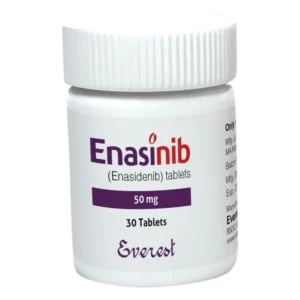
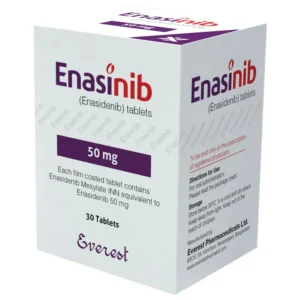
Enasinib 50 mg (Enasidenib) 30 Tablet: Global Patient Access, Price, & Clinical Safety Guide
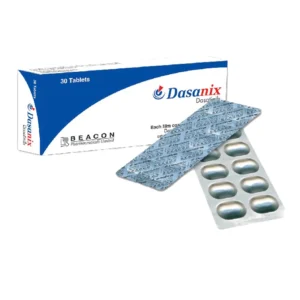
Request PriceDasanix 20 mg, 50 mg & 100 mg (Dasatinib)
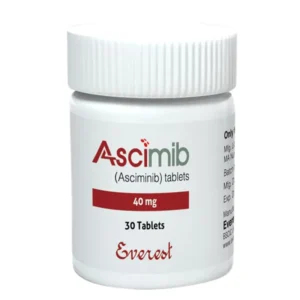
Request PriceAscimib 40 mg (Asciminib) Tablet | STAMP Inhibitor in PH+CML
Request PriceVentech 100 mg (Venetoclax)| 60 Tablets | Global Acces & Safety Guide
Request Price