Sourcing Disclosure: Licensed Bangladesh Global Sourcing Specialist facilitating global access under Named Patient Regulations.
Expert-reviewed clinical data for prescription-only medicine.


ROS1 Gene Fusions in NSCLC: Targeted Therapies and Clinical Management

Receiving a cancer diagnosis immediately thrusts you into a complex world of medical terminology, cellular biology, and genetic testing. Today, oncology relies heavily on understanding the unique genetic blueprint of a tumor. Instead of categorizing cancer solely by where it started in the body, doctors now look for the specific biological engines driving the disease.
One of the most important genetic discoveries in lung cancer and other solid tumors is the ROS1 alteration.
If your pathology report or genetic test indicates a ROS1 mutation—more accurately called a ROS1 gene fusion or rearrangement—your medical team has successfully identified the exact mechanism causing your cancer to grow. This discovery is highly actionable and fundamentally changes your treatment options. This guide translates the complex science of the ROS1 gene, explains how targeted medications work, and outlines what this means for your clinical prognosis.
The Basics: What is the ROS1 Gene?
Inside every human cell, DNA acts as a master instruction manual. Genes are specific chapters in this manual that provide instructions for building proteins.
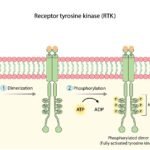
The ROS1 gene contains the instructions for building a specific receptor protein (a receptor tyrosine kinase). Think of this receptor as a communication antenna that sits on the outer surface of the cell.
In healthy, normal cells, the exact function of the ROS1 antenna is still being studied, but it is believed to play a role in normal cell growth and development. Normally, this antenna waits for an external signal before turning on, sending a brief message into the cell, and then turning back off.
The “Crossed Wires” Analogy
When doctors talk about a ROS1 “mutation” in cancer, they are usually referring to a structural error called a gene fusion or rearrangement.
Imagine a complex electrical circuit board that controls a machine.
- The Normal State: The machine only runs when someone presses a specific button to complete the circuit.
- The Error State: A severe physical error occurs. The wires on the circuit board are snapped in half and accidentally spliced together with completely different, unrelated wires.
Because of these “crossed wires,” the electrical current bypasses the normal on/off switch entirely. The circuit is permanently closed, and power flows continuously.
In a cancer cell, the ROS1 gene breaks and fuses with a different gene. The cell builds a deformed, fused protein. Because of this structural error, the new ROS1 antenna gets permanently stuck in the “ON” position. It constantly shouts at the cell to divide and multiply, eventually forming a tumor.
The Science of the Alteration: At the DNA Level
To understand how the tumor forms, we must look at the specific genetic errors occurring at the DNA level.
Unlike a point mutation (where a single chemical letter in the DNA is misspelled), a ROS1 alteration is a massive structural change. The DNA strand physically breaks apart. When the cell attempts to repair the break, it accidentally attaches the broken end of the ROS1 gene to a completely different gene.
Identifying the Mutation Hotspots
The genes that ROS1 accidentally attaches to are called “fusion partners.” While there are many possible partners, they tend to occur in specific patterns or “hotspots.”
- Non-Small Cell Lung Cancer (NSCLC): ROS1 fusions are relatively rare, found in approximately 1% to 2% of all non-small cell lung cancer cases. They are most frequently diagnosed in younger patients who have little to no history of smoking.
- The CD74 Partner: The most common fusion partner in lung cancer is a gene called CD74. When CD74 fuses with ROS1 (creating the CD74-ROS1 fusion), it creates a highly stable, hyperactive protein that aggressively drives cancer growth.
- Other Common Partners: Other frequently identified fusion partners include EZR, SLC34A2, and SDC4.
Regardless of the specific partner, the end result is the same: the ROS1 engine is permanently activated.
Pathway & Connectivity: The Biological Chain Reaction
To stop a tumor, scientists must map the exact communication route the cancer uses to grow. We call this the Signaling Pathway.
When the crossed wires of the ROS1 fusion protein trigger a continuous signal, it starts an internal chain reaction, passing chemical energy deep into the cell.
- The Origin: The abnormal ROS1 fusion protein sits at the cell membrane, acting as a permanently active engine.
- The RAS/MAPK Pathway: ROS1 passes energy to a protein called RAS. RAS passes it to RAF, then to MEK, and finally to ERK. This specific cascade delivers a direct command to the cell’s control center: “Multiply rapidly.”
- The PI3K/AKT Pathway: Simultaneously, the ROS1 engine triggers a second route involving proteins called PI3K and AKT. This pathway gives the cell a powerful “survival” command, actively preventing the cell from undergoing natural, programmed death (apoptosis).
- The JAK/STAT Pathway: A third pathway is activated, further reinforcing the survival and growth commands.
Because of this constant, multi-pathway chain reaction, the tumor cells multiply rapidly and evade the body’s natural defense mechanisms.
Mechanism of Action: How the Inhibitor Works
For many years, patients with ROS1-positive cancer received standard chemotherapy. While chemotherapy is a vital tool, it is a broad approach that attacks all dividing cells.
Medical science has now developed highly sophisticated, targeted oral medications known as ROS1 Tyrosine Kinase Inhibitors (TKIs). Examples include crizotinib, entrectinib, and repotrectinib. These drugs are engineered with atomic precision to shut down the defective ROS1 engine.
Finding and “Turning Off” the Cancer Cells
ROS1 inhibitors do not rely on broad cellular poisoning; they are designed to break the specific communication lines driving the tumor.
- Physical Binding: After the patient swallows the medication, the drug enters the bloodstream and locates the tumor cells. The chemical structure of the drug allows it to pass directly inside the cancer cell.
- Entering the Engine Room: The drug is built to fit perfectly into a microscopic structural pocket (the ATP-binding cleft) located inside the ROS1 protein’s internal engine.
- Blocking the Energy: Normally, the ROS1 engine uses a cellular fuel called ATP to power its chain reactions. The inhibitor drug acts like a physical wedge, snapping into the pocket and blocking the ATP from entering.
- Breaking the Chain: Deprived of its fuel, the ROS1 receptor is immediately paralyzed. It instantly stops sending signals down the RAS/MAPK and PI3K/AKT pathways. The cancer cell, suddenly cut off from its survival commands, stops dividing and eventually dies.
Target Specificity: Sparing Healthy Cells
The primary advantage of these targeted medications is their target specificity.
Normal, healthy cells in your heart, liver, and skin do not rely on a hyperactive ROS1 fusion protein to survive. Therefore, when the inhibitor drug circulates through the body, it largely bypasses these healthy tissues.
This specificity means that patients taking ROS1 inhibitors generally avoid the severe systemic toxicity associated with traditional chemotherapy, such as complete hair loss or severe immune suppression. Side effects still occur—such as dizziness, vision changes, or swelling (edema)—because the drug may lightly interact with other normal receptors in the body, but these are typically managed effectively by the oncology team.
Clinical Impact & Prognosis
The introduction of ROS1 inhibitors has fundamentally rewritten the clinical playbook for patients harboring this genetic alteration. Identifying a ROS1 fusion shifts a patient’s outlook from relying on generalized treatments to utilizing a highly focused, personalized therapy that often yields rapid and profound results.
Summarizing Clinical Trial Data
The regulatory approval of these targeted drugs is based on stringent international clinical trials. When discussing your prognosis, your oncologist relies on specific metrics from these studies.
- Objective Response Rate (ORR): This tracks the percentage of patients whose tumors experience significant, measurable shrinkage. In major trials for first-line ROS1 inhibitors, the response rates are exceptionally high, frequently landing between 70% and 80%. This means the vast majority of patients experience substantial tumor reduction.
- Progression-Free Survival (PFS): This metric measures the amount of time a patient lives with the disease without the tumor growing larger or spreading. Clinical data shows that patients taking these targeted therapies often experience a median progression-free survival extending from 15 to 19 months, and sometimes well over two years, depending on the specific drug used.
- Central Nervous System (CNS) Activity: ROS1-positive lung cancer has a high tendency to spread to the brain. Older drugs struggled to cross the blood-brain barrier. However, modern ROS1 inhibitors (like entrectinib and repotrectinib) are specifically designed to penetrate the brain. Clinical trials show these drugs effectively shrink brain metastases, providing a massive clinical advantage for patients.
Visualizing the Data: Understanding Clinical Graphs
When reviewing medical literature or discussing clinical trial outcomes with your medical team, you will likely encounter specific visual tools used to map patient data.
The Kaplan-Meier Survival Plot
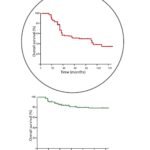
A Kaplan-Meier curve is the standard method for visualizing disease control and survival over a specific period.
- The Horizontal Axis (Bottom): This line tracks time, typically measured in months or years, starting from the day patients began treatment.
- The Vertical Axis (Side): This line represents the percentage of patients (from 100% down to 0%) whose disease remains strictly controlled.
- Reading the Graph: The graph features a descending line. When evaluating a highly effective targeted therapy like a ROS1 inhibitor, the line remains horizontal and high on the graph for a very long duration, stretching far to the right before stepping down. This visual plateau directly represents the extended months and years of stable, controlled disease.
The Waterfall Plot
A Waterfall Plot is used to visually demonstrate tumor shrinkage across a group of patients.
- The Layout: A horizontal line across the middle represents a 0% change (the baseline size of the tumor before treatment).
- The Data: Each vertical bar represents a single patient in the clinical trial.
- The Trend: Bars extending above the zero line mean the tumor grew. Bars extending below the zero line mean the tumor shrank. In a successful trial for a ROS1 inhibitor, the graph visually resembles a waterfall plunging downward. Almost all the vertical bars point deeply into the negative percentages, proving that the drug successfully reduced tumor volume for the majority of participants.
Precision Medicine & Resistance
Treating cancer based on a specific ROS1 fusion is the ultimate example of Precision Medicine.
You cannot determine if a tumor is driven by ROS1 by simply looking at a CT scan or examining the cells under a standard microscope. It requires advanced molecular profiling, specifically Next-Generation Sequencing (NGS) of the tumor tissue or a liquid biopsy (blood test). The treatment must be matched strictly to the molecular signature of the tumor.
Addressing Drug Resistance
Cancer biology is highly adaptive. While ROS1 inhibitors are remarkably effective, the tumor eventually learns to bypass the medication over time. This biological adaptation is called Drug Resistance.
If the medication stops working after a period of successful disease control, it means the cancer cells have evolved. Resistance generally occurs through specific mechanisms:
- On-Target Resistance (The Solvent Front Mutation): The cancer cell alters its DNA a second time, creating a new mutation directly inside the ROS1 receptor’s engine room. The most notorious secondary mutation in ROS1-positive cancer is the G2032R mutation. This specific spelling error physically changes the shape of the drug-binding pocket. The inhibitor drug can no longer fit inside the pocket, rendering it useless, and the receptor resumes firing its growth signals.
- Off-Target Resistance (Bypass Signaling): In other cases, the tumor completely abandons the blocked ROS1 receptor. The cancer cell activates entirely different sets of DNA instructions, turning on alternative signaling pathways (like the EGFR or MET pathways). The cancer builds a new cellular road around the roadblock, restarting the chain reaction.
When resistance occurs, your oncology team will typically conduct a new biopsy to map the adapted genetic landscape. Medical science anticipates these adaptations. Next-generation ROS1 inhibitors (such as repotrectinib) were intentionally engineered with a smaller, more flexible chemical structure designed specifically to overcome the G2032R resistance mutation, allowing patients to regain control of the disease even after previous drugs have failed.
Educational References
The biological mechanisms, genetic classifications, and clinical trial outcomes summarized in this guide are grounded in peer-reviewed science and data published by leading oncological and genomic institutions.
For primary source data, detailed clinical guidelines, and further verification, patients and families are encouraged to consult resources from:
- The American Society of Clinical Oncology (ASCO): Publishes rigorous clinical practice guidelines detailing the standard of care for molecular testing and targeted therapy sequencing in advanced non-small cell lung cancer.
- The National Cancer Institute (NCI): Provides comprehensive patient resources explaining the genetics of gene fusions, the mechanism of tyrosine kinase inhibitors, and directories for current clinical trials.
- The Cancer Genome Atlas (TCGA): A landmark genomic mapping project that established the frequency and behavior of structural rearrangements like ROS1 across multiple cancer types.
- The National Center for Biotechnology Information (NCBI): Hosts PubMed, a comprehensive database of peer-reviewed clinical trial publications (such as the PROFILE 1001 and TRIDENT-1 studies) that established the safety and immense efficacy of modern ROS1 inhibitors.
Disclaimer: The information provided in this article is for educational and informational purposes only. It is not a substitute for professional medical advice, diagnosis, or treatment. Always consult with your oncologist or healthcare provider regarding your specific medical condition, genetic testing results, and customized treatment plan. Medically Reviewed by (Dr. Salma Elreedy), Clinical Oncology, Sphinx Cure Oncology Center