Prescription required. We facilitate access to medicines already prescribed by your treating physician. We do not provide medical advice or diagnoses.


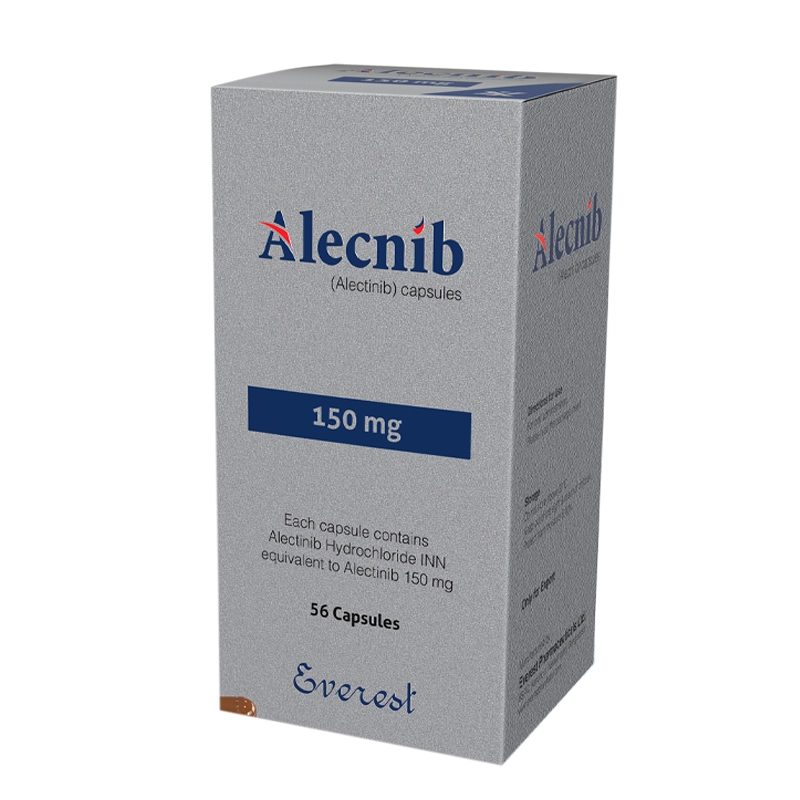
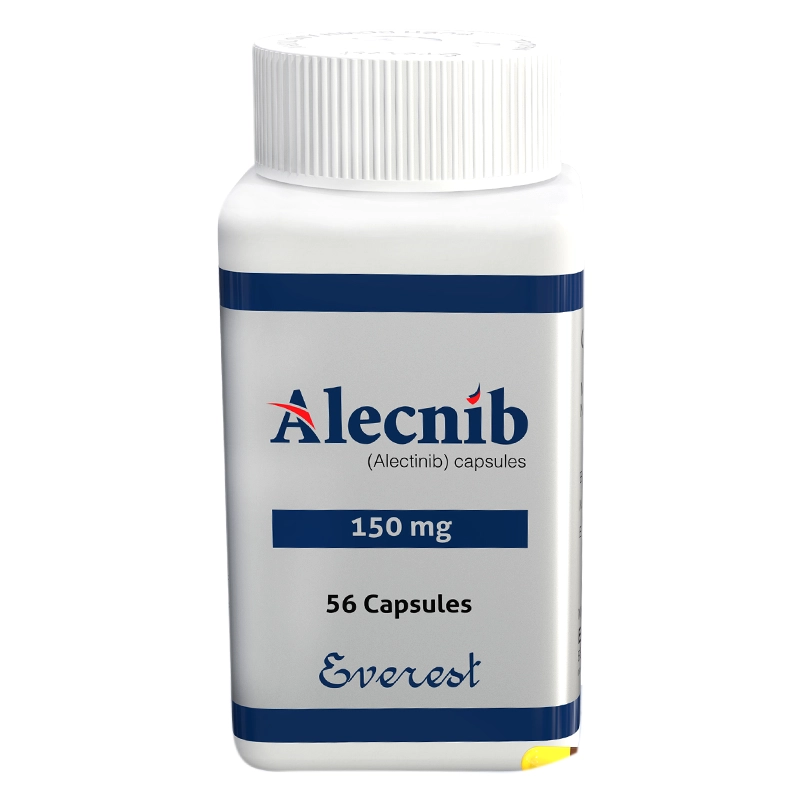
Alecnib 150mg (Alectinib): Alecensa Alternative, Uses & Safety
Request PriceResearching alectinib generic options, or looking for an Alecensa alternative? Alecnib is an oral capsule containing alectinib, the same active molecule sold under the brand name Alecensa. Everest Pharmaceuticals manufactures it in Bangladesh under WHO-GMP standards, in 150mg capsules.
Alectinib targets a gene fault called ALK, found in a specific subset of non-small cell lung cancer. Tumour cells carrying an ALK rearrangement depend on the resulting abnormal protein to keep growing. Alectinib blocks that protein directly, along with a related target called RET, leaving cells without the ALK abnormality largely untouched.
What distinguishes alectinib within its drug class is where it reaches. ALK-positive lung cancer has a strong tendency to spread to the brain, and alectinib crosses into the central nervous system far more effectively than crizotinib, the earlier drug in this category. The ALEX trial put a figure on this: over the study period, brain metastases developed in 9.4% of patients on alectinib compared with 41.4% on crizotinib. For many patients, that difference is the reason their oncologist selected this drug.
Alecnib is supplied for global access under Named Patient Program and personal-importation channels in regions where it is not locally registered.
Clinical Expert Insight
“Brain metastases are what ALK-positive lung cancer patients ask me about first, and they are right to. Alectinib was developed with that specific problem in mind. When I explain why I have chosen it over an older ALK inhibitor, the reason is usually about the brain rather than the lung.
The side effects follow their own pattern. Muscle pain and a blood marker called CPK rise in more than half of patients, so I test for it every two weeks in the first month whether or not anyone feels unwell. Liver enzymes need the same early attention, because most liver problems on this drug appear within the first three months. Two things patients rarely expect: the heart rate can slow, and skin burns in sunlight much faster than usual. I raise both before the first dose rather than after a patient has spent an afternoon outdoors.”
— Dr. Salma Mamdouh Elreedy, Clinical Oncologist, Sphinx Cure Oncology Center
Alecnib Uses and Clinical Safety Protocols
Precise Indications & Biomarkers
- First-line treatment: adults with ALK-positive advanced non-small cell lung cancer who have not previously received an ALK inhibitor.
- After crizotinib: adults with ALK-positive advanced NSCLC whose disease progressed on crizotinib, or who could not tolerate it.
- Adjuvant treatment: adults with resected ALK-positive NSCLC (tumors 4cm or larger, or node-positive), following surgery, to reduce the chance of recurrence.
- Biomarker requirement: ALK-positive status confirmed by an approved test is required in every indication. Alectinib is not prescribed on clinical suspicion alone, and a patient without a confirmed ALK rearrangement will not benefit from it.
Mechanism of Action, Pharmacokinetics & Administration
Alectinib inhibits ALK and RET tyrosine kinases, shutting down the downstream signaling (including the STAT3 and PI3K/AKT pathways) that ALK-rearranged tumor cells rely on. It remains active against several ALK mutations that cause resistance to crizotinib, which is why it continues to work after that earlier drug has failed.
- Absorption: oral, with peak plasma concentrations reached roughly 4 to 6 hours after a dose. Absorption improves substantially with food, which is why every dose is taken with a meal rather than on an empty stomach.
- Metabolism: processed in the liver by CYP3A4 into an active metabolite, M4, which carries similar potency to alectinib itself. This is why interactions with other CYP3A4-affecting drugs matter here, covered in the interaction table below.
- Half-life: approximately 33 hours for alectinib and 31 hours for M4, supporting twice-daily dosing.
- Elimination: almost entirely through the feces, with under 0.5% of a dose leaving through the urine. Kidney function therefore has little bearing on how the drug behaves, while liver function has a great deal.
- Administration: four 150mg capsules (600mg total) twice daily with food. Capsules are swallowed whole and must never be opened, crushed, or dissolved.
- Dose reduction: where the full dose is not tolerated, reductions proceed in 150mg steps per dose. Treatment stops permanently if a patient cannot tolerate 300mg twice daily.
Supply arithmetic worth noting. At 8 capsules a day, a 56-capsule pack covers 7 days. A month of treatment therefore requires roughly 4 packs. Patients and caregivers arranging supply should plan around that figure rather than assuming one pack represents a month.
Adverse Event (AE) Management Table
Alectinib’s side effect pattern differs from older lung cancer treatments, and several reactions below are ones a patient would not think to report unless told to expect them.
| Toxicity | Incidence | Threshold | Action |
|---|---|---|---|
| Hepatotoxicity | ~41% any grade, ~8% Grade 3+ | Grade 2 | Withhold; monitor LFTs closely |
| Grade 3–4 | Withhold, reduce, or discontinue by severity | ||
| CPK elevation | ~56% any grade, ~6% Grade 3+ | Grade 3+ | Withhold; resume at reduced dose on recovery |
| Myalgia | ~31% any grade | Symptomatic | Assess CPK; dose modification if severe |
| Bradycardia | Uncommon; monitored routinely | Symptomatic | Withhold, reduce dose, or discontinue if life-threatening or recurrent |
| Photosensitivity | ~4–5% | Any grade | Sun protection; dose modification rarely required |
| Interstitial lung disease / pneumonitis | Uncommon, serious | Any grade | Withhold immediately; discontinue permanently if confirmed |
| Hemolytic anemia | Uncommon | Suspected | Withhold; resume reduced or discontinue on confirmation |
| Renal impairment | ~1.7% Grade 3+ | Rising creatinine | Monitor renal function; adjust dose as needed |
Table-01: Adverse Event Management
Monitoring schedule. Liver function tests (ALT, AST, total bilirubin) every 2 weeks for the first 3 months, then monthly, with more frequent testing for anyone whose enzymes rise. CPK every 2 weeks during the first month, and at any point a patient reports unexplained muscle pain, tenderness, or weakness. Heart rate and blood pressure at routine visits. The concentration of monitoring in the early months is deliberate: most hepatotoxicity in trial data appeared within the first three months, and median time to significant CPK elevation was around 15 days.
Common reactions patients should expect and report: constipation (~39%), fatigue (~36%), edema (~29%), rash (~23%) and cough (~21%). None of these are typically dangerous, but a new or worsening cough deserves prompt mention, since it overlaps with the early symptoms of lung inflammation.
Clinical Efficacy: The ALEX and Related Benchmarks
- First-line NSCLC (ALEX, NCT02075840). Published in the New England Journal of Medicine in 2017, this global Phase III trial randomized 303 previously untreated patients with ALK-positive advanced NSCLC to alectinib 600mg twice daily or crizotinib 250mg twice daily. Independent review found median progression-free survival of 25.7 months with alectinib against 10.4 months with crizotinib (hazard ratio 0.50). Cumulative incidence of brain metastases over the study was 9.4% with alectinib against 41.4% with crizotinib, the finding that has shaped how this drug is positioned in practice.
- Mature ALEX follow-up. With longer follow-up published in Annals of Oncology (2020), investigator-assessed median progression-free survival reached 34.8 months for alectinib against 10.9 months for crizotinib (hazard ratio 0.43), with a 5-year overall survival rate of 62.5% against 45.5%.
- After crizotinib (NP28673). In patients whose disease had progressed on crizotinib, alectinib produced an objective response in 50% of evaluable patients, with a median response duration of 11.2 months. Most patients in this study had CNS metastases at baseline.
- Adjuvant setting (ALINA). Supported use following surgical resection in earlier-stage ALK-positive disease, extending alectinib’s role beyond metastatic treatment.
Alectinib’s evidence base is unusually consistent across trials: ALEX, J-ALEX and ALESIA each reached the same conclusion in different patient populations. The FDA approval history page lists the full set.
Drug Interaction Matrix
Because alectinib is metabolized by CYP3A4, interactions with drugs affecting this enzyme carry clinical weight. This is a meaningful difference from the checkpoint inhibitors elsewhere in our catalog, which have no CYP-mediated interactions at all.
| Interacting agent | Effect | Guidance |
|---|---|---|
| Strong CYP3A4 inhibitors (ketoconazole, clarithromycin, ritonavir) | May raise alectinib and M4 exposure | Avoid where an alternative exists; monitor closely if unavoidable |
| Strong CYP3A4 inducers (rifampin, carbamazepine, phenytoin, St John’s Wort) | May lower exposure and reduce efficacy | Avoid concurrent use |
| Grapefruit and grapefruit juice | Alters CYP3A4 activity unpredictably | Avoid throughout treatment |
| Heart-rate lowering agents (beta blockers, some calcium channel blockers) | Additive bradycardia risk | Use with caution; monitor heart rate |
Table-02: Drug Interaction Considerations
Patients should give their oncologist a full list of everything they take, including herbal preparations and over-the-counter products. St John’s Wort in particular is often omitted from medication lists because patients do not regard it as a drug.
Precautions & Special Populations
- Pregnancy. Alectinib can cause fetal harm based on animal studies and its mechanism of action. Pregnancy status should be confirmed before treatment begins. Patients of reproductive potential should use effective contraception during treatment and for 5 weeks after the final dose. Male patients with partners of reproductive potential should use effective contraception during treatment and for 3 months after the final dose.
- Lactation. Breastfeeding is not recommended during treatment or for 1 week after the final dose.
- Renal impairment. No dose adjustment for mild or moderate impairment. Because renal elimination is negligible, severe impairment is not expected to alter exposure meaningfully, though formal study data in this group is limited.
- Hepatic impairment. No dose adjustment for mild (Child-Pugh A) or moderate (Child-Pugh B) impairment. Severe impairment (Child-Pugh C) calls for a reduced dose of 450mg twice daily.
- Sun exposure. Skin burns more readily during treatment. High-SPF sunscreen and limited direct sun exposure are advised throughout, and for a period after the final dose.
- Storage. Standard room-temperature storage, away from direct sunlight and moisture. No cold-chain requirement, unlike the injectable immunotherapies in our catalog.
Certified Quality & International Distribution
Alecnib (Everest) and Alecensa (Originator) Compared
| Metric | Alecnib (Everest) | Alecensa (Originator) |
|---|---|---|
| Active substance | Alectinib | Alectinib |
| Regulatory status | WHO-GMP manufactured, Bangladesh | FDA-approved and EMA-approved originator |
| Presentation | 150mg capsule, pack of 56 | 150mg capsule |
Table-03: Product Comparison
Everest Pharmaceuticals Manufacturing
Everest Pharmaceuticals produces Alecnib in a WHO-GMP certified facility.
Global Access: Named Patient Program (NPP)
- Prescription. A valid prescription and treatment summary from the treating oncologist, together with documentation confirming ALK-positive status.
- Documentation. A Letter of Medical Necessity and patient identification.
- Import permit. Our team handles the personal-use import permit application with the relevant local drug authority.
- Logistics. Standard shipping applies. Alecnib is an oral capsule and carries no cold-chain requirement, unlike the injectable products in our catalog.
Frequently Asked Questions (FAQs)
Is there a generic or alternative to Alecensa?
Alectinib is the active ingredient in Alecensa, and Alecnib contains that same molecule, manufactured by Everest Pharmaceuticals under WHO-GMP standards. Whether it suits your situation depends on your regulatory environment and your oncologist’s assessment. That decision belongs with your treating physician, not with this page.
How long will I be on this treatment?
Unlike immunotherapies that often stop at a fixed point, ALK inhibitors are generally taken continuously for as long as they keep the disease under control and side effects remain manageable. Some patients remain on alectinib for years. In the adjuvant setting after surgery, treatment runs for a defined period instead. Your oncologist will set the plan for your case.
How does this compare with crizotinib, the older ALK drug?
Alectinib controls the disease for considerably longer and reaches the brain far more effectively. In the ALEX trial, median progression-free survival was 25.7 months against 10.4 months for crizotinib. It is now generally used first rather than after crizotinib.
Can I have grapefruit while taking this medication?
Do I need to avoid the sun during treatment?
Yes. Skin burns more easily on alectinib. Use high-SPF sunscreen, cover exposed skin, and limit time in direct sunlight throughout treatment and for a short period after the final dose.
Why do I need blood tests for muscle enzymes?
Alectinib raises a muscle enzyme called CPK in more than half of patients, sometimes with no symptoms at all. Testing every 2 weeks during the first month catches this early, while it can still be managed with a dose adjustment rather than stopping treatment.
Why is this drug used when there is a risk of the cancer spreading to the brain?
Alectinib penetrates the central nervous system far better than crizotinib, the older drug in this class. In the ALEX trial, brain metastases developed in 9.4% of patients on alectinib compared with 41.4% on crizotinib. That difference is often the deciding factor when an oncologist selects between the two.
How many packs will I need each month?
The standard dose is 8 capsules a day, so a 56-capsule pack lasts one week. A full month requires roughly 4 packs. Confirm your prescribed dose with your oncologist first, since patients on a reduced dose will need fewer.
What does Alecnib cost?
Pricing varies by region and by quantity. Send us your location on WhatsApp and we will provide a specific figure rather than a range that may not apply to you.
Is Alecnib the same as Alecensa?
Same active ingredient and same mechanism. The differences lie in the manufacturer and in where each product holds regulatory registration.
Related products

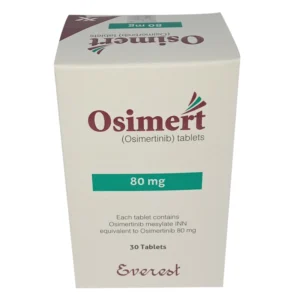
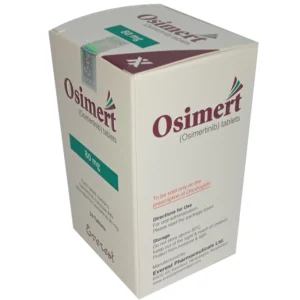
Osimert 80 mg (Osimertinib) | Tagrisso Alternative
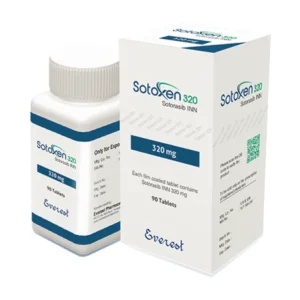
Request PriceSotoxen 120 mg (Sotorasib) 56 Tablets | Price, Uses, Patient Safety, & Access Guide
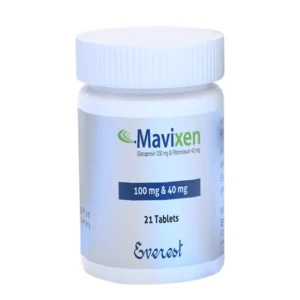
Request PriceMavixen (Glecaprevir + Pibrentasvir) 100 mg + 40 mg | Hepatitis C virus Therapy
Request PriceSelcaxen 40 mg Capsule (Selpercatinib): Price & Global Access Guide
Request Price