Prescription required. We facilitate access to medicines already prescribed by your treating physician. We do not provide medical advice or diagnoses.


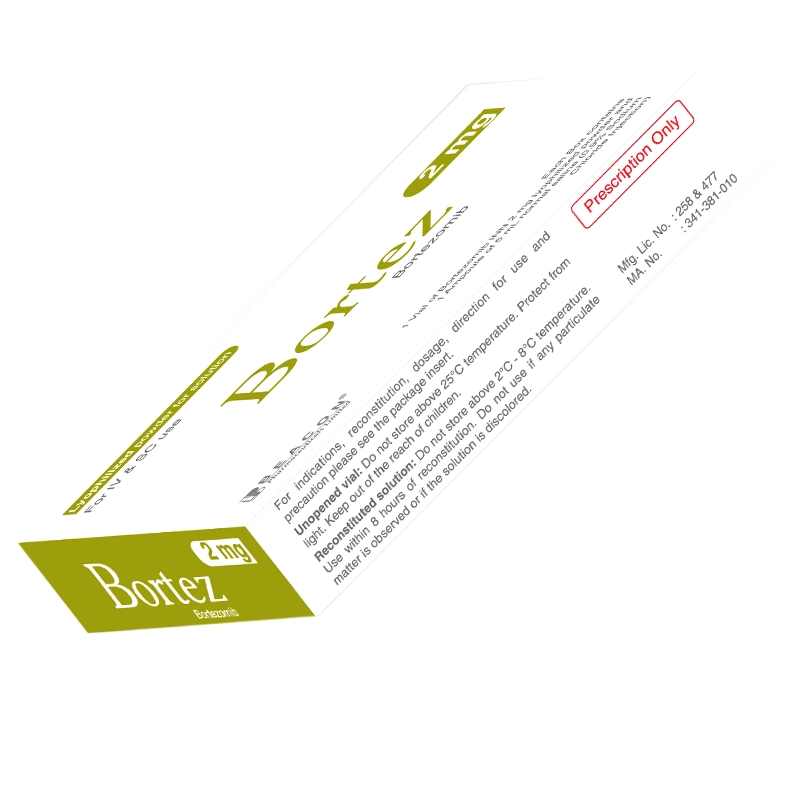
Bortez 1 mg & 2 mg (Bortezomib): A Velcade Alternative
- Used for: Bortez is a generic version of bortezomib, made by Beacon Pharmaceuticals in Bangladesh. It is given as an injection, either under the skin or into a vein, at a clinic or hospital, not at home.
- Availability: In Stock
- Shipping: Express Global Shipping (7-14 days depending on region).
- Requirement: Valid prescription from a licensed healthcare provider required.
✓ WHO GMP Certified
✓ Reviewed By Medical Expert
✓ Batch Examined in Lab
Need Patient Access Support?
Our team provides verified global sourcing assistance to help you navigate international shipping and prescription requirements safely.
Bortez is a generic version of bortezomib, made by Beacon Pharmaceuticals in Bangladesh. It is given as an injection, either under the skin or into a vein, at a clinic or hospital, not at home. It treats multiple myeloma and mantle cell lymphoma, usually as part of a combination with other drugs. As a Velcade alternative supplied through the Named Patient Program, it is available to patients outside Bangladesh who hold a valid prescription. This page explains how it is given, what the route of administration changes about side effects, and what to watch for.
⚠️ CRITICAL SAFETY WARNING: NEVER GIVEN INTO THE SPINE
Bortezomib must only be given into a vein (intravenous) or under the skin (subcutaneous). It is contraindicated for intrathecal administration, meaning it must never be injected into the spinal fluid. Fatal events have occurred when this drug was accidentally given intrathecally. This is a known, documented medication error, not a theoretical risk.
This is not an FDA boxed warning (bortezomib does not carry one), but it is treated with equivalent seriousness in the prescribing information and deserves the same attention from anyone administering it. If you are a patient, this is simply something to be aware of; the responsibility for correct administration route sits with your treating clinical team.
Route Matters: Subcutaneous or Intravenous
Bortezomib can be given two ways, and the choice is not just a matter of convenience. A dedicated Phase 3 trial compared the two routes directly in 222 patients with relapsed myeloma, and the difference in nerve side effects was substantial.
| Subcutaneous | Intravenous | |
|---|---|---|
| Peripheral neuropathy, any grade | 37% | 50% |
| Peripheral neuropathy, Grade 2 or higher | 24% | 39% |
| Peripheral neuropathy, Grade 3 or higher | 6% | 15% |
| Efficacy | Equivalent between routes | Equivalent between routes |
Efficacy was equivalent between the two routes. Nerve damage was not. This is why the label specifically notes that starting with the subcutaneous route may be considered for patients who already have peripheral neuropathy or are at higher risk of it. If your prescription doesn’t specify a route, this is worth raising with your oncologist.
Subcutaneous injection does carry its own minor trade-off: about 6% of patients get a local skin reaction at the injection site, almost always mild redness that resolves within about a week. If a reaction happens, the clinic can switch to a less concentrated solution or move to the intravenous route instead.
What Is Bortez (Bortezomib)?
Bortez contains bortezomib, the same active ingredient as the originator product Velcade, supplied as a powder that a clinician reconstitutes into solution immediately before injecting it. It is manufactured by Beacon Pharmaceuticals in Bangladesh under WHO-GMP quality standards and supplied internationally under Named Patient Program (NPP) frameworks.
Bortezomib was first approved by the U.S. FDA in 2003, the first proteasome inhibitor ever approved. That approval history belongs to the originator molecule and to branded products such as Velcade. Bortez itself is not an FDA-approved product; it is a generic manufactured to WHO-GMP standards and made available through the Named Patient route to patients in countries where it is not locally registered.
Available Vial Sizes: What’s on the Market in Bangladesh
Bortezomib vials come in different sizes from different manufacturers, and this matters for how the dose is prepared, not for what dose you receive. Your oncologist prescribes a dose in mg per square metre of body surface area (mg/m²), and the pharmacy calculates the correct volume from whichever vial size is on hand.
| Vial size | Manufacturer | Notes |
|---|---|---|
| 1 mg | Beacon (Bortez) | Smaller vial, more of them needed per dose |
| 2 mg | Beacon (Bortez) | |
| 2 mg | Healthcare Pharmaceuticals (Bortemo) | |
| 3.5 mg | Imported, manufactured by Ever Pharma, Germany | The internationally standard vial size |
| 1 mg | Imported originator Velcade, manufactured by Janssen, Belgium |
The international reference vial (and the one most published dosing literature assumes) is 3.5 mg. Beacon’s 1 mg and 2 mg vials are equally valid, just smaller, and your pharmacy will use more of them to reach the same total dose. This does not change your dose or your outcome; it changes how many vials get opened.
How Bortezomib Works
Cells constantly break down proteins they no longer need using a structure called the proteasome, a kind of cellular recycling centre. Cancer cells, myeloma cells especially, depend heavily on this process to clear out abnormal proteins and keep growing.
Bortezomib blocks the proteasome. Unwanted proteins build up inside the cancer cell faster than it can survive, and the cell dies. Myeloma cells are particularly vulnerable to this because they already produce large quantities of protein (antibodies) as part of their basic biology, which makes them more dependent on proteasome function than most healthy cells.
Bortezomib is usually given alongside other myeloma drugs, most often dexamethasone, and frequently a third agent such as lenalidomide or, in newly diagnosed patients, melphalan.
Bortezomib Uses: What Bortez Treats
Bortezomib is FDA approved for two conditions.
Multiple myeloma, in adults, both as initial treatment (usually in combination) and for relapsed disease.
Mantle cell lymphoma, in adults, both as initial treatment (in combination with rituximab, cyclophosphamide, doxorubicin and prednisone) and for relapsed disease. <details> <summary><strong>Clinical trial data (for readers who want the numbers)</strong></summary>
Figures below come from the current FDA prescribing information.
Newly diagnosed multiple myeloma. A randomised study of 682 patients compared bortezomib plus melphalan and prednisone against melphalan and prednisone alone, over nine six-week cycles.
Relapsed multiple myeloma. A randomised study of 669 patients compared bortezomib against high-dose dexamethasone. Among patients aged 65 and older, median time to progression was 5.5 months on bortezomib versus 4.3 months on dexamethasone, and median duration of response was 8.0 months versus 4.9 months.
Subcutaneous versus intravenous. The 222-patient route-comparison trial described above; see the Route Matters section for the neuropathy data.
Newly diagnosed mantle cell lymphoma. A randomised study of 487 patients compared bortezomib plus rituximab, cyclophosphamide, doxorubicin and prednisone (VcR-CAP) against the standard R-CHOP regimen without bortezomib, over six three-week cycles.
These are originator-drug trials. Beacon has not published independent bioequivalence data for Bortez that we have been able to verify. As a generic containing the same active ingredient, manufactured to WHO-GMP standards, it is expected to perform comparably. We make no bioequivalence claim. </details>
Bortezomib Dosage and Administration
The standard dose is 1.3 mg/m² of body surface area, calculated individually for each patient and given as either a 3 to 5 second injection into a vein or an injection under the skin.
Dosing schedules differ by setting:
Newly diagnosed multiple myeloma (with melphalan and prednisone): nine six-week cycles. In cycles 1 to 4, bortezomib is given twice weekly (Days 1, 4, 8, 11). In cycles 5 to 9, once weekly (Days 1, 8, 22, 29).
Relapsed multiple myeloma or relapsed mantle cell lymphoma (as a single agent or with dexamethasone): twice weekly for two weeks (Days 1, 4, 8, 11), followed by a 10-day rest period. This 21-day cycle can continue for up to eight cycles. Beyond that, dosing may switch to once weekly for four weeks (Days 1, 8, 15, 22) followed by a 13-day rest, or continue on the original schedule.
Newly diagnosed mantle cell lymphoma (with rituximab, cyclophosphamide, doxorubicin and prednisone): six three-week cycles. Bortezomib is given twice weekly for two weeks (Days 1, 4, 8, 11), followed by a 10-day rest. Two additional cycles are recommended if response is first seen at cycle 6.
At least 72 hours must pass between consecutive doses. This spacing is not flexible and is built into every schedule above.
Retreatment. If myeloma responded to bortezomib before and has relapsed at least six months after finishing that treatment, your oncologist may restart it at the last dose you tolerated.
Where and How It’s Given
This is not a medicine you take home. It is prepared and administered by trained clinical staff, typically in an outpatient infusion or injection setting.
The powder is dissolved immediately before use, using only 0.9% sodium chloride (normal saline) as the diluent, to a concentration of 1 mg/mL for intravenous use or 2.5 mg/mL for subcutaneous use. Because Bortez comes in smaller vials than the international standard, your pharmacy’s exact reconstitution volumes will differ from generic reference charts; they calculate this correctly based on the actual vial size dispensed.
Once reconstituted, the solution must be used within 8 hours, whether it is kept in the vial or drawn into a syringe. For subcutaneous injections, the site (usually the thigh or abdomen) is rotated each time, with each new injection given at least an inch from the last, avoiding any area that is tender, bruised, red, or hardened.
Dose Adjustment for Peripheral Neuropathy
Bortezomib’s most common dose-limiting side effect is nerve damage, and the label provides a specific, graded response to it rather than an all-or-nothing decision:
| Symptoms | What happens |
|---|---|
| Mild numbness or tingling, no pain, no impact on daily activities | No change |
| Mild symptoms with pain, or moderate symptoms limiting complex daily tasks (shopping, managing money, using the phone) | Dose reduced to 1 mg/m² |
| Moderate symptoms with pain, or severe symptoms limiting basic self-care (bathing, dressing, eating) | Treatment paused until it improves, then restarted at 0.7 mg/m², once weekly |
| Severe, disabling symptoms requiring urgent care | Bortezomib is stopped permanently |
This is one of the more reassuring parts of bortezomib’s safety profile: in trials, close to half of patients with significant nerve symptoms saw improvement or full resolution after a dose adjustment, and the rate rose further among those who stopped treatment because of it. Nerve symptoms are usually not permanent, though recovery can take months.
Dosage in Liver Impairment
| Liver function | Dose adjustment |
|---|---|
| Mild impairment | None needed |
| Moderate impairment (bilirubin 1.5 to 3 times the upper limit of normal) | Start at 0.7 mg/m² in the first cycle; may be adjusted up to 1 mg/m² or down to 0.5 mg/m² based on how it’s tolerated |
| Severe impairment (bilirubin above 3 times the upper limit of normal) | Same reduced starting approach as moderate impairment |
Monitoring During Treatment
Blood counts. Platelets and neutrophils are checked before every single dose, not just periodically. Bortezomib causes a predictable, cyclical drop in both: they fall during the dosing days of each cycle and recover during the rest period before the next cycle starts. This pattern is expected and, on its own, is not a sign that something has gone wrong. Your dose may still be adjusted if counts fall too low on a scheduled dosing day.
Blood pressure. Checked regularly, since bortezomib can cause low blood pressure, particularly on standing.
Heart and lung symptoms. New or worsening shortness of breath, chest pain, or swelling should be reported promptly; bortezomib has been linked to both heart failure and, less commonly, serious lung problems.
Herpes zoster (shingles) prevention. Bortezomib increases the risk of shingles reactivation. In one trial, using preventive antiviral medication cut the rate from 17% down to 3%. Antiviral prophylaxis is commonly prescribed alongside bortezomib for exactly this reason; ask your oncologist if you haven’t been started on one.
Warnings and Precautions
Beyond the intrathecal warning above, the label describes the following.
Low blood pressure. Reported in 8% of patients, mostly mild, occurring throughout treatment rather than just after dosing. Patients with a history of fainting, those on blood pressure medication, and those who are dehydrated are at higher risk.
Heart problems. New or worsening heart failure, and new drops in heart pumping efficiency, have occurred, including in patients with no prior heart risk factors. Patients with existing heart disease or risk factors need closer monitoring. Isolated cases of a heart rhythm abnormality called QT prolongation have been reported in trials, though a direct causal link has not been established.
Lung problems. Serious, sometimes fatal, lung conditions including acute respiratory distress syndrome and inflammatory lung disease have occurred. New or worsening breathing symptoms warrant prompt evaluation, and treatment may need to be paused while this is investigated.
Posterior reversible encephalopathy syndrome (PRES). A rare, usually reversible brain condition that can cause seizures, severe headache, confusion, high blood pressure, or vision loss. If suspected, treatment is stopped and brain imaging (preferably MRI) is used to confirm the diagnosis.
Digestive symptoms. Nausea, diarrhoea, constipation and vomiting are common enough to sometimes need their own medication or fluid support. A bowel blockage (ileus) can occur. Report severe or persistent symptoms rather than trying to manage them alone.
Low platelets and low white blood cells. As described in Monitoring above, this follows a predictable cycle. Bleeding, including in the digestive tract and rarely the brain, has occurred during periods of low platelets. Platelet transfusion and supportive care are used when needed.
Tumour lysis syndrome. Can occur in patients who start treatment with a large amount of cancer in their body. Closely monitored in this group.
Liver problems. Cases of acute liver failure have been reported, generally in patients on multiple other medications or with other serious underlying conditions. Liver enzymes are monitored, and treatment may be paused to assess whether they recover.
Thrombotic microangiopathy. A rare, sometimes fatal, blood vessel disorder (including TTP/HUS) has been reported after bortezomib reached the market. If suspected, treatment is stopped immediately for evaluation.
Harm to an unborn child. Bortezomib can cause fetal harm. Women who could become pregnant should use effective contraception during treatment and for 7 months after the last dose. Men with partners who could become pregnant should use effective contraception during treatment and for 4 months after the last dose. These windows are longer than lenalidomide’s, so if you are on a bortezomib and lenalidomide combination (such as VRd), follow whichever requirement runs longest, and confirm the details with your oncologist rather than assuming.
Breastfeeding. Not recommended during treatment or for 2 months after the last dose.
Bortezomib Side Effects
Very common (20% or more, across combined studies): nausea, diarrhoea, fatigue and weakness, peripheral neuropathy, low platelets, vomiting, constipation, and fever.
Worth understanding specifically:
- Nerve symptoms affect around 38% of patients overall, more often with intravenous dosing than subcutaneous (see Route Matters above). Report burning, numbness, tingling, or pain in the hands or feet promptly. It’s manageable, and dose adjustment often helps.
- Low platelets and low white cells follow the cyclical pattern described above and are expected, though your care team still tracks them closely.
- Shingles risk is elevated; antiviral prevention is often prescribed alongside treatment.
This is not a complete list. Report new or worsening symptoms to your treating physician rather than adjusting anything yourself, since this medicine is administered by a clinical team in any case.
Drug Interactions
Strong CYP3A4 inducers (such as certain anticonvulsants and rifampin) reduce how much bortezomib reaches the bloodstream, which could reduce how well it works. These are generally avoided during treatment.
Strong CYP3A4 inhibitors (such as certain antifungals) increase bortezomib levels and the risk of side effects. If one must be used alongside bortezomib, your care team will monitor you more closely and may reduce the dose.
No significant interaction has been found with dexamethasone, omeprazole, or the combination of melphalan and prednisone, which is reassuring given how often bortezomib is paired with these.
Tell your oncologist about every medicine, vitamin and supplement you take, including anything prescribed by a different doctor.
Storage and Handling
Unopened vials: Do not store above 25°C Temperature. Protect from light. Keep out of reach of children.
Reconstituted Solution: Do not store above 2℃-8℃ Temperature. Use within 8 hours of reconstitution. Do not use if any particulate matter is observed or if the solution is discolored.
Unopened vials are generally stored protected from light at controlled room temperature until the date on the packaging.
Once reconstituted, the solution must be used within 8 hours and is not for storage beyond that window, in the vial or in a syringe. Bortezomib is classified as a hazardous drug and is handled and disposed of by clinical staff according to their facility’s hazardous drug procedures. As a patient, this isn’t something you need to manage yourself; it’s mentioned here so the handling precautions you may notice at your clinic make sense.
Bortez vs Velcade: How This Generic Velcade Alternative Compares
| Bortez (supplied here) | Velcade (originator) | |
|---|---|---|
| Active ingredient | Bortezomib | Bortezomib |
| Vial sizes | 1 mg, 2 mg | 3.5 mg (standard) |
| Manufacturer | Beacon Pharmaceuticals, Bangladesh | Takeda / Janssen |
| Regulatory position | Manufactured to WHO-GMP standards; supplied under Named Patient Program | FDA and EMA approved |
| Route | Subcutaneous or intravenous | Subcutaneous or intravenous |
| Administration setting | Clinic or hospital only | Clinic or hospital only |
Provided for orientation only. This is not a claim of bioequivalence, and Bortez is not represented as an FDA-approved product.
Frequently Asked Questions
Is subcutaneous or intravenous bortezomib better?
Both work equally well. Subcutaneous injection carries meaningfully less risk of nerve damage (peripheral neuropathy) than intravenous, based on a dedicated head-to-head trial, at the cost of a small chance of a mild skin reaction at the injection site. If you have existing nerve symptoms or risk factors for them, ask your oncologist whether subcutaneous is right for you.
Can I take this medicine at home?
No. Bortezomib is prepared and injected by trained clinical staff at a clinic or hospital, not self-administered.
Why does my dosing schedule have a rest period?
Bortezomib causes platelets and white blood cells to dip predictably during the dosing days of each cycle. The rest period lets them recover before the next cycle starts. This cyclical pattern is expected and is closely tracked with blood tests before every dose.
I have some numbness in my feet already. Is bortezomib still an option?
Possibly, but it needs careful discussion with your oncologist. The label specifically notes that starting with the subcutaneous route may be considered for patients with pre-existing nerve symptoms, and that anyone with pre-existing severe neuropathy needs a careful risk-versus-benefit conversation before starting.
Does the vial size (1 mg vs 2 mg vs 3.5 mg) change my dose?
No. Your dose is calculated in mg per square metre of your body surface area, and your pharmacy uses whatever vial size is on hand to prepare the correct total amount. Smaller vials just mean more of them are used per dose.