Prescription required. We facilitate access to medicines already prescribed by your treating physician. We do not provide medical advice or diagnoses.


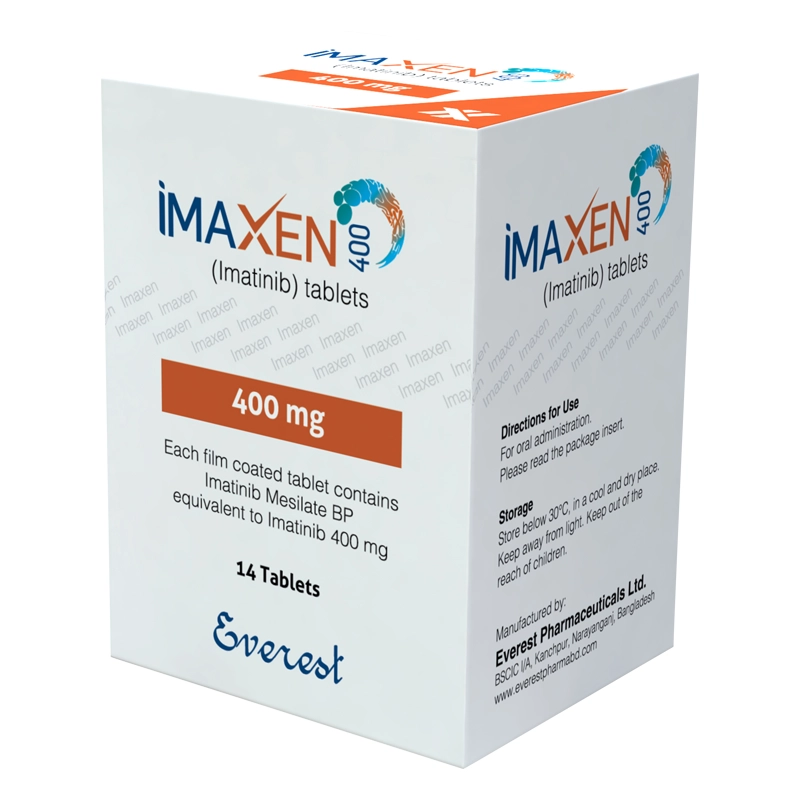
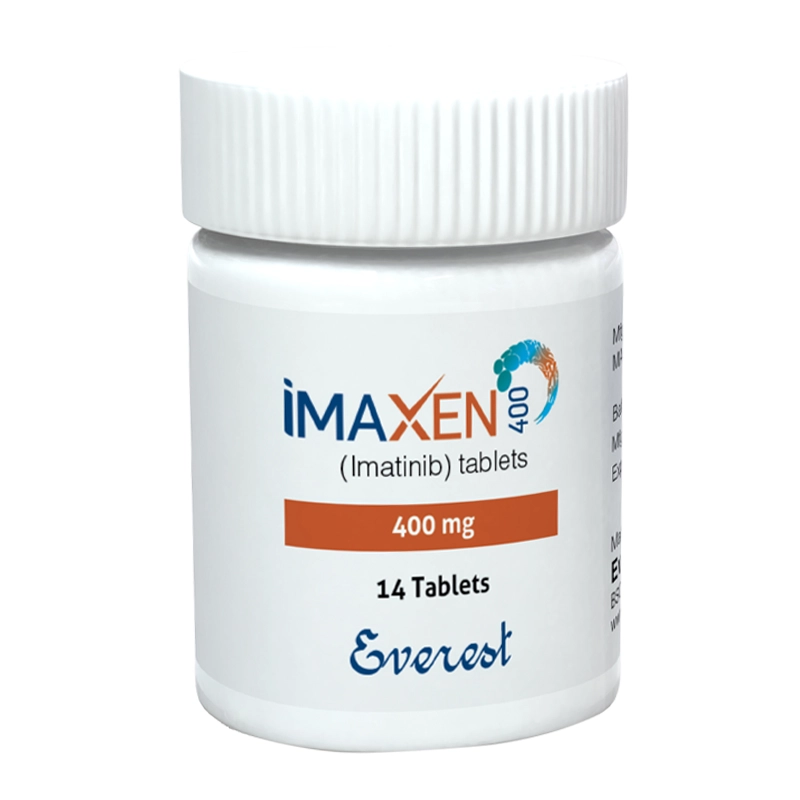
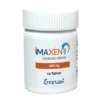
Imaxen 400mg (Imatinib) for Chronic Myeloid Leukemia
- Used for: Approved for newly diagnosed adults and children with Philadelphia chromosome positive (Ph+) CML in chronic phase, the earliest and most treatable stage.
- Availability: In Stock
- Shipping: Express Global Shipping (7-14 days depending on region).
- Requirement: Valid prescription from a licensed healthcare provider required.
✓ WHO GMP Certified
✓ Reviewed By Medical Expert
✓ Batch Examined in Lab
Need Patient Access Support?
Our team provides verified global sourcing assistance to help you navigate international shipping and prescription requirements safely.
Imaxen is a generic version of imatinib, made by Everest Pharmaceuticals in Bangladesh. It is a tablet taken once daily with food, and it was the drug that transformed chronic myeloid leukemia from a disease with a limited life expectancy into one most patients now live with long-term. As a Gleevec alternative supplied through the Named Patient Program, it is available to patients outside Bangladesh who hold a valid prescription. This page focuses on its use in CML, the indication most relevant to this category, while covering its other real approved uses accurately.
What Is Imaxen (Imatinib)?
Imaxen contains imatinib, the same active ingredient as the originator product Gleevec. It is manufactured by Everest Pharmaceuticals in Bangladesh under WHO-GMP quality standards and supplied internationally under Named Patient Program (NPP) frameworks.
Imatinib was first approved by the U.S. FDA in 2001. It was the first drug of its kind, a targeted therapy built specifically against the genetic abnormality driving a cancer, and its approval is widely regarded as the moment that proved the concept for an entire generation of cancer treatment that followed. That approval history belongs to the originator molecule and to branded products such as Gleevec. Imaxen itself is not an FDA-approved product; it is a generic manufactured to WHO-GMP standards and made available through the Named Patient route to patients in countries where it is not locally registered.
How Imatinib Works
Chronic myeloid leukemia is caused by a specific genetic error: two chromosomes swap material and create an abnormal fused gene called BCR-ABL. This gene produces a protein that is permanently switched on, constantly telling white blood cells to divide, which is what drives the leukemia.
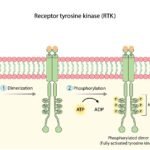
Imatinib blocks that protein directly, fitting into the site where it would normally bind energy to do its job and shutting it off. Because BCR-ABL is specific to the leukemia cells and largely absent from normal cells, this approach hits the cancer with relatively less collateral damage than older chemotherapy, which is part of why imatinib was such a significant advance when it was approved.
Imatinib also blocks two related receptors, KIT and PDGFR, which is why it also works in tumors driven by those instead of BCR-ABL, most notably gastrointestinal stromal tumors.
Imatinib Uses: What Imaxen Treats
Imatinib has ten FDA-approved indications. This page focuses on chronic myeloid leukemia, the reason this category exists, while covering the others accurately.
Chronic myeloid leukemia (CML). Approved for newly diagnosed adults and children with Philadelphia chromosome positive (Ph+) CML in chronic phase, the earliest and most treatable stage. Also approved for CML in accelerated phase or blast crisis, and for chronic phase CML after interferon-alpha treatment has failed.
Philadelphia chromosome positive acute lymphoblastic leukemia (Ph+ ALL). Approved for adults with relapsed or refractory disease, and for children with newly diagnosed disease when combined with chemotherapy.
Gastrointestinal stromal tumors (GIST). Approved for KIT-positive unresectable or metastatic GIST, and separately as adjuvant treatment (given after surgery to reduce recurrence risk) for KIT-positive GIST that has been completely removed.
Several rarer blood and skin conditions. Imatinib is also approved for specific subtypes of myelodysplastic/myeloproliferative disease, aggressive systemic mastocytosis, hypereosinophilic syndrome and chronic eosinophilic leukemia associated with a particular gene fusion, and dermatofibrosarcoma protuberans, a rare skin tumor. These are genuine, distinct FDA approvals, each with its own dosing detail in the full prescribing information; they are outside the focus of this page but real if any of them apply to you. <details> <summary><strong>Clinical trial data for CML (for readers who want the numbers)</strong></summary>
The IRIS trial, published in the New England Journal of Medicine in 2003, randomised 1,106 newly diagnosed chronic phase CML patients to imatinib or the previous standard of care, interferon-alfa plus cytarabine. At 18 months, the complete cytogenetic response rate (undetectable leukemia cells by chromosome testing) was 76.2% with imatinib versus 14.5% with interferon plus cytarabine, and freedom from progression to accelerated phase or blast crisis was 96.7% versus 91.5%. This is the trial that established imatinib as first-line CML therapy and remains one of the most cited results in modern oncology.
Longer-term follow-up of the same patient group, published across several later analyses, reported cumulative best complete cytogenetic response rates in the 82 to 87% range through 5 to 6 years, with an estimated 8-year event-free survival of 81% and 8-year overall survival of 85% (93% when only CML-related deaths were counted). We’re citing these later figures from published follow-up analyses rather than a single trial paper we’ve read in full, so treat them as a well-supported long-term picture rather than a single precise data point the way the 18-month IRIS result is.
These are originator-drug trial results. Everest has not published independent bioequivalence data for Imaxen that we have been able to verify. As a generic containing the same active ingredient at the same strength, manufactured to WHO-GMP standards, it is expected to perform comparably. We make no bioequivalence claim. </details>
Imatinib Dosage and Administration
Take Imaxen with food and a large glass of water. This is different from several other targeted cancer medicines on this site that require an empty stomach, so don’t assume the same rule carries over if you’re also taking another oncology drug.
| Setting | Standard dose |
|---|---|
| Adult CML, chronic phase | 400 mg once daily |
| Adult CML, accelerated phase or blast crisis | 600 mg once daily |
| Adult Ph+ ALL | 600 mg once daily |
| Adult GIST (unresectable, metastatic, or adjuvant) | 400 mg once daily |
| Children, newly diagnosed CML | 340 mg/m² per day (not exceeding 600 mg) |
Doses of 400 mg or 600 mg are taken once daily. If your dose is 800 mg, it’s split into two 400 mg doses taken about 12 hours apart, not taken all at once.
In CML, a dose increase (400 mg to 600 mg in chronic phase, or 600 mg to 800 mg in accelerated phase or blast crisis) may be considered if your disease isn’t responding adequately after a few months, provided you’re not already having significant side effects. This is a decision your oncologist makes based on your specific response, not something to request or adjust yourself.
If you have difficulty swallowing tablets, they can be dispersed in a small glass of water or apple juice and taken as soon as they’ve fully dissolved.
Dosing in Kidney or Liver Impairment
| Organ function | Adjustment |
|---|---|
| Mild or moderate liver impairment | None needed |
| Severe liver impairment | Reduce dose by 25% |
| Mild kidney impairment (CrCl 40-59) | Doses above 600 mg not recommended |
| Moderate kidney impairment (CrCl 20-39) | Reduce starting dose by 50%; may increase later if tolerated |
| Severe kidney impairment | Use with caution; very limited data support doses as low as 100 mg/day |
Dose Adjustment for Low Blood Counts
If neutrophils or platelets fall too low, treatment is paused and restarted at the same or a reduced dose once counts recover, following a structured schedule that varies by which indication and starting dose you’re on. Your oncologist manages this directly.
Warnings and Precautions
Imatinib does not carry an FDA boxed warning, and it has no listed contraindications.
Fluid retention and swelling. This is the single most common issue with imatinib and deserves to be understood upfront, not discovered as a surprise. In the trial that established imatinib for newly diagnosed CML, some degree of fluid retention occurred in 61.7% of patients, most often as mild swelling around the eyes or in the lower legs. Severe fluid retention, including fluid around the lungs or heart, or in the abdomen, is less common but can be serious, and is more likely at higher doses and in older patients. You’ll be weighed regularly, and unexpected rapid weight gain is investigated and managed, often with a diuretic or a temporary dose adjustment.
Low blood counts. Anemia, low white cells, and low platelets are common, more so in accelerated phase or blast crisis than in chronic phase CML. Blood counts are checked weekly for the first month, every two weeks for the second month, and periodically after that.
Heart failure. Uncommon but reported, more often in patients with existing heart disease, other health conditions, or older age. Report new shortness of breath, swelling, or unusual fatigue.
Liver injury. Can occasionally be severe, including rare fatal cases. Liver function is checked before starting and monthly afterward, or more often if clinically indicated.
Bleeding. More common in accelerated phase, blast crisis, and GIST, where tumor sites themselves can be a source of gastrointestinal bleeding.
Digestive tract irritation and, rarely, perforation. Taking the tablet with food and water helps reduce irritation. Perforation is rare but has been fatal in some reported cases.
A specific cardiac risk for certain rarer indications. In hypereosinophilic syndrome and related conditions with very high eosinophil counts, starting imatinib has occasionally triggered a sudden drop in heart function related to the disease itself, not a direct drug side effect. If this applies to your diagnosis, your oncologist may check heart function beforehand and consider a short course of steroids when starting.
Serious skin reactions. Rare blistering skin reactions, including erythema multiforme and Stevens-Johnson syndrome, have been reported.
Thyroid changes after thyroid removal. If you’ve had your thyroid removed and are on thyroid hormone replacement, imatinib can interfere with that replacement. Thyroid levels are monitored more closely in this situation.
Harm to an unborn child, with a short precaution window. Imatinib can cause fetal harm. Effective contraception is advised during treatment and for 14 days after stopping. That is shorter than several other oncology medicines on this site, so don’t assume a longer precaution period carries over from another drug.
Growth in children. Slower growth has been reported in children and pre-adolescents on long-term imatinib. Growth is monitored during treatment if this applies to your child.
Tumor lysis syndrome. Can occur in patients with a high burden of disease before starting, particularly in CML, GIST, ALL, and eosinophilic leukemia. Correcting dehydration and high uric acid before the first dose reduces this risk.
Driving and operating machinery. Dizziness, blurred vision, or drowsiness have been reported, and some patients have had traffic accidents while on imatinib. Use caution until you know how the medicine affects you.
Kidney function decline over time. A gradual decline in kidney function has been observed with long-term use. Kidney function is checked before starting and monitored during treatment, particularly if you have other risk factors such as diabetes, high blood pressure, or existing kidney or heart disease.
Imatinib Side Effects
Common in newly diagnosed CML (10% or more): fluid retention and swelling, nausea, muscle cramps, musculoskeletal pain, diarrhea, rash, fatigue, headache, joint pain, abdominal pain, upper respiratory infections, mild bleeding, muscle aches, vomiting, indigestion, cough, throat pain, dizziness, fever, weight gain, and trouble sleeping.
This is not a complete list, and side effect patterns differ somewhat by indication and disease phase. Report new or worsening symptoms to your treating physician rather than adjusting your dose yourself.
Drug Interactions
Avoid strong CYP3A4 inducers (dexamethasone, phenytoin, carbamazepine, rifampin, rifabutin, phenobarbital), which can significantly reduce imatinib levels and its effectiveness. If one can’t be avoided, your oncologist may increase your imatinib dose by at least 50% and monitor your response closely.
Strong CYP3A4 inhibitors can increase imatinib levels, raising the risk of side effects.
If you take warfarin, expect to switch to a different blood thinner. Imatinib inhibits the same liver enzymes that metabolize warfarin, making its effect unpredictable. The recommendation is to use low-molecular-weight or standard heparin instead of warfarin while you’re on imatinib.
Imatinib can raise levels of other medicines processed by the same liver pathways it blocks (CYP3A4 and CYP2D6), which may include some heart, pain, or psychiatric medications. Give your oncologist and pharmacist your complete medication list.
High-dose methotrexate may be cleared more slowly when combined with imatinib.
Storage
Store below 30℃ in a cool and dry place. Keep out of the reach of children.
Imaxen vs Gleevec: How This Generic Gleevec Alternative Compares
| Imaxen (supplied here) | Gleevec (originator) | |
|---|---|---|
| Active ingredient | Imatinib mesylate | Imatinib mesylate |
| Strengths | 100 mg, 400 mg | 100 mg, 400 mg |
| Manufacturer | Everest Pharmaceuticals, Bangladesh | Novartis |
| Regulatory position | Manufactured to WHO-GMP standards; supplied under Named Patient Program | FDA and EMA approved |
| Typical access route | International patients, via prescription upload and NPP import | Pharmacy dispensing where registered |
Provided for orientation only. This is not a claim of bioequivalence, and Imaxen is not represented as an FDA-approved product.
Frequently Asked Questions
Why do I need to take Imaxen with food?
It reduces stomach irritation. This is the opposite of some other targeted cancer medicines, which require an empty stomach, so always check the specific instructions for whichever medicine you’re taking rather than assuming they’re all the same.
Is the swelling I’m noticing normal?
Mild swelling, especially around the eyes or in the lower legs, is extremely common with imatinib, affecting well over half of patients in clinical trials. It’s usually manageable. Tell your oncologist about it regardless, and seek prompt attention for sudden or severe swelling, breathlessness, or rapid weight gain.
Can I keep taking warfarin?
Generally, no. Imatinib’s effect on warfarin’s metabolism is unpredictable enough that switching to heparin or a low-molecular-weight heparin is the standard recommendation. Discuss this with your prescriber if you’re currently on warfarin.
How long after stopping do I need contraception?
Fourteen days, shorter than some other cancer medicines. If you’re moving between different targeted therapies, don’t assume the precaution period is the same for each one.
Does Imaxen treat anything besides CML?
Yes. It’s also approved for a type of acute lymphoblastic leukemia, gastrointestinal stromal tumors, and several rarer blood and skin conditions. This page focuses on CML, but ask your oncologist if you have one of these other diagnoses.
Related products

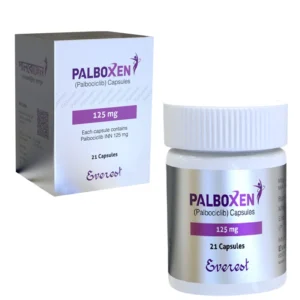
Palboxen 125 mg (Palbociclib) 21 Capsule: How to Order & Safety Guide
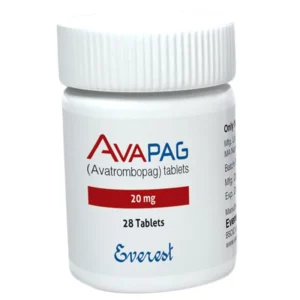
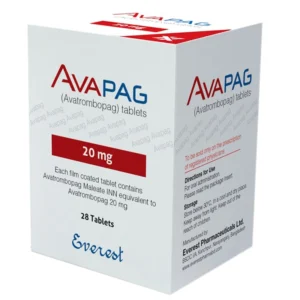
Request PriceAvapag 20 mg (Avatrombopag) Tablets | Thrombopoietin (TPO) Receptor Agonist
Request PriceBortez 1 mg & 2 mg (Bortezomib): A Velcade Alternative
Request PriceAscimib 40 mg (Asciminib) Tablet | STAMP Inhibitor in PH+CML
Request Price