Prescription required. We facilitate access to medicines already prescribed by your treating physician. We do not provide medical advice or diagnoses.


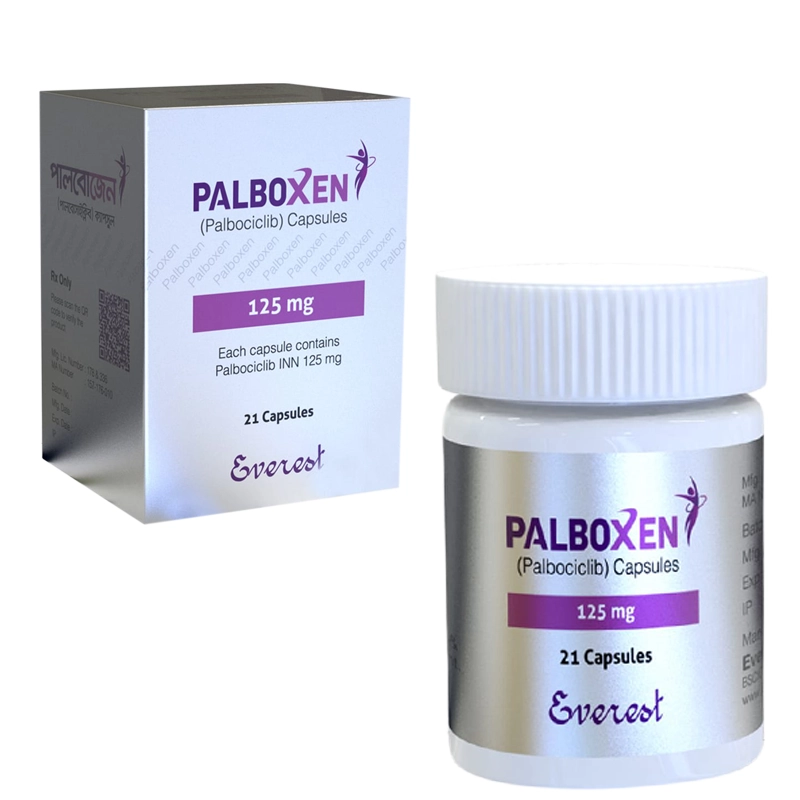
Palboxen 125 mg (Palbociclib) 21 Capsule: How to Order & Safety Guide
- Used for: The treatment of adult patients with (HR)-positive, (HER2)-negative advanced or metastatic breast cancer.
- Availability: In Stock
- Shipping: Express Global Shipping (7-14 days depending on region).
- Requirement: Valid prescription from a licensed healthcare provider required.
✓ WHO GMP Certified
✓ Reviewed By Medical Expert
✓ Batch Examined in Lab
Need Patient Access Support?
Our team provides verified global sourcing assistance to help you navigate international shipping and prescription requirements safely.
Palboxen 125 mg is a highly targeted oral kinase inhibitor featuring the active pharmaceutical ingredient Palbociclib. It is a precise generic equivalent to the innovator brand Ibrance. As a selective inhibitor of cyclin-dependent kinases (CDK) 4 and 6, Palboxen is indicated for the treatment of adult patients with hormone receptor (HR)-positive, human epidermal growth factor receptor 2 (HER2)-negative advanced or metastatic breast cancer. It is utilized in combination with an aromatase inhibitor as initial endocrine-based therapy, or with fulvestrant in patients experiencing disease progression following prior endocrine therapy.
Medical Expert Insight
“The introduction of CDK4/6 inhibitors fundamentally shifted how we manage HR+/HER2- advanced breast cancer. Historically, overriding endocrine therapy resistance was a significant clinical hurdle, often forcing an early transition to highly toxic systemic chemotherapy. Palbociclib delays disease progression effectively while preserving the patient’s quality of life.
However, the primary practical challenge we face with Palbociclib is the management of asymptomatic neutropenia and, more critically, financial toxicity. Treatment adherence drops sharply when patients cannot afford their medication. High-quality, bioequivalent generics like Palboxen, manufactured under rigorous WHO-GMP standards, are vital. They ensure patients maintain access to this life-extending targeted therapy without treatment-interrupting financial strain, allowing us to focus entirely on managing hematologic parameters and maximizing progression-free survival.” -Dr. Salma Elreedy
Clinical Data & Patient Safety Guide
Precise Indications & Biomarker Requirements
Palboxen is specifically indicated for the treatment of adult patients with hormone receptor (HR)-positive, human epidermal growth factor receptor 2 (HER2)-negative advanced or metastatic breast cancer. It is utilized in two primary clinical settings:
- Initial Therapy: In combination with an aromatase inhibitor (e.g., letrozole) as initial endocrine-based therapy in postmenopausal women or in men.
- Subsequent Therapy: In combination with fulvestrant in patients with disease progression following prior endocrine therapy.
Companion Diagnostic Testing: Prior to initiating Palboxen, clinical protocols require mandatory verification of tumor biomarker status. Patients must have confirmed HR-positive (estrogen and/or progesterone receptor) and HER2-negative pathology. This is typically verified using standard immunohistochemistry (IHC) to confirm receptor positivity, alongside IHC or fluorescence in situ hybridization (FISH) to verify HER2 negativity. Palboxen is contraindicated and clinically ineffective for patients with triple-negative breast cancer (TNBC) or HER2-overexpressing subtypes.
Q: What is the exact mechanism of action for Palbociclib?
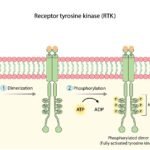
Palbociclib is a reversible, highly selective inhibitor of CDK4 and CDK6. In HR-positive breast cancer cell lines, cyclin D1 and CDK4/6 promote the hyperphosphorylation of the retinoblastoma (Rb) protein, driving cell cycle progression from the G1 into the S phase. By inhibiting this complex, Palbociclib prevents Rb phosphorylation, effectively arresting tumor cell proliferation in the G1 phase.
Pharmacokinetics & ADME Summary:
- Absorption: Median time to maximum concentration (Tmax) is 6 to 12 hours. Absorption and exposure are significantly more consistent when taken with food.
- Distribution: High plasma protein binding (approximately 85%), with no concentration dependence.
- Metabolism: Primarily hepatic via the CYP3A4 enzyme, with minor contributions from SULT2A1.
- Excretion: Eliminated predominantly in feces (74%) and urine (17%).
- Half-life: The mean apparent elimination half-life is 29 (±5) hours.
Baseline Dosage & Administration
The recommended starting dose is 125 mg taken orally once daily for 21 consecutive days, followed by 7 days off treatment to comprise a complete 28-day cycle. It must be taken with food.
Adverse Event (AE) Management & Dose Modification Table
Routine monitoring of Complete Blood Counts (CBC) is required prior to the start of each cycle, on Day 15 of the first two cycles, and as clinically indicated.
| Toxicity Type | Grade | Management Protocol & Dose Modification |
|---|---|---|
| Neutropenia | Grade 1 or 2 | No dose adjustment required. Maintain 125 mg. |
| Neutropenia | Grade 3 (ANC 500 to <1000/mm³) | Day 1 of Cycle: Withhold until recovery to Grade ≤2, then repeat CBC within 1 week. Day 15 of Cycle 1/2: Continue current dose to complete cycle. Repeat CBC on Day 22. |
| Neutropenia | Grade 3 with Fever (≥38.5°C) | Withhold until recovery to Grade ≤2. Resume at next lower dose (100 mg). |
| Neutropenia | Grade 4 (ANC <500/mm³) | Withhold until recovery to Grade ≤2. Resume at next lower dose (100 mg). |
| Non-Hematologic | Grade 3 or 4 | Withhold until symptoms resolve to Grade ≤1 or baseline. Resume at next lower dose (100 mg). |
(Note: If further reduction is required below 100 mg, reduce to 75 mg. If toxicity persists at 75 mg, discontinue Palboxen entirely.)
Drug-Drug Interaction (DDI) Matrix
Palboxen relies heavily on CYP3A metabolism. Precise medication reconciliation is mandatory.
- Strong CYP3A Inhibitors (e.g., clarithromycin, indinavir, itraconazole, ketoconazole): Avoid concurrent use. If coadministration cannot be avoided, reduce the Palboxen dose to 75 mg once daily. Upon discontinuation of the inhibitor, return the Palboxen dose to the previous level after 3-5 half-lives of the inhibitor.
- Strong CYP3A Inducers (e.g., phenytoin, rifampin, carbamazepine, St. John’s Wort): Avoid concurrent use. These agents significantly decrease palbociclib plasma exposure, leading to loss of clinical efficacy.
- Sensitive CYP3A Substrates (e.g., midazolam, pimozide, ergotamine): Palbociclib is a weak, time-dependent inhibitor of CYP3A. Coadministration may increase the exposure of sensitive substrates with narrow therapeutic indices. Monitor closely.
Clinical Efficacy & Real-World Data
The efficacy of Palbociclib was established in landmark randomized clinical trials:
- PALOMA-2 (Initial Therapy): In combination with letrozole, median Progression-Free Survival (PFS) was 24.8 months versus 14.5 months for placebo + letrozole (HR: 0.58; 95% CI: 0.46, 0.72; p<0.0001).
- PALOMA-3 (Post-Endocrine Therapy): In combination with fulvestrant, median PFS was 9.5 months versus 4.6 months for placebo + fulvestrant (HR: 0.46; 95% CI: 0.36, 0.59; p<0.0001).
Real-World Evidence (RWE) in post-marketing registries confirms these outcomes, demonstrating robust efficacy in diverse clinical settings outside of strict trial inclusion criteria, particularly when neutropenia is proactively managed via dose delays rather than immediate discontinuation.
Precautions & Special Populations
- Pregnancy & Embryo-Fetal Toxicity: Palbociclib can cause fetal harm. Verify pregnancy status prior to initiation. Females of reproductive potential must use effective contraception during treatment and for at least 3 weeks following the final dose. Male patients with female partners of reproductive potential must use effective contraception for 3 months after the final dose.
- Lactation: There is no data on the presence of palbociclib in human milk. Because of the potential for serious adverse reactions in nursing infants, advise women not to breastfeed during treatment and for 3 weeks after the last dose.
- Hepatic Impairment: No dose adjustment is required for mild hepatic impairment. For moderate to severe hepatic impairment (Child-Pugh class B and C), the recommended starting dose is reduced to 75 mg once daily.
- Renal Impairment: No dose adjustment is required for mild, moderate, or severe renal impairment (CrCl ≥15 mL/min).
- Storage Logistics: Store at 20°C to 25°C (68°F to 77°F); excursions permitted between 15°C to 30°C (59°F to 86°F). Protect from moisture and direct heat.
Manufacturing Quality, Global Patient Access Guide, & Head to Head Comparison
Global Access & Personal Importation (Named Patient Program)
If Palboxen is unavailable or prohibitively expensive in your home country, patients can access it legally through the Named Patient Program (NPP). This international regulatory framework allows patients to import unapproved or unavailable life-saving medicines for personal use.
Steps for Verified Global Sourcing:
- Documentation: You must obtain a valid, signed prescription and a Letter of Medical Necessity from your treating oncologist.
- Verification: Upload your documents securely via our checkout portal. Our medical team will verify the prescription.
- Customs Clearance: We manage the complex logistics, providing necessary commercial invoices and pharmacy licenses to ensure seamless customs clearance in your specific region.
- Delivery: Utilizing secure cold-chain/temperature-controlled express global shipping, the medication is delivered directly to your home or clinic in 7-14 days.
Everest Pharmaceuticals Manufacturing Insights
Palboxen is manufactured by Everest Pharmaceuticals, a recognized leader in specialized generic oncology formulations. Everest operates strictly under WHO-GMP (Good Manufacturing Practices) guidelines and maintains rigorous ISO certifications. To ensure exact therapeutic equivalence to the innovator brand, Palboxen undergoes exhaustive bioequivalence testing, ensuring that the dissolution profile, peak plasma concentration (Cmax), and area under the curve (AUC) match the safety and efficacy profile established in the PALOMA clinical trials. Every batch is examined in a certified lab prior to global distribution.
Brand vs Generic Comparison
| Metric | Ibrance® (Innovator) | Palboxen 125 mg (Generic) |
|---|---|---|
| Active Pharmaceutical Ingredient | Palbociclib | Palbociclib |
| Target Mechanism | CDK4/6 Inhibitor | CDK4/6 Inhibitor |
| Dosage Form | Oral Capsule / Tablet | Oral Capsule |
| Therapeutic Indications | HR+/HER2- Advanced Breast Cancer | HR+/HER2- Advanced Breast Cancer |
| Dosing Schedule | 21 Days On / 7 Days Off | 21 Days On / 7 Days Off |
Frequently Asked Questions
What is Palboxen 125 mg used for?
Palboxen is a targeted therapy used to treat adult patients with HR-positive, HER2-negative advanced or metastatic breast cancer. It is prescribed in combination with an aromatase inhibitor or fulvestrant to slow the progression of the disease.
How much does generic Palboxen cost compared to Ibrance?
Because Palboxen is a generic formulation, it is available at a significantly lower price point than the innovator brand Ibrance, often reducing patient costs by 70% to 85%, depending on global shipping regions. This allows for sustainable, long-term adherence to the treatment protocol. Please check our current listed price above.
Does Palbociclib cause hair loss?
Unlike traditional systemic chemotherapy, Palbociclib does not typically cause complete hair loss (alopecia). Some patients may experience mild hair thinning, but it is rarely severe.
Should I take Palboxen with food?
Yes. Palboxen capsules should be taken with food to ensure consistent absorption and maximum clinical efficacy. Swallow the capsules whole; do not chew, crush, or open them.
What should I do if I miss a dose of Palbociclib?
If you miss a dose, or if you vomit after taking your dose, do not take an extra dose that day. Take your next prescribed dose at your regular time the following day.
How can I import Palboxen 125 mg legally?
Patients can legally import Palboxen for personal use through the Named Patient Program. You will need a valid prescription and a Letter of Medical Necessity from your doctor. Our patient support team provides full verified global sourcing assistance to navigate the shipping and customs requirements safely.
Related products

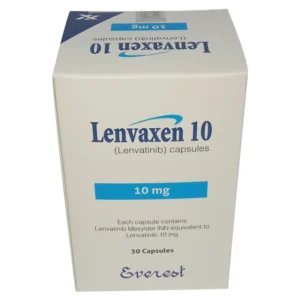
Lenvaxen 10 mg (Lenvatinib) Capsule | Thyroid Cancer Therapy
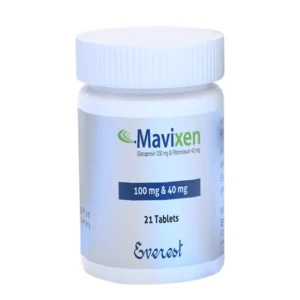
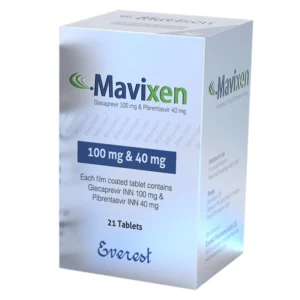
Request PriceMavixen (Glecaprevir + Pibrentasvir) 100 mg + 40 mg | Hepatitis C virus Therapy
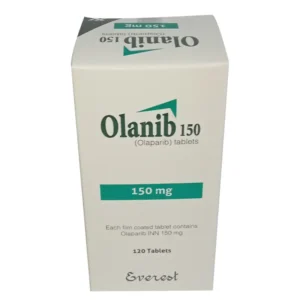
Request PriceOlanib 150 mg Tablet (Olaparib) | Clinical Overview Of A PARP Inhibitor
Request PriceVentech 100 mg (Venetoclax)| 60 Tablets | Global Acces & Safety Guide
Request Price