Prescription required. We facilitate access to medicines already prescribed by your treating physician. We do not provide medical advice or diagnoses.


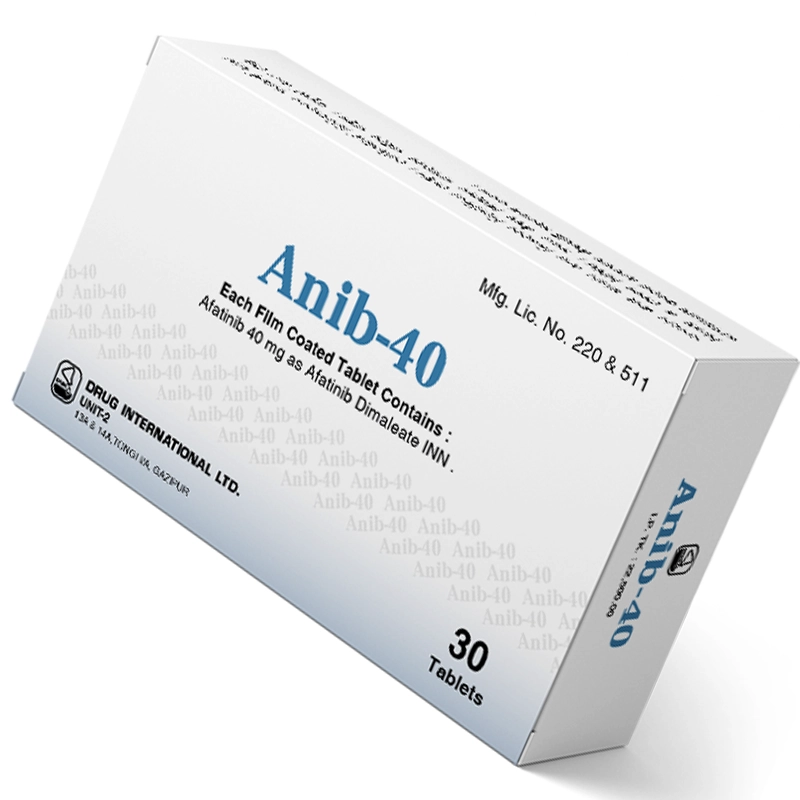
Anib 40mg (Afatinib) 30 Tablets
- Used for: Used as a targeted therapy for advanced EGFR-mutant and squamous non-small cell lung cancer.
- Availability: In Stock
- Shipping: Express Global Shipping (7-14 days depending on region).
- Requirement: Valid prescription from a licensed healthcare provider required.
✓ WHO GMP Certified
✓ Reviewed By Medical Expert
✓ Batch Examined in Lab
Need Patient Access Support?
Our team provides verified global sourcing assistance to help you navigate international shipping and prescription requirements safely.
What our medical expert told about Afatinib
“Afatinib was one of the first oral therapies to give EGFR-mutant lung cancer patients a real alternative to starting with chemotherapy, and it remains one of the few EGFR-targeted drugs also approved for squamous NSCLC, where no driver mutation is needed at all. The trade-off patients should understand going in is tolerability: the diarrhea and skin reactions are common enough that a planned dose reduction, not a discontinuation, is often the right first response. Getting the EGFR mutation test result before starting is essential, both to confirm eligibility and because the survival benefit in the pivotal trials was concentrated in patients with the exon 19 deletion specifically.”
“Salma Mamdouh Elreedy, Medical content reviewer, Generic Oncology”
Clinical Uses & Safety Management Protocols
Anib 40mg is a generic version of afatinib, an oral, irreversible, second-generation ErbB-family (EGFR/HER1, HER2, HER4) tyrosine kinase inhibitor, and a Gilotrif alternative for patients who cannot access or afford the originator brand (Boehringer Ingelheim). It is manufactured by Drug International Ltd. under WHO-GMP conditions and supplied globally through Named Patient Program (NPP) import frameworks.
Unlike most EGFR inhibitors on this site, afatinib binds irreversibly and blocks the whole ErbB receptor family rather than EGFR alone, and it is approved for two distinct clinical situations: EGFR-mutant non-small cell lung cancer (NSCLC) at first diagnosis, and squamous NSCLC after chemotherapy has already failed, where no EGFR mutation is present at all. These are managed differently, and this page treats them as two separate use cases rather than one blended indication.
This is a prescription-only oncology medicine. It should be started and monitored only under the supervision of a treating oncologist, with baseline EGFR mutation testing completed before first-line use. Anib is sourced through import and personal-use frameworks; it is not sold over the counter and is not stocked for walk-in retail purchase.
Precise Indications & Biomarker Necessity
Afatinib carries two FDA-approved indications (per the current Gilotrif label, DailyMed, revised April 2022):
1. First-line treatment of metastatic NSCLC with non-resistant EGFR mutations, as detected by an FDA-approved test. This covers the two common activating mutations, exon 19 deletions and the L858R point mutation in exon 21, along with the less common non-resistant mutations (L861Q, G719X, S768I), which are included under the same indication rather than listed separately on the current label.
2. Treatment of metastatic, squamous-cell NSCLC progressing after platinum-based chemotherapy. This indication does not require any EGFR mutation. It is based on afatinib’s broader ErbB-family activity, and squamous NSCLC is tested for far less often than adenocarcinoma.
Limitation of use, stated directly on the label: safety and efficacy have not been established in patients whose tumors carry resistant EGFR mutations, most importantly T790M, the mutation that most commonly causes resistance after first- or second-generation EGFR TKI therapy. If resistance testing after progression on Anib identifies T790M, afatinib is not the next step.
A third-generation, T790M-active agent such as osimertinib or lazertinib (see Lazerib on this site) is the guideline-recommended option, not a higher afatinib dose or a switch to another second-generation drug.
Biomarker testing (tissue or liquid-biopsy EGFR panel) should be completed and documented before starting Anib for the first-line indication.
Mechanism & Pharmacokinetics (ADME)
Afatinib is an irreversible ErbB-family blocker. It covalently binds EGFR (HER1), HER2, and HER4, permanently inactivating the receptor rather than competing reversibly for the ATP-binding site the way first-generation drugs (erlotinib, gefitinib) do.
This is mechanistically distinct from Lazerib (lazertinib), the third-generation, mutant-selective EGFR inhibitor already on this site: afatinib is older, broader-acting within the ErbB family, and not designed to overcome T790M resistance, while lazertinib is newer and built specifically to work after that resistance mutation appears (and to spare wild-type EGFR, part of why its skin/GI toxicity profile differs).
The two drugs are not interchangeable. Sequencing typically goes afatinib (or another first- or second-generation agent) first, then a third-generation agent at resistance, not the reverse.
Administration: Anib must be taken on an empty stomach, at least 1 hour before or 2 hours after a meal. This is the opposite rule from oral TKIs on this site that require food, such as Imaxen (imatinib); the two should never be assumed interchangeable in administration timing. A high-fat meal reduces afatinib’s peak concentration (Cmax) by roughly 50% and total exposure (AUC) by roughly 39%, clinically significant enough that the label states the timing rule explicitly rather than as a general suggestion.
Metabolism: Afatinib is not significantly metabolized by, and does not significantly inhibit or induce, the CYP450 enzyme system, a real practical advantage over drugs that carry a long CYP3A4 interaction list. Its main interaction pathway instead runs through P-glycoprotein (P-gp) transport (see the interaction matrix below).
Dosage & Adverse Event (AE) Management
Starting dose: 40mg orally, once daily, on an empty stomach, taken at the same time each day.
Dose reduction ladder (10mg steps): 40mg to 30mg to 20mg. A reduction step is triggered by Grade 3 or higher adverse reactions per NCI-CTCAE criteria, or by specific Grade 2 reactions that don’t resolve quickly: diarrhea lasting 2 or more consecutive days despite antidiarrheal treatment, cutaneous reactions lasting more than 7 days, or Grade 2 renal impairment. The standard process is to withhold Anib until the reaction resolves to Grade 1 or baseline, then resume at the next lower dose.
Permanent discontinuation is required for: life-threatening skin reactions (bullous, blistering, or exfoliative), confirmed interstitial lung disease (ILD), severe hepatic impairment, persistent ulcerative keratitis, symptomatic left ventricular dysfunction, or any reaction that remains intolerable even at the 20mg floor dose.
A strength-gap note worth stating plainly: Anib is currently supplied by Drug International only at 40mg. This is not unique to Anib. None of the four afatinib brands sold in Bangladesh (Anib/Drug International, Afatin/Beacon, Afaz/Healthcare Pharma, Atanib/Aristopharma) currently offer the 30mg or 20mg strengths the dose-reduction ladder calls for. In practice this means Anib 40mg fully covers the standard starting dose, but a patient who needs a dose reduction cannot currently source the exact 30mg or 20mg tablet strength from the Bangladeshi market through this or comparable facilitation channels. Reduction via tablet-splitting is not something this page recommends without the patient’s oncologist and pharmacist confirming it is appropriate for this specific formulation.
Renal impairment: Severe impairment (eGFR 15-29 mL/min/1.73m²): start at the reduced 30mg dose. Mild-to-moderate impairment: no adjustment needed. eGFR below 15 or dialysis-dependent patients: not studied.
Hepatic impairment: Mild (Child-Pugh A) or moderate (Child-Pugh B): no adjustment needed. Severe (Child-Pugh C): not studied; monitor closely and adjust only if the drug is not tolerated.
Common adverse reactions (≥20% incidence, per the label’s own reporting threshold, LUX-Lung 3, n=229): diarrhea (96%), rash/acneiform dermatitis (90%), stomatitis (71%), paronychia (58%), dry skin (31%), decreased appetite (29%), nausea (25%), vomiting (23%), pruritus (21%).
Serious adverse reactions: occurred in 29% of patients in LUX-Lung 3 and 44% in LUX-Lung 8. Fatal outcomes were uncommon but real: pulmonary toxicity/ILD (1.3% in LUX-Lung 3, 0.5% in LUX-Lung 8), sepsis (0.43%), pneumonia (0.43% in LUX-Lung 3, 0.3% in LUX-Lung 8), and acute renal failure (0.3%, LUX-Lung 8).
Drug-Drug Interaction (DDI) Matrix
| Interacting agent class | Examples | Effect on afatinib | Recommended action |
|---|---|---|---|
| P-glycoprotein (P-gp) inhibitors | Ritonavir, cyclosporine, ketoconazole, verapamil | Increases afatinib exposure | Reduce Anib dose by 10mg/day if the combination is not tolerated |
| P-glycoprotein (P-gp) inducers | Rifampicin, carbamazepine, phenytoin, St. John’s wort | Decreases afatinib exposure | Increase Anib dose by 10mg/day as tolerated, if chronic co-administration is unavoidable |
| CYP450 substrates/inhibitors/inducers | Not applicable | Minimal interaction either direction | No specific CYP-based dose adjustment needed; a real advantage over TKIs with a long CYP3A4 interaction list |
| Food | High-fat meal | Cmax reduced ~50%, AUC reduced ~39% | Take on an empty stomach: 1 hour before or 2 hours after eating |
Clinical Efficacy & Real-World Data
First-line EGFR-mutant NSCLC, LUX-Lung 3 (afatinib vs. cisplatin + pemetrexed, n=345): median PFS 11.1 vs. 6.9 months (HR 0.58, p=.001); objective response rate 56% vs. 23% (p=.001). In the exon 19 deletion/L858R subgroup specifically, PFS extended to 13.6 vs. 6.9 months (HR 0.47, p=.001).
First-line EGFR-mutant NSCLC, LUX-Lung 6 (Asian population, afatinib vs. gemcitabine + cisplatin): a similarly designed trial confirming the PFS benefit in an Asian patient population, where ILD incidence also runs higher (see Precautions below).
Overall survival, an important honesty point rather than a single flattering average: Pooled OS analysis of LUX-Lung 3 and LUX-Lung 6 found no statistically significant overall survival benefit across the full trial populations (LUX-Lung 3: 28.2 vs. 28.2 months, HR 0.88, p=.39; LUX-Lung 6: 23.1 vs. 23.5 months, HR 0.93, p=.61). The survival benefit was concentrated specifically in patients with the exon 19 deletion: 33.3 vs. 21.1 months in LUX-Lung 3 (HR 0.54, p=.0015) and 31.4 vs. 18.4 months in LUX-Lung 6 (HR 0.64, p=.023). Patients with the L858R mutation alone did not show a significant OS advantage over chemotherapy in either trial. This distinction is clinically relevant and is stated here directly.
Squamous NSCLC, second-line, LUX-Lung 8 (afatinib vs. erlotinib, n=795, final analysis): median OS 7.9 vs. 6.8 months (HR 0.81, 95% CI 0.69-0.95, p=.0077); median PFS 2.6 vs. 1.9 months (HR 0.81, 95% CI 0.69-0.96, p=.0103); disease control rate 50.5% vs. 39.5%. This is the trial underpinning afatinib’s second FDA indication, and it is a genuine head-to-head against another approved EGFR TKI, not a placebo comparison.
All efficacy and safety data above is sourced from the primary trial publications and the current FDA label rather than secondary aggregator sites; see Clinical Essentials for full citations.
Precautions & Special Populations
Diarrhea (96% incidence, LUX-Lung 3): the most common adverse reaction by a wide margin. 15% of patients experienced Grade 3 diarrhea, and it caused dehydration or renal impairment in 6% of patients in this trial. Early antidiarrheal treatment and adequate fluid intake are standard first steps; a dose reduction is the label-directed response if it persists at Grade 2 for 2+ days or reaches Grade 3.
Bullous and exfoliative skin reactions: 90% of patients had some form of cutaneous reaction in LUX-Lung 3; 0.2% had Grade 3 bullous lesions. Life-threatening skin reactions require permanent discontinuation, not a dose reduction.
Interstitial lung disease (ILD): occurred in 1.6% of patients overall (0.4% fatal), with a higher rate in Asian patients (2.3%) than white patients (1.0%). Anib should be withheld immediately for any acute onset or worsening of unexplained respiratory symptoms while ILD is being ruled out, and discontinued permanently if ILD is confirmed.
Hepatotoxicity: liver test abnormalities occurred in 9.7% of patients across trials (17.5% any-grade in LUX-Lung 3 specifically), with fatal hepatic events in 0.2%. Periodic liver function monitoring is recommended, more closely in patients with baseline hepatic impairment.
Keratitis: 0.7% incidence (0.05% Grade 3). Patients should be evaluated promptly for any acute or worsening eye symptoms, including eye pain, photophobia, or blurred vision, and contact lens use should generally be avoided during treatment. Anib should be withheld pending evaluation.
Embryo-fetal toxicity: afatinib can cause fetal harm. Effective contraception is required during treatment and for at least 2 weeks after the final dose, for patients of reproductive potential. Breastfeeding should not resume until 2 weeks after the last dose. Fertility may be reduced in both females and males; reversibility has not been established.
Renal and hepatic impairment: see the dosing section above. Severe renal impairment requires a reduced starting dose; severe hepatic impairment has not been formally studied and requires close monitoring if used at all.
Global Access Guide and Quality Assurance
Anib 40mg is manufactured by Drug International Ltd., a WHO-GMP certified Bangladeshi pharmaceutical manufacturer.
As with every product on this site: a manufacturing facility’s WHO-GMP certification confirms the manufacturing process meets international quality standards. It is not the same as, and should never be conflated with, FDA approval of the specific generic product itself. Anib is a generic formulation supplied for personal import under Named Patient Program frameworks in jurisdictions where this is legally permitted; it is not FDA-approved and is not sold as an FDA-approved product in any market.
Bioequivalence data (comparative dissolution testing against Gilotrif) has not yet been supplied by Drug International for this page. Until that data is available, no bioequivalence claim is made here, following standing site policy of only making bioequivalence claims for small molecules once manufacturer dissolution data is in hand.
Drug International Ltd. Manufacturing Insights
Drug International Ltd. is one of the core Bangladeshi manufacturers already represented in this catalog, alongside Everest, Incepta, Beacon, Eskayef/SK+F, Ziska, and General Pharmaceuticals.
Global Access via Named Patient Program (NPP)
Patients outside Bangladesh who cannot access or afford Gilotrif in their home market may be eligible to receive Anib 40mg through a Named Patient Program import, where legally permitted, with a valid prescription from a treating oncologist. The process typically requires:
- A valid prescription confirming the afatinib indication and dose
- Upload of the prescription via the site’s Upload Prescription page or directly send it through our WhatsApp
- Verification and a personalized quote (price is not listed publicly on oncology product pages; see FAQ)
- Shipment under appropriate conditions, with tracking provided
Patients should confirm the legal status of personal medicine import in their own country before ordering. This page does not constitute legal or regulatory advice.
Anib 40mg vs Gilotrif 40mg (Head-to-Head Comparison)
| Anib 40mg (Drug International) | Gilotrif 40mg (Boehringer Ingelheim) | |
|---|---|---|
| Active ingredient | Afatinib (as dimaleate) | Afatinib (as dimaleate) |
| Dosage form | Film-coated tablet | Film-coated tablet |
| Strength available | 40mg only | 20mg, 30mg, 40mg |
| Approved indications | Same mechanism and clinical use; generic is not separately FDA-indication-listed | First-line EGFR-mutant NSCLC; squamous NSCLC post-platinum chemo |
| Regulatory status | WHO-GMP manufactured; not FDA-approved; supplied via NPP import | FDA-approved (original NDA 2013) |
| Bioequivalence data | Not mentioned in the website | Not applicable (reference product) |
| Typical access route | Personal import / Named Patient Program | Retail pharmacy in FDA-regulated markets |
Frequently Asked Questions
What is the price of Anib 40mg?
Pricing varies by order quantity, destination, and current exchange rates, so we don’t publish a fixed price on this page. Contact us via WhatsApp or email for a personalized quote once your prescription is uploaded.
How exactly does Anib (afatinib) work?
It’s an irreversible EGFR-family (ErbB) blocker. Once it binds, it permanently inactivates the EGFR, HER2, and HER4 receptors on cancer cells, cutting off the growth signals many EGFR-mutant lung cancers depend on. Unlike the first-generation EGFR inhibitors, this binding doesn’t wear off between doses.
Do I need a specific test before taking Anib?
Yes, for the first-line lung cancer indication. An EGFR mutation test (tissue or blood-based) confirms your tumor carries a non-resistant mutation, most commonly exon 19 deletion or L858R, before starting. If you’re being treated for squamous NSCLC after chemotherapy, this specific mutation test isn’t required for that indication.
What if my cancer has the T790M resistance mutation?
Afatinib is not indicated for tumors with resistant EGFR mutations, including T790M; the label states this explicitly. If resistance testing shows T790M after progression on an earlier EGFR TKI, a third-generation agent is the appropriate next step, not Anib. Ask your oncologist about options in that situation.
Why do I need to take Anib on an empty stomach?
Food, especially a high-fat meal, significantly reduces how much afatinib your body absorbs, by up to roughly half at peak levels. Taking it consistently 1 hour before or 2 hours after eating keeps your dose working the way it’s meant to.
What side effects mean I should call my doctor right away?
Severe or worsening diarrhea that doesn’t respond to antidiarrheal medication, any new or worsening shortness of breath or cough (a possible sign of lung inflammation/ILD), blistering or peeling skin, eye pain or vision changes, or signs of liver problems such as yellowing skin/eyes or dark urine. These are the reactions the label specifically calls out as requiring prompt evaluation, dose changes, or discontinuation.
Related products

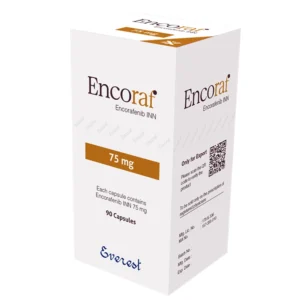
Encoraf 75 mg (Encorafenib) | BRAF Kinase Inhibitor
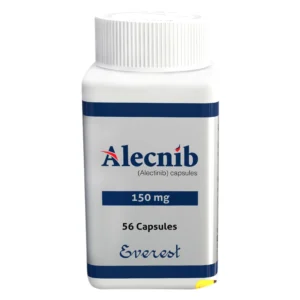
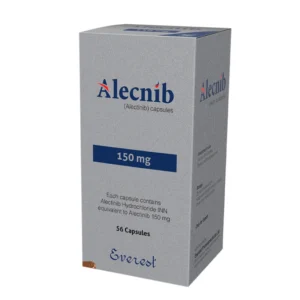
Request PriceAlecnib 150mg (Alectinib): Alecensa Alternative, Uses & Safety
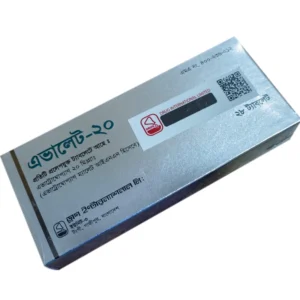
Request PriceAvalet 20 mg (Avatrombopag) 28 Tablets | Patient Access and Safety Guide.
Request PriceSotoxen 120 mg (Sotorasib) 56 Tablets | Price, Uses, Patient Safety, & Access Guide
Request Price