Sourcing Disclosure: Licensed Bangladesh Global Sourcing Specialist facilitating global access under Named Patient Regulations.
Expert-reviewed clinical data for prescription-only medicine.


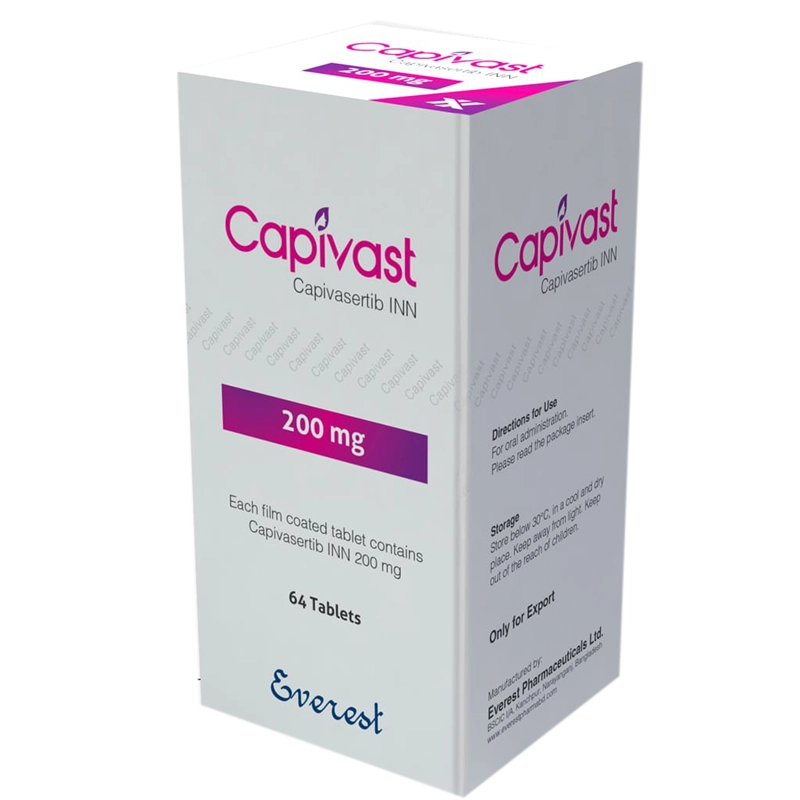
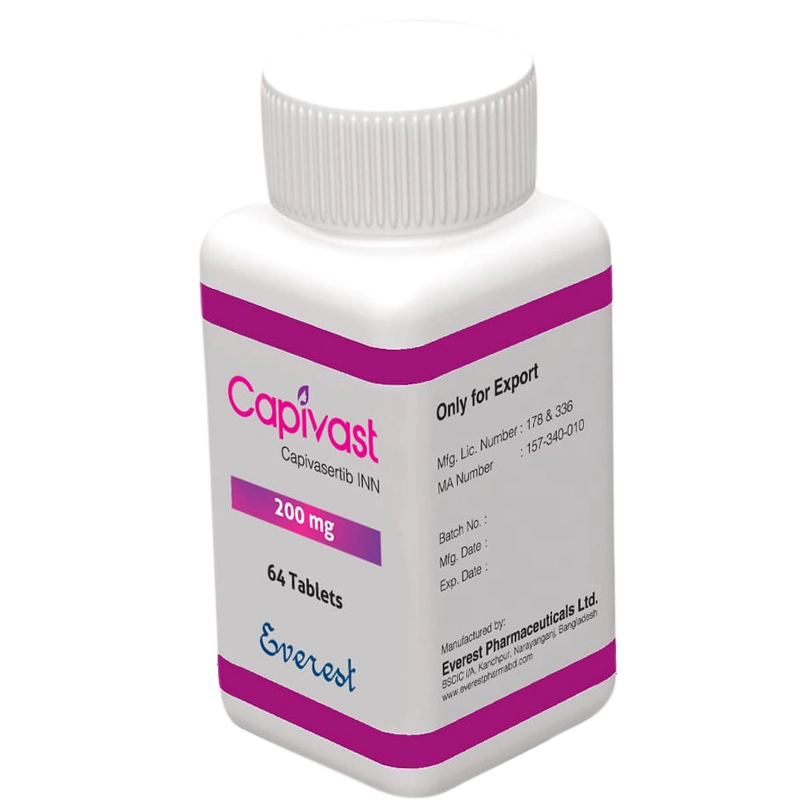
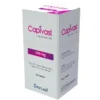
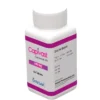
Capivast (Capivasertib) 200 mg Tablets | Advanced Breast Cancer Therapy in AKT Mutation
Brand Name: Capivast
Generic Name: Capivasertib
Therapeutic Class: Selective AKT inhibitor
Clinical Trials: HR-positive, HER2-negative advanced breast cancer harboring PIK3CA/AKT1/PTEN alterations
Available Strength: 200 mg
Pack Size: 64 Tablets
- WHO GMP Certified
- Reviewed By Medical Expert
- Batch Examined in Lab
The information provided in this guide is for educational purposes only. It is not a substitute for professional medical advice, diagnosis, or treatment. Always consult a licensed healthcare provider or oncologist before making any changes to a treatment plan. This content is based on clinical data from authorized sources, including the FDA, EMA, and ClinicalTrials.gov.
(Medically Reviewed by Dr. Salma Elreedy)
Capivast, contains the active ingredient Capivasertib in a 200 mg tablet, is a first-in-class oral AKT inhibitor. It is the generic equivalent of the innovator medication, Truqap. Unlike general chemotherapy, Capivasertib specifically targets a pathway that has become overactive due to genetic mutations. By “switching off” the signals that tell cancer cells to multiply and survive, Capivast helps control tumor growth and improve outcomes for patients whose cancer has progressed on standard hormone therapies.
Clinical Data & Patient Guide
What exactly is this medication for?
Based on clinical protocols from the FDA, EMA, and NCCN, Capivasertib is indicated for:
- HR-positive, HER2-negative Advanced Breast Cancer: For adult patients with locally advanced or metastatic breast cancer that has one or more genetic alterations in the PIK3CA, AKT1, or PTEN genes.
- Prior Treatment Requirement: It is typically prescribed after the cancer has progressed on at least one endocrine-based regimen (like letrozole or anastrozole) in the metastatic setting.
- Your doctor will use an FDA-approved diagnostic test to confirm these genetic markers before starting treatment.
How does Capivasertib work to fight cancer?
In many breast cancers, a protein called AKT acts like an “engine” that drives the cell to grow, divide, and resist dying. Genetic mutations (PIK3CA, AKT1, or PTEN) can keep this engine running permanently. Capivasertib is a potent inhibitor that binds to all three forms of the AKT protein (AKT1, 2, and 3). By blocking this central node in the signaling network, the medication effectively cuts the power to the cancer cell’s growth signals. When used in combination with Fulvestrant, it provides a dual attack: one blocking the AKT engine and the other downregulating the estrogen receptors that fuel the tumor.
How is Capivast administered?
The dosing of Capivasertib follows a specific “intermittent” schedule to help your body manage the treatment.
- The Weekly Schedule: The standard dose is 400 mg (two 200 mg tablets) taken twice daily (about 12 hours apart) for 4 consecutive days, followed by 3 days off each week.
- Administration: You can take the tablets with or without food.
- Swallow Whole: Do not crush, chew, or split the tablets. Take them with a full glass of water.
- Vomited Doses: If you vomit after taking your dose, do not take an extra one. Simply wait until your next scheduled dose to keep your blood levels stable.
What side effects and safety data should I watch for?
Clinical safety data from the CAPItello-291 trial (published on ClinicalTrials.gov and the official FDA label) highlight the following key areas for monitoring:
Critical Risk: Hyperglycemia (High Blood Sugar)
Because the AKT pathway also helps regulate how your body uses sugar, blocking it can cause blood sugar to rise.
- Actionable Advice: Your doctor will test your fasting glucose and HbA1c before you start. You may need to monitor your blood sugar at home. If you notice excessive thirst, frequent urination, or blurred vision, contact your clinic immediately.
Critical Risk: Diarrhea
Diarrhea is very common, affecting over 70% of patients in clinical trials.
- Actionable Advice: Do not wait for it to become severe. Keep an over-the-counter anti-diarrheal (like loperamide) at home and start it at the first sign of loose stools. Stay hydrated with clear fluids.
Common Adverse Reactions:
- Skin Reactions: Rashes or dry skin are common. Advice: Use fragrance-free, thick moisturizers and avoid harsh soaps.
- Nausea & Fatigue: General tiredness is frequent. Advice: Schedule rest periods and eat small, frequent meals.
Lab Changes: Decreased hemoglobin (anemia) or decreased white blood cells (lymphocytes).
Are there special precautions for certain populations?
- Pregnancy: Capivasertib can cause severe fetal harm. Effective contraception is required for females during treatment and for 1 month after the last dose. Males with female partners should use contraception for 4 months post-treatment.
Grapefruit: Strictly avoid grapefruit and grapefruit juice, as they can interfere with how your liver breaks down the drug, leading to dangerous toxicity.
How should I store Capivast?
Capivast does not require cold chain storage. Store the tablets at controlled room temperature (20C° to 25C°) in a dry place. Keep them in their original packaging to protect them from light and moisture.
Manufacturer Quality & Assurance
In targeted oncology, the precision of the tablet formulation is critical for consistent absorption. Capivast is manufactured by Everest Pharmaceuticals Ltd. in a specialized facility that adheres to WHO GMP (World Health Organization Good Manufacturing Practices) standards. This ensures that every 200 mg tablet undergoes rigorous bioequivalence and stability testing, providing a high-quality, clinically effective generic version that matches the safety and efficacy profile of the innovator brand, Truqap.
Global Access to Medication
If Capivast is not available in your local pharmacy, international healthcare frameworks often allow for the legal importation of life-saving medicines for personal use.
- Prescription Requirement: A valid, legible prescription from a licensed oncologist is mandatory.
- Regulatory Compliance: Most national drug authorities (using “Named Patient” protocols) permit a limited supply (typically 3 months) to be imported if the medicine is unavailable locally.
Verification: Always consult with your local customs or drug administration authority to ensure you comply with the specific import documentation needed for your region.
Frequently Asked Questions (FAQ)
Why do I only take the medicine for 4 days a week?
The “4 days on, 3 days off” schedule is a deliberate clinical design. It allows your body—specifically your blood sugar levels and digestive system—a rest period to recover, making the long-term treatment more tolerable while still effectively suppressing the cancer cells.
What should I do if I miss a dose?
If it has been less than 4 hours from your scheduled time, take it immediately. If more than 4 hours have passed, skip the missed dose and wait for your next scheduled time. Never take two doses at once to “make up” for a missed one.
Can I take this medicine if I have diabetes?
Yes, but it requires very close coordination between your oncologist and your primary doctor. Since Capivasertib can raise blood sugar, your diabetes medications may need to be adjusted during treatment.
Related products

Resiliva 80 mg Tablet (Resmetirom)| Global Acces Named Patient Guide to Generic Rezdiffra
Consult Pharmacist for PriceTucaxen 150 mg (Tucatinib) | Price, Clinical Guide, & Safety Protocol
Consult Pharmacist for PriceWHO GMP Certified Generic Osimertinib (Osimert 80 mg) | Tagrisso Alternative
Consult Pharmacist for PricePonaxen 45 mg Tablet (Ponatinib) | CML Tyrosine Kinase Inhibitor
Consult Pharmacist for Price