Prescription required. We facilitate access to medicines already prescribed by your treating physician. We do not provide medical advice or diagnoses.


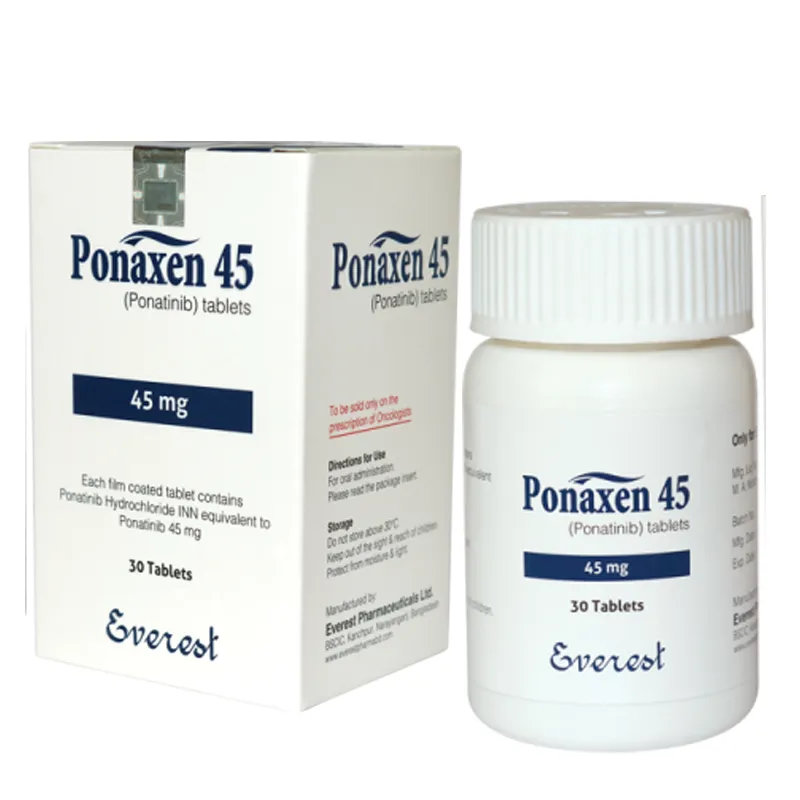
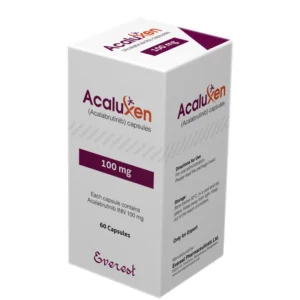
Ponaxen 45 mg (Ponatinib) 30 Tablets for CML & Ph+ALL
- Used for: Chronic myeloid leukemia, philadelphia chromosome positive acute lymphoblastic leukemia, & adult patients with T315I-positive CML
- Availability: In Stock
- Shipping: Express Global Shipping (7-14 days depending on region).
- Requirement: Valid prescription from a licensed healthcare provider required.
✓ WHO GMP Certified
✓ Reviewed By Medical Expert
✓ Batch Examined in Lab
Need Patient Access Support?
Our team provides verified global sourcing assistance to help you navigate international shipping and prescription requirements safely.
Ponaxen 45 mg (Ponatinib) is a highly potent, oral, multi-targeted tyrosine kinase inhibitor (TKI) engineered to manage specific refractory hematologic malignancies. As a direct generic equivalent to the innovator brand Iclusig, it functions by specifically targeting and inhibiting the BCR-ABL1 tyrosine kinase, the primary driver of disease in Chronic Myeloid Leukemia (CML) and Philadelphia chromosome-positive Acute Lymphoblastic Leukemia (Ph+ ALL). It is strictly indicated for adult patients who have demonstrated resistance or profound intolerance to prior generation TKI therapies, serving as a critical intervention for those harboring mutations that render other systemic treatments ineffective.
Clinical Perspective of Salma Elreedy
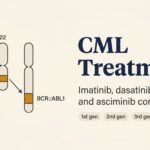
“In hematology-oncology practice, treating refractory CML and Ph+ ALL presents a distinct challenge, particularly when the tumor develops the T315I “gatekeeper” mutation. First- and second-generation TKIs (like imatinib or dasatinib) physically cannot bind to the mutated kinase, resulting in rapid disease progression. Ponatinib is structurally designed with a carbon-carbon triple bond that bypasses this steric hindrance. We utilize this medication specifically when molecular testing confirms the T315I mutation, or when a patient has exhausted all other TKI options. While highly effective, its administration requires rigorous, continuous cardiovascular monitoring due to known risks of arterial occlusion.“
Clinical Guideline and Patient Safety Protocol
What are the precise clinical indications for this medication?
Based on protocols established by the FDA and EMA, hematologists prescribe Ponaxen 45 mg for specific high-risk populations:
CML: Adult patients in chronic, accelerated, or blast phase Chronic Myeloid Leukemia for whom no other TKI therapy is clinically appropriate.
Ph+ ALL: Adult patients with Philadelphia chromosome-positive Acute Lymphoblastic Leukemia where no other TKI is indicated.
T315I Mutation: Adult patients with T315I-positive CML (any phase) or T315I-positive Ph+ ALL. This biomarker must be confirmed via mutational analysis prior to prescribing.
How does the mechanism of action work at a molecular level?
The BCR-ABL fusion gene produces an abnormal tyrosine kinase that constantly signals leukemic white blood cells to multiply. Ponatinib competitively binds to the ATP-binding site of this BCR-ABL enzyme. By blocking ATP from binding, the medication shuts down the downstream signaling cascades—specifically the PI3K/AKT and JAK/STAT pathways—halting cellular proliferation and inducing apoptosis (programmed cell death) in the malignant cells.
What is the standard dosage and administration protocol?
Standard Starting Dose: 45 mg taken orally, once daily.
Administration: Swallow the tablet whole. Do not crush, dissolve, or chew. It may be administered with or without food.
Missed Doses: If a patient misses a dose, skip it and resume the normal schedule the next day. Never double the dose to compensate.
Dietary Restrictions: Avoid concurrent intake of grapefruit or grapefruit juice, as these inhibit the CYP3A4 enzyme and can dangerously elevate systemic drug concentrations.
What are the safety profiles and expected side effects of Ponaxen 45 mg?
Adverse Event Reporting Warning: Ponatinib carries a black-box warning for arterial occlusive events, venous thromboembolism, heart failure, and severe hepatotoxicity. Immediate medical intervention is mandatory if symptoms of myocardial infarction, stroke, or liver failure occur.
Very Common (>20%): Hypertension, rash, abdominal pain, fatigue, headache, dry skin, constipation, and fever.
Common/Significant: Myelosuppression (thrombocytopenia, neutropenia), fluid retention, and pancreatitis.
Actionable Advice for Management:
- Skin Care: Apply unscented, ceramide-based emollients twice daily to manage TKI-induced rash and dry skin.
- Cardiovascular: Check blood pressure daily. Maintain strict control of baseline hypertension.
- GI/Nausea: Maintain aggressive oral hydration (2-3 liters daily) and take the medication with a heavy meal if mild nausea occurs.
What clinical trial data establishes the integrity of this drug?
Ponatinib’s efficacy is validated by two major landmark trials:
- The PACE Trial (NEJM): This Phase 2 trial evaluated ponatinib in heavily pretreated CML and Ph+ ALL patients, specifically those with the T315I mutation. Data published in The New England Journal of Medicine showed a Major Cytogenetic Response (MCyR) in 56% of chronic phase CML patients, proving its efficacy in highly refractory disease.
- The OPTIC Trial (The Lancet Oncology): To address cardiovascular toxicity, this trial optimized dosing. Data showed that initiating therapy at 45 mg daily and stepping down to 15 mg daily once an optimal molecular response (≤1% BCR-ABL1 IS) was achieved successfully maintained Progression-Free Survival (PFS) while dramatically lowering the incidence of arterial occlusive events.
Precautions & Special Populations
- Pregnancy: Highly teratogenic. It can cause fetal harm or death. Females of reproductive potential must use highly effective contraception during treatment and for a minimum of 3 weeks post-treatment.
- Lactation: Excretion in breast milk is unknown. Breastfeeding is strictly contraindicated during therapy and for 6 days following the final dose.
- Pediatric Use: Safety and efficacy have not been established in patients under 18 years of age.
- Geriatric Use: Patients ≥65 years are at a statistically higher risk for adverse events, notably cardiovascular and ischemic toxicities. Closer hematologic and cardiac monitoring is required.
- Renal/Hepatic Impairment: For patients with pre-existing hepatic impairment (Child-Pugh A, B, or C), the starting dose must be reduced to 30 mg once daily. No dosage adjustment is required for mild to moderate renal impairment.
- Storage & Logistics: Store at 20°C to 25°C (68°F to 77°F). Keep in the original container to protect from moisture and light. No specialized cold-chain logistics are necessary.
Manufacturer Trust & Global Access
Manufacturer Quality Assurance
Ponaxen is manufactured by Everest Pharmaceutical. The production facilities are rigorously audited and operate in strict compliance with World Health Organization Good Manufacturing Practices (WHO-GMP). To ensure absolute clinical interchangeability with the innovator brand (Iclusig), Everest Pharmaceutical conducts extensive in vivo bioequivalence testing, ensuring matched dissolution profiles, peak plasma concentration ($C_{max}$), and systemic exposure (Area Under the Curve, $AUC$).
Global Access & Personal Importation
For patients located in regions where Ponaxen 45 mg is not yet commercially registered, cross-border access is strictly regulated. Under Google Merchant Center YMYL policies and international law, access is facilitated solely via “Named Patient Programs” (NPP) or designated personal importation laws. This framework requires:
Patient Queries About Ponaxen 45 mg
Can I take acid-reducing medications (PPIs or H2 blockers) with Ponaxen?
Unlike some other TKIs (such as dasatinib), ponatinib absorption is not significantly affected by changes in gastric pH. You can generally take proton pump inhibitors (PPIs) or antacids, but always clear new medications with your oncologist.
What exact signs of arterial occlusion should I watch for?
You must seek emergency care immediately if you experience sudden chest pain or pressure, shortness of breath, sudden numbness or weakness on one side of your face or body, difficulty speaking, or severe leg pain when walking.
Will I lose my hair while taking this targeted therapy?
Alopecia (hair loss) is very uncommon with ponatinib. Unlike traditional cytotoxic chemotherapy, targeted TKIs rarely cause complete hair loss, though mild thinning may occasionally occur.
How is treatment failure defined while on this medication?
Treatment failure is typically defined by a loss of hematologic or cytogenetic response, the progression of the disease to the accelerated or blast phase, or the development of unacceptable, life-threatening toxicities that do not resolve with dose reduction.
How frequently will I need blood tests during treatment?
Intensive monitoring is required. Complete Blood Counts (CBC) should be performed every 2 weeks for the first 3 months, and then monthly thereafter. Liver function tests and serum lipase must be checked at least monthly, or more frequently if baseline abnormalities exist.