Sourcing Disclosure: Licensed Bangladesh Global Sourcing Specialist facilitating global access under Named Patient Regulations.
Expert-reviewed clinical data for prescription-only medicine.


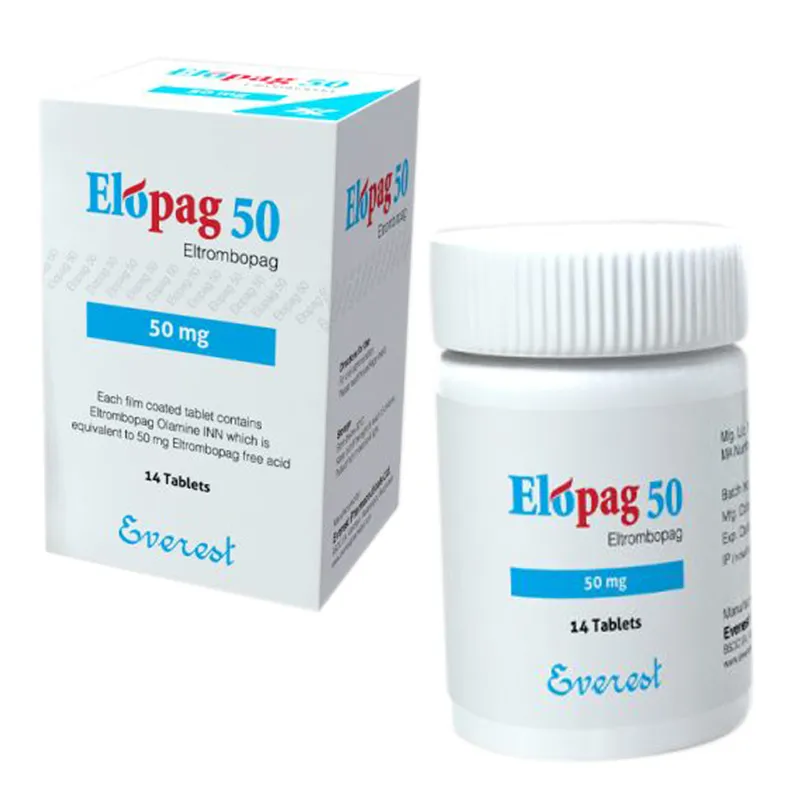
Elopag 50 mg Tablet (Eltrombopag) | Clinical Profile, Price, & Patient Access
Brand Name: Elopag
Generic Name: Eltrombopag
Therapeutic Class: Thrombopoietin receptor agonist
Clinical Indications: Chronic Immune Thrombocytopenia, Chronic Hepatitis C-Associated Thrombocytopenia, Severe Aplastic Anemia
Available Strength: 50 mg & 25 mg
Pack Size: 14 tablets
- WHO GMP Certified
- Reviewed By Medical Expert
- Batch Examined in Lab
Elopag 50 mg is an orally bioavailable, small-molecule thrombopoietin receptor agonist (TPO-RA) containing Eltrombopag. It is specifically engineered to address severe cytopenias by stimulating the proliferation and differentiation of megakaryocytes in the bone marrow. As a high-quality generic equivalent to the innovator brand Promacta (also known as Revolade), Elopag is a cornerstone therapy for Chronic Immune Thrombocytopenia (ITP), Severe Aplastic Anemia (SAA), and thrombocytopenia in Chronic Hepatitis C patients. Unlike treatments that merely slow platelet destruction, Eltrombopag works at the source to prompt the body to produce more platelets naturally.
Expert Commentry on Elopag 50 mg
“Historically, managing refractory cytopenias was a defensive game—we used immunosuppression to stop the body from killing its own platelets. The introduction of Eltrombopag shifted us to an offensive strategy. We are now able to directly signal the bone marrow to increase production.
In my clinical practice, the availability of bioequivalent generics like Elopag by Everest Pharmaceuticals has significantly improved patient compliance. SAA and chronic ITP require long-term management; ‘financial toxicity’ often leads to skipped doses or treatment abandonment. By using a WHO-GMP certified generic that maintains the exact pharmacokinetic profile of the innovator, we can achieve durable hematologic responses while ensuring the treatment remains economically sustainable for the patient.”
Uses & Clinical Safety Profile
What exactly is this medication for?
Based on clinical protocols from the FDA, EMA, and NCCN, Eltrombopag is prescribed for several specific conditions:
- Chronic Immune Thrombocytopenia (ITP): For adults and children (1 year and older) who haven’t responded well to corticosteroids or immunoglobulins.
- Chronic Hepatitis C-Associated Thrombocytopenia: To increase platelets so that interferon-based therapy can be started or continued safely.
Severe Aplastic Anemia (SAA): For patients who haven’t had an insufficient response to immunosuppressive therapy.
Understanding Your Treatment: The Bone Marrow Factory
To understand how Elopag works, think of your bone marrow as a factory and platelets as the product. In conditions like ITP or SAA, the factory is either under attack or running too slowly.
Eltrombopag acts as a “production manager.” It mimics a natural protein called thrombopoietin, binding to specific receptors on the surface of bone marrow cells. This sends a molecular signal (the JAK/STAT pathway) that tells the factory to “speed up” the creation of megakaryocytes—the giant cells that eventually break apart to become the platelets in your bloodstream.
Mechanism & Pharmacokinetics (ADME)
- Absorption: Reaches (Cmax) in 2–6 hours. Absorption is highly dependent on an empty stomach.
- Distribution: >99% bound to plasma proteins.
- Metabolism: Primarily hepatic via oxidation (CYP1A2, CYP2C8) and glucuronidation.
- Excretion: Predominantly fecal (59%); Elimination half-life is 21–35 hours.
Administration Protocols: The Strict Rules for Efficacy
Taking Elopag correctly is vital because certain minerals can “trap” the medicine in your gut, preventing it from ever reaching your blood.
- The Empty Stomach Rule: Take Elopag at least 1 hour before or 2 hours after eating.
- The “Cation” Rule: Avoid foods or supplements containing calcium, magnesium, iron, or zinc (milk, yogurt, antacids, or multivitamins) for 4 hours before and 2 hours after your dose.
- Dosage Note: Standard starting dose is 50 mg. However, patients of East or Southeast Asian ancestry usually start at 25 mg, as their bodies process the drug more slowly, leading to higher systemic exposure.
Clinical Safety & Adverse Event Management
The goal of therapy is not to reach a “normal” platelet count, but to maintain a count high enough to prevent bleeding (usually >50,000/µL) while avoiding the risk of blood clots.
| Toxicity | Grade / Severity | Clinical Action | Management Protocol |
|---|---|---|---|
| Hepatotoxicity | ALT/AST > 3x ULN | Interrupt Dose | Monitor liver enzymes weekly. Resume only when levels return to <2x ULN. |
| Thromboembolism | Platelets > 400,000/µL | Stop/Reduce Dose | High counts increase clot risk. Report sudden leg swelling or chest pain immediately. |
| Cataracts | New/Worsening vision | Monitor | Baseline and regular eye exams are recommended during long-term therapy. |
| Nausea/Headache | Mild (Grade 1-2) | Maintain | Usually resolves as the body adjusts to the medication. |
Clinical Efficacy & Landmark Trials
- ITP (EXTEND Trial): 86% of patients achieved the target platelet count of ≥ 50,000/μL.
- SAA (Townsley Study): Combining Eltrombopag with standard immunosuppression (IST) resulted in a Complete Response (CR) rate of 58%, a significant leap over IST alone.
- Real-World Evidence (RWE): Post-marketing data confirms that the generic bioequivalence of Elopag provides the same safety profile as the innovator, with consistent marrow stimulation across diverse patient populations.
Drug-Drug Interaction Matrix
| Interacting Agent | Mechanism | Clinical Action / Rule |
|---|---|---|
| Polyvalent Cations (Dairy, Antacids, Iron) | Chelation in the GI tract | The 4-Hour Rule: Dose Elopag 2 hours before or 4 hours after these products. |
| Statins (Rosuvastatin) | OATP1B1/BCRP Inhibition | Eltrombopag increases statin levels. Reduce statin dose by 50%. |
| CYP1A2 Inhibitors (Ciprofloxacin) | Decreased metabolism | Monitor for increased Eltrombopag toxicity. |
Precautions & Special Populations
- Pregnancy: Embryo-fetal toxicity risk. Use effective contraception during and for 7 days after therapy.
- East/Southeast Asian Ancestry: Start at 25 mg once daily.
- Hepatic Impairment: For patients with Cirrhosis (Child-Pugh A, B, C), the starting dose is 25 mg.
- Storage: Store at 20°C to 25°C (68°F to 77°F). No cold-chain required. Protect from moisture in the original container.
Manufacturing Quality Assurance, Global Access, Price & Availability
How Everest Pharmaceutical Ensure WHO-GMP Quality?
Everest Pharmaceutical operates a high-containment oncology and hematology facility. Every batch of Elopag 50 mg undergoes rigorous bioequivalence testing to ensure it mirrors the innovator’s pharmacokinetic Cmax and AUC. Compliance with ISO 9001:2015 and WHO-GMP ensures that the API purity exceeds 99%, providing a safe, accessible therapeutic option.
How To Access Elopag 50 mg Globally Under Named Patient Program (NPP)?
If Elopag is not available in your local pharmacy, international healthcare guidelines often allow for the legal importation of life-saving medicines for personal use.
- Prescription Requirement: A valid, legible prescription from a licensed oncologist or hematologist is mandatory.
- Regulatory Compliance: Most national drug authorities allow for the import of a limited supply (typically 3 months) under “Personal Use” or “Named Patient” programs.
- Logistics: Always verify with your local customs office regarding specific documentation needed to ensure your life-saving treatment reaches you without delay.
What are the difference between Originator Promacta and Generic Elopag?
| Metric | Elopag (Everest) | Promacta (Originator) |
|---|---|---|
| Active Ingredient | Eltrombopag Olamine | Eltrombopag Olamine |
| Bioequivalence | Confirmed HPLC & Dissolution | Reference Standard |
| Manufacturing | WHO-GMP Certified | GMP Certified |
| Indications | ITP, SAA, HCV | ITP, SAA, HCV |
Frequently Asked Questions (FAQs)
What are the clinical implications of dairy and cation consumption with Elopag?
Eltrombopag undergoes significant chelation when it comes into contact with polyvalent cations such as calcium, magnesium, and iron. Consuming dairy products or mineral supplements within the prohibited window (4 hours before or 2 hours after a dose) can reduce the drug’s systemic exposure by over 70%, effectively neutralizing the treatment.
How are missed doses managed in relation to platelet kinetics?
Why does my doctor check my blood so often?
What are the pharmacoeconomic considerations regarding the Elopag 50 mg price?
How does the price of generic Eltrombopag impact long-term treatment adherence?
Related products

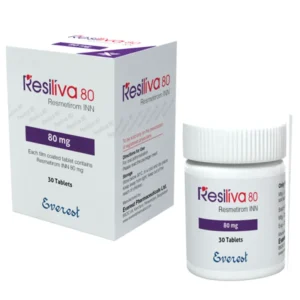
Resiliva 80 mg Tablet (Resmetirom)| Global Acces Named Patient Guide to Generic Rezdiffra
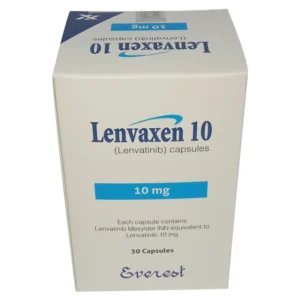
Consult Pharmacist for PriceLenvaxen 10 mg (Lenvatinib) Capsule | Thyroid Cancer Therapy
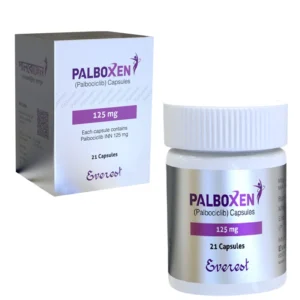
Consult Pharmacist for PricePalboxen 125 mg Capsule (Palbociclib) | Clinical Guide & Patient Safety Information
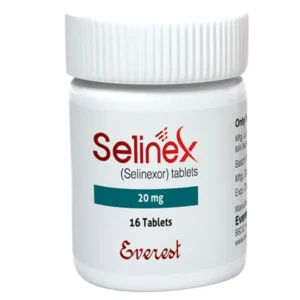
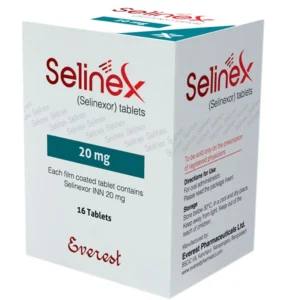
Consult Pharmacist for PriceSelinex 20 mg Tablets (Selinexor) | Selective Inhibitor of Nuclear Export (SINE)
Consult Pharmacist for Price