Sourcing Disclosure: Licensed Bangladesh Global Sourcing Specialist facilitating global access under Named Patient Regulations.
Expert-reviewed clinical data for prescription-only medicine.


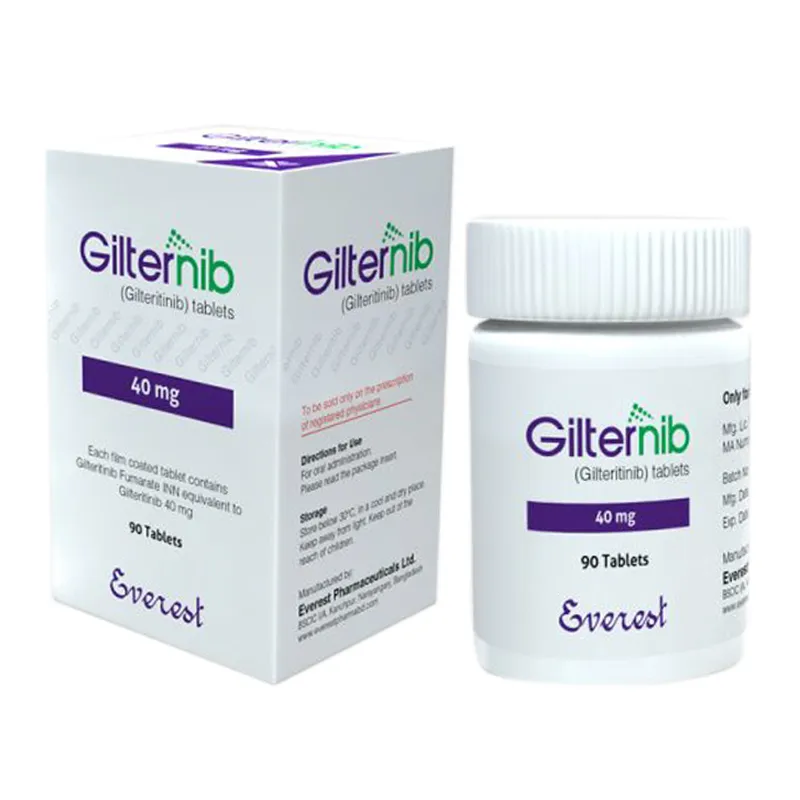
Gilternib 40 mg Tablet (Gilteritinib) | FLT3 Mutation Inhibitor
Brand Name: Gilternib
Generic Name: Gilteritinib
Therapeutic Class: FMS-like tyrosine kinase 3 (FLT3) inhibitor
Clinical Indications: Relapsed or refractory AML with a confirmed FLT3 mutation.
Available Strength: 40 mg
Pack Size: 90 Tablets
- WHO GMP Certified
- Reviewed By Medical Expert
- Batch Examined in Lab
Gilternib 40 mg (active pharmaceutical ingredient: gilteritinib) is a highly potent, orally bioavailable FMS-like tyrosine kinase 3 (FLT3) inhibitor. Manufactured by Everest Pharmaceuticals, this targeted oncology medication is therapeutically equivalent to the innovator brand, Xospata. It is strictly indicated for the treatment of adult patients presenting with relapsed or refractory acute myeloid leukemia (AML) harboring a FLT3 mutation. By selectively binding to and inhibiting both FLT3 internal tandem duplication (ITD) and tyrosine kinase domain (TKD) receptor mutations, Gilternib rapidly suppresses leukemic cell proliferation and induces apoptosis in receptor-dependent blast populations.
Expert Insight of the Medical Reviewer
“Managing relapsed or refractory FLT3-mutated AML has historically presented one of the most rigorous challenges in hematologic oncology. Prior to the integration of targeted FLT3 inhibitors, patients facing disease relapse exhibited a profoundly poor prognosis, often failing to achieve subsequent remissions with standard cytotoxic salvage chemotherapy.
The introduction of gilteritinib fundamentally altered this clinical reality. By specifically targeting the driver mutation, we observe rapid blast clearance and a statistically significant extension of overall survival. However, the high acquisition cost of innovator biologics and targeted therapies often restricts patient access, particularly in emerging healthcare systems. The availability of high-quality, bioequivalent generics like Gilternib, manufactured under strict WHO-GMP guidelines by Everest Pharmaceuticals, bridges this critical gap. It ensures that oncologists can prescribe the standard-of-care molecule with absolute confidence in its pharmacokinetic stability and clinical efficacy, directly improving survival outcomes across a broader patient demographic.“
FDA Approved Clinical Data & Advance Adverse Event Management Protocols
Precise Indications & Diagnostic Prerequisites
Gilternib is indicated exclusively for adult patients with relapsed or refractory AML with a confirmed FLT3 mutation.
- Biomarker Requirements: Efficacy is established across both FLT3-ITD and FLT3-TKD (D835 and I836) mutations.
- Companion Diagnostic: Prescription must be preceded by mutation verification utilizing an FDA-approved or highly validated regional companion diagnostic tool (e.g., LeukoStrat® CDx FLT3 Mutation Assay) from peripheral blood or bone marrow aspirate.
Mechanism of Action & Pharmacokinetics (ADME)
Gilteritinib interrupts exogenous and endogenous FLT3 receptor signaling.
- Molecular Pathways: It competitively inhibits ATP binding at the FLT3 receptor, effectively halting downstream phosphorylation of the STAT5, PI3K/AKT, and MAPK/ERK pathways, thereby initiating leukemic cell apoptosis.
- Absorption: Peak plasma concentrations ((Tmax)) are achieved between 4 to 6 hours post-dose. High fat meals decrease Cmax by approximately 26%, though total exposure (AUC) remains unaffected.
- Distribution: Highly bound to plasma proteins (94%), predominantly albumin, with extensive tissue distribution.
- Metabolism: Primarily metabolized in the liver via the CYP3A4 enzyme system.
- Excretion: Excreted primarily in the feces (64.5%) and minimally in the urine (16.4%).
- Half-Life: The estimated terminal half-life (t1/2) is approximately 113 hours, allowing for steady-state achievement within 15 days of once-daily dosing.
Dosage & Adverse Event (AE) Management Protocol
- Baseline Dosing: 120 mg (administered as three 40 mg tablets) orally once daily. Continue treatment for a minimum of 6 months to allow time for clinical response, unless disease progression or unacceptable toxicity occurs.
| Adverse Event | Toxicity Grade / Presentation | Action / Dose Modification |
| Differentiation Syndrome | Fever, dyspnea, pleural effusion, weight gain. | Administer systemic corticosteroids (e.g., dexamethasone 10 mg IV BID). Interrupt Gilternib if symptoms are severe. Resume at 120 mg when symptoms resolve to Grade 1. |
| QTc Prolongation | QTc interval > 500 msec. | Interrupt Gilternib. Correct electrolytes (K+, Mg2+). Upon resolution to ≤ 480 msec or baseline, resume at a reduced dose of 80 mg daily. |
| Posterior Reversible Encephalopathy Syndrome (PRES) | Seizures, altered mental status, visual disturbances. | Permanently discontinue Gilternib. |
| Cytopenias | Platelets < 50 Gi/L, Neutrophils < 0.5 Gi/L (lasting > 4 weeks without active leukemia). | Interrupt Gilternib until counts recover, then resume at 80 mg daily. |
Clinical Efficacy & Real-World Data
The clinical superiority of gilteritinib was established in the landmark Phase 3 ADMIRAL Trial (NCT02421939):
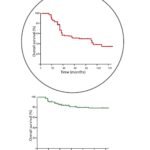
- Median Overall Survival (OS): 9.3 months for the gilteritinib cohort vs. 5.6 months for the salvage chemotherapy cohort.
- Hazard Ratio (HR): 0.64 (95% CI: 0.49, 0.83; p=0.0004), representing a 36% reduction in the risk of death.
- Response Rates: The rate of Complete Remission (CR) or Complete Remission with partial hematologic recovery (CRh) was 34%.
- Real-World Evidence (RWE): Post-marketing surveillance and independent clinical registries confirm that these survival benefits persist outside trial settings, particularly when dose intensity is maintained and emergent toxicities (like differentiation syndrome) are managed aggressively in standard hospital environments.
Drug-Drug Interaction (DDI) Matrix
| Drug Class / Mechanism | Examples | Clinical Effect | Action / Modification |
|---|---|---|---|
| Strong CYP3A4 Inducers | Rifampin, Phenytoin, St. John’s Wort | Significant decrease in gilteritinib AUC (up to 70%), risking therapeutic failure. | Contraindicated. Avoid concomitant use. |
| Strong CYP3A4 Inhibitors | Ketoconazole, Itraconazole, Clarithromycin | Increases gilteritinib AUC, elevating the risk of toxicities (e.g., QTc prolongation). | Consider alternative therapies. If unavoidable, monitor ECG and observe closely for AEs. |
| QT-Prolonging Agents | Amiodarone, Ondansetron, Fluoroquinolones | Additive effect on ventricular repolarization delays. | Avoid co-administration. If required, mandate continuous ECG monitoring. |
Precautions & Special Populations
- Pregnancy & Embryo-Fetal Toxicity: Gilteritinib can cause fetal harm when administered to pregnant individuals. Verify pregnancy status prior to initiation. Females of reproductive potential must use highly effective contraception during treatment and for at least 6 months following the final dose.
- Lactation: Excretion in human milk is unknown. Advise women not to breastfeed during treatment and for 2 months after the final dose.
- Pediatric Use: Safety and effectiveness in patients under 18 years of age have not been established.
- Geriatric Use: Clinical trials demonstrated no significant variations in safety or efficacy profiles between patients aged 65 and older and younger cohorts.
- Organ Impairment: No dose modification is required for mild to moderate renal or hepatic impairment. The pharmacokinetics in severe impairment have not been robustly evaluated.
- Handling & Storage: Store at 20°C to 25°C (68°F to 77°F); temporary excursions permitted to 15°C to 30°C (59°F to 86°F). Retain in original packaging to protect from moisture and light.
Manufacturer Trust, Head-to-Head Comparison & Global Access
Brand vs. Generic Therapeutic Equivalence
| Specification | Xospata® (Innovator Brand) | Gilternib (Everest Pharmaceuticals) |
|---|---|---|
| Active Pharmaceutical Ingredient | Gilteritinib Fumarate | Gilteritinib Fumarate |
| Available Strength | 40 mg Tablet | 40 mg Tablet |
| Therapeutic Indication | FLT3-mutated R/R AML | FLT3-mutated R/R AML |
| Route of Administration | Oral | Oral |
| Bioequivalence | FDA Reference Standard | Verified via rigorous PK/PD testing |
Everest Pharmaceuticals Manufacturing Integrity
Gilternib is synthesized by Everest Pharmaceuticals, an institution operating under stringent regulatory frameworks. The manufacturing facilities strictly adhere to WHO-GMP (Good Manufacturing Practices) guidelines and hold active ISO certifications. Every batch undergoes comprehensive high-performance liquid chromatography (HPLC) testing to guarantee exact stoichiometric ratios, API purity, and dissolution profiles identical to the innovator molecule.
Global Access via the Named Patient Program (NPP)
Patients residing in jurisdictions where Gilternib is not yet commercially registered can legally access this medication through the Named Patient Program (NPP), an established framework for importing life-saving drugs. Require/+d Documentation for Personal Importation:
- Local Oncologist Prescription: A valid, clearly written prescription specifying Gilternib 40 mg, daily dosage, and treatment duration.
- Letter of Medical Necessity: A signed declaration from the treating hematologist detailing the patient’s FLT3-mutated AML diagnosis, previous failed therapies, and the clinical justification for gilteritinib.
- Patient Identity Verification: Government–issued identification (e.g., Passport).
- Import License/Permit: Provided by the patient’s national Ministry of Health or customs authority (requirements vary by country; designated export specialists assist in this phase).
Frequently Asked Questions (FAQs)
Q1: What is Gilternib 40 mg used for?
A: Gilternib is a prescription oncology medication used to treat adults with acute myeloid leukemia (AML) that has returned (relapsed) or has not responded to previous treatments (refractory), specifically when the leukemia cells have a confirmed FLT3 gene mutation.
Q2: How should I take Gilternib tablets?
Q3: What are the most common side effects of Gilteritinib?
Q4: Can I take other medications while on Gilternib?
Q5: Is Gilternib by Everest Pharmaceuticals the same as Xospata?
A: Yes, therapeutically. Gilternib is a generic formulation containing the exact same active ingredient (gilteritinib) as the brand-name drug Xospata. It is manufactured to meet equivalent safety, quality, and efficacy standards.
Q6: How long do I need to take this medication?
Related products

Caboxen (Cabozantinib) 20 mg Capsules | A Multi-Targeted Tyrosine Kinase Inhibitor (TKI)
Consult Pharmacist for PriceSelcaxen 40 mg Capsule (Selpercatinib): Clinical Profile and Treatment Overview
Consult Pharmacist for PriceDaclaxen 60 mg Tablet (Daclatasvir) | NS5A inhibitor for Chronic Hepatitis C (HCV)
Consult Pharmacist for PriceOlanib 150 mg Tablet (Olaparib) | Clinical Overview Of A PARP Inhibitor
Consult Pharmacist for Price

Reviews
There are no reviews yet.