Sourcing Disclosure: Licensed Bangladesh Global Sourcing Specialist facilitating global access under Named Patient Regulations.
Expert-reviewed clinical data for prescription-only medicine.


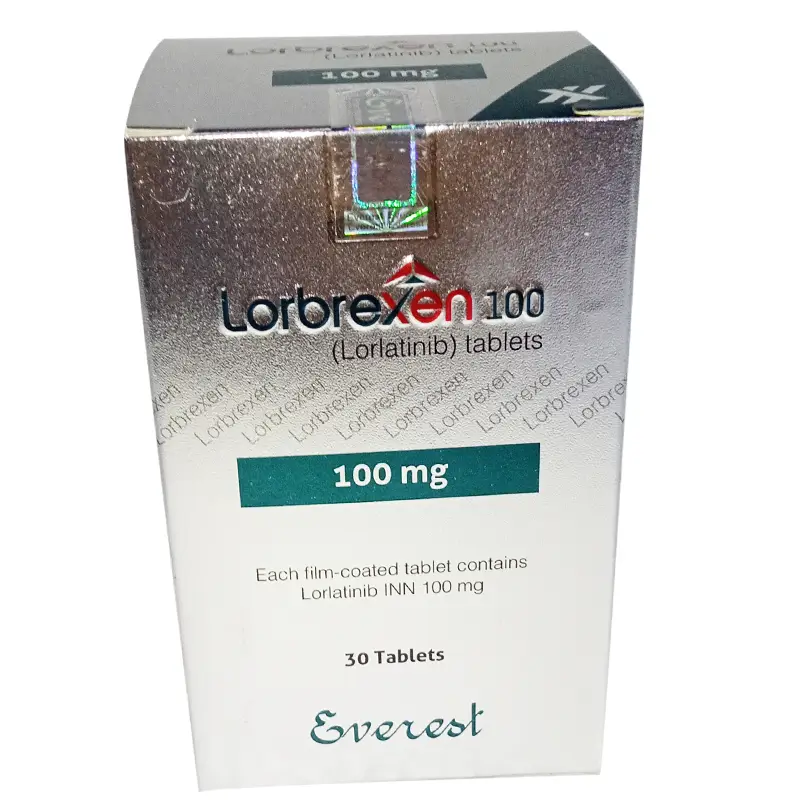
Lorbrexen 100 mg Tablet (Lorlatinib)
Brand Name: Lorbrexen
Generic Name: Lorlatinib
Therapeutic Class: Third-Generation ALK (Anaplastic Lymphoma Kinase) Tyrosine Kinase Inhibitor (TKI).
Clinical Indication: First-line treatment or treatment for patients with metastatic ALK-positive non-small cell lung cancer (NSCLC)
- WHO GMP Certified
- Reviewed By Medical Expert
- Batch Examined in Lab
Lorbrexen 100 mg contains the active pharmaceutical ingredient Lorlatinib. It is a potent, third-generation tyrosine kinase inhibitor (TKI) specifically engineered to target the Anaplastic Lymphoma Kinase (ALK) and ROS1 proteins. Lorbrexen is exclusively indicated for the treatment of adult patients with metastatic non-small cell lung cancer (NSCLC) whose tumors are ALK-positive. Designed with high lipophilicity to cross the blood-brain barrier (BBB), Lorlatinib specifically addresses central nervous system (CNS) metastases and overcomes secondary resistance mutations that typically develop after exposure to first- or second-generation ALK inhibitors (such as crizotinib or alectinib).
Real world clinical insight
“In the management of ALK-positive non-small cell lung cancer, the central nervous system has historically acted as a sanctuary site. Even when early-generation TKIs effectively controlled systemic disease in the lungs, they often failed to penetrate the blood-brain barrier, leaving the brain vulnerable to metastatic spread. The development of third-generation molecules like Lorlatinib represents a critical shift in our clinical protocols. By effectively crossing the BBB, we can now induce deep intracranial responses and target complex ALK resistance mutations (such as G1202R).
However, the clinical reality is that advanced oncology is often severely limited by financial toxicity. The high acquisition cost of innovator targeted therapies frequently leads to dose interruptions or complete treatment abandonment, which rapidly accelerates disease progression. The availability of high-quality, bioequivalent generics like Lorbrexen is not just an economic convenience; it is a clinical necessity. It ensures that patients can maintain the strict, continuous exposure required to keep ALK-driven malignancies suppressed over the long term.“
Clinical Guide, Safety Data, & Adverse Event Management Protocols
Precise Indications & Diagnostics
Accroding to the FDA data, Lorbrexen is indicated for adults with metastatic ALK-positive NSCLC.
- Companion Diagnostics: Initiation of therapy requires validated confirmation of the ALK rearrangement. This must be detected using an FDA- or EMA-approved diagnostic test, primarily Fluorescence In Situ Hybridization (FISH) or Next-Generation Sequencing (NGS) of tumor tissue or circulating tumor DNA (ctDNA).
Mechanism of Action & Pharmacokinetics
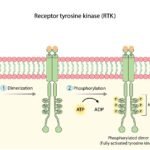
Lorlatinib functions by competitively binding to the ATP-binding pocket of the ALK and ROS1 kinases. This inhibits autophosphorylation, effectively shutting down downstream oncogenic signaling pathways, including PI3K/AKT, MAPK/ERK, and JAK/STAT. This cessation of signaling halts cellular proliferation and induces apoptosis.
ADME Summary:
- Absorption: Highly bioavailable; peak plasma concentrations (Tmax) are achieved in 1.2 to 2 hours. Food does not clinically alter systemic exposure.
- Distribution: Extensive tissue distribution with exceptional CNS penetration. In vitro protein binding is 66%.
- Metabolism: Primarily metabolized in the liver by CYP3A4 and UGT1A4.
- Excretion: Approximately 48% recovered in urine and 41% in feces.
- Half-life (t1/2): Approximately 24 hours, supporting once-daily dosing.
Dosage & Adverse Event (AE) Management
Baseline Dosing: The recommended starting dose is 100 mg taken orally once daily, with or without food, until disease progression or unacceptable toxicity.
Table 1: Grade 1-4 Adverse Event Management Protocol
| Toxicity / Adverse Event | Grade 1 or 2 Management | Grade 3 Management | Grade 4 Management |
|---|---|---|---|
| Hyperlipidemia (Cholesterol/Triglycerides) | Initiate or increase statins/fibrates. Continue Lorbrexen at 100mg. | Withhold until ≤ Grade 2. Resume at same dose. If severe, reduce to 75mg. | Withhold until $\le$ Grade 2. Resume at 75mg. |
| CNS Effects (Cognitive, Mood, Speech) | Monitor closely. Continue dose or reduce to 75mg if intolerable. | Withhold until ≤ Grade 1. Resume at a reduced dose (75mg or 50mg). | Permanently discontinue Lorbrexen. |
| Atrioventricular (AV) Block | Monitor EKG. Continue Lorbrexen. | Withhold until ≤ Grade 1. Resume at a reduced dose. | Permanently discontinue. |
| Pneumonitis / ILD | Withhold Lorbrexen. Investigate for alternative causes. | Permanently discontinue Lorbrexen. | Permanently discontinue. |
Clinical Efficacy & Real-World Data
The clinical superiority of Lorlatinib was established in the CROWN Trial (Phase 3), which compared Lorlatinib directly against crizotinib in previously untreated ALK-positive NSCLC.
- Progression-Free Survival (PFS): At the 3-year follow-up, median PFS was not reached for the Lorlatinib arm, compared to 9.3 months for crizotinib.
- Hazard Ratio (HR): 0.28 (95% CI: 0.19-0.41), representing a massive 72% reduction in the risk of progression or death.
- Intracranial Efficacy: Among patients with baseline measurable brain metastases, the Intracranial Objective Response Rate (IC-ORR) was 82%, with a 71% Complete Response (CR) rate.
- Real-World Evidence (RWE): Post-marketing data confirms these results outside of controlled trials, noting that prophylactic management of hyperlipidemia (often required within the first 4 weeks) is critical to maintaining patient adherence and achieving these survival metrics.
Table 2: Pharmacological Interactions
| Interaction Class | Examples | Actionable Protocol & Warnings |
|---|---|---|
| Strong CYP3A Inducers | Rifampin, Phenytoin, St. John’s Wort | Contraindicated. High risk of severe hepatotoxicity. Discontinue inducer 3 half-lives prior to starting Lorbrexen. |
| Strong CYP3A Inhibitors | Ketoconazole, Clarithromycin, Ritonavir | Avoid co-administration. If unavoidable, reduce Lorbrexen starting dose from 100 mg to 75 mg once daily. |
| CYP3A Substrates | Hormonal Contraceptives, Simvastatin | Lorbrexen induces CYP3A, reducing the efficacy of these substrates. Use non-hormonal contraception. |
| P-gp Substrates | Digoxin, Dabigatran | Lorbrexen may alter systemic exposure of P-gp substrates. Monitor therapeutic index closely. |
Precautions & Special Populations
- Pregnancy & Lactation: Lorlatinib exhibits severe embryo-fetal toxicity. Females of reproductive potential must use effective non-hormonal contraception during therapy and for 6 months after the final dose. Males with female partners of reproductive potential must use barrier contraception for 3 months post-treatment. Breastfeeding is strictly contraindicated.
- Pediatrics: Safety and efficacy in patients under 18 years of age have not been established.
- Renal Impairment: No dose adjustment is required for mild or moderate renal impairment. For severe renal impairment (CrCl 15 to <30 mL/min), reduce the starting dose to 75 mg once daily.
- Hepatic Impairment: Lorbrexen is not recommended for patients with moderate to severe hepatic impairment due to the risk of hepatotoxicity.
- Storage & Logistics: Store at controlled room temperature, 20°C to 25°C (68°F to 77°F). Excursions permitted between 15°C and 30°C. No specialized cold-chain logistics are required, but medication must be protected from excessive moisture.
Brand vs Generic Version, Global Access, & Manufacturer Trust
Table 3: Therapeutic Equivalence Matrix
| Clinical Metric | Lorbrena (Innovator) | Lorbrexen (Generic) |
|---|---|---|
| Active Pharmaceutical Ingredient | Lorlatinib | Lorlatinib |
| Available Strengths | 25 mg, 100 mg Tablets | 25 mg, 100 mg Tablets |
| Therapeutic Indications | ALK+ Metastatic NSCLC | ALK+ Metastatic NSCLC |
| Mechanism of Action | ALK / ROS1 Tyrosine Kinase Inhibitor | ALK / ROS1 Tyrosine Kinase Inhibitor |
| Bioequivalence Status | Reference Standard | Structurally & Clinically Identical |
Global Access via the Named Patient Program (NPP)
For patients residing in countries where generic Lorlatinib is not locally registered or is financially inaccessible, Lorbrexen can be legally acquired through the Named Patient Program (NPP) or Personal Use Importation laws.
Step-by-Step Importation Protocol:
- Valid Prescription: The patient must obtain a formal, written prescription for Lorlatinib 100mg from their treating, locally registered oncologist.
- Letter of Medical Necessity: A brief letter from the physician explaining why the medication is required and justifying the importation (e.g., local unavailability or unaffordability).
- Regulatory Clearance: Depending on the destination country (e.g., FDA in the USA, MHRA in the UK), patients may need to submit these documents to their local customs or health authority to receive a No Objection Certificate (NOC) or personal import permit.
- Fulfillment: Once verified by our pharmacy team, the medication is shipped directly to the patient or clinic via tracked, temperature-controlled medical logistics.
Everest Pharmaceuticals Manufacturing Insights
Lorbrexen is manufactured by Everest Pharmaceuticals, a globally recognized producer of advanced oncology generics. The facility operates under strict WHO-GMP (Good Manufacturing Practices) guidelines and holds ISO 9001 certifications. Everest utilizes state-of-the-art high-performance liquid chromatography (HPLC) to ensure absolute molecular purity. Every batch undergoes rigorous dissolution and pharmacokinetic testing to guarantee it matches the safety, efficacy, and systemic absorption profile of the innovator brand.
Frequently Asked Questions (FAQs)
Is Lorbrexen a form of traditional chemotherapy?
No. Lorbrexen is a targeted therapy known as a kinase inhibitor. Unlike traditional chemotherapy that attacks all fast-growing cells, Lorbrexen specifically targets cancer cells harboring the ALK gene mutation, generally sparing healthy tissue.
How long can a patient stay on Lorbrexen?
What are the common CNS side effects of Lorlatinib?
Why is my cholesterol increasing while taking this medication?
Can I crush Lorbrexen tablets if I have trouble swallowing?
Does Lorbrexen cure ALK-positive lung cancer?
Related products

Niranib 100 mg Capsule (Niraparib) | Clinical Profile and Treatment Overview
Consult Pharmacist for PriceSelcaxen 40 mg Capsule (Selpercatinib): Clinical Profile and Treatment Overview
Consult Pharmacist for PriceProstaxen 60 mg Tablet (Apalutamide) | Nonsteroidal Androgen Receptor (AR) Inhibitor
Consult Pharmacist for PriceAlkixen 250 mg Capsule (Crizotinib) | First-Generation ALK & ROS-1 Positive NSCLC Therapy
Consult Pharmacist for Price