Prescription required. We facilitate access to medicines already prescribed by your treating physician. We do not provide medical advice or diagnoses.


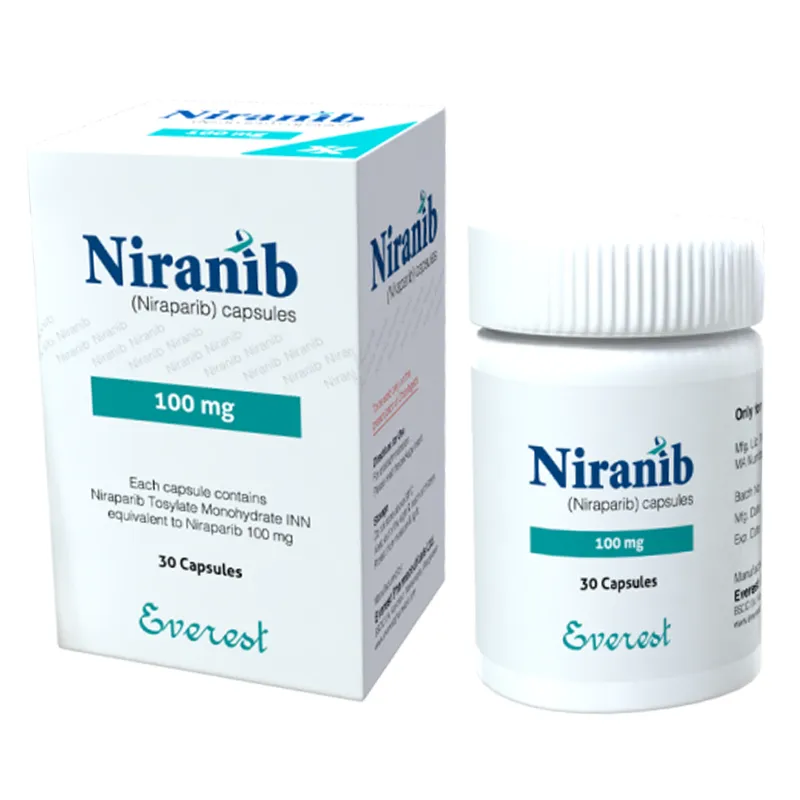
Niranib 100 mg (Niraparib) 30 Capsules
- Used for: Adults Patients with BRCA-Mutated Advanced Ovarian Cancer.
- Availability: In Stock
- Shipping: Express Global Shipping (7-14 days depending on region).
- Requirement: Valid prescription from a licensed healthcare provider required.
✓ WHO GMP Certified
✓ Reviewed By Medical Expert
✓ Batch Examined in Lab
Need Patient Access Support?
Our team provides verified global sourcing assistance to help you navigate international shipping and prescription requirements safely.
Niranib 100 mg (active pharmaceutical ingredient: niraparib) is a highly selective, orally active poly (ADP-ribose) polymerase (PARP) inhibitor. Manufactured by Everest Pharmaceuticals, this targeted oncology medication is therapeutically equivalent to the innovator brand, Zejula. It is strictly indicated for the maintenance treatment of adult patients with advanced epithelial ovarian, fallopian tube, or primary peritoneal cancer who are in a complete or partial response to platinum-based chemotherapy. By inhibiting PARP1 and PARP2 enzymes, Niranib disrupts DNA repair mechanisms, inducing synthetic lethality in tumor cells—particularly those with homologous recombination deficiency (HRD) or BRCA mutations.
Expert Insight by Salma Elreedy
“Historically, managing advanced ovarian cancer following a response to platinum-based chemotherapy presented a distinct clinical challenge: delaying disease recurrence without severely compromising the patient’s quality of life. The integration of PARP inhibitors like niraparib into our maintenance protocols fundamentally shifted this paradigm.
By exploiting synthetic lethality, niraparib provides a statistically significant extension of progression-free survival, irrespective of BRCA mutation status, though the benefit is most pronounced in HRD-positive cohorts. However, continuous maintenance therapy requires sustained medication adherence, which is frequently compromised by the high acquisition costs of innovator brands. The availability of high-quality, bioequivalent generics like Niranib, produced under uncompromising WHO-GMP standards by Everest Pharmaceuticals, addresses this barrier. It allows oncologists to prescribe evidence-based, standard-of-care maintenance therapy with absolute confidence in its pharmacokinetic stability, directly translating to improved longitudinal outcomes for a broader patient population.“
Safety Management Protocols and Administration Guide
Precise Indications & Diagnostic Prerequisites
Niranib is indicated as a monotherapy for the maintenance treatment of adults with advanced epithelial ovarian, fallopian tube, or primary peritoneal cancer.
- Biomarker Considerations: Unlike first-generation PARP inhibitors, niraparib does not strictly require a germline BRCA mutation for prescription. However, efficacy is stratified by Homologous Recombination Deficiency (HRD) status.
- Companion Diagnostic: While not strictly mandatory for use in the recurrent setting, testing for HRD status (e.g., via the Myriad myChoice® CDx assay) is highly recommended to predict the magnitude of clinical benefit and guide patient counseling.
Mechanism of Action & Pharmacokinetics (ADME)
Niraparib functions through the inhibition of PARP1 and PARP2, enzymes critical for DNA single-strand break repair.
- Molecular Pathways: Inhibition leads to the accumulation of single-strand breaks, which degenerate into double-strand breaks during DNA replication. In cells with preexisting HRD (such as BRCA1/2 mutations), this causes chromosomal instability and targeted cellular apoptosis (synthetic lethality).
- Absorption: Absolute bioavailability is approximately 73%. Peak plasma concentrations ((Tmax) are reached within 3 hours. Food does not significantly impact pharmacokinetics.
- Distribution: Moderately bound to human plasma proteins (83.0%), with an apparent volume of distribution Vd indicating extensive tissue distribution.
- Metabolism: Primarily metabolized by carboxylesterases (CEs) to form an inactive major metabolite (M1). It is not significantly metabolized by the CYP450 system.
- Excretion: Excreted in both urine (47.5%) and feces (38.8%), primarily as metabolites.
- Half-Life: The mean terminal half-life (t1/2) is approximately 36 hours, supporting once-daily dosing.
Dosage & Adverse Event (AE) Management Protocol
- Baseline Dosing: Dosing is individualized based on baseline body weight and platelet count.
- Weight ≥ 77 kg AND baseline platelets ≥ 150,000/µL: 300 mg (three 100 mg capsules) orally once daily.
- Weight < 77 kg OR baseline platelets < 150,000/µL: 200 mg (two 100 mg capsules) orally once daily.
| Adverse Event | Toxicity Grade / Presentation | Action / Dose Modification |
|---|---|---|
| Thrombocytopenia | Platelets < 100,000/µL. | Withhold Niranib. Monitor blood counts weekly. Upon recovery to $\ge$ 100,000/µL, resume at next lower dose (e.g., 300 mg to 200 mg). If platelets fall below 10,000/µL, consider platelet transfusion. |
| Anemia | Hemoglobin < 8 g/dL. | Withhold Niranib. Administer antihypertensives. Upon stabilization, resume at next lower dose. |
| MDS / AML | Confirmed Myelodysplastic Syndrome or Acute Myeloid Leukemia. | Permanently discontinue Niranib. |
| Hypertension | Grade 3 Systolic ≥ 160 or Diastolic ≥ 100 mmHg | Withhold Niranib. Administer antihypertensives. Upon stabilization, resume at next lower dose. |
Clinical Efficacy & Real-World Data
The clinical efficacy of niraparib was established in the PRIMA Trial (NCT02655016) and NOVA Trial (NCT01847274):
- PRIMA (First-Line Maintenance): In the HRD-positive cohort, the Median Progression-Free Survival (PFS) was 21.9 months for the niraparib arm vs. 10.4 months for placebo (Hazard Ratio [HR]: 0.43; 95% CI: 0.31, 0.59).
- NOVA (Recurrent Setting): In patients with a germline BRCA mutation, Median PFS was 21.0 months vs. 5.5 months for placebo (HR: 0.27; 95% CI: 0.17, 0.41).
- Real-World Evidence (RWE): Retrospective analyses from global tumor registries validate these trial outcomes, demonstrating sustained PFS in standard clinical practice when oncologists actively manage early-onset hematologic toxicities through protocol-driven dose modifications.
Drug-Drug Interaction (DDI) Matrix
Because niraparib is not a substrate, inhibitor, or inducer of CYP450 enzymes, it possesses a favorable DDI profile compared to other targeted therapies.
| Drug Class / Mechanism | Examples | Clinical Effect | Action / Modification |
|---|---|---|---|
| P-gp and BCRP Inhibitors | Amiodarone, Verapamil, Cyclosporine | Niraparib is a substrate of P-gp and BCRP; however, clinical data suggests no clinically significant changes in exposure. | No dose adjustment required. Monitor for increased AE incidence. |
| CYP450 Inhibitors/Inducers | Ketoconazole, Rifampin | Negligible effect on niraparib clearance. | Co-administration is generally safe without dose adjustments. |
Precautions & Special Populations
- Pregnancy & Embryo-Fetal Toxicity: Niranib can cause severe fetal harm. Verify pregnancy status prior to treatment. Females of reproductive potential must utilize highly effective contraception during therapy and for at least 6 months following the final dose.
- Lactation: Excretion in human breast milk is unknown. Instruct patients not to breastfeed during treatment and for 1 month after the final dose.
- MDS/AML Risk: Myelodysplastic Syndrome and Acute Myeloid Leukemia have occurred in patients treated with PARP inhibitors. Monitor complete blood counts (CBC) weekly for the first month, monthly for the next 11 months, and periodically thereafter.
- Hepatic Impairment: Reduce starting dose to 200 mg once daily for moderate hepatic impairment.
- Handling & Storage: Store at 20°C to 25°C (68°F to 77°F); excursions permitted to 15°C to 30°C (59°F to 86°F). No strict cold-chain logistics are required, but medication must remain in original packaging to protect from moisture.
Manufacturer Trust, Brand vs Generic Comparison and Global Access
Everest Pharmaceuticals Manufacturing Integrity
Niranib is synthesized by Everest Pharmaceuticals within facilities governed by WHO-GMP (Good Manufacturing Practices) guidelines and active ISO certifications. Each manufacturing lot undergoes rigorous high-performance liquid chromatography (HPLC) testing. This ensures exact stoichiometric ratios, active ingredient purity, and dissolution profiles that are clinically identical to the innovator biologic, securing absolute therapeutic reliability.
Global Access via the Named Patient Program (NPP)
Patients residing in regions where Niranib is not commercially registered can legally access this targeted therapy via the Named Patient Program (NPP), an established global framework for the importation of life-saving medications. Required Documentation for Legal Importation:
- Local Oncologist Prescription: A valid prescription specifying Niranib 100 mg, explicit daily dosage parameters, and intended treatment duration.
- Letter of Medical Necessity: A formal declaration from the prescribing oncologist detailing the advanced ovarian cancer diagnosis, previous platinum-based therapies, and the clinical justification for PARP inhibition.
- Patient Identity Verification: A valid, government-issued passport or national ID.
- Import License/Permit: Documentation issued by the patient’s national Ministry of Health or local customs authority (our export specialists facilitate this regulatory step).
Brand vs. Generic Therapeutic Equivalence
| Specification | Zejula® (Innovator Brand) | Niranib (Everest Pharmaceuticals) |
|---|---|---|
| Active Pharmaceutical Ingredient | Niraparib Tosylate | Niraparib Tosylate |
| Available Strength | 100 mg Capsule | 100 mg Capsule |
| Therapeutic Indication | Ovarian Cancer Maintenance | Ovarian Cancer Maintenance |
| Route of Administration | Oral | Oral |
| Bioequivalence | FDA Reference Standard | Verified via rigorous PK/PD testing |
Patient Queries
Q1: What is Niranib 100 mg used for?
A: Niranib is a targeted oncology medication used for the maintenance treatment of adult patients with advanced ovarian, fallopian tube, or primary peritoneal cancer who have responded to platinum-based chemotherapy.
Q2: How does Niraparib target cancer cells?
A: Niraparib belongs to a class of drugs called PARP inhibitors. It blocks the PARP enzymes that cancer cells use to repair their damaged DNA. When these enzymes are blocked, the damaged DNA cannot be repaired, causing the cancer cells to die.
Q3: What are the most common side effects of Niranib?
A: The most frequently reported side effects include a decrease in blood cell counts (platelets, red blood cells, and white blood cells), nausea, fatigue, and high blood pressure. Your oncologist will require regular blood tests to monitor these levels.
Q4: Do I need a BRCA mutation to take Niranib?
A: No. While Niranib is highly effective in patients with BRCA mutations or Homologous Recombination Deficiency (HRD), clinical trials have shown it extends progression-free survival in patients regardless of their biomarker status.
Q5: Is Niranib by Everest Pharmaceuticals equivalent to Zejula?
A: Yes. Niranib contains the exact same active pharmaceutical ingredient (niraparib) as the innovator brand Zejula. It is manufactured under strict WHO-GMP protocols to ensure it is therapeutically and pharmacokinetically equivalent.
Q6: How long will I need to take this maintenance therapy?
A: Patients typically take Niranib continuously as a daily maintenance therapy until the disease progresses or unacceptable side effects occur. Your healthcare provider will determine the exact duration based on your clinical response and tolerance.
Related products

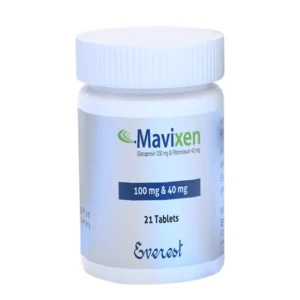
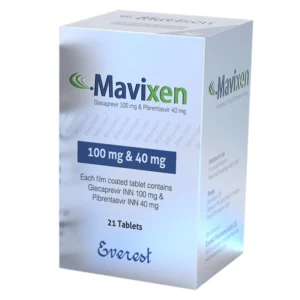
Mavixen (Glecaprevir + Pibrentasvir) 100 mg + 40 mg | Hepatitis C virus Therapy
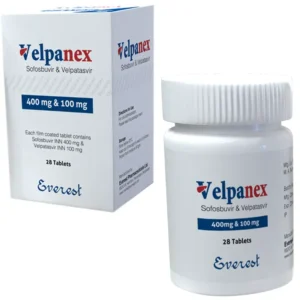
Request PriceVelpanex (Sofosbuvir + Velpatasvir) 100 mg + 400 mg | HCV Direct Acting Antiviral
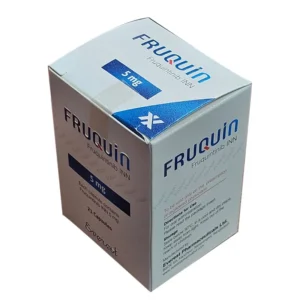
Request PriceFruquin 5 mg Tablet (Fruquintinib) | Metastatic Colorectal Cancer Therapy
Request PricePalboxen 125 mg (Palbociclib) 21 Capsule: How to Order & Safety Guide
Request Price