Sourcing Disclosure: Licensed Bangladesh Global Sourcing Specialist facilitating global access under Named Patient Regulations.
Expert-reviewed clinical data for prescription-only medicine.


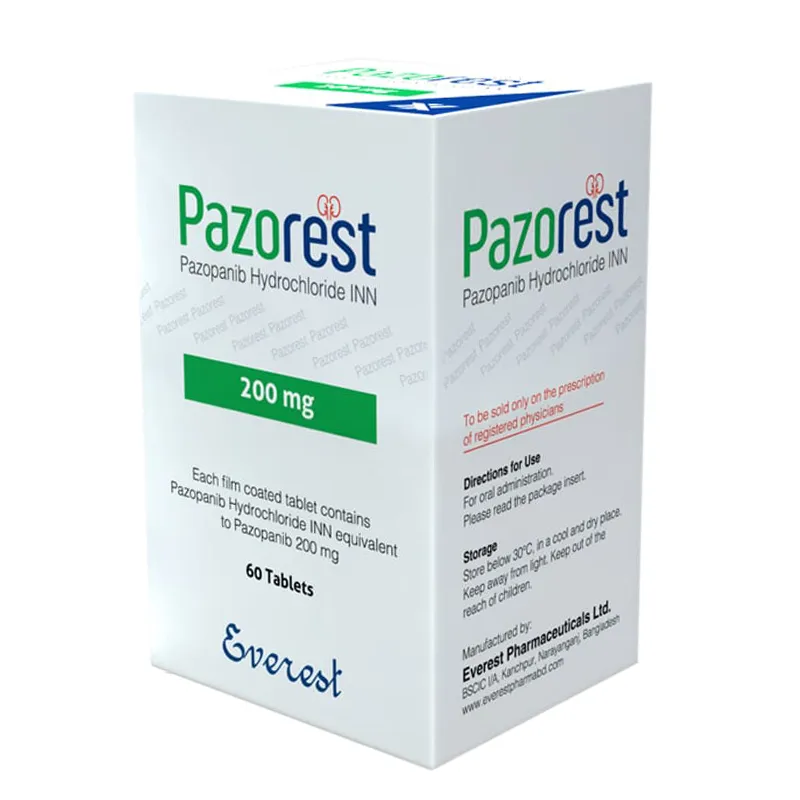
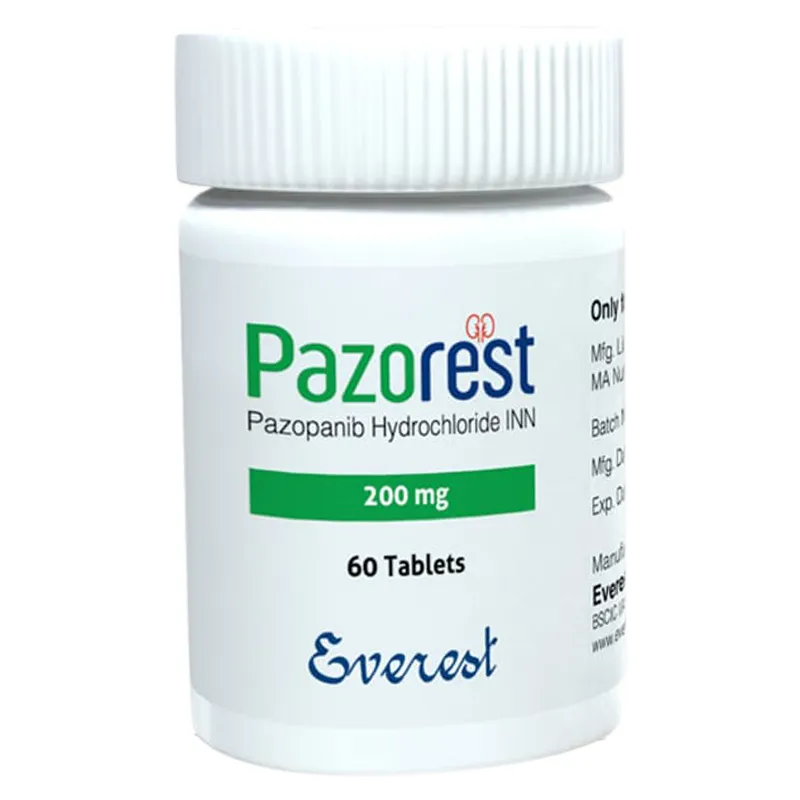


Pazopanib Hydrochloride (Pazorest) 200 mg Tablets | Soft Tissue Sarcoma & Renal Cell Carcinoma Therapy
Brand Name: Pazorest
Generic Name: PazoPanib
Therapeutic Class: Angiogenesis Inhibitor
Available Strength: 200 mg
Pack Size: 60 Tablets
- WHO GMP Certified
- Reviewed By Medical Expert
- Batch Examined in Lab
Disclaimer: The following information is for educational and informational purposes only and is not intended as a substitute for professional medical advice, diagnosis, or treatment. Always seek the guidance of your oncologist or other qualified healthcare provider with any questions you may have regarding a medical condition or treatment plan. (Medically Reviewed by: Dr. Salma Elreedy)
Pazorest 200 mg, containing the active pharmaceutical ingredient Pazopanib, is a potent oral multi-kinase inhibitor and the generic equivalent of the innovator brand Votrient (referenced as Pazopater in some regions). This medication marks a critical advancement in targeted oncology, specifically for managing advanced solid tumors. By interfering with the signals that allow cancer cells to grow and form new blood vessels, Pazorest helps slow the progression of the disease.
What are the primary clinical indications for Pazorest 200 mg?
Oncologists utilize Pazopanib for specific, high-stakes conditions as established by global regulatory bodies like the FDA and EMA:
Advanced Renal Cell Carcinoma (RCC): It is indicated as a first-line treatment for adults with advanced or metastatic kidney cancer.
Advanced Soft Tissue Sarcoma (STS): It is indicated for patients with specific subtypes of advanced soft tissue sarcoma who have previously received chemotherapy.
Note: Its efficacy has not been demonstrated in patients with adipocytic STS or gastrointestinal stromal tumors (GIST).
How does Pazopanib target cancer?
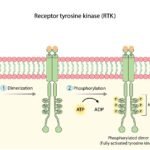
Cancer tumors require a constant supply of blood to grow and spread—a process called angiogenesis. Pazorest is an angiogenesis inhibitor. It works by blocking several “tyrosine kinase” receptors on the surface of cells, most notably VEGFR-1, -2, and -3, PDGFR-α and -β, and c-Kit.
By inhibiting these receptors, Pazorest effectively “starves” the tumor by preventing the formation of new blood vessels and disrupting the signaling pathways that leukemia and sarcoma cells use to multiply.
What is the recommended dosage and administration?
The administration of Pazopanib is highly specific because food significantly alters how your body absorbs the medicine.
Standard Dosage: The recommended starting dose is 800 mg once daily (taken as four 200 mg tablets).
The “Empty Stomach” Rule: You must take Pazorest on an empty stomach—at least 1 hour before or 2 hours after a meal. Taking it with food can more than double the concentration in your blood, which can lead to increased side effects.
Swallow tablets whole with water. Never crush or chew them, as this increases the absorption rate too quickly. If you miss a dose and your next dose is less than 12 hours away, skip the missed one and stay on your normal schedule.
What does the clinical evidence show?
The clinical authority of Pazopanib is grounded in major Phase III trials documented on Clinicaltrials.gov and published in the Journal of Clinical Oncology:
VEG105192 Trial: This landmark study in advanced RCC demonstrated that Pazopanib significantly improved progression-free survival (PFS) compared to placebo (9.2 months vs. 4.2 months).
PALETTE Trial (NCT00753688): In the soft tissue sarcoma setting, Pazopanib showed a statistically significant improvement in PFS over placebo, establishing it as a standard second-line therapy.
What are the side effects and safety considerations?
Like all targeted therapies, Pazorest has a defined safety profile. Based on reporting from the FDA and Drugs.com, common side effects include:
Hepatotoxicity: This is the most significant clinical risk. We monitor liver function tests (ALT, AST, and Bilirubin) before starting and regularly during the first few months.
Gastrointestinal Issues: Diarrhea (very common), nausea, and changes in appetite or taste (dysgeusia).
Hypertension: High blood pressure is a known effect; regular home monitoring of your BP is vital.
Hair and Skin Changes: You may notice a lightening of your hair color (depigmentation) or skin during treatment, which is typically reversible.
Are there precautions for special populations?
Pregnancy and Nursing: Pazopanib can cause fetal harm. Effective contraception is mandatory. Do not breastfeed while taking this medication.
Cardiac Health: Patients with a history of heart issues or high blood pressure must be monitored closely for heart rhythm changes (QT prolongation).
Surgery: Because it inhibits blood vessel growth, Pazorest can interfere with wound healing. It is usually paused before and after any planned surgical procedures.
Manufacturer Quality and Trust
Who manufactures Pazorest and how is quality ensured?
Pazorest 200 mg is manufactured by Everest Pharmaceuticals Ltd. In the field of international oncology, transparency is the foundation of patient trust. Everest Pharmaceuticals operates under strict WHO GMP (World Health Organization Good Manufacturing Practices) standards. Their specialized facility in Bangladesh utilizes advanced technology to ensure batch-to-batch consistency, purity, and clinical bioequivalence to the innovator brand. This ensures that the generic version delivers the same therapeutic molecular efficacy that patients and oncologists expect.
Global Access to Pazopanib
How can a patient access Pazorest 200 mg?
Accessing advanced oncology medications across borders is a legal and regulated process. International patients can access Pazorest through verified pharmaceutical exporters under “Personal Use Importation” rules, provided their national health ministry or drug distribution authority permits the importation of prescription medicines.
A valid prescription from a licensed oncologist is a mandatory requirement. This ensures that while patients access more affordable generic alternatives, they remain under the professional supervision of their medical team for dosage management and safety monitoring.
Frequently Asked Questions (FAQs)
Is Pazorest 200 mg exactly the same as Votrient?
Yes. Pazorest contains Pazopanib, the identical active pharmaceutical ingredient found in the innovator brand. Manufactured under WHO GMP standards, it is clinically bioequivalent, meaning it targets the cancer receptors with the same mechanism and potency.
Why must I avoid grapefruit while taking Pazorest?
Pazopanib is processed in the liver by an enzyme called CYP3A4. Grapefruit and its juice can block this enzyme, causing the medication levels in your blood to rise significantly, which increases the risk of side effects.
What should I do if my hair changes color?
Hair depigmentation (lightening or turning white) is a common side effect of many kinase inhibitors. It is not harmful and usually resolves if treatment is paused or concluded.
How long does it take for Pazorest to start working?
While the drug begins working on a molecular level shortly after the first dose, it often takes several weeks or months to see a measurable reduction in tumor size on a CT or MRI scan.
Can I take antacids with my treatment?
Gastric acid-reducing agents (like PPIs or H2 blockers) can lower the absorption of Pazopanib. If you need an antacid, it is best to use a short-acting one and separate it from your Pazorest dose by several hours. Always check with your care team first.
Related products

Olanib 150 mg Tablet (Olaparib) | Clinical Overview Of A PARP Inhibitor
Consult Pharmacist for PricePalboxen 125 mg Capsule (Palbociclib) | Clinical Guide & Patient Safety Information
Consult Pharmacist for PriceVelpanex (Sofosbuvir + Velpatasvir) 100 mg + 400 mg | HCV Direct Acting Antiviral
Consult Pharmacist for PriceResiliva 80 mg Tablet (Resmetirom)| Global Acces Named Patient Guide to Generic Rezdiffra
Consult Pharmacist for Price