Sourcing Disclosure: Licensed Bangladesh Global Sourcing Specialist facilitating global access under Named Patient Regulations.
Expert-reviewed clinical data for prescription-only medicine.


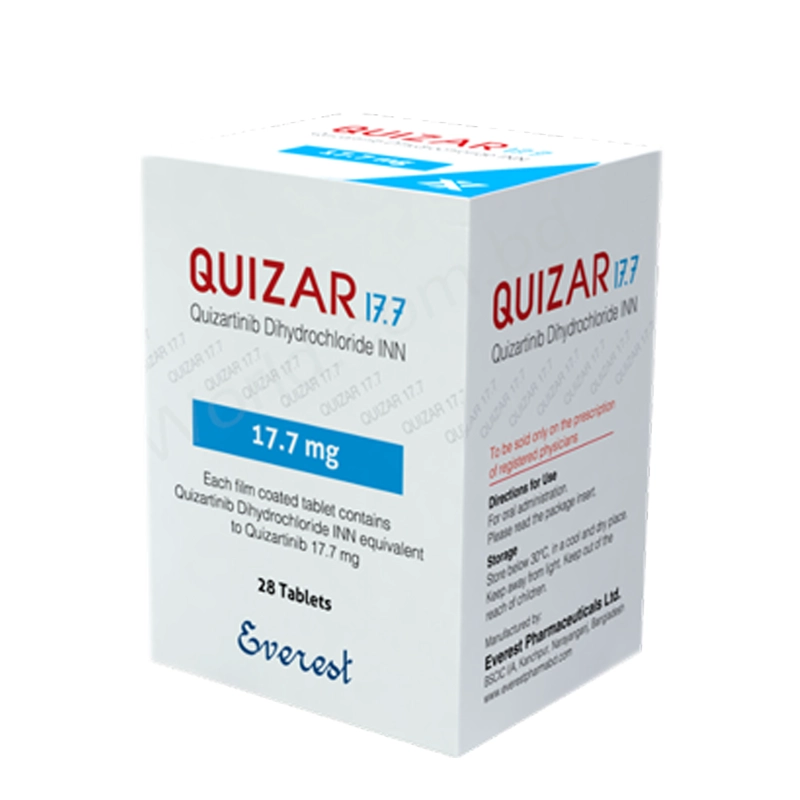
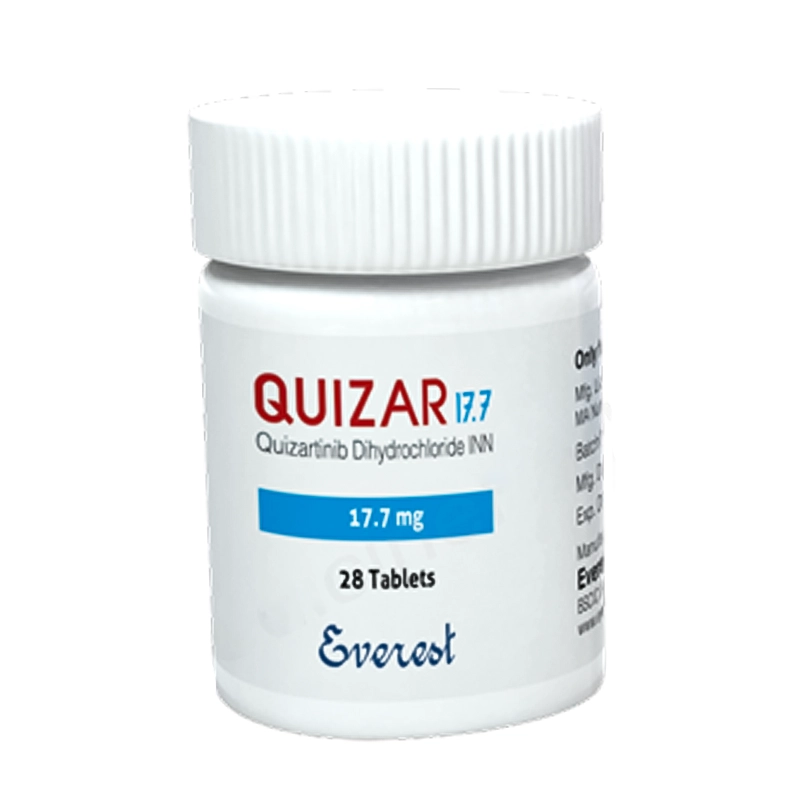
Quizar 17.7 mg (Quizartinib) Tablet | FLT3-ITD Tyrosine Kinase Inhibitor in AML
Brand Name: Quizar
Generic Name: Quizartinib
Therapeutic Class: FLT3 tyrosine kinase inhibitor
Clinical Indication: Newly diagnosed FLT3-ITD positive Acute Myeloid Leukemia (AML).
Available Strength: 17.7 mg
Pack Size: 28 Tablets
- WHO GMP Certified
- Reviewed By Medical Expert
- Batch Examined in Lab
Disclaimer: The following information is for educational and informational purposes only and is not intended as a substitute for professional medical advice, diagnosis, or treatment. Always seek the guidance of your hematologist, oncologist, or other qualified healthcare provider with any questions you may have regarding a medical condition or treatment plan. (Medically Reviewed by : Dr. Salma Elreedy)
Quizar 17.7 mg, containing the active pharmaceutical ingredient Quizartinib, is a highly potent and selective second-generation type II FLT3 inhibitor. It is the generic equivalent of the innovator brand, Vanflyta. This targeted therapy is specifically engineered for adult patients with a certain type of blood cancer called Acute Myeloid Leukemia (AML) that carries a genetic mutation known as FLT3-ITD. By blocking the abnormal signals that cause leukemia cells to multiply uncontrollably, Quizar helps slow down the disease and, when combined with chemotherapy, has been shown to improve overall survival.
Understanding Quizar 17.7 mg: Clinical Data & Guidelines
What are the primary clinical indications for Quizar 17.7 mg?
Oncologists utilize Quizartinib for adult patients in very specific clinical scenarios, as approved by global regulatory bodies like the FDA:
- Newly Diagnosed AML: Used in combination with standard induction (cytarabine and anthracycline) and consolidation chemotherapy.
- Maintenance Therapy: Continued as a single agent (monotherapy) following consolidation chemotherapy to help keep the leukemia in remission.
- FLT3-ITD Positive Status: It is only indicated for patients whose leukemia cells have the internal tandem duplication (ITD) mutation in the FLT3 gene, which must be confirmed by a validated diagnostic test.
How does Quizartinib target leukemia cells?
In healthy bone marrow, the FLT3 protein acts like a switch that tells blood cells when to grow. In patients with the FLT3-ITD mutation, this switch is “broken” and permanently stuck in the “on” position, leading to the rapid and uncontrolled growth of leukemia cells.
Quizartinib works by precisely binding to the FLT3 receptor on the surface of these cells. By blocking the receptor’s activity, Quizar effectively shuts off the “on” signal, which stops the leukemia cells from dividing and helps the bone marrow return to normal function.
What is the recommended dosage and how is it administered?
Dosing is highly specific and depends on the phase of your treatment:
- Induction/Consolidation: The standard starting dose is often 35.4 mg once daily (which is two 17.7 mg tablets). This is taken for two weeks during each chemotherapy cycle.
- Maintenance: After chemotherapy is finished, the dose often starts at 26.5 mg once daily and may be increased to 53 mg once daily based on how your heart’s electrical rhythm (QT interval) responds.
Administration Advice: Tablets should be swallowed whole with water; do not crush, chew, or split them. You can take them with or without food, but try to take them at the same time every day to maintain a steady level in your system.
What does the clinical evidence show regarding its effectiveness?
The clinical authority of Quizartinib is grounded in the QuANTUM-First trial (NCT02668653), a landmark Phase 3 study documented on Clinicaltrials.gov and published in The Lancet.
- Survival Benefit: The trial demonstrated that adding Quizartinib to standard chemotherapy significantly improved overall survival compared to chemotherapy alone.
- Deep Remissions: Patients receiving Quizartinib were more likely to achieve deeper remissions, which correlates with a lower risk of the cancer returning.
What are the potential side effects and safety considerations?
Because Quizartinib is a powerful kinase inhibitor, it has a distinct safety profile that requires close medical supervision:
- Cardiac Risks (Boxed Warning): Quizartinib can cause a change in the heart’s electrical rhythm known as QT prolongation. In rare cases, this can lead to serious heart rhythm problems like torsades de pointes or cardiac arrest.
- Hematological Effects: Since it affects blood cells, common side effects include febrile neutropenia (fever with low white blood cells) and low platelet counts.
- Laboratory Changes: You may see decreases in electrolytes like potassium, magnesium, calcium, and albumin. Routine blood tests are mandatory to monitor these.
- Other Common Effects: Nausea, diarrhea, mouth sores (mucositis), and headache.
Are there serious risks or warnings?
Yes. Heart health is the priority. Before starting Quizar, we perform an EKG to check your heart’s baseline rhythm. We continue to monitor this weekly during the first few months of treatment. We also monitor your electrolytes (potassium and magnesium) and correct any deficiencies before each dose.
Manufacturer Quality & Trust
Who manufactures Quizar and how is quality ensured?
Quizar 17.7 mg is manufactured by Everest Pharmaceuticals. In the specialized field of oncology, manufacturing transparency is essential for patient trust. Everest Pharmaceuticals operates under strict WHO GMP (World Health Organization Good Manufacturing Practices) standards. Their facility utilizes advanced environmental controls and rigorous batch-testing for molecular purity and stability. This ensures that every tablet of Quizar is clinically bioequivalent to the innovator brand (Vanflyta), providing patients with the same therapeutic outcome.
Global Access to Quizartinib
How can a patient access Quizar 17.7 mg internationally?
Accessing advanced leukemia treatments across borders is a legal and regulated process. International patients can access Quizar through verified pharmaceutical exporters under “Personal Use Importation” or “Named Patient” rules.
A valid prescription from a licensed hematologist or oncologist is a mandatory legal requirement. This ensures that while you access a more affordable generic option, you remain under the formal supervision of your medical team, who will perform the necessary EKG monitoring and dose adjustments to keep your treatment safe and effective.
Frequently Asked Questions (FAQs)
Is Quizar 17.7 mg the same as Vanflyta?
Yes. Quizar contains Quizartinib, the identical active pharmaceutical ingredient as Vanflyta. As a WHO GMP-certified generic, it is clinically bioequivalent, meaning it targets the FLT3-ITD mutation with the same mechanism and potency.
Why is the dose 17.7 mg instead of a round number?
17.7 mg is the amount of Quizartinib “base.” This is equivalent to 20 mg of Quizartinib dihydrochloride. Doctors use these specific numbers to ensure precise dosing during the various phases of AML therapy.
What should I do if I vomit after taking my dose?
If you vomit after taking Quizar, do not take an extra dose. Simply wait and take your next dose at the regularly scheduled time the following day.
Can I take this medicine with my other drugs?
Quizartinib is processed by an enzyme called CYP3A4. Certain drugs (like some antibiotics or antifungals) and even St. John’s wort can interfere with this enzyme, making the drug levels in your blood too high or too low. Always provide your oncologist with a full list of your medications.
How should I store my medication?
Quizar 17.7 mg tablets are stable at room temperature. They should be stored at controlled room temperature, 20°C to 25°C (68°F to 77°F), in their original container to protect them from moisture and light.
How long does treatment usually last?
In the maintenance phase, treatment can continue for up to 36 cycles (about 3 years), provided the leukemia stays in remission and you are not experiencing severe side effects.
Related products

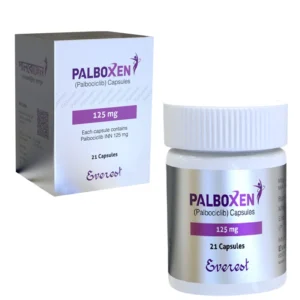
Palboxen 125 mg Capsule (Palbociclib) | Clinical Guide & Patient Safety Information
Consult Pharmacist for PriceEnasinib 50 mg Tablet (Enasidenib) | IDH2 (isocitrate dehydrogenase-2) inhibitor in AML
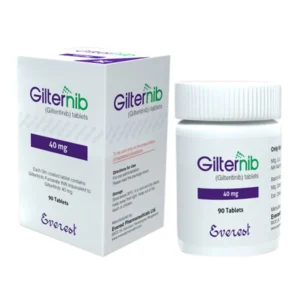
Consult Pharmacist for PriceGilternib 40 mg Tablet (Gilteritinib) | FLT3 Mutation Inhibitor
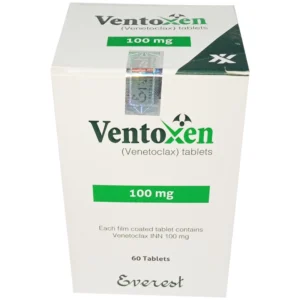
Consult Pharmacist for PriceVentoxen 100 mg (Venetoclax): Clinical Profile and Venclexta Alternative
Consult Pharmacist for Price