Sourcing Disclosure: Licensed Bangladesh Global Sourcing Specialist facilitating global access under Named Patient Regulations.
Expert-reviewed clinical data for prescription-only medicine.


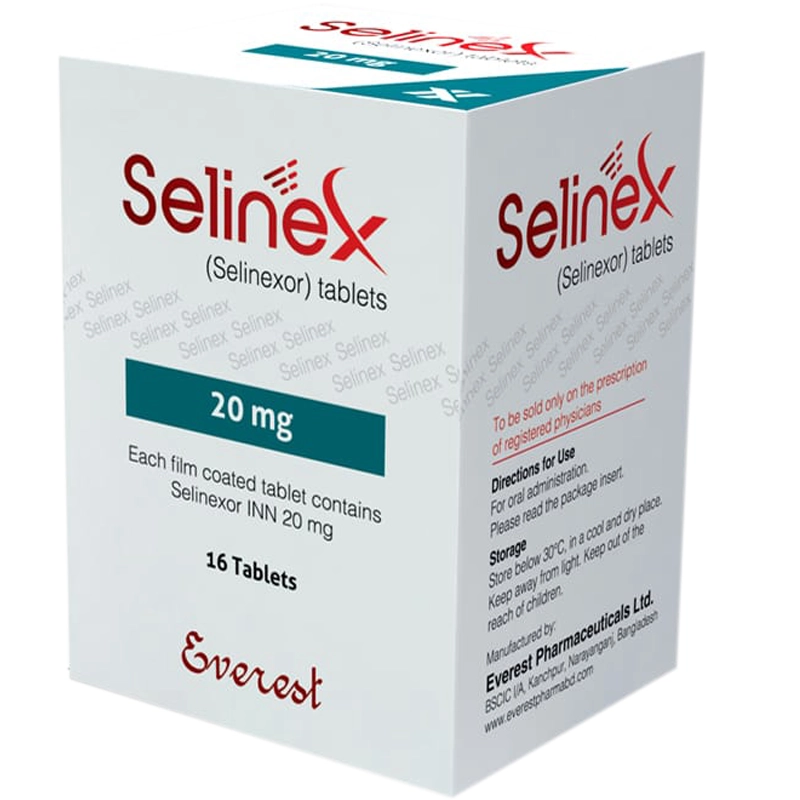
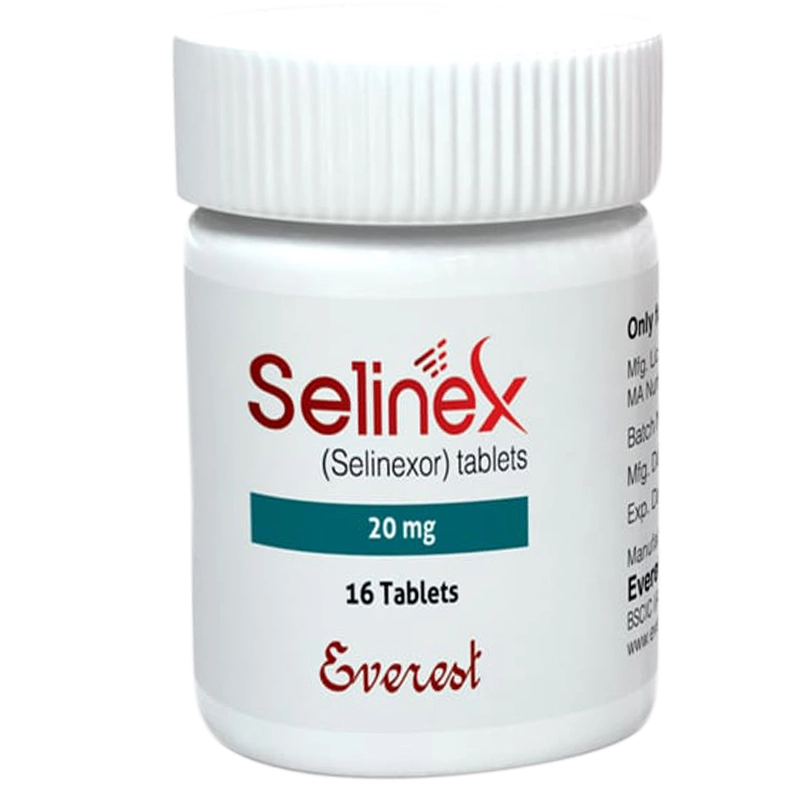
Selinex 20 mg Tablets (Selinexor) | Selective Inhibitor of Nuclear Export (SINE)
Brand Name: Selinex
Generic Name: Selinexor
Therapeutic Class: Selective Inhibitor of Nuclear Export (SINE)
Clinical Indications: Relapsed or Refractory Multiple Myeloma, Relapsed or Refractory Diffuse Large B-Cell Lymphoma
Available Strength: 20 mg
Pack Size: 16 Tablets
- WHO GMP Certified
- Reviewed By Medical Expert
- Batch Examined in Lab
Disclaimer: The following information is provided for educational and informational purposes only and is not intended as a substitute for professional medical advice, diagnosis, or treatment. Always seek the guidance of a hematologist, oncologist, or other qualified healthcare provider regarding medical conditions or treatment protocols. (Medically Reviewed by: Dr. Salma Elreedy)
Selinex 20 mg Tablets (Selinexor): Clinical Profile and Treatment Overview
Selinex 20 mg Tablet (Selinexor), is the generic equivalent of Xpovio. It is a first-in-class oncology medication known as a Selective Inhibitor of Nuclear Export (SINE). By targeting specific transport proteins within cancer cells, Selinexor represents a novel therapeutic approach for patients with advanced hematologic malignancies.
What are the primary clinical indications for Selinex 20 mg Tablets?
Selinexor is primarily used for patients with specific types of blood cancers that have returned or failed to respond to standard therapies. According to FDA and EMA approval data, these indications include:
- Relapsed or Refractory Multiple Myeloma (RRMM): Selinexor is used in combination with dexamethasone for adult patients who have received at least four prior therapies and whose disease is refractory to at least two proteasome inhibitors, two immunomodulatory agents, and an anti-CD38 monoclonal antibody. It is also indicated in combination with bortezomib and dexamethasone for patients who have received at least one prior therapy.
- Relapsed or Refractory Diffuse Large B-Cell Lymphoma (DLBCL): It is indicated for adult patients with DLBCL, not otherwise specified (including DLBCL arising from follicular lymphoma), after at least two lines of systemic therapy.
Mechanism of Action: How does Selinexor target cancer cells?
The human cell uses a transport protein called Exportin 1 (XPO1) to move proteins from the nucleus (the cell’s command center) to the cytoplasm. In many cancer cells, XPO1 is overactive, meaning it exports tumor-suppressor proteins—nature’s way of stopping cancer growth—out of the nucleus, preventing them from doing their job.
Selinexor binds directly and reversibly to XPO1. By blocking this transport “shuttle,” Selinexor forces tumor-suppressor proteins to stay inside the nucleus. Once these proteins accumulate in the nucleus, they can restart the cell’s internal checks, leading to cell cycle arrest and the natural death (apoptosis) of the cancer cell.
What are the recommended dosage and administration protocols?
The dosing schedule for Selinex is unique and highly dependent on the specific condition being treated. It is typically administered on a “weekly” or “twice-weekly” schedule rather than daily.
- For Multiple Myeloma (Triple Combination): The standard starting dose is often 100 mg (five 20 mg tablets) taken orally once weekly on Day 1 of each week.
- For Multiple Myeloma (with Dexamethasone): The dose is frequently 80 mg (four 20 mg tablets) taken on Days 1 and 3 of each week.
- For DLBCL: The recommended dosage is 60 mg (three 20 mg tablets) taken on Days 1 and 3 of each week.
Clinical Administration Guidelines:
- Tablets must be swallowed whole with water. They should not be crushed, chewed, or broken.
- It can be taken with or without food.
- Patients are advised to maintain adequate fluid and caloric intake to prevent dehydration and weight loss.
- Most patients are prescribed prophylactic anti-nausea medications (like 5-HT3 antagonists) before and during treatment to manage gastrointestinal side effects.
What does the clinical data show regarding efficacy?
The clinical performance of Selinexor is backed by several pivotal trials documented on Clinicaltrials.gov and published in the New England Journal of Medicine (NEJM):
- BOSTON Trial (Multiple Myeloma): This phase 3 study showed that combining Selinexor once weekly with bortezomib and dexamethasone significantly extended progression-free survival (PFS) compared to the standard twice-weekly bortezomib/dexamethasone regimen.
- SADAL Trial (DLBCL): In this open-label study, Selinexor demonstrated an overall response rate (ORR) of approximately 29%, with several patients achieving a complete response, even after failing multiple prior lines of chemotherapy.
Adverse Effects and Safety Profile
Based on safety data from the FDA and clinical repositories like Medscape, Selinexor has a distinct side effect profile that requires careful clinical management.
Commonly Reported Effects:
- Gastrointestinal Issues: Nausea (50-70%), vomiting, diarrhea, and decreased appetite are common. These usually occur early in treatment and are manageable with supportive care.
- Constitutional Symptoms: Fatigue (up to 60%) and weight loss are frequently observed.
- Hyponatremia: Low blood sodium levels occur in about 30-40% of patients and require monitoring of electrolytes.
Hematological Risks (Laboratory Monitoring):
- Thrombocytopenia: A reduction in platelet counts is a known pharmacological effect. Physicians monitor blood counts at baseline and frequently during the first two months.
- Anemia and Neutropenia: Decreases in red and white blood cells are common and may require dose modifications or growth factor support.
Neurological Effects:
- Some patients may experience dizziness, mental status changes, or blurred vision. These effects are often reversible with dose adjustments.
Precautions for Specific Populations
- Pregnancy: Selinexor can cause fetal harm. Effective contraception is required during treatment and for one week after the last dose.
- Lactation: It is advised not to breastfeed while taking this medication.
- Geriatric Use: Clinical trials included a high percentage of patients over 65. While efficacy is consistent, older adults may be more sensitive to side effects like fatigue and hyponatremia.
Storage Data and Environmental Stability
Unlike injectable biologics that require strict 2°C to 8°C cold chain handling, Selinex tablets are more stable. However, maintaining the integrity of the active pharmaceutical ingredient is still critical.
- Standard Storage: The medication should be stored at controlled room temperature, specifically between 20°C to 25°C (68°F to 77°F).
- Protection: It should be kept in a dry place, away from direct sunlight and excessive moisture.
- Transit Integrity: Certified pharmaceutical exporters utilize climate-controlled logistics to protect shipments from extreme thermal spikes during international flight or warehouse storage, ensuring the medication arrives with full clinical potency.
Manufacturer Quality and Trust
Selinex 20 mg is manufactured by Everest Pharmaceuticals. In the landscape of generic oncology, manufacturing transparency is the primary driver of patient trust. Everest Pharmaceuticals operates under stringent WHO GMP (World Health Organization Good Manufacturing Practices) standards. This involves continuous facility audits, rigorous batch-testing for purity, and confirmed bioequivalence to the innovator brand (Xpovio), ensuring the generic version delivers the same clinical outcomes.
Global Access to Selinexor
Navigating the acquisition of advanced oncology medicine internationally requires adherence to specific legal frameworks. Patients can access Selinex 20 mg through verified pharmaceutical exporters under “Personal Use Importation” regulations.
A valid prescription from a licensed hematologist or oncologist is mandatory. Most national drug authorities allow for the importation of essential medicines when they are not locally available or when a generic equivalent is more accessible. This process ensures the patient receives the necessary treatment while remaining under the supervision of their treating physician.
Frequently Asked Questions (FAQs)
Is Selinex 20 mg bioequivalent to Xpovio?
Yes. Selinex contains Selinexor, the identical active pharmaceutical ingredient as Xpovio. Because it is manufactured under WHO GMP standards, it is clinically bioequivalent, ensuring that the nuclear export inhibition and therapeutic effects are the same.
Why is the dosing only once or twice a week?
Selinexor has a unique pharmacological profile where “pulsed” dosing allows the body to recover between doses while still maintaining a strong anti-cancer effect. Following the specific weekly schedule provided by your doctor is essential for its success.
What should I do if I miss a dose of Selinexor?
If a dose is missed or delayed, you should take your next dose at the next regularly scheduled time. You should not take a “double dose” to make up for a missed tablet. If you vomit after taking a dose, do not repeat the dose; simply wait for the next scheduled day.
Are there foods I should avoid during treatment?
There are no specific food contraindications, but because Selinexor can cause nausea and weight loss, clinicians often recommend a high-calorie diet and consistent hydration (drinking plenty of water) to help the body process the medication more comfortably.
Can Selinexor be taken with other medications?
Selinexor is metabolized by the liver (CYP3A4). It is important to disclose all concurrent medications, including over-the-counter supplements, to your oncology team to ensure there are no interactions that could affect how the drug works or increase side effects.
Related products

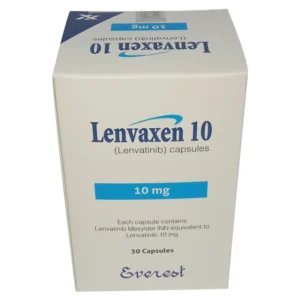
Lenvaxen 10 mg (Lenvatinib) Capsule | Thyroid Cancer Therapy
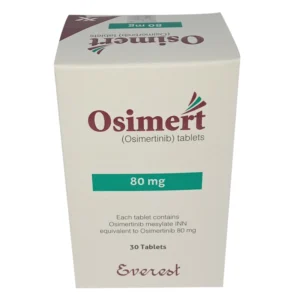
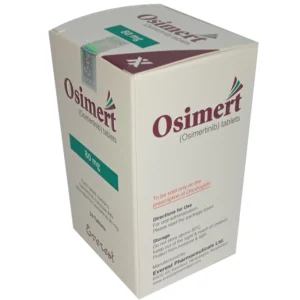
Consult Pharmacist for PriceWHO GMP Certified Generic Osimertinib (Osimert 80 mg) | Tagrisso Alternative
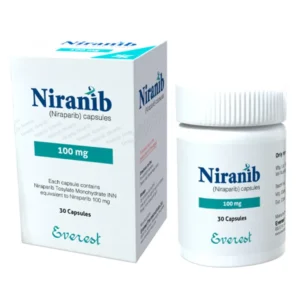
Consult Pharmacist for PriceNiranib 100 mg Capsule (Niraparib) | Clinical Profile and Treatment Overview
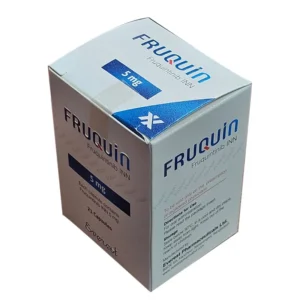
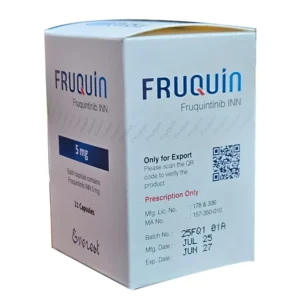
Consult Pharmacist for PriceFruquin 5 mg Tablet (Fruquintinib) | Metastatic Colorectal Cancer Therapy
Consult Pharmacist for Price