Prescription required. We facilitate access to medicines already prescribed by your treating physician. We do not provide medical advice or diagnoses.


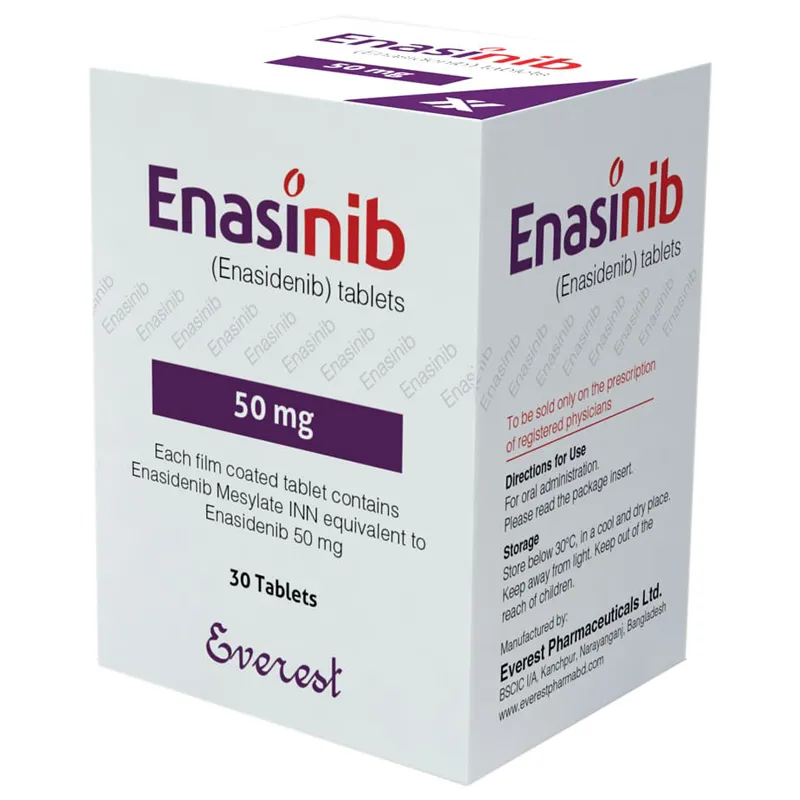
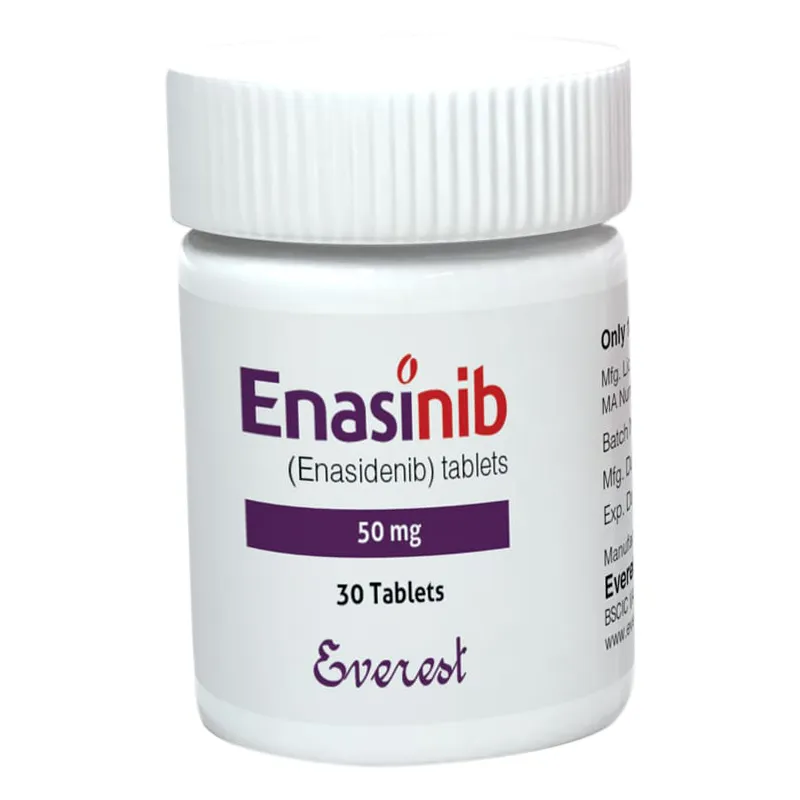
Enasinib 50 mg (Enasidenib) 30 Tablet: Global Patient Access, Price, & Clinical Safety Guide
- Used for: Adult patients with IDH2-mutant Relapsed/Refractory AML.
- Availability: In Stock
- Shipping: Express Global Shipping (7-14 days depending on region).
- Requirement: Valid prescription from a licensed healthcare provider required.
✓ WHO GMP Certified
✓ Reviewed By Medical Expert
✓ Batch Examined in Lab
Need Patient Access Support?
Our team provides verified global sourcing assistance to help you navigate international shipping and prescription requirements safely.
Enasinib is an oral, targeted small-molecule inhibitor of the isocitrate dehydrogenase-2 (IDH2) enzyme. It is specifically indicated for the treatment of adult patients with Relapsed or Refractory (R/R) Acute Myeloid Leukemia (AML) who harbor a confirmed isocitrate dehydrogenase-2 (IDH2) mutation, as detected by an FDA-approved diagnostic test. As a first-in-class differentiation therapy, Enasinib works by reducing levels of the oncometabolite 2-hydroxyglutarate (2-HG), thereby restoring normal myeloid cellular differentiation and reducing the blast count.
Clinically AML Patient Management Experience by Medical Reviewer
“For decades, the management of relapsed or refractory AML was limited to intensive salvage chemotherapy, which often yielded poor outcomes and significant toxicity, especially in older populations. The identification of IDH2 mutations—present in approximately 8% to 15% of AML cases—marked a turning point.
In my clinical experience, the transition from broad-spectrum cytotoxic agents to targeted inhibitors like Enasidenib has fundamentally altered how we approach R/R disease. Unlike traditional chemo, Enasinib does not work through immediate marrow ablation; it forces malignant blasts to mature into functional neutrophils. This ‘differentiation’ approach requires a different mindset regarding response assessment and side-effect management, particularly concerning Differentiation Syndrome. The availability of high-quality generic equivalents through manufacturers like Everest Pharmaceutical is critical. It bridges the gap between clinical innovation and global patient access, ensuring that life-extending targeted therapy is not restricted by geography or socioeconomic barriers.” (Dr. Salma Elreedy)
Specific Indications, Dosage, Side Effects, Clinical Efficacy, Adverse Event Management Profile
Precise Indications & Biomarker Requirements Mentioned in the FDA
Enasinib is not a frontline treatment for all AML patients. Efficacy is strictly tied to the presence of IDH2 mutations (specifically the R140 or R172 variants).
- Companion Diagnostic: Testing must be performed using a validated assay (e.g., Abbott RealTime IDH2 assay) on blood or bone marrow samples.
- Indication: Treatment of adult patients with R/R AML with an IDH2 mutation.
Mechanism of Action & Pharmacokinetics (ADME)
Enasidenib targets the mutant IDH2 enzyme to inhibit the conversion of alpha-ketoglutarate (α-KG) to 2-hydroxyglutarate (2-HG).
- Absorption: Peak plasma concentration reached in roughly 4 hours. Steady-state is achieved within 29 days.
- Distribution: High protein binding (98.5%).
- Metabolism: Primarily metabolized via CYP3A4, CYP2C19, and UGT enzymes.
- Excretion: 89% eliminated in feces; 11% in urine.
- Half-life: Approximately 137 hours, requiring careful monitoring during dose adjustments.
Dosage & Adverse Event (AE) Management
The standard starting dose is 100 mg orally once daily (utilizing two 50 mg tablets) until disease progression or unacceptable toxicity.
| Toxicity Type | Severity (Grade) | Clinical Protocol & Dose Modification |
|---|---|---|
| Differentiation Syndrome | Any Grade (Suspected) | Initiate systemic corticosteroids (Dexamethasone 10 mg Q12h) and hemodynamic monitoring. Do not interrupt Enasinib unless symptoms are severe. |
| Differentiation Syndrome | Severe (Grade 3-4) | Interruption is mandatory if severe pulmonary symptoms (requiring intubation/ventilator) or renal dysfunction persist for >48 hours after starting steroids. |
| Hyperbilirubinemia | Grade 3 (>3.0–10x ULN) | If >3x ULN for ≥2 weeks, reduce dose to 50 mg. Resume 100 mg only when bilirubin is <2x ULN. |
| QTc Prolongation | >500 ms | Interrupt Enasinib. Correct electrolytes. Resume at 50 mg once QTc is <480 ms. |
| Other Non-Hematologic | Grade 3 or higher | Interrupt until Grade ≤2. Resume at 100 mg; if recurs, reduce to 50 mg. |
| Noninfectious Leukocytosis | If WBC >30 x 10⁹/L, initiate hydroxyurea | Interrupt Enasidenib only if it persists despite hydroxyurea. |
Clinical Efficacy & Real-World Evidence (RWE)
The efficacy of Enasidenib was established in trial AG221-C-001 (NCT01915498), a multi-center, open-label study:
- Complete Remission (CR) / CR with partial hematologic recovery (CRh): 23%
- Median Duration of CR/CRh: 8.2 months.
- Median Time to First Response: 1.9 months (responses can take up to 6 months).
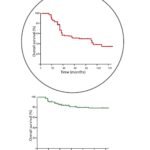
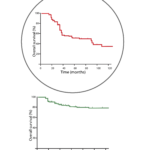
- Overall Survival (OS): Median OS in the R/R population was approximately 9.3 months.
Real-World Evidence (RWE): Post-marketing data suggests that in community settings, patients often remain on therapy longer than in trials, provided Differentiation Syndrome is managed aggressively in the first 60 days. RWE indicates that transfusion independence is achieved in approximately 34% of patients who do not reach a full CR.
Drug-Drug Interaction (DDI) Matrix
| Interaction Category | Agent Examples | Clinical Recommendation |
|---|---|---|
| Strong CYP3A4 Inducers | Rifampin, Phenytoin, St. John’s Wort | Avoid co-administration; may significantly reduce Enasinib plasma levels. as a CYP3A4 inducer, it can decrease the effectiveness of hormonal contraceptives. |
| Strong CYP3A4 Inhibitors | Ketoconazole, Itraconazole, Voriconazole | Monitor closely for increased toxicity. No immediate dose reduction required unless AEs occur. This can increase the concentration of drugs like caffeine, phenytoin, or S-mephenytoin. |
| BCRP Substrates | Rosuvastatin, Methotrexate | Enasidenib may increase concentrations of these drugs. Consider dose reduction of the substrate. |
| QTc Prolonging Agents | Ondansetron, Amiodarone, Moxifloxacin | Avoid concomitant use if possible. Mandatory ECG monitoring required. |
Precautions & Special Populations
- Embryo-Fetal Toxicity: Enasinib can cause fetal harm. Both females of reproductive potential and males with female partners should use effective contraception during treatment and for 2 months after the final dose. (as Enasidenib may interfere with hormonal birth control).
- Lactation: Advise patients not to breastfeed during treatment and for 1 month after the final dose.
- Pediatric Use: Safety and efficacy have not been established in patients under 18.
- Geriatric Use: No significant differences in safety or efficacy observed in patients ≥ 65 years.
- Storage: Store at 20°C to 25°C (68°F to 77°F). Keep in original bottle with desiccant to protect from moisture.
Manufacturing Quality Assurance, Named Patient Global Access, & Brand Comparison
Everest Pharmaceuticals Manufacturing Insights
Everest Pharmaceutical operates advanced manufacturing facilities that adhere to World Health Organization Good Manufacturing Practices (WHO-GMP). Each batch of Enasinib undergoes stringent quality control, including High-Performance Liquid Chromatography (HPLC) for purity assessment and dissolution profiling to ensure therapeutic equivalence to the originator.
Global Access via Named Patient Program (NPP)
For patients in regions where Enasinib is not yet locally registered, it can be accessed through the Named Patient Program (NPP). This legal framework allows for the importation of life-saving medications.
- Prescription: A valid prescription from a local licensed oncologist.
- Medical Necessity: A Letter of Medical Necessity (LMN) stating the patient’s IDH2 mutation status and treatment history.
- Import License: Application for a personal-use import permit from the local Ministry of Health.
- Documentation: Submission of patient ID and relevant clinical reports.
Originator (IDHIFA) vs Generic (Enasinib)
| Feature | Innovator (Idhifa) | Enasinib (Everest) |
|---|---|---|
| Active Ingredient | Enasidenib Mesylate | Enasidenib Mesylate |
| Dosage Strength | 50 mg / 100 mg | 50 mg |
| Bioequivalence | Reference Standard | Confirmed via Comparative Dissolution |
| Indication | IDH2-mutated R/R AML | IDH2-mutated R/R AML |
| Manufacturing Standards | FDA/EMA Approved | WHO-GMP & ISO Certified |
Frequently Asked Questions (FAQs)
What is the price of Enasinib 50 mg compared to the brand name?
Enasinib offers a significant cost-reduction, often priced at 60-80% less than the innovator brand, facilitating broader access in emerging markets while maintaining API purity.
How long does it take for Enasinib to work in AML?
The median time to the first response is approximately 1.9 months, though some patients may take up to 6 months to achieve a complete response.
What are the symptoms of Differentiation Syndrome with Enasinib?
Symptoms include fever, dyspnea, pulmonary infiltrates, pleural effusions, and rapid weight gain. Immediate medical intervention with corticosteroids is required.
Can Enasinib be used if I don’t have the IDH2 mutation?
No. Enasinib specifically targets the mutant IDH2 enzyme. It is not effective and not indicated for patients with wild-type IDH2 or other mutations like FLT3.
Is Enasinib a type of chemotherapy?
Technically, it is a “targeted therapy” or “differentiation agent,” not traditional cytotoxic chemotherapy. It helps cancer cells mature into normal cells rather than just killing them. “Differentiation Syndrome” is a sign that the drug is actually working (it is a side effect of the cancer cells maturing), which often reassures patients who are frightened by the symptoms.
Are there any dietary restrictions while taking Enasinib?
It can be taken with or without food. However, patients should avoid grapefruit products as they may interfere with the CYP3A4 metabolism of the drug.
Related products

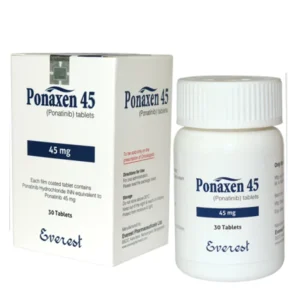
Ponaxen 45 mg (Ponatinib) 30 Tablets for CML & Ph+ALL
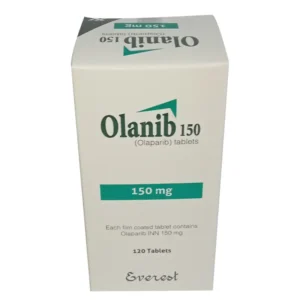
Request PriceOlanib 150 mg Tablet (Olaparib) | Clinical Overview Of A PARP Inhibitor
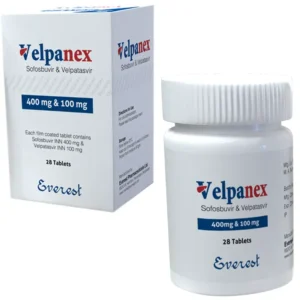
Request PriceVelpanex (Sofosbuvir + Velpatasvir) 100 mg + 400 mg | HCV Direct Acting Antiviral
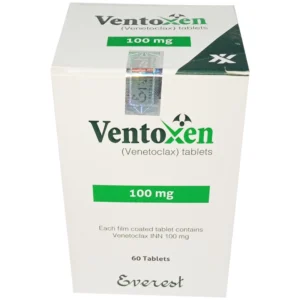
Request PriceVentoxen 100 mg (Venetoclax): Clinical Profile and Venclexta Alternative
Request Price