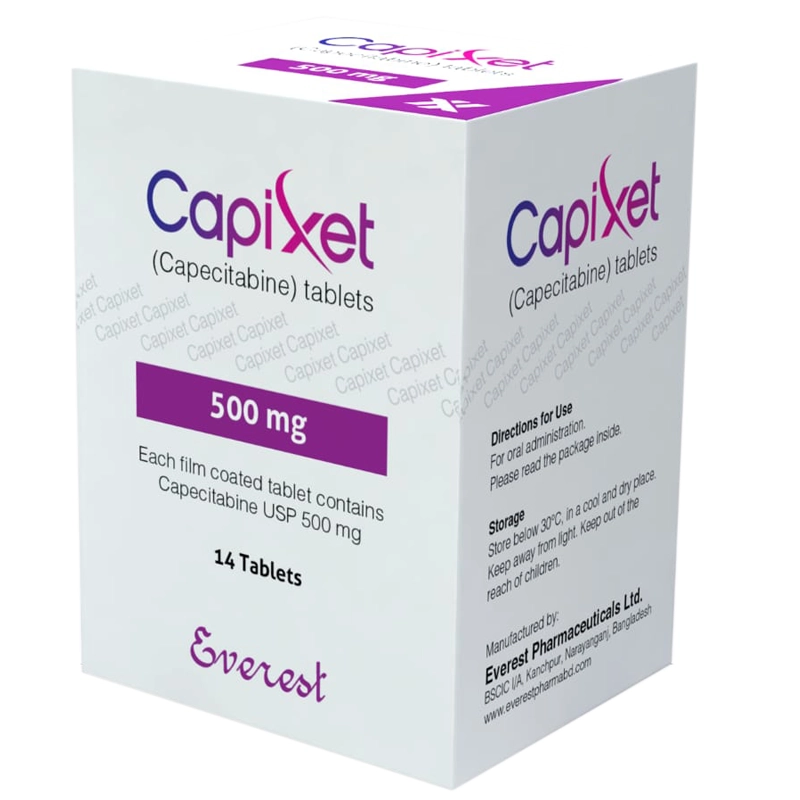
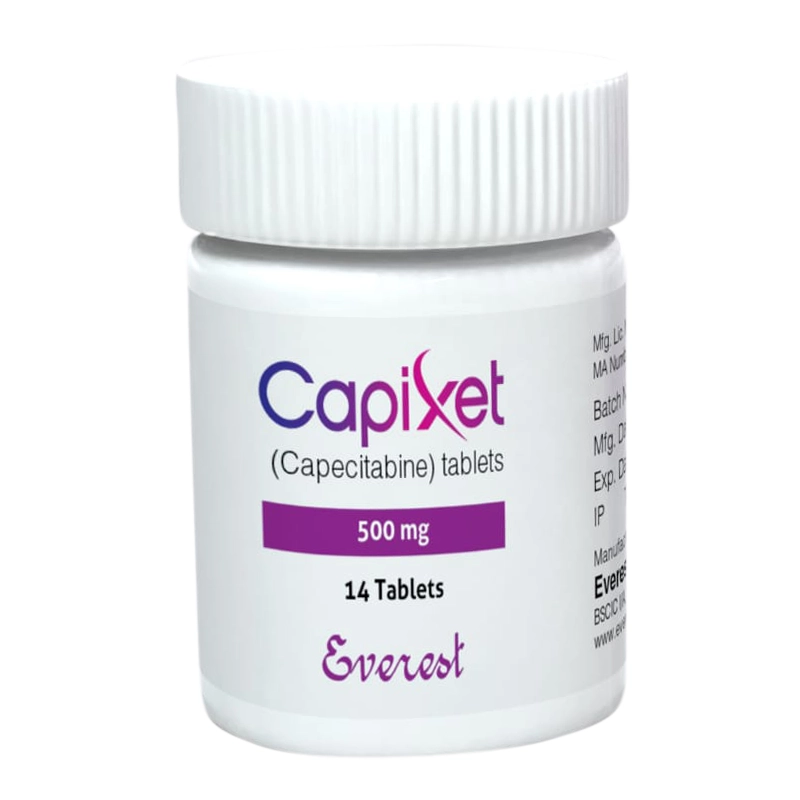
Being prescribed oral chemotherapy is a profound shift in your treatment plan. It means moving away from the clinical infusion chair and bringing your treatment home. Capixet 500 mg (Capecitabine) is an oral chemotherapeutic agent that provides the benefits of systemic treatment in a convenient tablet form. It is the bioequivalent generic of the innovator brand, Xeloda.
Capecitabine acts as a “prodrug.” This means it remains inactive in your bloodstream until it reaches the tumor site, where it is converted into its active, cancer-fighting form. This targeted mechanism is designed to concentrate the medicine where it is needed most while sparing as much healthy tissue as possible.
Clinical Oncologist Insight
“In my oncology practice, transitioning a patient to Capecitabine often fundamentally changes their daily reality. It gives them back their time, allowing them to undergo chemotherapy without spending hours in a hospital ward.
Taking chemotherapy at home shifts a massive amount of responsibility onto the patient. Because you are managing this yourself, strict adherence to the rules is non-negotiable. The ’30-minute rule’ after meals, for instance, isn’t just a suggestion to prevent an upset stomach—it is a strict pharmacokinetic requirement that prevents severe, dose-limiting toxicity. My goal is to ensure you have the exact clinical knowledge you need to manage this powerful medication safely from your own home.“
Clinical Data & Patient Guide
What is Capixet 500 mg indicated for?
Based on established protocols from the FDA, and EMA Capecitabine is primarily used for:
Adjuvant Colon Cancer: For patients who have undergone surgery for Stage III (Dukes’ C) colon cancer.
Metastatic Colorectal Cancer: As a primary, first-line treatment when single-agent therapy is preferred.
Metastatic Breast Cancer: Utilized either as a standalone therapy (when other treatments have failed) or in combination with other agents like docetaxel.
How does Capecitabine work in the body?
Capecitabine follows a unique “three-step” enzymatic process. After you swallow the tablet, it is absorbed and travels to the liver, where it begins its transformation. The final and most critical step happens predominantly inside the tumor itself, thanks to an enzyme called thymidine phosphorylase, which is often found in higher concentrations in cancer cells. This enzyme converts the medicine into 5-fluorouracil (5-FU). Once active, it blocks the tumor’s ability to repair its DNA and create new cells, effectively slowing or stopping the cancer’s growth.
What is the recommended dosage and how should it be taken?
Your oncologist will calculate your specific dose based on your body surface area (BSA), usually measured in mg/m².
Clinical Parameter
Standard Protocol
Actionable Instruction
Standard Dose
1250 mg/m²
Administered orally, twice daily (morning and evening).
Cycle Duration
21 Days
Take medication for 14 consecutive days, followed by a strict 7-day rest period.
Administration Timing
The “30-Minute Rule”
Tablets must be swallowed whole with water within 30 minutes after finishing a meal.
Renal Adjustment
CrCl 30–50 mL/min
Starting dose must be reduced by 25%. Contraindicated if CrCl <30 mL/min.
What side effects and safety data should I monitor?
Adverse Event
Clinical Presentation
Management Protocol (Grade 2/3)
Hand-Foot Syndrome (HFS)
Numbness, tingling, severe redness, peeling, or blistering of palms/soles.
Interrupt Therapy: Stop Capixet immediately. Apply heavy emollient creams. Do not resume until toxicity resolves to Grade 1.
Severe Diarrhea
Increase of 4 to 6 stools per day over baseline, or nocturnal diarrhea.
Sudden, severe, and unexpected toxicity (mucositis, neutropenia) within days of the first dose.
Medical Emergency: Indicates an absence of the DPD enzyme required to metabolize the drug. Permanently discontinue.
⚠️ FDA BLACK BOX WARNING: Anticoagulant Interaction Capixet can significantly alter coagulation parameters and cause severe, life-threatening bleeding if taken concurrently with coumarin-derivative anticoagulants (such as Warfarin). This interaction can occur within days of starting Capixet or up to one month after stopping. If co-administration is unavoidable, your PT/INR must be monitored almost daily.
Can I take vitamins or other drugs with Capixet?
You must be careful with blood thinners like Warfarin. Capecitabine can significantly increase the blood-thinning effect, raising your risk of bleeding. Also, avoid high doses of Folic Acid, as it can increase the toxicity of the drug. Always provide your oncologist with a full list of your supplements.
Other Common Adverse Reactions:
Nausea and Vomiting: Usually manageable with anti-nausea medications.
Fatigue: Feeling unusually tired is normal; schedule rest periods throughout your day.
Low Blood Counts: It can lower your white blood cells, increasing infection risk. report any fever of 100.4°F) or higher immediately.
Are there special precautions for certain populations?
DPD Deficiency: A small percentage of people lack the enzyme (DPD) needed to break down this drug. The FDA recently updated safety labels recommending genetic testing if possible, as a deficiency can lead to life-threatening toxicity.
Renal (Kidney) Health: If your kidneys aren’t working at full capacity, your doctor will likely reduce your starting dose by 25%. It is contraindicated for those with severe kidney disease.
Pregnancy: This medication can cause severe fetal harm. Both men and women must use effective contraception during treatment and for several months after the final dose.
How should I store Capixet 500 mg Tablet?
Capixet does not require cold chain storage. It should be kept at room temperature (20°C to 25°C) in a dry place. Keep the tablets in their original blister pack to protect them from light and moisture until the moment you take them.
Manufacturer Quality & Assurance
In oncology, the precision of the generic formulation is vital. Capixet is manufactured by Everest Pharmaceuticals Ltd. in their specialized facility in Bangladesh. The plant operates under the strict guidelines of World Health Organization Good Manufacturing Practices (WHO GMP). This ensures that every 500 mg tablet undergoes rigorous stability and bioequivalence testing to ensure it matches the therapeutic standards, absorption rate, and safety profile of the originator brand, Xeloda.
The Global Access Compliance Checklist
Upgrade your “Global Access” section with this clear, actionable list.
For patients in jurisdictions where generic Capecitabine is not locally approved or financially accessible, Capixet may be procured via “Named Patient” import regulations. To utilize this pathway safely and legally, the following documentation is mandatory:
Valid Medical Prescription: A formal prescription from your treating oncologist detailing the exact BSA calculation and dosage.
Letter of Medical Necessity: A brief document from your physician justifying the need for the generic equivalent.
Local Customs Verification: Our clinical pharmacy team will review your documentation to ensure compliance with your national health ministry’s personal use import quotas prior to dispatch.
Frequently Asked Questions (FAQ)
Is Capixet 500 mg exactly the same as Xeloda?
Yes. Capixet contains Capecitabine, the identical Active Pharmaceutical Ingredient (API) found in the innovator brand, Xeloda. Manufactured under WHO-GMP standards, it undergoes strict bioequivalence testing to ensure it delivers the exact same systemic absorption, cancer-fighting efficacy, and safety profile as the original medication.
Why must I take Capixet within 30 minutes after a meal?
Taking Capecitabine shortly after a meal is a mandatory pharmacokinetic requirement. Food increases the absorption of the drug into your bloodstream and significantly reduces the risk of severe gastrointestinal toxicity (like extreme nausea and diarrhea). Taking it on an empty stomach makes the medication less safe and less effective.
Will Capixet cause me to lose all my hair?
Unlike traditional intravenous chemotherapy, complete hair loss (alopecia) is rare with Capecitabine. Most patients may experience mild to moderate hair thinning, but complete baldness is highly uncommon when taking this oral medication as a single agent.
Can I take antacids for stomach upset while on Capixet?
You must exercise extreme caution. Antacids containing aluminum hydroxide and magnesium hydroxide (such as Maalox or Mylanta) can significantly increase the concentration of Capecitabine in your blood, raising the risk of severe side effects. Always consult your oncologist before taking any over-the-counter stomach medications.
How can I prevent Hand-Foot Syndrome from getting worse?
Prevention requires proactive skincare from day one. Apply a thick, alcohol-free emollient (like a 10% urea cream) to your hands and feet 3 to 4 times daily. Avoid hot water, tight-fitting shoes, and activities that cause friction (like heavy lifting or jogging). If your skin begins to blister or peel, contact your clinical team immediately to adjust your dose.
How long does the Named Patient Program take to deliver Capixet?
Once you submit your valid oncologist’s prescription and Letter of Medical Necessity, our clinical team verifies the documentation within 24 to 48 hours. Following regulatory clearance, international dispatch via temperature-controlled logistics typically takes between 7 to 14 business days, depending on your local customs authority.