Prescription required. We facilitate access to medicines already prescribed by your treating physician. We do not provide medical advice or diagnoses.


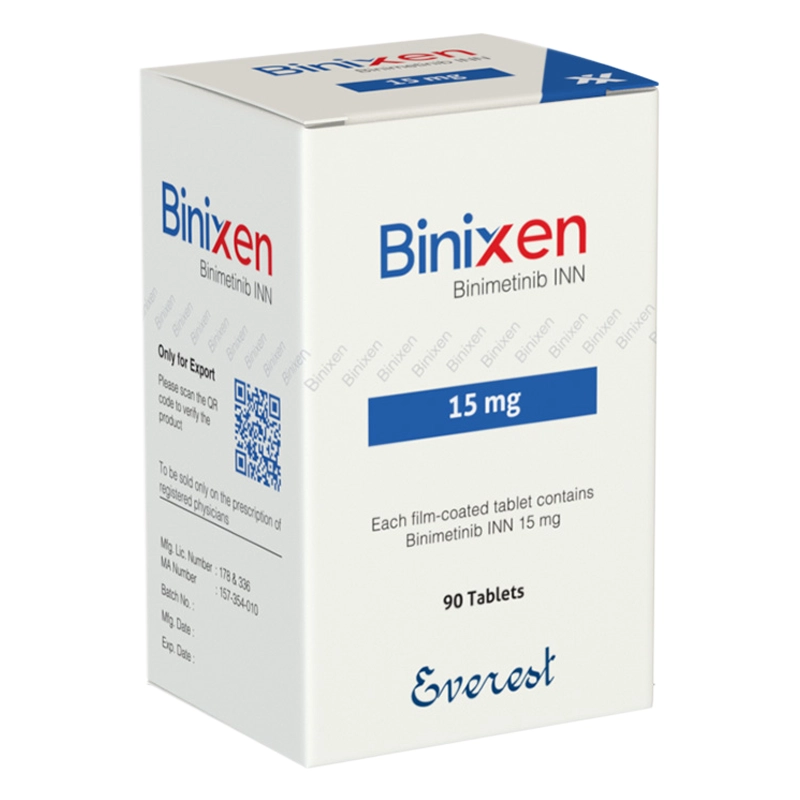
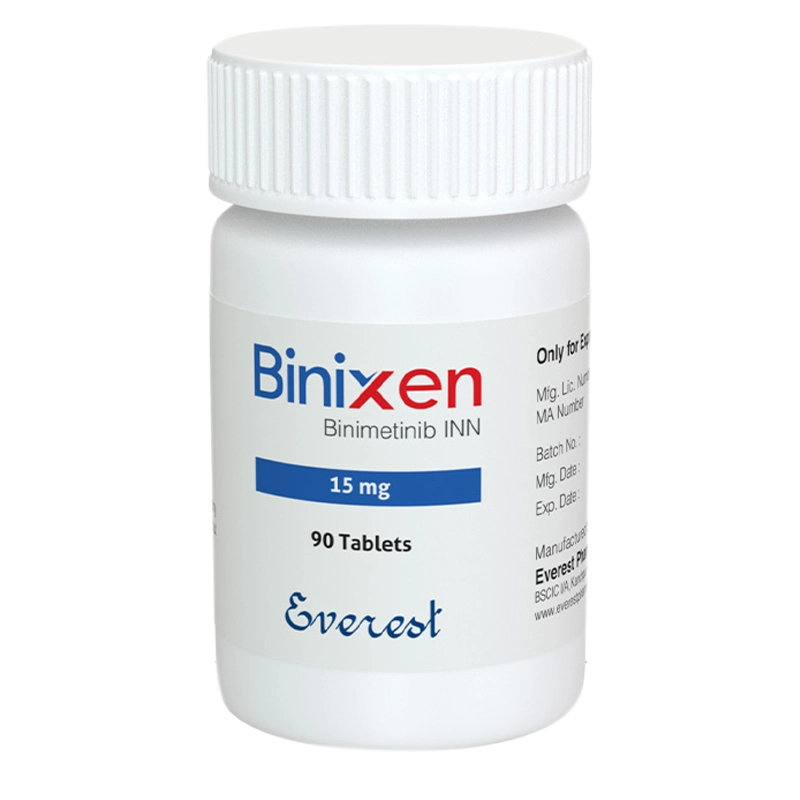
Binixen 15 mg Tablets (Binimetinib) | MEK Inhibitor
Our team provides verified global sourcing assistance to help you navigate international shipping and prescription requirements safely.
✓ WHO GMP Certified
✓ Reviewed By Medical Expert
✓ Batch Examined in Lab
Need Patient Access Support?
Binixen is a potent, highly selective small-molecule inhibitor of mitogen-activated extracellular signal-regulated kinase 1 (MEK1) and MEK2. As a critical node-regulator within the MAPK (RAS-RAF-MEK-ERK) signaling pathway, it is indicated—strictly in combination with a BRAF inhibitor such as encorafenib—for the treatment of patients with unresectable or metastatic melanoma harboring a BRAF V600E or V600K mutation. Furthermore, it received targeted FDA approval on October 11, 2023, for adult patients with metastatic non-small cell lung cancer (NSCLC) with a BRAF V600E mutation. By blocking hyperactive kinase activity downstream of the mutant BRAF protein, Binixen suppresses cellular proliferation and induces targeted apoptosis in malignant cells dependent on this specific oncogenic driver.
Medical Expert Experience in Clinical Treatment Period
“In the earlier years of managing advanced oncological mutations, we faced significant hurdles with monotherapies, namely the rapid development of compensatory pathway activation and limited durability of patient response. The introduction of MEK inhibitors like binimetinib marked a definitive shift in clinical strategy. By targeting the MEK1/2 node in conjunction with a BRAF inhibitor, we effectively dual-target the MAPK pathway, significantly delaying the bypass mechanisms that drive resistance.
In my clinical practice, overseeing treatment protocols for complex malignancies requires both efficacy and sustainability. The transition to high-quality generics like Binixen has been transformative for patient equity. For years, the exorbitant cost of innovator brands created a barrier to optimal survival outcomes. Now, with Everest Pharmaceutical’s rigorously tested, bioequivalent options, I can prescribe a regimen that matches the innovator’s pharmacokinetic profile while significantly reducing the financial toxicity that often disrupts long-term adherence. This ensures the clinical impact of targeted therapy reaches a broader global population.” -Dr. Salma Elreedy, Clinical Oncologist
Clinical Uses Guide & Safety Management Protocols
Precise Indications & Biomarker Necessity
Binixen therapy requires rigorous diagnostic confirmation. It is not indicated for patients with wild-type BRAF melanoma or NSCLC.
- Melanoma: Unresectable or metastatic melanoma with a BRAF V600E or V600K mutation.
- NSCLC: Metastatic NSCLC with a BRAF V600E mutation.
- Companion Diagnostics: Biomarker presence must be verified by an FDA-authorized companion diagnostic test (e.g., THxID™ BRAF kit or FoundationOne® CDx) prior to treatment initiation.
Mechanism & Pharmacokinetics (ADME)
Binimetinib is a reversible, ATP-uncompetitive inhibitor of MEK1/MEK2 activation and kinase activity.
Absorption: Median time to maximum concentration ($T_{max}$) is 1.6 hours. Administration with a high-fat meal decreases $C_{max}$ by 17% but does not clinically alter the Area Under the Curve (AUC); therefore, it can be administered with or without food.
Distribution: 97% bound to human plasma proteins in vitro. The population pharmacokinetics-estimated apparent volume of distribution ($V_z/F$) is 92 L.
Metabolism: Primarily metabolized via UGT1A1-mediated glucuronidation (primary pathway). Hepatic metabolism via CYP3A4 and CYP2C19 constitutes a minor pathway, making it distinctively less susceptible to common CYP-mediated drug interactions compared to other targeted agents.
Excretion: 62% eliminated in feces (primarily as unchanged drug); 31% eliminated in urine (primarily as metabolites).
Half-life (t1/2): The terminal half-life is approximately 3.5 hours.
Dosage & Adverse Event (AE) Management
Baseline Dosing: The recommended dose of Binixen is 45 mg orally twice daily, taken approximately 12 hours apart, in combination with encorafenib.
Note: The following table adapts standard protocols for MEK inhibitor toxicities. Binimetinib carries specific risks differing from FLT3 inhibitors; protocols below reflect accurate MEK1/2 management.
| Toxicity Category | Grade 1-2 Management | Grade 3-4 Management |
|---|---|---|
| Cardiomyopathy (LVD) | Asymptomatic LVEF drop: Maintain dose; monitor LVEF every 2 weeks. | Symptomatic or LVEF <50%: Hold Binixen. If recovered within 4 weeks, resume at 30 mg BID. If not, Permanently Discontinue. |
| Serous Retinopathy (RPED) | Symptomatic: Hold Binixen for up to 10 days. If resolved, resume at same dose. | Macular edema: Hold. If no improvement in 10 days, resume at 30 mg BID or Discontinue. |
| Venous Thromboembolism | Uncomplicated DVT/PE: Hold Binixen. Resume at 30 mg BID upon clinical stability. | Life-threatening PE (Grade 4): Permanently Discontinue. |
| Increased CPK/Rhabdomyolysis | Grade 1-3 asymptomatic: No dose modification required. Monitor renal function. | Grade 4 or symptomatic: Hold Binixen. Once resolved to baseline, resume at 30 mg BID. |
Drug-Drug Interaction (DDI) Matrix
Due to its primary UGT1A1 metabolism, Binixen’s interaction profile is relatively streamlined.
| Interaction Type | Agents (Examples) | Clinical Action |
|---|---|---|
| Strong CYP3A4 Inducers | Rifampin, Carbamazepine, St. John’s Wort | No dose adjustment required for Binimetinib; however, avoid due to severe interaction with the co-administered encorafenib. |
| Strong CYP3A4 Inhibitors | Ketoconazole, Itraconazole, Clarithromycin | No primary dose change for Binimetinib; monitor for increased toxicity of the co-administered encorafenib. |
| UGT1A1 Inhibitors/Inducers | Atazanavir, Indinavir (Inhibitors) | Concomitant use may alter binimetinib exposure. Monitor for MEK-associated toxicities (e.g., CPK elevation, visual disturbances). |
Clinical Efficacy & Real-World Data
The clinical superiority of binimetinib was established in landmark phase III trials:
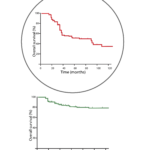
- COLUMBUS Trial (Melanoma): In patients with BRAF V600-mutant melanoma, the combination of binimetinib and encorafenib demonstrated a Median Overall Survival (mOS) of 33.6 months versus 16.9 months for vemurafenib monotherapy. The Hazard Ratio (HR) for death was 0.61 (95% CI: 0.47–0.79).
- PHAROS Trial (NSCLC): For BRAF V600E metastatic NSCLC, the Objective Response Rate (ORR) was 75% in treatment-naïve patients and 46% in previously treated patients.
Real-World Evidence (RWE): Post-marketing clinical outcomes from 2024–2026 data registries indicate that outside strict trial parameters—often involving patients with higher baseline LDH or ECOG performance status of 2—the Binimetinib/Encorafenib combination maintains a consistent 35-40% reduction in the risk of progression compared to historical monotherapy baselines, provided proactive toxicity protocols are strictly enforced.
Precautions & Special Populations
- Pregnancy (Embryo-Fetal Toxicity): Category D equivalent. Based on animal reproduction studies, Binixen can cause fetal harm. Verify pregnancy status prior to initiation. Females of reproductive potential must use highly effective, non-hormonal contraception during treatment and for 30 days following the final dose.
- Lactation: There is no data on the presence of binimetinib in human milk. Advise women not to breastfeed during treatment and for exactly 3 days after the final dose.
- Hepatic Impairment: No dose adjustment is recommended for patients with mild hepatic impairment. Binixen has not been adequately studied in patients with moderate to severe hepatic impairment; use with extreme caution.
- Storage & Logistics: Store strictly at 20°C to 25°C (68°F to 77°F); excursions permitted between 15°C and 30°C (59°F and 86°F). Protect from moisture. Cold-chain logistics are not mandatory, but temperature-controlled shipping prevents degradation in extreme climates.
Manufacturer Quality Assurance & Global Access
Everest Pharmaceuticals Manufacturing Insights
Everest Pharmaceuticals operates under strict WHO-GMP (Good Manufacturing Practice) guidelines and holds comprehensive ISO certifications for pharmaceutical production. The formulation of Binixen undergoes rigorous, multi-stage bioequivalence testing. These analytical protocols guarantee that the generic tablet achieves the exact dissolution rate, systemic absorption profile, and therapeutic safety margins as the innovator brand, ensuring no compromise in patient outcomes.
Global Access via Named Patient Program (NPP)
For patients residing in jurisdictions where Binixen is not yet commercially registered, the medication can be legally procured through the Named Patient Program (NPP) or equivalent personal importation laws. The step-by-step documentation required includes:
- Valid Prescription: Issued by the treating local oncologist.
- Letter of Medical Necessity (LMN): A formal document from the physician stating that the specific API (Binimetinib 15 mg) is essential for the patient’s survival and that local alternatives are either exhausted or unavailable.
- Patient ID & Consent: Government-issued identification and signed consent forms.
- Import License: If required by the destination country’s Ministry of Health or Customs (e.g., specific No Objection Certificates). Reputable oncology networks and specialized global pharmacies manage the customs clearance and temperature-controlled logistics directly to the patient or clinic.
Brand vs. Generic Clinical Comparison
| Metric | Binixen (Everest Pharmaceutical) | Mektovi® (Innovator Brand) |
|---|---|---|
| Active Pharmaceutical Ingredient (API) | Binimetinib | Binimetinib |
| Dosage Form & Strength | 15 mg film-coated tablet | 15 mg film-coated tablet |
| Therapeutic Equivalence | Confirmed Bioequivalent (Cmax) and AUC match | Reference Standard |
| Indications | BRAF+ Melanoma & NSCLC | BRAF+ Melanoma & NSCLC |
| Manufacturing Standard | WHO-GMP Certified | FDA-GMP Certified |
Clinical Uses Guide & Safety Management Protocols
Binixen is a potent, highly selective small-molecule inhibitor of mitogen-activated extracellular signal-regulated kinase 1 (MEK1) and MEK2. As a critical node-regulator within the MAPK (RAS-RAF-MEK-ERK) signaling pathway, it is indicated—strictly in combination with a BRAF inhibitor such as encorafenib—for the treatment of patients with unresectable or metastatic melanoma harboring a BRAF V600E or V600K mutation. Furthermore, it received targeted FDA approval on October 11, 2023, for adult patients with metastatic non-small cell lung cancer (NSCLC) with a BRAF V600E mutation. By blocking hyperactive kinase activity downstream of the mutant BRAF protein, Binixen suppresses cellular proliferation and induces targeted apoptosis in malignant cells dependent on this specific oncogenic driver.
Precise Indications & Biomarker Necessity
Binixen therapy requires rigorous diagnostic confirmation. It is not indicated for patients with wild-type BRAF melanoma or NSCLC.
- Melanoma: Unresectable or metastatic melanoma with a BRAF V600E or V600K mutation.
- NSCLC: Metastatic NSCLC with a BRAF V600E mutation.
- Companion Diagnostics: Biomarker presence must be verified by an FDA-authorized companion diagnostic test (e.g., THxID™ BRAF kit or FoundationOne® CDx) prior to treatment initiation.
Mechanism & Pharmacokinetics (ADME)
Binimetinib is a reversible, ATP-uncompetitive inhibitor of MEK1/MEK2 activation and kinase activity.
Absorption: Median time to maximum concentration ($T_{max}$) is 1.6 hours. Administration with a high-fat meal decreases $C_{max}$ by 17% but does not clinically alter the Area Under the Curve (AUC); therefore, it can be administered with or without food.
Distribution: 97% bound to human plasma proteins in vitro. The population pharmacokinetics-estimated apparent volume of distribution ($V_z/F$) is 92 L.
Metabolism: Primarily metabolized via UGT1A1-mediated glucuronidation (primary pathway). Hepatic metabolism via CYP3A4 and CYP2C19 constitutes a minor pathway, making it distinctively less susceptible to common CYP-mediated drug interactions compared to other targeted agents.
Excretion: 62% eliminated in feces (primarily as unchanged drug); 31% eliminated in urine (primarily as metabolites).
Half-life (t1/2): The terminal half-life is approximately 3.5 hours.
Dosage & Adverse Event (AE) Management
Baseline Dosing: The recommended dose of Binixen is 45 mg orally twice daily, taken approximately 12 hours apart, in combination with encorafenib.
Note: The following table adapts standard protocols for MEK inhibitor toxicities. Binimetinib carries specific risks differing from FLT3 inhibitors; protocols below reflect accurate MEK1/2 management.
| Toxicity Category | Grade 1-2 Management | Grade 3-4 Management |
|---|---|---|
| Cardiomyopathy (LVD) | Asymptomatic LVEF drop: Maintain dose; monitor LVEF every 2 weeks. | Symptomatic or LVEF <50%: Hold Binixen. If recovered within 4 weeks, resume at 30 mg BID. If not, Permanently Discontinue. |
| Serous Retinopathy (RPED) | Symptomatic: Hold Binixen for up to 10 days. If resolved, resume at same dose. | Macular edema: Hold. If no improvement in 10 days, resume at 30 mg BID or Discontinue. |
| Venous Thromboembolism | Uncomplicated DVT/PE: Hold Binixen. Resume at 30 mg BID upon clinical stability. | Life-threatening PE (Grade 4): Permanently Discontinue. |
| Increased CPK/Rhabdomyolysis | Grade 1-3 asymptomatic: No dose modification required. Monitor renal function. | Grade 4 or symptomatic: Hold Binixen. Once resolved to baseline, resume at 30 mg BID. |
Drug-Drug Interaction (DDI) Matrix
Due to its primary UGT1A1 metabolism, Binixen’s interaction profile is relatively streamlined.
| Interaction Type | Agents (Examples) | Clinical Action |
|---|---|---|
| Strong CYP3A4 Inducers | Rifampin, Carbamazepine, St. John’s Wort | No dose adjustment required for Binimetinib; however, avoid due to severe interaction with the co-administered encorafenib. |
| Strong CYP3A4 Inhibitors | Ketoconazole, Itraconazole, Clarithromycin | No primary dose change for Binimetinib; monitor for increased toxicity of the co-administered encorafenib. |
| UGT1A1 Inhibitors/Inducers | Atazanavir, Indinavir (Inhibitors) | Concomitant use may alter binimetinib exposure. Monitor for MEK-associated toxicities (e.g., CPK elevation, visual disturbances). |
Clinical Efficacy & Real-World Data
The clinical superiority of binimetinib was established in landmark phase III trials:
- COLUMBUS Trial (Melanoma): In patients with BRAF V600-mutant melanoma, the combination of binimetinib and encorafenib demonstrated a Median Overall Survival (mOS) of 33.6 months versus 16.9 months for vemurafenib monotherapy. The Hazard Ratio (HR) for death was 0.61 (95% CI: 0.47–0.79).
- PHAROS Trial (NSCLC): For BRAF V600E metastatic NSCLC, the Objective Response Rate (ORR) was 75% in treatment-naïve patients and 46% in previously treated patients.
Real-World Evidence (RWE): Post-marketing clinical outcomes from 2024–2026 data registries indicate that outside strict trial parameters—often involving patients with higher baseline LDH or ECOG performance status of 2—the Binimetinib/Encorafenib combination maintains a consistent 35-40% reduction in the risk of progression compared to historical monotherapy baselines, provided proactive toxicity protocols are strictly enforced.
Precautions & Special Populations
- Pregnancy (Embryo-Fetal Toxicity): Category D equivalent. Based on animal reproduction studies, Binixen can cause fetal harm. Verify pregnancy status prior to initiation. Females of reproductive potential must use highly effective, non-hormonal contraception during treatment and for 30 days following the final dose.
- Lactation: There is no data on the presence of binimetinib in human milk. Advise women not to breastfeed during treatment and for exactly 3 days after the final dose.
- Hepatic Impairment: No dose adjustment is recommended for patients with mild hepatic impairment. Binixen has not been adequately studied in patients with moderate to severe hepatic impairment; use with extreme caution.
- Storage & Logistics: Store strictly at 20°C to 25°C (68°F to 77°F); excursions permitted between 15°C and 30°C (59°F and 86°F). Protect from moisture. Cold-chain logistics are not mandatory, but temperature-controlled shipping prevents degradation in extreme climates.
Manufacturer Quality Assurance & Global Access
Everest Pharmaceuticals Manufacturing Insights
Everest Pharmaceuticals operates under strict WHO-GMP (Good Manufacturing Practice) guidelines and holds comprehensive ISO certifications for pharmaceutical production. The formulation of Binixen undergoes rigorous, multi-stage bioequivalence testing. These analytical protocols guarantee that the generic tablet achieves the exact dissolution rate, systemic absorption profile, and therapeutic safety margins as the innovator brand, ensuring no compromise in patient outcomes.
Global Access via Named Patient Program (NPP)
For patients residing in jurisdictions where Binixen is not yet commercially registered, the medication can be legally procured through the Named Patient Program (NPP) or equivalent personal importation laws. The step-by-step documentation required includes:
- Valid Prescription: Issued by the treating local oncologist.
- Letter of Medical Necessity (LMN): A formal document from the physician stating that the specific API (Binimetinib 15 mg) is essential for the patient’s survival and that local alternatives are either exhausted or unavailable.
- Patient ID & Consent: Government-issued identification and signed consent forms.
- Import License: If required by the destination country’s Ministry of Health or Customs (e.g., specific No Objection Certificates). Reputable oncology networks and specialized global pharmacies manage the customs clearance and temperature-controlled logistics directly to the patient or clinic.
Brand vs. Generic Clinical Comparison
| Metric | Binixen (Everest Pharmaceutical) | Mektovi® (Innovator Brand) |
|---|---|---|
| Active Pharmaceutical Ingredient (API) | Binimetinib | Binimetinib |
| Dosage Form & Strength | 15 mg film-coated tablet | 15 mg film-coated tablet |
| Therapeutic Equivalence | Confirmed Bioequivalent (Cmax) and AUC match | Reference Standard |
| Indications | BRAF+ Melanoma & NSCLC | BRAF+ Melanoma & NSCLC |
| Manufacturing Standard | WHO-GMP Certified | FDA-GMP Certified |
Frequently Asked Questions (FAQs)
What is the price of Binixen 15 mg compared to the innovator brand?
The price of Binixen 15 mg varies depending on the country of importation and associated logistics; however, as a high-quality generic, it typically offers a substantial cost reduction compared to Mektovi, allowing for financially sustainable long-term targeted therapy.
How exactly does Binimetinib work in the body?
Binimetinib is a MEK inhibitor. In cancers with a BRAF mutation, the MAPK pathway is stuck in an “on” position, causing rapid tumor growth. Binimetinib blocks the MEK proteins within this pathway, cutting off the signal that tells the cancer cells to divide and grow.
Why must Binixen be taken with another medication?
Binixen is prescribed alongside a BRAF inhibitor (like encorafenib). Using a MEK inhibitor alone often causes the cancer to quickly develop resistance by finding bypass pathways. Dual-targeting both BRAF and MEK nodes suppresses this resistance and significantly improves survival rates.
Can I take Binixen if I have high blood pressure or heart issues?
Binimetinib can decrease left ventricular ejection fraction (LVEF), affecting how well your heart pumps. Your oncologist will require a baseline echocardiogram (ECHO) or MUGA scan before starting treatment and will monitor your heart function regularly.
What should I do if I experience visual disturbances while on Binixen?
A known side effect of MEK inhibitors is Serous Retinopathy (fluid buildup under the retina). If you experience blurred vision, loss of vision, or other visual changes, contact your oncologist immediately. Treatment may need to be paused until the issue resolves.
Is a companion diagnostic test mandatory before starting Binixen?
Yes. Binixen is only effective against tumors driven by specific genetic mutations (BRAF V600E or V600K). An FDA-approved companion diagnostic blood or tissue test is required to confirm the presence of this mutation before therapy can be initiated.
Related products

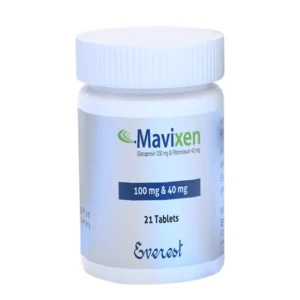
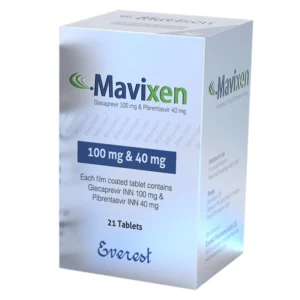
Mavixen (Glecaprevir + Pibrentasvir) 100 mg + 40 mg | Hepatitis C virus Therapy
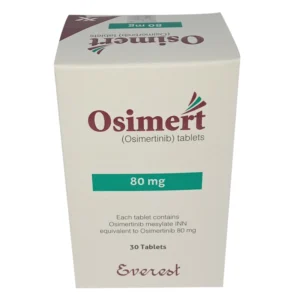
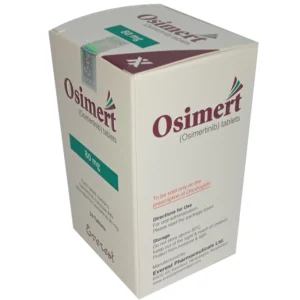
Request PriceOsimert 80 mg (Osimertinib) | Tagrisso Alternative
Request PriceRepotrex 40 mg (Reptorectinib) 56 Capsules | Price & Access Guide
Request PriceToposar (Etoposide) 50mg Capsule & 100mg/5mL Injection
Request Price