Prescription required. We facilitate access to medicines already prescribed by your treating physician. We do not provide medical advice or diagnoses.


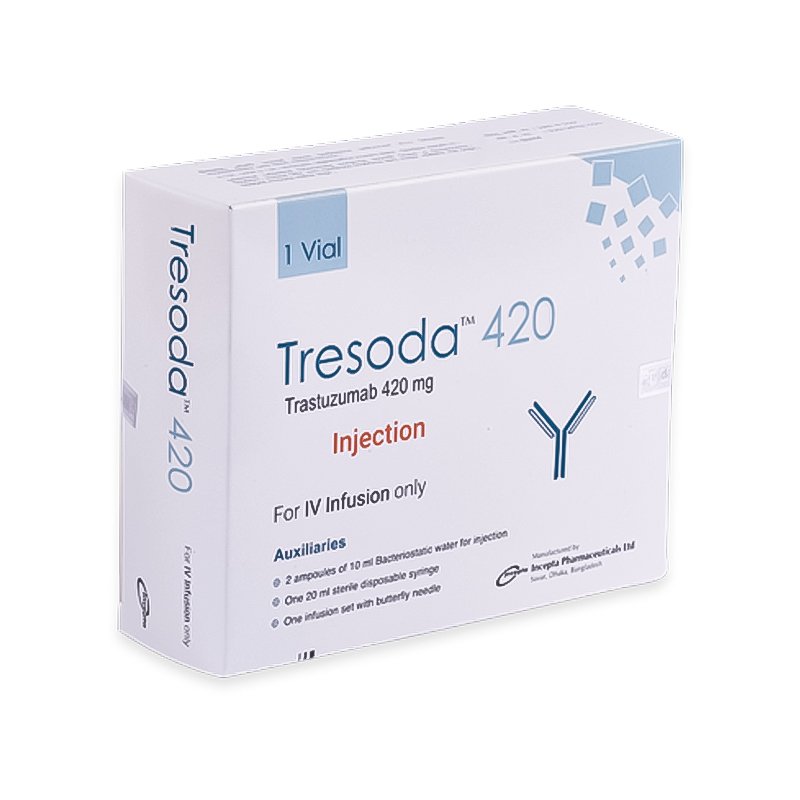
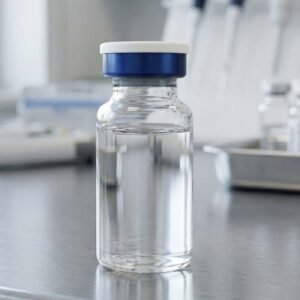
Tresoda 420 mg/20 ml (Trastuzumab) Concentrate for Infusion
- Used for: indication is HER2-positive breast cancer and HER2-positive metastatic gastric or gastroesophageal junction cancer, consistent with the originator brand’s core approved uses.
- Availability: In Stock
- Shipping: Express Global Shipping (7-14 days depending on region).
- Requirement: Valid prescription from a licensed healthcare provider required.
✓ WHO GMP Certified
✓ Reviewed By Medical Expert
✓ Batch Examined in Lab
Need Patient Access Support?
Our team provides verified global sourcing assistance to help you navigate international shipping and prescription requirements safely.
Trastuzumab — HER2 Inhibitor (Anti-HER2 Targeted Therapy) for HER2-Positive Breast and Gastric Cancers
Prescription Only | IV Infusion Administered by a Healthcare Professional Only
Reviewed against FDA prescribing information and EMA SmPC for trastuzumab (Herceptin)
Manufactured by Incepta Pharmaceuticals Ltd | Last updated: June 2026 | Next scheduled review: June 2027 or upon label change
| ABOUT THE MANUFACTURER: Incepta Pharmaceuticals Ltd is a Bangladesh-based pharmaceutical |
|---|
| company headquartered in Dhaka, in operation since 1999. Incepta is one of Bangladesh’s largest pharmaceutical companies, manufacturing across tablets, capsules, injectables, biologics, and vaccines, and exporting to dozens of countries. Incepta’s solid-dosage manufacturing facility at Zirabo, Savar holds EU GMP and UK MHRA certification, and the company holds WHO prequalification for at least one of its injectable products. This page has not been able to independently confirm that Tresoda’s specific manufacturing site has received EU GMP, MHRA, US FDA, or WHO prequalification accreditation for biologic/monoclonal antibody production — see Section 1 for what to ask and who to ask. Source: Incepta Pharmaceuticals’ official corporate site (inceptapharma.com) and WHO prequalification records (extranet.who.int/prequal). |
| A NOTE ON SOURCES: The clinical figures, dosing, and trial results on this page are drawn primarily |
|---|
| from the approved prescribing information for trastuzumab (Herceptin), since this is the most complete publicly available clinical dataset for this active ingredient. Tresoda’s own manufacturer-listed indication, current as of Incepta’s published product information, is presented separately in Section 1. Where a figure is specific to Tresoda rather than confirmed identical across both products, this page says so explicitly. Ask Incepta Pharmaceuticals or your oncologist to confirm which figures have been separately verified for Tresoda specifically. |
| IMPORTANT: Tresoda is a prescription-only antineoplastic biologic. It is given only as an intravenous |
|---|
| infusion by a qualified oncology team, never self-administered, and never taken as a tablet or injection at home. Starting, pausing, or stopping this medicine is a decision made by your oncologist, based on your scans, heart function tests, and overall health. |
| BOXED WARNING (the FDA’s highest-level safety alert): Trastuzumab can cause serious, sometimes |
|---|
| fatal, heart failure (cardiomyopathy), severe infusion reactions, lung damage, and harm to a developing baby during pregnancy. These risks are described in full in Section 6. Read this section before your first infusion. |
Trastuzumab’s defining safety feature, compared with most other cancer biologics, is that its main risk involves the heart rather than the gut, the blood, or the lungs first. That’s why cardiac function testing before and during treatment isn’t an optional precaution layered on top of standard care — it’s a structural part of how the FDA label requires trastuzumab to be used. Section 4 covers exactly what gets checked and when.
Note for publication: replace this section with a named, credentialed medical reviewer Dr. Salma Mamdouh Elreedy, MD, board-certified medical oncologist
1. What is Tresoda?
Tresoda is a cancer treatment. Its active ingredient is trastuzumab, a laboratory-made antibody that belongs to a drug class called HER2 inhibitors. Tresoda is manufactured by Incepta Pharmaceuticals Ltd, a Bangladesh-based manufacturer operating since 1999, using the same active ingredient as the originator brand, Herceptin.
Incepta is a large, diversified pharmaceutical manufacturer — by its own published figures, it produces over 1,300 generic presentations and exports to more than 100 countries — with international certifications across parts of its business, including EU GMP and UK MHRA approval for its solid-dosage facility and WHO prequalification for at least one injectable product line. It’s worth confirming directly with Incepta which specific facility produces Tresoda, and which accreditations apply to that facility and to this product specifically, since approval of one manufacturing site or product line is not the same as approval of every site or every product the company makes. As of this page’s last review, a published, product-specific accreditation record for Tresoda’s manufacturing site (as distinct from Incepta’s other facilities) was not identified in publicly available sources.
Trastuzumab works differently from traditional chemotherapy and differently from a hormone-blocking pill. It’s a large biologic molecule (an antibody), not a small chemical compound, and because of that it can only be given as an intravenous infusion — it cannot be made into a tablet.
A note on “generic” terminology for biologics: Unlike a small-molecule drug, a biologic like trastuzumab cannot be copied atom-for-atom by another manufacturer. When another company markets a version of an approved biologic, it’s typically reviewed by regulators as a biosimilar — a product shown through dedicated clinical and analytical studies to work the same way, with no clinically meaningful differences from the original.
| What this means for trastuzumab generally |
|---|
| • Trastuzumab is one of the more heavily biosimilar-competed biologics on the market: six versions of Herceptin have been FDA-approved since 2017 (Ogivri, Herzuma, Ontruzant, Trazimera, Kanjinti, Hercessi), each backed by a published head-to-head comparison against the originator. • That track record shows the pathway for this molecule is well-established — but it says nothing about Tresoda specifically. None of those six are made by Incepta. |
| What’s known about Tresoda specifically |
|---|
| • A pharmacokinetic, safety, and immunogenicity trial comparing Incepta’s trastuzumab against Roche’s Herceptin (NCT06886659) was registered on ClinicalTrials.gov in March 2025, sponsored by Incepta with EskeGen Ltd, Bangladesh, as a collaborator. • As of this page’s last review, the trial’s status was listed in registry records as active but no longer recruiting participants — meaning it is underway but not confirmed as completed. • This page could not confirm whether the trial has since concluded, whether full results have been published in a peer-reviewed journal, or whether it has been used to support a formal biosimilar approval for Tresoda in any market. • Trial status changes — check the live ClinicalTrials.gov record for NCT06886659 directly for the current status before relying on this page’s snapshot. |
Before relying on Tresoda, ask your pharmacist, oncologist, or Incepta Pharmaceuticals directly whether Tresoda has been reviewed and approved through your country’s biosimilar approval pathway, whether NCT06886659 has concluded and its results are available, and ask to see the specific regulatory approval and registration number. This page cannot confirm that status on your behalf — see Section 11 for what to ask and who to ask.
Who is Tresoda for?
Tresoda’s own manufacturer-published indication is HER2-positive breast cancer and HER2-positive metastatic gastric or gastroesophageal junction cancer, consistent with the originator brand’s core approved uses. Confirm with your oncologist and with Incepta directly which specific lines of therapy, treatment settings, and combination regimens Tresoda is registered for in your country, since a manufacturer can hold approval for one setting while a related setting remains unapproved for that specific product.
The table below shows the broader set of HER2-positive cancer settings approved for trastuzumab as an active ingredient generally, based on the originator brand’s label.
| Treatment setting | Typically combined with | Notes | Confirmed for Tresoda specifically? |
|---|---|---|---|
| Adjuvant (after surgery) treatment of HER2-overexpressing breast cancer | Often combined with or given after chemotherapy | Standard course is one full year of treatment | Confirm with Incepta and your oncologist |
| Neoadjuvant (before surgery) treatment of locally advanced HER2-overexpressing breast cancer | Combined with chemotherapy | Followed by continued trastuzumab after surgery to complete a year | Confirm with Incepta and your oncologist |
| Metastatic HER2-overexpressing breast cancer | Alone, or combined with chemotherapy such as paclitaxel | First-line treatment in HER2-positive metastatic disease | Yes — manufacturer-listed indication |
| HER2-overexpressing metastatic gastric or gastroesophageal junction adenocarcinoma | Combined with chemotherapy (such as cisplatin and a fluoropyrimidine) | Patients are not previously treated for metastatic disease | Yes — manufacturer-listed indication |
| Confirm with Incepta Pharmaceuticals and your oncologist exactly which of these settings |
|---|
| Tresoda itself is registered and approved for in your country. Approved indications for a biosimilar or generic biologic can be narrower than the full list approved for the originator brand, and not every approval applies in every country. |
| Why exactly one year? In the adjuvant setting, one year of trastuzumab isn’t an arbitrary |
|---|
| round number. The HERA trial directly tested 2 years of treatment against 1 year in over 5,000 women and found no additional survival benefit from the longer course — and more cardiac toxicity. A separate trial (PHARE) tested 6 months against 12 months and could not show that the shorter course was as effective. Together, these are the basis for one year being the standard of care: long enough to show clear benefit, without extending heart-risk exposure for no added gain. If your oncologist proposes a different duration for your specific situation, it’s reasonable to ask what’s driving that decision. |
| A note on combination regimens: trastuzumab is often given together with a second HER2-targeted |
|---|
| antibody, pertuzumab, particularly in neoadjuvant treatment of locally advanced breast cancer and in first-line metastatic HER2-positive breast cancer. This dual-antibody approach is a standard option in many treatment guidelines, not a rare or experimental combination. Ask your oncologist whether a pertuzumab-containing regimen is appropriate for your specific cancer setting, and confirm with Incepta and your treatment center whether Tresoda is used in combination with pertuzumab in your country’s approved regimens. |
| A note on HER2 testing: trastuzumab is only appropriate for tumors confirmed to overexpress |
|---|
| HER2, tested using a validated, FDA-authorized (or locally authorized) laboratory test. Trastuzumab is not effective in HER2-negative cancers, and HER2 status should be confirmed before treatment begins. |
2. How does Tresoda work?
Some cancer cells, especially in certain breast and stomach cancers, have far more copies than normal of a receptor on their surface called HER2 (human epidermal growth factor receptor 2). Think of HER2 as a switch sitting on the outside of the cell. In a HER2-positive cancer, there are far too many of these switches, and they get flipped on too often, sending a constant “grow and divide” signal into the cell.
Trastuzumab works by attaching directly to the HER2 switch on the outside of the cancer cell, like a clamp that physically covers it so it can no longer be activated as easily. With the signal dampened, the cancer cell’s “grow and divide” instruction is interrupted. Trastuzumab also flags the cancer cell for the body’s own immune system, helping immune cells recognize and attack cells coated with the antibody.
This is why trastuzumab is described as a targeted, HER2-directed therapy rather than a classic chemotherapy drug. It only works in cancers confirmed to be HER2-positive, which is why HER2 testing is required before starting treatment, and it’s often used alongside chemotherapy or, in some settings, on its own.
3. How Tresoda is given
This is an infusion, not a tablet
Tresoda is given only as an intravenous (IV) infusion, through a vein, by a trained healthcare professional in an infusion center, oncology clinic, or hospital outpatient unit. You will never take Tresoda home, swallow it, or inject it yourself.
Infusion timing
| Infusion | Typical duration |
|---|---|
| First (loading) infusion | Given slowly, typically over about 90 minutes, so your team can watch closely for any reaction |
| Subsequent infusions (if prior infusions were well tolerated) | Often shortened to about 30 minutes |
Your exact dose in mg per kg of body weight, and how often you receive it, depends on which schedule your oncologist selects. Two general approaches are commonly used: a loading dose followed by treatment every 3 weeks, or a smaller weekly dose. Your oncology team will confirm your specific schedule and total planned duration of treatment — there is no single “standard dose” that applies to every patient or every cancer setting.
What happens during and after your infusion
- Your team will watch for any signs of an infusion reaction — fever, chills, nausea, breathing changes, low blood pressure — especially during your first infusion, when these reactions are most common.
- You’ll usually be asked to stay for a period of observation after the infusion finishes, particularly the first time.
- Your heart function will be checked before treatment starts and at regular intervals throughout, as described in Section 4.
- Tell your team immediately about any new shortness of breath, swelling, chest pain, cough, or unusual symptoms, even ones that seem minor.
If an infusion is delayed
Unlike a daily tablet, you don’t control the timing of an infusion yourself. If a scheduled infusion needs to be delayed — for example, because of a heart function result, an infection, or another safety concern — your oncology team will decide when it’s safe to resume. If a dose has been missed for an extended period, your team may need to restart with a loading dose rather than simply resuming the maintenance dose; this is a clinical decision, not something to manage yourself.
4. Monitoring and tests
Because trastuzumab’s most important risk involves the heart, your team will check your heart function on a structured schedule throughout treatment, not only if you develop symptoms.
| When | What is checked | Why |
|---|---|---|
| Before starting treatment | Left ventricular ejection fraction (LVEF) — usually by echocardiogram or MUGA scan | To establish your baseline heart pumping function before any trastuzumab is given |
| At regular intervals during treatment (per your oncologist’s plan) | Repeat LVEF testing | To catch a meaningful drop in heart function early, often before symptoms appear |
| Before every infusion | Questions about new shortness of breath, swelling in the legs, cough, or fatigue | These can be early signs of heart failure related to treatment |
| During and shortly after every infusion, especially the first | Vital signs and observation for infusion reaction symptoms | Most serious infusion reactions happen during or within 24 hours of a dose |
| If you become pregnant or are trying to conceive | Discussion with your oncology team immediately | Trastuzumab can seriously harm a developing baby — see Section 9 |
| Periodically, per your oncologist’s plan | General blood counts and organ function tests | To monitor your overall tolerance of treatment alongside any chemotherapy partner |
| URGENT: New or worsening shortness of breath, a new cough, swelling in your legs or ankles, |
|---|
| sudden weight gain, or chest pain should be reported to your oncology team immediately, even between scheduled visits. These can be early signs of heart failure related to treatment. Do not wait for your next appointment. |
5. Dose adjustments
Trastuzumab dosing is calculated by your body weight (mg per kg) rather than using a fixed set of dose-reduction steps like some tablet therapies. If side effects occur, your oncologist generally manages them in one of these ways, depending on severity:
You won’t be the one calculating any of these numbers — that’s your oncology team’s job, using your echocardiogram or MUGA scan results. This table is here so you understand what they’re looking at and why a hold or stop decision gets made the way it does.
| Side effect | What typically happens |
|---|---|
| LVEF drop of 16 percentage points or more from your pre-treatment baseline | Treatment is withheld for at least 4 weeks and LVEF is rechecked before any decision to resume |
| LVEF falls below the institution’s lower limit of normal, with a drop of 10 percentage points or more from baseline | Treatment is withheld for at least 4 weeks and LVEF is rechecked |
| LVEF recovers to normal limits within 4 to 8 weeks, with the drop from baseline narrowing to 15 percentage points or less | Treatment may be resumed |
| LVEF does not recover within roughly 4 to 8 weeks of holding treatment, or continues to decline | Treatment is generally discontinued permanently |
| LVEF drop with symptoms of heart failure | Treatment is generally discontinued |
| Mild to moderate infusion reaction | Infusion may be slowed or paused, and supportive medicine given; may resume at a slower rate |
| Severe infusion reaction, anaphylaxis, or angioedema | Treatment is stopped immediately and permanently discontinued |
| Interstitial pneumonitis or acute respiratory distress syndrome | Treatment is permanently discontinued |
| Pregnancy occurring during treatment | Treatment is stopped and your oncologist will discuss next steps with you directly |
Never adjust the timing or decide to skip a dose yourself. Because Tresoda is given by infusion, these decisions are made entirely by your oncology team based on your heart function results and symptoms.
6. Boxed warning: the risks the FDA highlights most
This section covers the risks placed in trastuzumab’s boxed warning, the FDA’s strongest level of safety alert. Please read this before your first infusion.
Cardiomyopathy (heart failure)
- The risk: Both silent declines in heart pumping function and clinical heart failure, including congestive heart failure (CHF) and a drop in left ventricular ejection fraction (LVEF).
- How common: Depends heavily on what else you’re being treated with. As trastuzumab alone (no anthracycline chemotherapy), cardiac dysfunction has occurred in roughly 3% to 7% of patients across pivotal trials, with symptomatic heart failure generally under 4%. Given at the same time as anthracycline chemotherapy (such as doxorubicin), cardiac dysfunction has been reported as high as 27% to 28% in some trial arms, with severe (NYHA class III or IV) heart failure in up to about 19%.
- Why it matters: This is the clearest reason trastuzumab is generally not given concurrently with anthracyclines. Most cardiac dysfunction improves after the drug is stopped, but treatment is generally discontinued if clinically significant heart failure develops. Your heart function is checked before treatment starts and at regular intervals throughout — see Section 4.
Infusion reactions and pulmonary toxicity
- The risk: Serious and occasionally fatal infusion reactions and lung problems, including anaphylaxis, angioedema (swelling), interstitial pneumonitis (lung inflammation), and acute respiratory distress syndrome (ARDS).
- When it happens: Symptoms most often occur during the infusion or within 24 hours afterward.
- Why it matters: Your team is trained to watch for these reactions, especially with your first dose, and treatment is permanently stopped if a severe reaction or significant lung toxicity occurs.
Embryo-fetal toxicity
- The risk: Serious harm to a developing baby if given during pregnancy, including a condition called oligohydramnios (low amniotic fluid), which in some reported cases has been associated with underdeveloped lungs in the baby, skeletal problems, and newborn death.
- The requirement: Effective contraception during treatment and for a period after the last dose — see Section 9 for details.
- What to do: Tell your oncology team immediately if you are pregnant, think you might be pregnant, or become pregnant during treatment.
7. Other side effects
Very common
- Fever and chills, especially with the first infusion
- Nausea and vomiting
- Diarrhea
- Fatigue and weakness
- Headache
- Infections, including upper respiratory tract infections
- Increased cough
- Rash
- Muscle and joint pain (myalgia)
- Asymptomatic decline in heart pumping function (LVEF) — reported in roughly 1 in 10 patients in some trials, which is why heart scans continue throughout treatment even if you feel completely well
Serious side effects — seek immediate medical attention
- Heart failure symptoms: new or worsening shortness of breath, cough, swelling in the legs or ankles, sudden weight gain, or a fast or irregular heartbeat.
- Severe infusion reactions: difficulty breathing, swelling of the face, lips, or throat, wheezing, or a sharp drop in blood pressure during or shortly after the infusion. Your team is trained to treat this immediately.
- Lung problems: new or worsening shortness of breath, especially if it comes on suddenly, can signal interstitial pneumonitis or ARDS, particularly in patients with pre-existing lung disease.
- Low white blood cell counts (neutropenia), particularly when trastuzumab is combined with chemotherapy: increased risk of fever and infection.
- Severe diarrhea: ongoing or severe diarrhea should be reported, as it can lead to dehydration.
8. Surgery, other medicines, and situations to flag
Trastuzumab isn’t broken down by the liver enzyme system the way many tablet cancer drugs are, so it doesn’t carry the same long list of drug-interaction warnings. Instead, the most important precautions relate to your heart health and to other medicines that also affect the heart.
| Situation | Guidance |
|---|---|
| Anthracycline chemotherapy (such as doxorubicin or epirubicin) | Generally not given at the same time as trastuzumab because of significantly increased heart failure risk. Your oncologist will plan the sequencing of these drugs carefully if both are part of your regimen. |
| Pertuzumab (a second HER2-targeted antibody) | Often given together with trastuzumab in neoadjuvant and first-line metastatic settings, as a standard combination in many treatment guidelines — this is a deliberate, well-studied pairing, not a drug interaction to avoid. Confirm with your oncologist and with Incepta whether this combination is part of your specific regimen. |
| Pre-existing heart disease, prior heart attack, or high blood pressure | Tell your oncology team before starting. This may affect your monitoring plan or the choice of chemotherapy partner. |
| Prior chest radiation | Tell your oncology team, as this can add to cardiac risk. |
| Lung disease | Tell your oncology team, as trastuzumab carries a risk of pulmonary toxicity that may be higher in patients with pre-existing lung problems. |
| Vaccinations | Discuss timing with your oncology team, as with any active cancer treatment. |
Always tell your oncologist and pharmacist about every medicine, supplement, and herbal product you take, including over-the-counter remedies, and update this list at every visit.
9. Special populations
| Situation | Guidance |
|---|---|
| Pregnancy | Trastuzumab can cause serious harm to a developing baby, including low amniotic fluid (oligohydramnios), which has been linked in reports to underdeveloped lungs, skeletal problems, and newborn death. Do not become pregnant while taking this medicine. |
| Contraception — females | Use effective contraception during treatment and for at least 7 months after the last dose. |
| Breastfeeding | Discuss with your oncologist; trastuzumab may pass into breast milk, and the decision should be made together with your care team. |
| Fertility | Discuss any fertility concerns with your oncologist before starting treatment. |
| Children and adolescents | Trastuzumab is not approved for any pediatric indication. A Children’s Oncology Group phase 2 trial tested trastuzumab added to chemotherapy in children and young adults with HER2-overexpressing metastatic osteosarcoma (a bone cancer) and did not show an improvement in outcomes over chemotherapy alone; a separate, more recent pediatric trial of a related HER2-targeted antibody-drug conjugate in relapsed osteosarcoma was also stopped early for lack of benefit. Use of trastuzumab in children for any indication is decided case-by-case by a pediatric oncology specialist, generally only within a clinical trial. |
| Older adults | Used in older adults; your oncologist will weigh overall health and heart function, which can be more vulnerable to treatment-related changes in this age group. |
| Heart disease | Discuss any history of heart disease with your oncologist before starting, given trastuzumab’s cardiac risk; closer cardiac monitoring may be recommended. |
10. Clinical evidence
Trastuzumab’s approval across HER2-positive breast and gastric cancers is supported by multiple Phase 3 clinical trials reviewed by the FDA and the European Medicines Agency. A few headline examples:
| Trial / setting | Comparison | Result |
|---|---|---|
| Metastatic HER2-positive breast cancer (pivotal trial, Slamon et al. 2001) | Chemotherapy plus trastuzumab vs. chemotherapy alone, first-line | Median overall survival 25.1 vs. 20.3 months; time to disease progression 7.4 vs. 4.6 months; overall response rate 50% vs. 32% |
| Adjuvant HER2-positive breast cancer (multi-trial meta-analysis) | Chemotherapy plus trastuzumab vs. chemotherapy alone, after surgery | Significantly improved disease-free and overall survival across a pooled analysis of nearly 14,000 women in seven randomized trials |
| HER2-positive metastatic gastric/gastroesophageal junction cancer (ToGA trial, Bang et al. 2010) | Chemotherapy plus trastuzumab vs. chemotherapy alone, first-line | Median overall survival 13.8 vs. 11.1 months (hazard ratio 0.74); response rate improved from about 35% to about 47% |
| A note on HER2 testing and benefit: trastuzumab only works in tumors confirmed to overexpress |
|---|
| HER2, by a validated test (immunohistochemistry and/or FISH). In the ToGA trial, the survival benefit was larger in patients with the highest HER2 expression levels (IHC 3+, or IHC 2+ with FISH-confirmed amplification), with median overall survival reaching 16 months in that subgroup. Trastuzumab is not expected to benefit, and is not indicated for, HER2-negative cancers. Confirm your tumor’s HER2 status with your oncologist before starting treatment. |
| Trastuzumab is not generally curative on its own in metastatic disease. In the adjuvant setting, |
|---|
| it is given with curative intent alongside other treatment as part of a complete one-year course. In metastatic or advanced disease, it is used to slow disease progression and extend survival, and the specific benefit depends heavily on cancer type, stage, and HER2 status. Ask your oncologist what the realistic goal of your specific treatment plan is. |
11. Generic biologic vs. brand: what’s the same, what’s different, and what to ask
Tresoda contains the same active ingredient, trastuzumab, as the originator brand, Herceptin. But because trastuzumab is a biologic (a complex molecule made using living cells, not a simple chemical), “same active ingredient” means something a little different here than it would for a tablet.
| Question | Answer |
|---|---|
| Same active ingredient? | Yes, both contain trastuzumab as the active substance. |
| Same mechanism of action? | Yes, both work by binding to subdomain IV of the HER2 receptor on the surface of cancer cells. |
| Made through an identical manufacturing process? | Not necessarily. Biologics are produced in living cell cultures, and small, expected differences in the manufacturing process between companies are normal and are exactly what a biosimilarity study is designed to evaluate. |
| Is there precedent for trastuzumab biosimilars generally? | Yes, substantial precedent. Six trastuzumab biosimilars (Ogivri, Herzuma, Ontruzant, Trazimera, Kanjinti, Hercessi) have been FDA-approved since 2017, each on the strength of a published biosimilarity study against Herceptin. This establishes that the biosimilar pathway for this specific molecule is well-trodden — but none of those six are Tresoda, and this precedent doesn’t substitute for product-specific data on Tresoda itself. |
| Can a pharmacy automatically substitute a trastuzumab biosimilar without the prescriber’s involvement? | Not in the US, for any currently approved trastuzumab biosimilar. None of the six FDA-approved trastuzumab biosimilars carry the additional “interchangeable” designation, which is a separate, higher bar than standard biosimilar approval. In practice, this means a prescriber generally needs to specifically order a biosimilar (or the brand) rather than a pharmacist substituting one for the other on their own judgment, the way is common for small-molecule generic tablets. For Bangladesh specifically, this page has not confirmed whether DGDA’s pharmacy regulations include an equivalent “automatic substitution” concept for biologics at all, separate from the question of whether Tresoda is registered as a biosimilar in the first place. Ask your pharmacy directly how substitution between Tresoda and Herceptin (or between Tresoda and any other registered alternative) actually works in your specific treatment setting, since the answer may differ by country and this page cannot confirm it generally. |
| What is known about the manufacturing facility’s quality standing? | Incepta Pharmaceuticals holds EU GMP and UK MHRA certification for its solid-dosage facility and WHO prequalification for at least one injectable product line, which are genuine, verifiable quality signals about parts of the company’s operations. This page has not been able to confirm a published, product-specific accreditation record for the facility that manufactures Tresoda itself, or for biologic/monoclonal antibody manufacturing specifically — see next row. |
| Has Tresoda specifically completed a published biosimilarity study against Herceptin (matching clinical efficacy, safety, and pharmacokinetics)? | [DATA NOT FULLY CONFIRMED — confirm with Incepta Pharmaceuticals and your national medicines regulator]. A pharmacokinetic, safety, and immunogenicity trial (NCT06886659) comparing Incepta’s trastuzumab against Roche’s Herceptin in healthy volunteers was registered in March 2025. As of this page’s last review, registry records listed the trial as active but no longer recruiting — not yet confirmed as completed. Whether this trial has since concluded, its full results published, and whether it was used to support a formal biosimilar approval for Tresoda specifically, was not confirmed in the sources reviewed for this page. Check the live ClinicalTrials.gov record for the current status. This is the single most important remaining question to ask before assuming Tresoda performs identically to Herceptin. |
| What regulatory pathway was Tresoda approved through? | [DATA NOT PROVIDED — confirm the specific approval pathway, approving authority, and registration number with Incepta Pharmaceuticals]. Bangladesh’s drug regulator, the Directorate General of Drug Administration (DGDA), published a formal Guideline for Registration of Biosimilar Products in 2025, setting out the analytical and clinical comparison standard a biosimilar must meet against a reference product to be registered as such in Bangladesh. Ask Incepta specifically whether Tresoda was registered under this biosimilar guideline, under an earlier or different pathway, or as a standard new drug application, since this affects how much comparative evidence exists and what regulatory standard the product was actually held to. |
| Typically lower cost than the brand? | Online pharmacy listings in Bangladesh have shown Tresoda priced at an estimated 60,000 BDT per 420 mg vial as of June 2026, against an estimated 112,600 BDT for Roche’s Herceptin 440 mg vial in the same market and timeframe — though the two products differ in vial strength, so this isn’t a direct per-mg comparison. These figures have not been re-verified against a live listing in this review cycle and will go stale; confirm current like-for-like pricing directly with your treatment center or pharmacy rather than relying on this page. |
If you’re considering switching between Tresoda and Herceptin, or starting either for the first time, discuss this with your oncologist so your monitoring plan and treatment records, especially your heart function tracking, stay consistent and clearly documented.
12. How Tresoda is sourced and verified
Trastuzumab is never available over the counter, at a retail pharmacy counter, or as a vial delivered to a patient’s home for self-administration. It’s a cold-chain biologic that must stay continuously refrigerated and is only safe to use when it’s reconstituted and prepared by a pharmacist immediately before your infusion. Because of this, “sourcing” Tresoda is fundamentally a clinical supply-chain task, not a patient purchasing task — your role is to ask the right questions, not to place an order yourself.
This isn’t a theoretical concern. Counterfeit trastuzumab has reached real patients: in 2014, the European Medicines Agency issued an alert after stolen Herceptin vials, tampered with and re-introduced into the legitimate supply chain, were found circulating in EU member states. More recently, Nigeria’s drug regulator flagged a counterfeit batch of Herceptin in 2025 after a patient in Ghana presented with a vial bearing a batch number that didn’t correspond to any product Roche had actually manufactured. Counterfeit vials in past incidents have been found to contain no active ingredient at all, or a diluted version unlikely to provide any clinical benefit.
Generic Oncology is an online platform that helps oncology centers, hospital pharmacies, and treatment coordinators source and verify generic and biosimilar oncology medicines, including Tresoda, with batch-level traceability back to Incepta Pharmaceuticals. The platform itself is built around clinical and pharmacy-side procurement, not direct-to-patient delivery — a vial of Tresoda ordered through it still travels through your treatment center’s pharmacy and cold-chain handling before it ever reaches you, in the same way it would if sourced through any other verified channel.
Here’s what this means for you as a patient, and what’s worth asking:
- Ask your oncology team whether their pharmacy sources Tresoda through Generic Oncology or another verified channel. You’re entitled to know where your medicine comes from, even though you won’t be the one ordering or receiving it directly.
- Ask about batch/lot traceability. A platform like Generic Oncology should be able to provide your treatment center with a batch number traceable back to Incepta Pharmaceuticals for every vial. If you ever have a reaction or a question, this batch number matters for your medical record and for any safety reporting.
- Confirm the order is going through your treatment center’s pharmacy, not to you directly. A legitimate sourcing platform for an IV cold-chain biologic coordinates with hospitals and clinics; it should never ship a vial of Tresoda to a patient’s home address for self-administration or personal transport. If anyone, including a platform representative, suggests otherwise, treat it as a serious red flag and raise it with your oncologist immediately.
- Verify registration independently if you have any doubt. Contact Incepta Pharmaceuticals directly, or check with your national medicines regulator (for example, the FDA in the United States, the EMA in the European Union, or your country’s equivalent body) to confirm both Tresoda’s and the sourcing platform’s standing before treatment begins.
- Never accept or personally purchase an injectable cancer biologic from any seller, online or otherwise, that bypasses your treatment center’s pharmacy. Counterfeit or improperly stored biologic cancer drugs are a real and serious risk, since these products can lose effectiveness or become unsafe if mishandled at any point in the cold chain, and that risk is impossible for a patient to detect on their own.
13. How Tresoda is stored
Storage and handling of Tresoda is managed entirely by your hospital or infusion center’s pharmacy, not by you at home. For reference:
- Stored refrigerated (typically 2°C to 8°C / 36°F to 46°F), protected from light, prior to reconstitution.
- Not frozen.
- Reconstituted and diluted by trained pharmacy staff shortly before your infusion, following the manufacturer’s specific reconstitution instructions.
- Any unused vial or reconstituted solution is discarded according to cytotoxic pharmaceutical waste guidance, not household disposal.
14. Patient FAQ
Is Tresoda the same as chemotherapy?
No. Trastuzumab works differently — it targets a specific protein (HER2) found in excess on certain cancer cells, rather than directly killing rapidly dividing cells the way classic chemotherapy does. Depending on your treatment setting, it may be given alongside chemotherapy or, in some cases, on its own.
Why do I need heart scans before and during treatment?
HER2, the target of trastuzumab, also plays a normal role in heart muscle function. Checking your heart’s pumping ability (LVEF) before treatment and at regular intervals afterward lets your team catch a meaningful decline early, often before you’d notice any symptoms, so treatment can be adjusted before it becomes serious.
Can I receive Tresoda alongside other chemotherapy drugs?
Often yes, but not with every combination. Trastuzumab is generally not given at the same time as anthracycline chemotherapy drugs (like doxorubicin) because of a significantly increased risk of heart problems. Your oncologist will plan your specific regimen and sequencing carefully.
What if I notice new shortness of breath or swelling in my legs?
Contact your oncology team immediately. These can be early signs of heart failure related to treatment, and catching this early matters. Don’t wait for your next scheduled visit.
Will Tresoda cure my cancer?
That depends heavily on your specific cancer type, stage, and treatment setting, and is a conversation to have directly with your oncologist. In the adjuvant (after-surgery) setting, trastuzumab is given with curative intent as part of a full course of treatment. In metastatic or advanced disease, it’s generally used to slow progression and extend survival rather than as a stand-alone cure.
Why is adjuvant treatment exactly one year — could shorter or longer work better for me?
One year became the standard because it’s the duration that’s actually been tested and shown to work, not because it’s a round number. A large trial that compared 2 years against 1 year found no extra survival benefit from the longer course, along with more heart-related side effects. A separate trial testing 6 months against 12 months wasn’t able to show the shorter course was equally effective. If you’re wondering whether a different duration might suit your situation, that’s a reasonable question to bring to your oncologist directly.
Is Tresoda as effective as Herceptin?
Tresoda contains the same active ingredient as Herceptin, but whether a specific, published study has confirmed matching clinical performance (a “biosimilarity” study) is not fully confirmed in the material reviewed for this page. Ask your oncologist or pharmacist directly whether such evidence exists for Tresoda before assuming the two perform identically.
What are the warning signs of an infusion reaction?
Most infusion reactions happen during the infusion or within 24 hours afterward. Seek immediate attention for difficulty breathing, swelling of the face or throat, wheezing, or a sudden drop in blood pressure. Tell your team about fever, chills, or nausea during the infusion as well, even if mild.
Medical Disclaimer
The information on this page is for educational purposes and does not constitute medical advice. Tresoda must be prescribed, administered, and supervised exclusively by a qualified medical oncology team within a clinical infusion setting. Treatment decisions should always be made in consultation with your healthcare team based on your individual clinical situation, cancer type, HER2 status, and stage. This page was prepared using FDA prescribing information and EMA SmPC data for trastuzumab; consult the current full prescribing information for complete details.
Reporting side effects: If you experience a side effect, tell your oncologist or pharmacist. You can also report suspected side effects directly to your national regulatory authority (for example, the FDA at 1-800-FDA-1088 or www.fda.gov/medwatch in the United States, or your country’s medicines regulator).