Prescription required. We facilitate access to medicines already prescribed by your treating physician. We do not provide medical advice or diagnoses.


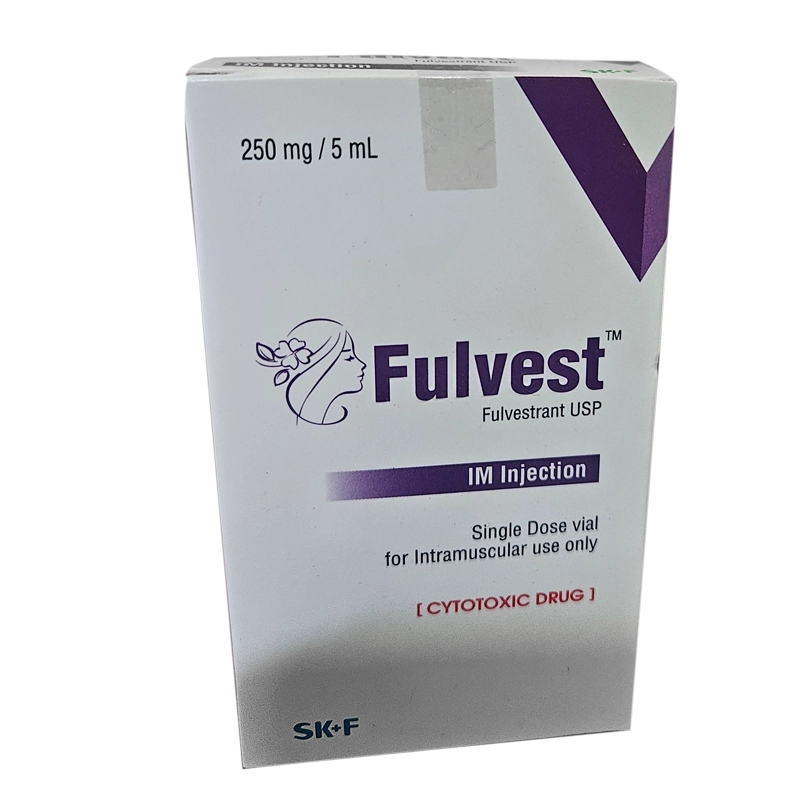
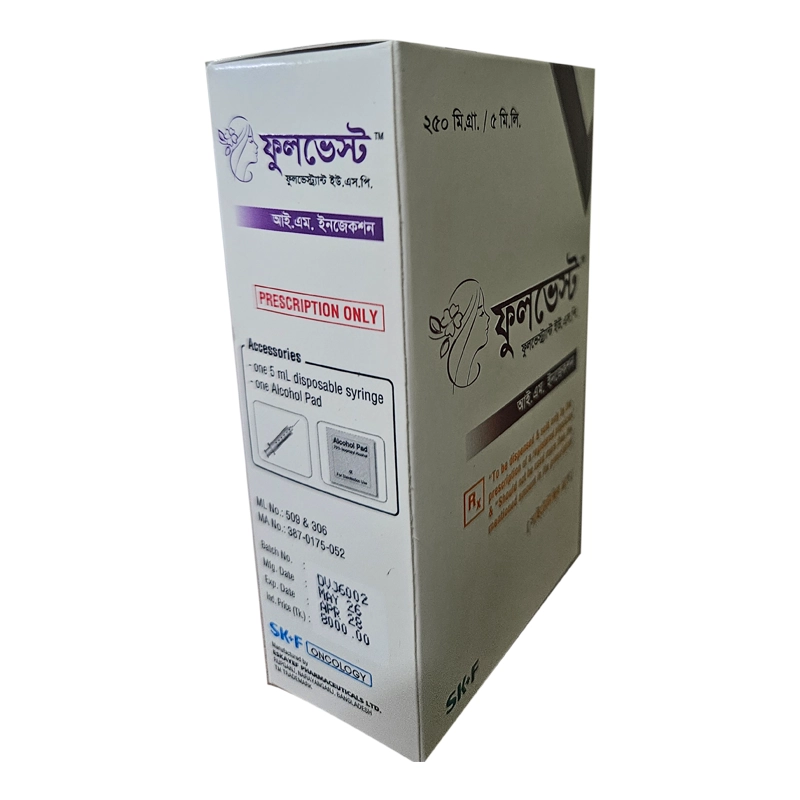
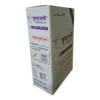
Fulvest 250 mg/5 mL (Fulvestrant Injection)
- Used for: As a first treatment for postmenopausal women whose hormone receptor-positive, HER2-negative breast cancer hasn’t been treated with hormone therapy before.
- Availability: In Stock
- Shipping: Express Global Shipping (7-14 days depending on region).
- Requirement: Valid prescription from a licensed healthcare provider required.
✓ WHO GMP Certified
✓ Reviewed By Medical Expert
✓ Batch Examined in Lab
Need Patient Access Support?
Our team provides verified global sourcing assistance to help you navigate international shipping and prescription requirements safely.
A selective estrogen receptor degrader for hormone receptor-positive breast cancer
Prescription only. Given as an intramuscular injection by a healthcare professional. Never at home, never self-administered.
Medically reviewed by Dr. Salma Mamdouh Elreedy, Clinical Oncologist, Sphinx Cure Oncology Center. Last updated July 2026. This page is checked against FDA and EMA prescribing information for fulvestrant and updated whenever that information changes, or at least once a year.
If you’ve just been prescribed Fulvest 250 mg/5 mL, or you’re a caregiver trying to understand what’s coming next, this page walks through what this fulvestrant injection does, how the appointments work, what side effects to expect, and what questions are worth raising with your oncology team before you start.
What Fulvest is
Fulvest contains fulvestrant, manufactured by Eskayef Pharmaceuticals (SK+F), one of Bangladesh’s oldest and most internationally certified pharmaceutical companies. It’s the same active ingredient, at the same strength, as the originator brand Faslodex, so Fulvest is often described as a generic Faslodex injection.
Eskayef’s injectable manufacturing plant holds US FDA approval, the only facility in Bangladesh to hold that specific accreditation, alongside UK MHRA and EU GMP certification, and the company runs a dedicated oncology division with its own safety-monitoring program.
Fulvestrant belongs to a class of hormonal cancer therapies called selective estrogen receptor degraders, or SERDs. It’s used for hormone receptor-positive, HER2-negative breast cancer in postmenopausal women, given either as a first treatment, after progression on a previous hormone therapy, or paired with another targeted drug once the cancer stops responding to earlier treatment. It isn’t approved for use in men.
Because it’s a small, chemically made molecule rather than a biologic antibody, Fulvest doesn’t carry the same manufacturing complexity as an antibody drug like bevacizumab. That said, “same active ingredient” still isn’t the whole story. See the Generic Versus Brand section below for what a generic version can and can’t tell you.
“Fulvestrant works differently from a pill like tamoxifen or an aromatase inhibitor. It doesn’t just block the estrogen receptor, it breaks it down. The one thing I ask every patient to watch for after an injection is any shooting pain or numbness down the leg. It’s not common, but because of where the injection goes, it’s worth telling us about right away rather than waiting for your next appointment.” says Dr. Salma Mamdouh Elreedy.
Who Fulvest is prescribed for
Most people receive Fulvest in one of three situations. As a first treatment for postmenopausal women whose hormone receptor-positive, HER2-negative breast cancer hasn’t been treated with hormone therapy before.
After a previous hormone therapy has stopped working, given on its own. Or combined with another drug, most often a CDK4/6 inhibitor like palbociclib, abemaciclib, or ribociclib, once the cancer has progressed on endocrine therapy alone.
There’s also a newer option worth knowing about. Since late 2023, fulvestrant can be combined with capivasertib for patients whose tumor carries a PIK3CA, AKT1, or PTEN gene alteration, identified through a specific biomarker test, after the cancer has progressed on prior hormone therapy. This isn’t relevant to everyone, since it depends on genetic testing of the tumor, but it’s a good example of why treatment plans differ so much from patient to patient even with the same starting diagnosis.
Eskayef’s own registered indication for Fulvest may be narrower than the full list above. Ask your oncologist, or Eskayef directly, which of these uses Fulvest is specifically approved for in your country.
How it works, in plain terms
Estrogen feeds hormone receptor-positive breast cancer cells by locking onto estrogen receptors inside the cell and switching on the genes that drive growth. Older hormone therapies interrupt that process in different ways. Tamoxifen sits in the receptor and blocks most, but not all, of its activity, while aromatase inhibitors work further upstream by lowering how much estrogen the body makes.
Fulvestrant takes it a step further. It binds to the estrogen receptor, blocks it completely, and causes the receptor itself to break down. Rather than turning the light off, it removes the switch from the wall. That’s part of why it can still work in cancers that have become resistant to tamoxifen, and why it’s often paired with a second targeted drug for a more complete effect.
How the injection works
Fulvest is never a tablet. It’s given as an intramuscular injection into the buttock muscle, by a trained healthcare professional, in a clinic or hospital setting.
| How it’s given | Schedule | |
|---|---|---|
| Standard dose (500 mg) | Two 5 mL injections, one in each buttock, each given slowly over 1 to 2 minutes | Day 1, day 15, day 29, then once a month |
| Reduced dose for moderate liver impairment (250 mg) | One 5 mL injection | Day 1, day 15, day 29, then monthly |
If Fulvest is combined with an oral CDK4/6 inhibitor or with capivasertib, the injection schedule above doesn’t change. The oral medicine has its own separate dosing, covered on that medicine’s own page.
The injection is deliberately slow because of the volume involved, and your care team will be careful about exactly where they place the needle, since the sciatic nerve runs close to the usual injection site. That’s why nerve-related symptoms are something to flag, and more on that below. A little soreness or swelling right where the needle went in is common and usually fades within a day or two.
If an appointment needs to be pushed back, whether for a bleeding concern, an infection, or scheduling, your care team decides when it’s safe to resume. You won’t be asked to make up a missed dose yourself.
What your appointments will involve
Before you start, expect a pregnancy test if you’re of reproductive age, and a baseline liver function check. From then on, your team will typically ask a few consistent questions at each visit: whether you’ve noticed any leg pain, numbness, or weakness since your last injection; whether you’re bruising or bleeding more easily than usual; and whether you’re on any new medicines, including over-the-counter ones or supplements. Liver function tests continue periodically, since mild, usually symptom-free rises in liver enzymes are common with fulvestrant.
If you ever notice sudden numbness, tingling, or shooting pain down a leg after an injection, don’t wait for your next scheduled visit. Call your team. It’s an uncommon reaction, but it’s the one thing worth acting on quickly rather than mentioning in passing.
Side effects
Most people tolerate Fulvest reasonably well. The side effects reported most often, in more than 1 in 10 patients, are joint pain, hot flashes, fatigue, nausea, headache, bone or back pain, and some soreness right at the injection site. Liver enzymes often rise slightly on blood tests without causing any symptoms at all.
Less common but still fairly frequently reported: vomiting, reduced appetite, general weakness, muscle aches, a cough or mild breathlessness, and either constipation or diarrhea.
A shorter list of effects is worth acting on rather than just mentioning at your next visit: an allergic reaction (hives, facial or throat swelling, sudden difficulty breathing); signs of a real liver problem, such as yellowing skin or eyes, dark urine, or pain under the right ribs; swelling or pain in a leg, or sudden breathlessness or chest pain, which can point to a blood clot; and the leg numbness or shooting pain mentioned above. None of these are common, but they’re the reason your care team keeps checking in at every visit rather than only when something feels wrong.
Safety points worth understanding before your first dose
Fulvestrant doesn’t carry an FDA boxed warning (the agency’s highest-level alert) the way some cancer drugs do. But there are a few things in the label worth knowing.
Because the injection itself is large-volume and intramuscular, it carries some bleeding risk. Tell your team if you have a bleeding disorder, a low platelet count, or you’re on a blood thinner, so they can take that into account.
If you have moderate liver impairment, your doctor may describe this as Child-Pugh class B, your body clears fulvestrant more slowly, which is why the dose is reduced to 250 mg. Severe liver impairment hasn’t been studied, so your oncologist will rely on judgment and closer monitoring if that applies to you.
Fulvestrant can seriously harm a developing baby, based on how it works and on animal studies. Effective contraception is needed during treatment and for a full year after your last dose, noticeably longer than the contraception window for some of the oral medicines it’s paired with. The same one-year window applies to breastfeeding: it isn’t recommended during treatment or for a year afterward.
Interactions with other medicines
Fulvestrant is broken down mainly through a liver process called conjugation rather than the CYP450 enzyme pathway that affects many oral cancer drugs, so it has a shorter interaction list than you might expect. Common enzyme-blocking or enzyme-inducing medicines don’t require a dose change, and there’s no known problematic interaction with palbociclib, abemaciclib, ribociclib, or capivasertib when they’re combined with fulvestrant.
The one interaction that matters practically is blood thinners, not because of how the drugs are metabolized, but because combining an anticoagulant with a large intramuscular injection raises bleeding risk. Bring a full list of everything you take, including supplements, to every appointment.
Pregnancy, fertility, and other situations to flag
If you’re of reproductive age, your team will check a pregnancy test before starting and expect effective contraception throughout treatment and for a year after your last dose. Don’t assume this doesn’t apply to you without asking. Breastfeeding isn’t recommended during that same window. If future fertility matters to you, raise it with your oncologist before starting, since fulvestrant’s hormone-blocking effect can affect fertility discussions.
Fulvest hasn’t been studied in children, and safety in severe liver disease is unknown. Kidney function doesn’t require a specific label-based dose change, though your oncologist will still factor in your overall health. Older adults are treated the same way as younger patients, with the same monitoring.
What the research actually shows
A few large trials shaped how fulvestrant is used today, and the numbers are worth knowing so you understand what “working” realistically looks like.
In the FALCON trial, fulvestrant as a first treatment kept the cancer from progressing for a median of 16.6 months, compared with 13.8 months on anastrozole, a standard aromatase inhibitor. An earlier trial, CONFIRM, is why the dose is 500 mg rather than the 250 mg used years ago. The higher dose extended median progression-free survival to 6.5 months versus 5.5 months, and extended overall survival to 26.4 months versus 22.3 months.
Combination treatment adds meaningfully more time. In PALOMA-3, adding palbociclib to fulvestrant after progression on prior hormone therapy extended median progression-free survival to 9.5 months, compared with 4.6 months on fulvestrant alone. In MONARCH 2, adding abemaciclib produced a median of 16.4 months versus 9.3 months on fulvestrant alone. And in the more recent CAPItello-291 trial, adding capivasertib for patients with a PIK3CA, AKT1, or PTEN tumor alteration extended median progression-free survival to 7.3 months versus 3.1 months on fulvestrant alone in that specific biomarker group.
None of this makes fulvestrant a cure on its own for advanced disease. It’s used to slow the cancer down and extend the time before it progresses further, and how much benefit any individual patient sees depends heavily on their own cancer biology and treatment history. Your oncologist is the right person to translate these trial averages into what to expect in your specific case.
Generic versus brand: what to actually ask
Fulvest and Faslodex share the same active ingredient at the same strength, and the same mechanism: both bind, block, and break down the estrogen receptor. What we haven’t been able to confirm, and what’s worth asking Eskayef or your pharmacist directly, is whether a published bioequivalence study exists comparing the two products head to head, and which regulatory pathway and registration number Fulvest was approved under. Same active ingredient and strength is a meaningful starting point, but it isn’t the same as confirmed matching pharmacokinetics, and that’s a fair, reasonable question to ask before assuming the two behave identically. Generic hormonal cancer therapies like Fulvest are typically priced lower than the originator Faslodex brand, though the actual gap depends on your country and pharmacy, so confirm current pricing with your treatment center rather than assuming a fixed discount.
How it’s sourced, and how it’s stored
Fulvestrant is never sold over the counter, and it isn’t something that gets shipped to a patient’s home for self-injection. It needs continuous refrigeration and correct injection technique, so getting it to you is really a clinical supply chain question, not a purchasing one. If your care team sources medicines through Generic Oncology, the platform provides batch-level traceability back to Eskayef Pharmaceuticals, so your treatment center can confirm exactly where a given vial came from. It’s reasonable to ask your team where their Fulvest supply comes from, and to be wary of anyone offering to send a vial directly to your home. That’s not how a legitimate cold-chain injectable is handled.
Storage itself is handled by your clinic’s pharmacy: refrigerated between 2°C and 8°C, kept in its original carton, protected from light, and never frozen. It can sit at room temperature for up to an hour before your injection, which some clinics do to make the injection itself more comfortable.
Questions patients often ask
Is this the same as chemotherapy?
No. Fulvestrant is a hormonal therapy that blocks and breaks down the estrogen receptor rather than killing rapidly dividing cells the way chemotherapy does.
Why two injections instead of one?
The standard 500 mg dose is a larger volume than most intramuscular injections, so it’s split across both sides to keep it manageable and reduce discomfort.
Why does the contraception advice last a full year after my last dose?
Fulvestrant stays active in the body for a while after treatment stops, and it can seriously harm a developing baby, which is why the window is longer than for some of the oral medicines it’s combined with.
What if I feel numbness or a shooting pain in my leg afterward?
Call your care team rather than waiting. It usually relates to the injection site being close to the sciatic nerve, and it’s the one symptom worth acting on quickly.
Can I still get the injection if I’m on a blood thinner?
Often yes, but tell your team beforehand. They may take extra precautions given the bleeding risk from a large intramuscular injection.
Will this cure my cancer?
For advanced or metastatic disease, fulvestrant is generally used to slow the cancer’s progression rather than cure it outright, whether given alone or combined with another drug. Your oncologist can talk through what a realistic goal looks like for your specific situation.
This page is written for general education and doesn’t replace advice from your own oncology team. Fulvest must be prescribed and administered by a qualified medical professional, and any decisions about starting, adjusting, or stopping treatment should be made with your doctor based on your own test results and health history.
If you experience a side effect, tell your oncologist or pharmacist. You can also report it to your national regulator. In the US, that’s the FDA at 1-800-FDA-1088 or www.fda.gov/medwatch.