Prescription required. We facilitate access to medicines already prescribed by your treating physician. We do not provide medical advice or diagnoses.


Palbociclib and Fulvestrant for Advanced Breast Cancer: Benefits, Survival Data and Side Effects

Medically reviewed by: Dr. Salma Mamdouh Elreedy, Clinical Oncologist, Sphinx Cure Oncology Center Published: July 2026 · Last medically reviewed: July 2026 ·
This page provides general education about a specific treatment combination. It does not replace individualized advice from your own oncology team, who know your diagnosis, history, and test results.
Palbociclib and fulvestrant are used together to treat certain HR-positive, HER2-negative advanced or metastatic breast cancers that have progressed during or after endocrine therapy. In the PALOMA-3 trial, the combination substantially delayed cancer progression compared with fulvestrant alone, though it also requires regular blood-count monitoring because low white blood cell counts and infection are the most important safety concerns.
Key Points About Palbociclib and Fulvestrant
- Palbociclib is an oral CDK4/6 inhibitor that blocks proteins involved in cancer-cell division.
- Fulvestrant is an injectable hormone therapy that blocks and gradually degrades the estrogen receptor.
- In the PALOMA-3 trial, the combination significantly delayed disease progression compared with fulvestrant alone.
- Longer-term overall-survival data favored the combination numerically, but the statistical interpretation needs careful qualification: the prespecified final analysis did not cross its own significance threshold.
- Low white blood cell counts (neutropenia) are the most common and most clinically important safety concern; gastrointestinal symptoms such as diarrhea, nausea, and mouth soreness can also occur.
A quick note on the numbers below: trial medians describe what happened, on average, to a group of several hundred patients. They can’t predict how long any one person will respond to treatment or how long they will live.
What Are Palbociclib and Fulvestrant?
What Is Palbociclib?
Palbociclib (brand name Ibrance) is an oral medication belonging to a class called CDK4/6 inhibitors. CDK4 and CDK6 are proteins that normally help cells move through the stages of cell division. In some hormone receptor-positive breast cancers, this division cycle runs unchecked, letting the tumor grow. Palbociclib blocks CDK4 and CDK6, which interrupts that cycle and slows the growth of susceptible cancer cells.
It’s worth being clear about what palbociclib is not: it’s a targeted therapy, not traditional chemotherapy. That distinction matters for how it works, but it doesn’t mean the drug is automatically gentler or risk-free. As the side-effects section below covers, it carries real and clinically significant safety considerations of its own.
Scope note: palbociclib is used in more than one breast cancer setting. As of June 2026, it also has a separate FDA-approved indication alongside trastuzumab (with or without pertuzumab) for HR-positive, HER2-positive metastatic breast cancer maintenance therapy, a different population from the one this article covers. Everything below is specifically about the palbociclib-plus-fulvestrant regimen for HR-positive, HER2-negative advanced or metastatic disease. If your own diagnosis is HER2-positive, ask your oncology team which indication and regimen actually applies to you.
What Is Fulvestrant?
Fulvestrant (brand name Faslodex) is a hormone therapy given by intramuscular injection rather than as a pill. It works by attaching to estrogen receptors on cancer cells, blocking them from responding to estrogen, and over time causing the cell to break the receptor down entirely. Because some breast cancers rely on estrogen signaling to grow, reducing that signaling can slow the disease. Common fulvestrant-related effects include injection-site discomfort and hormone-related symptoms, both covered in more detail further down.
Why Are Palbociclib and Fulvestrant Prescribed Together?
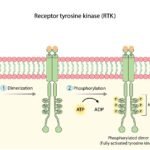
The two drugs work on different parts of the same growth pathway, which is exactly why they’re often paired. Fulvestrant reduces the estrogen signal reaching the cancer cell. Palbociclib then blocks the cell-division machinery that signal would otherwise switch on. In appropriately selected patients, combining an endocrine therapy with a CDK4/6 inhibitor tends to control the cancer more effectively than endocrine therapy given alone.
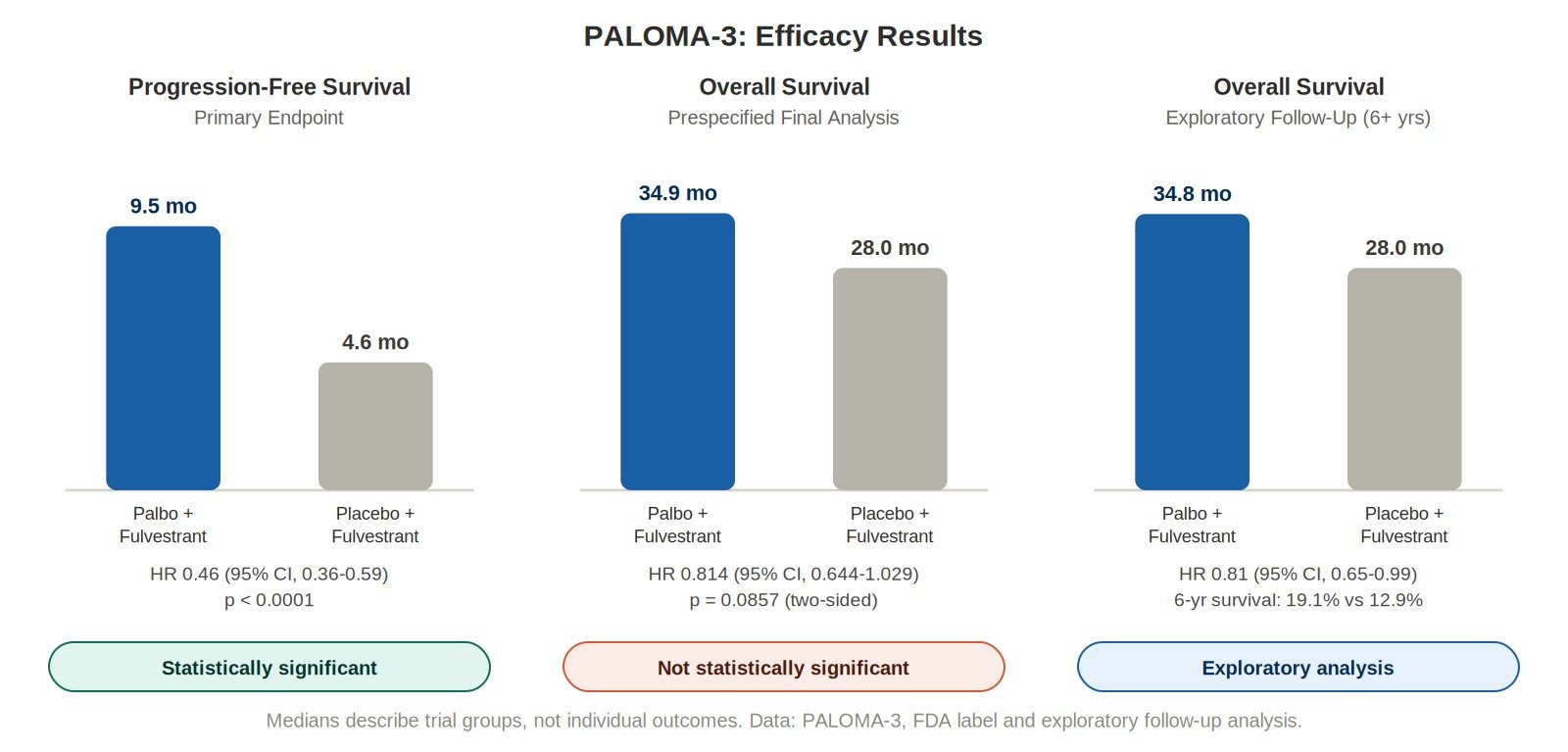
[Illustration: estrogen receptor signaling leading to CDK4/6 activation and cell-cycle progression, with each medication’s point of action marked.]
Illustrations like this are useful for building intuition, but they necessarily simplify things: not every cell in a tumor follows an identical pathway, and your reviewing clinician’s explanation of your specific case should always take precedence over a generalized diagram.
Who May Receive This Combination?
Breast Cancer Characteristics
This regimen is generally considered for cancer that is:
- Hormone receptor-positive
- HER2-negative
- Advanced or metastatic (has spread beyond the breast)
- Progressing during or after a previous course of endocrine therapy
Previous Treatments and Resistance
Whether this specific combination is the right next step depends on a number of individual factors, including which endocrine therapy was used before, how quickly the disease progressed on it, whether a CDK4/6 inhibitor has already been tried, menopausal status, how much disease is present and where, any relevant tumor mutations, other health conditions, and a patient’s own goals for treatment. This is deliberately not a step-by-step decision tree. Current treatment sequencing in this disease is individualized, and it continues to evolve as new options (including newer CDK4/6 inhibitors and combinations) become available.
Premenopausal and Perimenopausal Patients
Under the current US label, premenopausal and perimenopausal women receiving this combination are generally also given an LHRH agonist (a medication that suppresses ovarian hormone production), since the endocrine component of treatment depends on a low-estrogen environment that these patients wouldn’t otherwise have.
How Is Palbociclib With Fulvestrant Given?
Palbociclib Schedule
Palbociclib is taken as a tablet, once daily, for 21 consecutive days, followed by 7 days off treatment, forming a 28-day cycle in total. It can be taken with or without food, ideally at roughly the same time each day. Dose reductions, delays, and temporary interruptions are common, label-recognized tools your oncology team may use to manage side effects; they are not something to adjust on your own.
Fulvestrant Injection Schedule
Fulvestrant is given as an intramuscular injection by a healthcare professional, at a standard dose of 500 mg on days 1, 15, and 29, and then once every 28 days thereafter. It is never self-administered at home.
Missed or Vomited Palbociclib Doses
The FDA-approved patient labeling is specific and simple here: if you vomit after taking a dose, or miss a dose entirely, do not take an extra tablet to make up for it. Just take your next dose at its regular scheduled time. If you’re ever unsure, your medicine guide and your oncology team’s instructions take priority over any general information here.
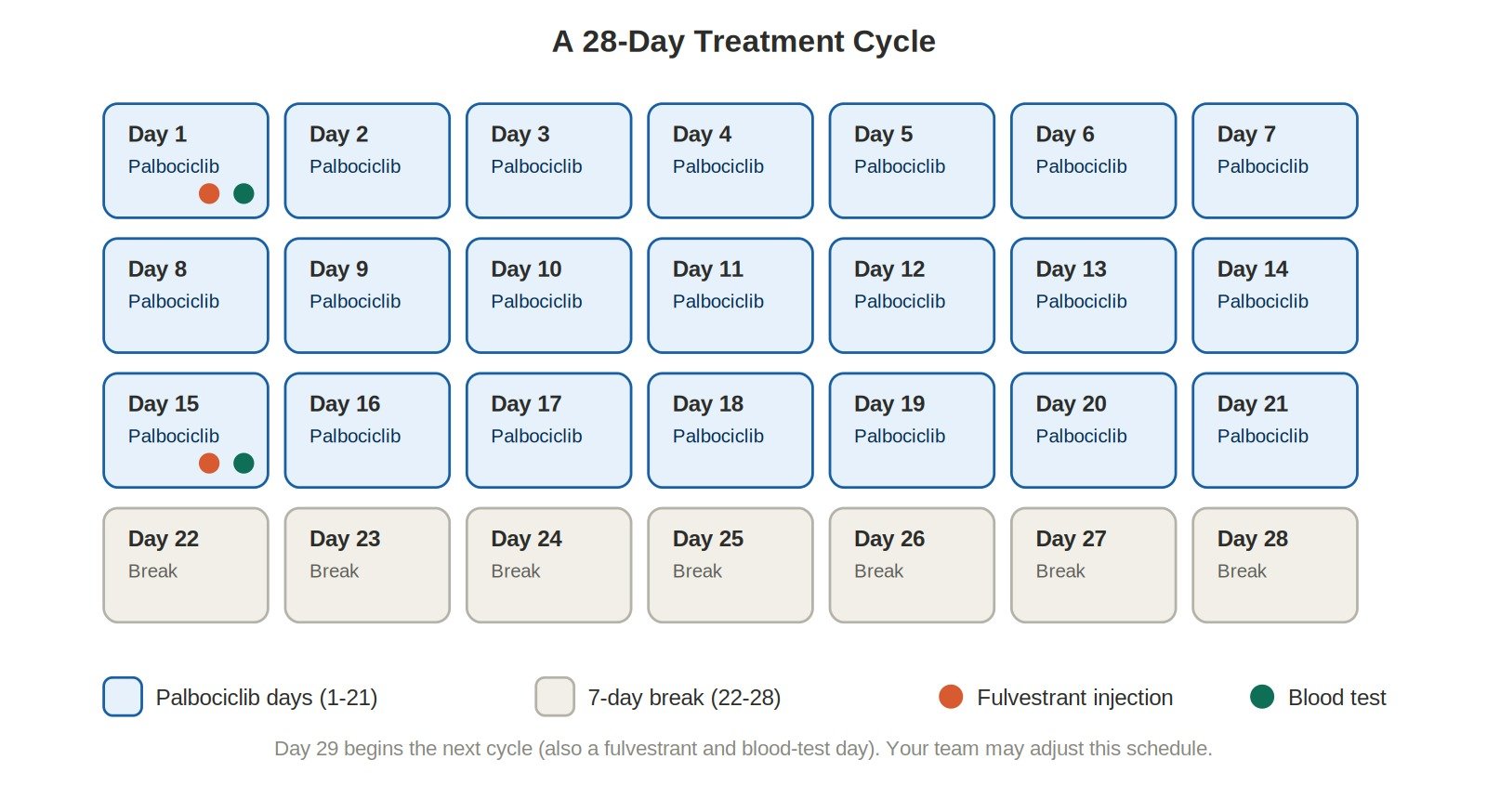
[Visual: a 28-day treatment calendar showing palbociclib days 1-21, the 7-day break, fulvestrant appointment markers, and blood-test checkpoints.]
How Effective Are Palbociclib and Fulvestrant Together?
Understanding Progression-Free Survival and Overall Survival
Before looking at the numbers, three terms are worth defining clearly:
- Progression-free survival (PFS): the length of time a patient remains alive without the cancer meeting the study’s definition of progression (typically, measurable growth on scans).
- Overall survival (OS): the time from being assigned a treatment in a trial until death from any cause.
- Median: the point at which half of a study group has experienced the outcome being measured, and half has not yet.
A median is a description of what happened to a group in a clinical trial. It is not a treatment deadline, and it is not a personal prognosis for any individual reading this page.
Progression-Free Survival in PALOMA-3
PALOMA-3 was a phase 3, randomized, double-blind trial comparing palbociclib plus fulvestrant against placebo plus fulvestrant in patients whose HR-positive, HER2-negative advanced breast cancer had progressed on prior endocrine therapy. Its primary endpoint, investigator-assessed progression-free survival, showed a clear result:
| Outcome | Palbociclib + fulvestrant | Placebo + fulvestrant |
|---|---|---|
| Median progression-free survival | 9.5 months | 4.6 months |
| Hazard ratio | 0.46 (95% CI, 0.36-0.59) | N/A |
| Statistical significance | p < 0.0001 | N/A |
In practical terms: during the trial, adding palbociclib to fulvestrant reduced the relative risk of the cancer progressing or the patient dying, at any given point in the study, by roughly half compared with fulvestrant alone. This does not mean every patient’s cancer was controlled for exactly 9.5 months. Some patients did much better, others less well, and the median is simply the midpoint of that range.
Overall Survival With Palbociclib and Fulvestrant
This is the part of the evidence that most needs careful framing, because survival data from PALOMA-3 has sometimes been described in stronger terms than the statistics actually support. There are two separate analyses to know about, and they shouldn’t be blended together.
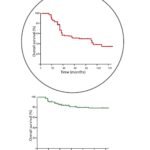
Prespecified final analysis (FDA label, median follow-up 45 months):
| Measure | Result |
|---|---|
| Median OS, palbociclib + fulvestrant | 34.9 months |
| Median OS, placebo + fulvestrant | 28.0 months |
| Hazard ratio | 0.814 (95% CI, 0.644-1.029) |
| p-value | 0.0857 (two-sided) |
| Interpretation | Numerically longer survival with the combination, but this result did not cross the trial’s own prespecified statistical threshold for significance |
Longer-term exploratory follow-up (median follow-up more than six years):
| Measure | Result |
|---|---|
| Median OS, palbociclib + fulvestrant | 34.8 months |
| Median OS, placebo + fulvestrant | 28.0 months |
| Hazard ratio | 0.81 (95% CI, 0.65-0.99) |
| Six-year overall survival rate | 19.1% vs. 12.9% |
| Interpretation | Longer follow-up continued to favor the combination, and this later analysis did cross a significance boundary, but it was explicitly labeled exploratory, meaning it was not the trial’s primary, prespecified test |
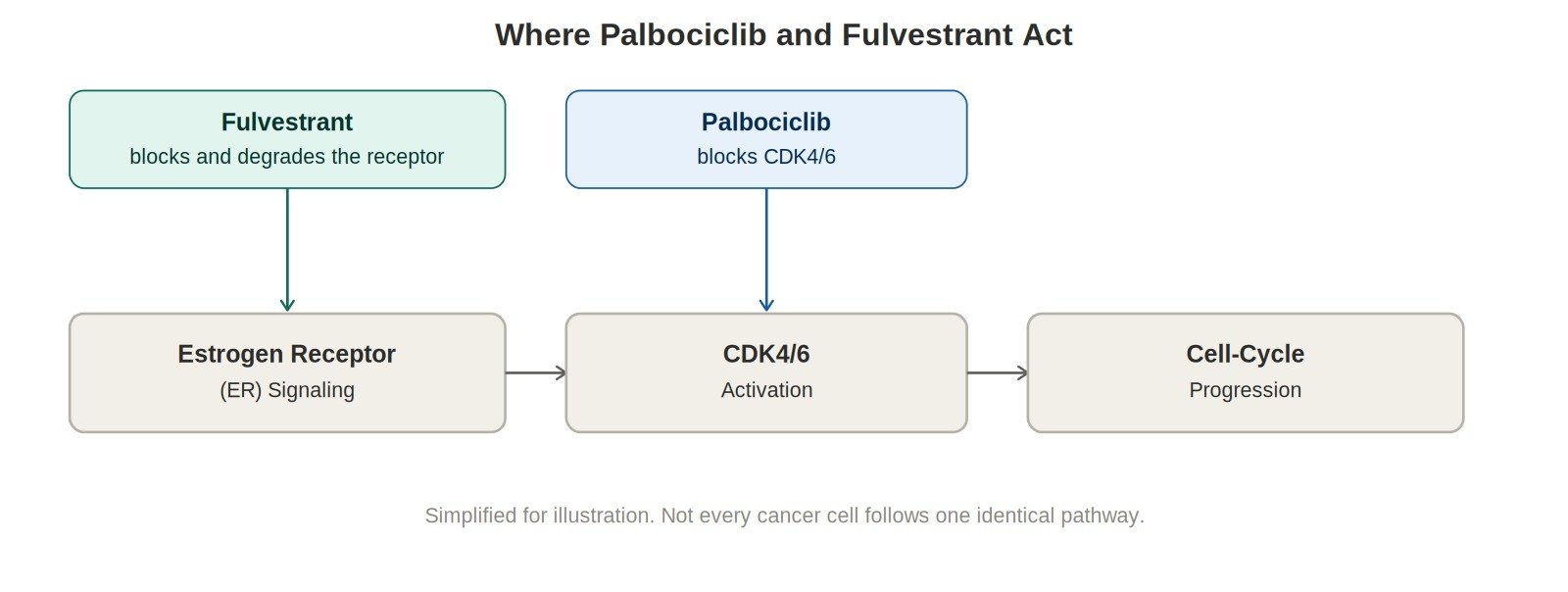
The honest summary: PALOMA-3 clearly and definitively demonstrated a progression-free-survival benefit. It did not definitively prove an overall-survival benefit in its formal, prespecified analysis. The numbers moved in the right direction, and a later exploratory look was encouraging, but neither of those is the same as a proven survival benefit in the strict statistical sense.
Important limitation: PALOMA-3 specifically excluded patients who had already received a prior CDK4/6 inhibitor (such as palbociclib, ribociclib, or abemaciclib) or prior fulvestrant. That matters today more than it did when the trial was designed: CDK4/6 inhibitors are now standard first-line therapy for most patients with this type of breast cancer. If your cancer has already progressed on a CDK4/6-containing regimen, PALOMA-3’s results don’t directly apply to your situation, and this specific combination may not be the next recommended step. This is exactly the kind of detail that makes an individual conversation with your oncologist essential rather than optional.
Why Survival Results Require Careful Interpretation
A few things make survival data like this harder to interpret than they first appear:
- Overall survival can be influenced by whatever treatments a patient receives after their cancer progresses on the trial regimen, not just the trial drugs themselves.
- Subgroup findings (for example, results in patients with prior chemotherapy versus those without) often involve much smaller numbers of patients and are less statistically reliable.
- A hazard ratio describes relative risk over time; it is not the same as an absolute percentage difference in outcomes.
- People enrolled in a clinical trial may differ in meaningful ways from any individual reading this article.
- A difference in median survival between two groups should never be described as a guaranteed amount of “extra life” for a given patient.
Quality of Life During Treatment
Patient-reported outcome data collected during PALOMA-3 indicated that overall quality of life was generally maintained during treatment, with global quality-of-life scores favoring the combination arm over the measured period. This is a meaningful and reassuring finding, but “quality of life was maintained” is a statement about group averages, not a claim that side effects were absent. Individual experience still varies.
Palbociclib and Fulvestrant Side Effects
Side effects from this regimen vary considerably between patients. Some are driven mainly by palbociclib, some by fulvestrant, and some may have nothing to do with either drug. They can just as easily come from the underlying cancer, another medication, or an unrelated condition. Reporting anything unusual to your care team, rather than assuming a cause, is always the safer approach.
Common Side Effects Reported in PALOMA-3
The table below shows all-grade adverse events reported with the combination in the FDA label’s PALOMA-3 safety data, alongside the placebo-plus-fulvestrant comparator arm. The comparator numbers matter: they show which effects were meaningfully increased by adding palbociclib, and which occurred at similar rates even without it.
| Side effect or lab finding | Palbociclib + fulvestrant | Placebo + fulvestrant | In plain terms |
|---|---|---|---|
| Neutropenia | 83% | 4% | Reduced neutrophils (a type of white blood cell), raising infection risk |
| Leukopenia | 53% | 5% | Reduced overall white blood cell count |
| Infections | 47% | 31% | Includes infections of varying type and severity |
| Fatigue | 41% | 29% | Tiredness that can affect daily activity |
| Nausea | 34% | 28% | Feeling sick to the stomach |
| Anemia | 30% | 13% | Reduced red blood cell count |
| Stomatitis | 28% | 13% | Mouth soreness or ulcers |
| Diarrhea | 24% | 19% | Loose or more frequent stools |
| Thrombocytopenia | 23% | 0% | Reduced platelet count |
| Vomiting | 19% | 15% | May increase dehydration risk |
These are trial-reported frequencies, not a prediction of what any specific patient will experience or how severe it will be for them.
Low White Blood Cell Counts and Infection Risk
Neutropenia is the single most common and most clinically important safety issue with this regimen. It’s different from febrile neutropenia, the more serious situation where a low neutrophil count is accompanied by fever, which needs urgent medical attention. This is exactly why complete blood counts are checked regularly throughout treatment (details below), and why treatment is sometimes paused or the palbociclib dose reduced if counts drop too far. Palbociclib’s label also carries a warning for rare but serious interstitial lung disease or pneumonitis (lung inflammation), so new or worsening cough, chest pain, or shortness of breath should always be reported promptly. Follow your own care team’s specific instructions about what temperature counts as a fever requiring same-day contact. This varies by clinic and shouldn’t be guessed at from a general article.
Fatigue and Anemia
Fatigue during this treatment is common and shouldn’t simply be tolerated in silence. It’s worth reporting, since your care team can check whether it’s related to anemia (which is treatable) or another cause. Persistent or worsening tiredness, especially alongside shortness of breath or dizziness, is worth flagging at your next contact rather than waiting for a scheduled visit.
Mouth Sores
Mouth tenderness or ulcers (stomatitis) can make eating or drinking uncomfortable. Your oncology team can suggest supportive measures, and more significant oral symptoms, ones that interfere with eating, drinking, or taking medication, are worth a dedicated conversation rather than working around quietly.
Fulvestrant-Related Symptoms
Beyond the effects shared with palbociclib, fulvestrant on its own is associated with injection-site pain, joint, muscle, back, or bone discomfort, hot flashes, nausea, constipation, headache, and fatigue. The fulvestrant label also carries a caution about bleeding risk connected to the intramuscular injection, relevant if you take blood thinners, have a bleeding disorder, or have a low platelet count, along with a note about rare nerve-related complications near the injection site, given its proximity to the sciatic nerve.
Can Palbociclib and Fulvestrant Cause “Bowel Irritation”?
“Bowel irritation” is a phrase many patients use, but it isn’t a precise clinical term found in the drug labels or in PALOMA-3’s own safety reporting. When people say this, they’re usually describing one or more of: diarrhea, constipation, cramping, general abdominal discomfort, a change in bowel habits, urgency, or nausea. It’s worth naming the specific symptom, since that’s what actually guides what your care team checks and how they respond.
Diarrhea
Diarrhea occurred in 24% of patients receiving palbociclib plus fulvestrant in PALOMA-3, compared with 19% of those receiving placebo plus fulvestrant. That comparison matters: it shows this symptom cannot automatically be pinned on palbociclib alone, since it also occurred fairly often in patients who weren’t taking it.
Constipation
Constipation is listed among the commonly reported fulvestrant-related adverse reactions. Other medicines, including certain pain relievers and anti-nausea drugs, can also contribute, and so can reduced fluid intake or lower activity levels during treatment. As with diarrhea, more than one cause is often in play at once.
Abdominal Discomfort and Cramping
Abdominal pain or cramping can have several possible explanations: diarrhea or constipation, an infection, dehydration, other medications, dietary changes, a complication related to the cancer itself, or, less commonly but importantly, a bowel obstruction or other condition requiring prompt attention. Because the range of possible causes is wide, and some of them are urgent, this is one symptom that’s never appropriate to self-diagnose from an article. Report it, and let your care team work out the cause.
Managing Diarrhea, Constipation, and Other Gastrointestinal Symptoms
The strategies below are general starting points to discuss with your oncology team, not a personalized treatment plan.
Keep a Symptom Record
A simple record can make these conversations much more productive. Useful things to track include your usual bowel pattern before treatment, the number and consistency of stools, how long any constipation has lasted, abdominal pain, vomiting, fluid intake, temperature, any newly started medicines or supplements, and how symptoms line up with where you are in your treatment cycle.
Hydration and Food Intake
General, non-personalized principles that are often discussed include maintaining fluid intake where medically appropriate, asking your team whether an oral rehydration solution is suitable, eating smaller and more frequent meals if nausea is present, and working with an oncology dietitian on any dietary adjustments rather than restricting food intake aggressively on your own, which can risk unwanted weight loss.
Before Using Anti-Diarrheal Medicines or Laxatives
Ask your oncology team before starting, or repeatedly using, anti-diarrheal medicines, laxatives, suppositories, enemas, or herbal remedies. This matters even more if you currently have neutropenia, significant abdominal pain, vomiting, blood in the stool, possible bowel obstruction, or you’re taking other medicines that could interact.
When Treatment May Be Interrupted or Reduced
If gastrointestinal symptoms are significant, your oncology team may repeat blood tests, check for infection, review your other medications, temporarily hold palbociclib, and restart it at the same or a reduced dose once things settle, or investigate an entirely separate cause. This is a routine part of managing the regimen, not a sign that something has gone unusually wrong.
When to Contact the Oncology Team Urgently
Reach out to your care team promptly, rather than waiting for a scheduled appointment, if you notice:
- Fever or infection symptoms, following the specific threshold your team has given you
- Shaking chills
- Severe or worsening abdominal pain
- A swollen or unusually firm abdomen
- Persistent vomiting, or an inability to keep fluids down
- Signs of dehydration, faintness, or confusion
- Blood in the stool, or black, tar-like stools
- Severe or persistent diarrhea
- Constipation combined with vomiting or noticeable abdominal swelling
- New or worsening shortness of breath, cough, or chest symptoms
- Unusual bleeding or bruising
- A severe reaction at the injection site, or new weakness, numbness, or radiating leg pain
If you’re ever unsure whether something counts as urgent, treat it as urgent and call. It’s always better to check.
What Monitoring Is Needed During Treatment?
Complete Blood Counts
Per the current label, blood counts are generally checked before starting treatment, at the beginning of each treatment cycle, and on day 15 of the first two cycles, with additional checks whenever clinically needed. This monitoring schedule exists specifically because of how common and clinically significant neutropenia is with this regimen.
Symptom and Infection Monitoring
Alongside bloodwork, your team will typically also be tracking fever, mouth symptoms, fatigue, unusual bruising or bleeding, respiratory symptoms, and gastrointestinal symptoms over the course of treatment.
Imaging and Treatment Response
Scans, physical exams, and how you’re feeling day to day are all considered together when assessing whether treatment is working. A temporary pause or dose reduction due to side effects does not, on its own, mean the cancer has progressed. Those are two separate and unrelated decisions.
Medicines, Foods, and Supplements to Discuss With Your Care Team
CYP3A Interactions
Palbociclib is processed by a liver enzyme called CYP3A, and its blood levels can be significantly affected by other drugs and foods that strongly inhibit or induce this enzyme. The label specifically advises avoiding strong CYP3A inhibitors and inducers where possible, and avoiding grapefruit or grapefruit products entirely during treatment.
Medication List Review
Give your oncology team a complete list of everything you take: prescription medicines, over-the-counter drugs, vitamins, herbal products, supplements, anticoagulants or antiplatelet medicines, and antibiotics or antifungals. A partial list, even one that feels “close enough,” can miss an interaction that matters.
Pregnancy and Contraception
Palbociclib can cause fetal harm, and effective contraception is required during treatment and for a defined period afterward for patients (and partners) of reproductive potential. If pregnancy, fertility preservation, or breastfeeding are relevant to your situation, raise them directly with your oncology team before starting treatment. This is a conversation worth having early, not after the fact.
Questions to Ask Your Oncologist
- Why is this combination appropriate for my specific type of breast cancer?
- What is the main goal of this treatment in my situation?
- How will we know whether the treatment is working?
- When will my blood counts be checked?
- What temperature or symptoms mean I should call outside of a scheduled visit?
- Which bowel-related symptoms should I report right away?
- Which anti-diarrheal or constipation treatments are safe for me specifically?
- Are there foods, medicines, or supplements I should avoid?
- What happens if my palbociclib dose needs to be reduced?
- Do I need ovarian suppression as part of this treatment?
- Who do I contact outside normal clinic hours?
- What would we consider next if this treatment eventually stops working?
Frequently Asked Questions
How quickly does the combination start working?
Is palbociclib and fulvestrant chemotherapy?
No. Palbociclib is a targeted CDK4/6 inhibitor and fulvestrant is a hormone therapy; neither is traditional cytotoxic chemotherapy. That said, the combination can still cause serious side effects, so “not chemotherapy” doesn’t mean “low-risk.”
How long do patients typically stay on this combination?
Treatment commonly continues for as long as it’s controlling the cancer and side effects remain manageable, but the exact duration is individualized and decided together with your oncology team.
Does a palbociclib dose reduction mean it’s no longer working?
No. Dose adjustment is a standard, expected way of managing side effects like neutropenia. It doesn’t automatically mean the treatment has stopped being effective, but your oncology team is the one who evaluates that, not a general assumption either way.
Is diarrhea common with palbociclib and fulvestrant?
It’s reported in about 24% of patients on the combination in PALOMA-3, versus 19% on fulvestrant alone, so it’s fairly common, though not always attributable to palbociclib specifically.
Can fulvestrant cause constipation?
Yes, constipation is among the commonly reported fulvestrant-related effects, though other causes should also be considered.
When is bowel-related pain an emergency?
Severe or worsening abdominal pain, a swollen or firm abdomen, persistent vomiting, or blood in the stool all warrant prompt contact with your care team rather than waiting it out.
Can I take loperamide or a laxative on my own?
Check with your oncology team first, especially if your symptoms are severe, come with fever or abdominal pain, or your blood counts are currently low.
Why are blood tests needed so often?
To monitor for neutropenia, anemia, and thrombocytopenia, the three blood-count changes most closely tied to this regimen’s safety profile.
What should I do if I miss a dose of palbociclib?
Don’t take an extra tablet to make up for it. Take your next dose at the usual scheduled time, and follow up with your care team if you’re ever unsure.
The Bottom Line
Palbociclib plus fulvestrant is an established treatment option for eligible patients with HR-positive, HER2-negative advanced breast cancer that has progressed after endocrine therapy. PALOMA-3 demonstrated a substantial, statistically significant progression-free-survival benefit. Overall-survival results favored the combination numerically, with encouraging longer-term exploratory findings, but these should be described with their real statistical limitations rather than as a proven survival benefit. Because neutropenia, infection, and gastrointestinal side effects can be clinically significant, regular blood monitoring and early, direct communication with your oncology team are central to using this treatment safely.
References
- Cristofanilli M, et al. Fulvestrant plus palbociclib versus fulvestrant plus placebo (PALOMA-3): final analysis of progression-free survival. Lancet Oncology.
- Turner NC, et al. Overall Survival with Palbociclib and Fulvestrant in Advanced Breast Cancer. New England Journal of Medicine.
- IBRANCE (palbociclib): FDA Prescribing Information, accessdata.fda.gov
- Turner NC, et al. Overall Survival with Palbociclib and Fulvestrant: Updated Exploratory Analyses of PALOMA-3. Clinical Cancer Research.
- Harbeck N, et al. Quality of life with palbociclib plus fulvestrant: patient-reported outcomes from PALOMA-3. PubMed.
- Fulvestrant Injection: DailyMed Prescribing Information
- FDA approves palbociclib with trastuzumab, with or without pertuzumab, and endocrine therapy for maintenance treatment of HR-positive, HER2-positive metastatic breast cancer (June 24, 2026), for the separate indication referenced in the scope note above
About This Article
This article was written using primary trial publications and current FDA/DailyMed prescribing information, prioritized in that order over secondary or promotional sources. It was drafted with the assistance of AI tools and reviewed for medical accuracy by the named reviewer above. No sponsorship or payment influenced its content or the sources selected.
The content and clinical information on this page are provided for educational purposes only. They do not replace personalized medical advice from your oncology team. Always consult your doctor before starting, stopping, or adjusting any cancer treatment, and never change a dose or medication schedule based on general information alone.
Need Help Accessing Palbociclib or Fulvestrant?
Generic Oncology sources WHO-GMP certified palbociclib and fulvestrant and helps patients navigate access through Named Patient Program (NPP) frameworks when the brand-name products are unavailable or unaffordable where they live.
- Upload your prescription to check availability and pricing for your situation.
- WhatsApp: +8801792288474
- Email: [email protected]
This section is provided by Generic Oncology and is separate from the medical information above. It is not a treatment recommendation.