Prescription required. We facilitate access to medicines already prescribed by your treating physician. We do not provide medical advice or diagnoses.


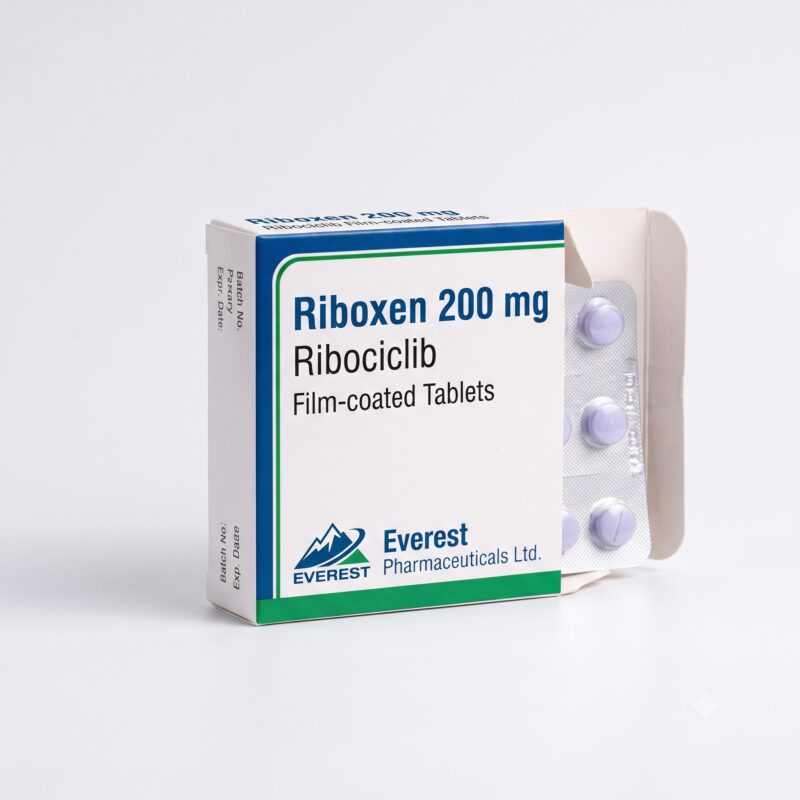
Riboxen 200 mg (Ribociclib)
- Used for: If you have hormone receptor positive, HER2 negative breast cancer that is advanced or has spread, and your doctor is combining it with an aromatase inhibitor or with fulvestrant.
- Availability: In Stock
- Shipping: Express Global Shipping (7-14 days depending on region).
- Requirement: Valid prescription from a licensed healthcare provider required.
✓ WHO GMP Certified
✓ Reviewed By Medical Expert
✓ Batch Examined in Lab
Need Patient Access Support?
Our team provides verified global sourcing assistance to help you navigate international shipping and prescription requirements safely.
Medically reviewed by Dr. Salma Mamdouh Elreedy, Clinical Oncologist, Sphinx Cure Oncology Center Last reviewed: [23-07-2026]. Next review due: [JULY-2027].
A Note Before You Read On
This page is here to help you understand your treatment, not to replace your doctor’s advice. Riboxen (ribociclib) is a prescription medicine. It is only supplied to patients who have a valid prescription from a licensed oncologist, through Named Patient Program (NPP) import, in countries where it is not otherwise available locally. Please talk to your treating doctor about your own situation before making any decisions.
Riboxen 200mg at a Glance
| Brand name | Riboxen |
| Generic name | Ribociclib |
| Strength | 200 mg tablet |
| Type of medicine | CDK4/6 inhibitor, taken by mouth |
| Made by | Everest Pharmaceuticals Ltd, Bangladesh (WHO-GMP certified factory) |
| Pack size | 21 Tablets |
| Reference brand | Kisqali (Novartis). Riboxen is a separately manufactured generic version of ribociclib, not a Novartis product |
Riboxen is usually prescribed if: You have hormone receptor positive, HER2 negative breast cancer that is advanced or has spread, and your doctor is combining it with an aromatase inhibitor or with fulvestrant.
Your doctor will check first: A heart tracing (ECG), liver blood tests, and a full blood count, before you start.
Riboxen should not be combined with: Tamoxifen. See the heart monitoring section below for why.
What is Riboxen?
Riboxen is the Bangladesh-made generic version of ribociclib, a tablet medicine used together with hormone therapy to treat certain types of breast cancer. It is manufactured by Everest Pharmaceuticals under WHO-GMP certification, the same standard applied across our CDK4/6 inhibitor lineup, which also includes Palboxen and Palbocent (palbociclib) and Abeclib (abemaciclib).
How Ribociclib Works
Cancer cells need to divide and multiply to grow. Two proteins inside the cell, called CDK4 and CDK6, act like switches that tell the cell it is safe to divide. Ribociclib blocks these switches, so hormone-sensitive breast cancer cells are slowed down or stopped from dividing.
On its own, this is not usually enough. That is why ribociclib is always given together with a hormone therapy (an aromatase inhibitor, or fulvestrant). The hormone therapy cuts off the signal that feeds the cancer, and ribociclib blocks the cell’s ability to act on any signal that gets through. The two work as a pair.
What Riboxen (Ribociclib) Is Used For
Riboxen is prescribed for adults with hormone receptor positive, HER2 negative breast cancer that is advanced or has spread to other parts of the body. It is given:
- Together with an aromatase inhibitor, as a first treatment, or
- Together with fulvestrant, either as a first treatment or after another hormone therapy has stopped working
If you have not yet reached menopause, your doctor will also prescribe an LHRH agonist alongside Riboxen.
Riboxen Dosage and How to Take It
- The usual starting dose is 600 mg, which is three 200 mg tablets, taken once a day
- Take it for 21 days in a row, then stop for 7 days. This 28-day pattern is one full cycle, and it repeats
- You can take it with or without food
- Try to take it at roughly the same time each day
- If side effects are difficult to manage, your doctor may lower your dose in steps: first to 400 mg a day, then to 200 mg a day. If 200 mg is still too much, treatment is usually stopped
- [PLACEHOLDER: what to do if you miss a dose, confirm with local pharmacist guidance]
What to Expect in Your First Treatment Cycle
Your first cycle is when your care team watches you most closely:
- Before your first dose: an ECG (heart tracing), blood tests for your liver, a full blood count, and a check of your blood salts (electrolytes)
- Around day 14: a repeat ECG
- Every 2 weeks through your first two cycles: repeat blood counts and liver tests
Most changes that are going to happen usually show up in these first few weeks, and they are generally manageable and reversible if caught early, which is exactly why this monitoring schedule matters.
Ribociclib Side Effects
Common side effects:
- Low white blood cell count (this is checked with regular blood tests)
- Feeling sick, being sick, or diarrhea
- Tiredness
- Headache
- Thinning hair
- Changes in liver blood tests
Contact your doctor promptly if you notice:
- Yellowing of your skin or eyes, dark urine, or unusual tiredness (possible liver problem)
- A racing or fluttering heartbeat, dizziness, or fainting (possible heart rhythm change)
- Fever or chills (possible infection, linked to low white blood cell count)
- New shortness of breath or a persistent cough
Heart Monitoring on Ribociclib: Why It Matters
Ribociclib can affect your heart’s electrical rhythm, seen on an ECG as something called QT prolongation. This is why heart monitoring is a routine, expected part of treatment, not a sign that something has gone wrong:
- Before starting: your doctor will check your ECG. Treatment normally only begins if your QT reading is within a safe range
- Day 14 of your first cycle: a repeat ECG
- Start of your second cycle: another ECG, then as needed after that
- Blood salts (potassium, calcium, magnesium, phosphorus): checked before you start, and again at the start of each of your first 6 cycles
If your ECG shows a change, your doctor may pause your dose, and either restart at the same dose once it settles, or restart at a lower dose. In rare cases where the change is significant and combined with symptoms, treatment is stopped for good.
Riboxen should not be taken with tamoxifen. Taking the two together increases the risk of this heart rhythm change.
Other Medicines to Be Careful With
Tell your doctor and pharmacist about every medicine you take, including over-the-counter and herbal products. In particular:
- Certain strong medicines that affect a liver enzyme called CYP3A4 (your doctor will know which ones) can raise or lower the amount of ribociclib in your body, and may need to be avoided or your dose adjusted
- Tamoxifen should not be combined with Riboxen
- Other medicines known to affect heart rhythm should generally be avoided while on Riboxen
Who Should Take Extra Care, or Avoid This Medicine
- Anyone with an abnormal baseline heart rhythm reading should have this corrected before starting
- This medicine can harm an unborn baby. If you can become pregnant, use effective contraception during treatment and for a period afterward, and discuss timing with your oncologist
- If you have liver problems, your doctor may need to adjust your dose.
- Do not combine with tamoxifen
Guidance for Caregivers
- Keep a simple written note of any missed doses, delays, or new symptoms such as a racing heartbeat, fever, or unusual tiredness, so it is easy to share at the next appointment
- Store tablets below 30°C, away from light and moisture, and out of reach of children
- Check with the oncology team before adding any new medicine, supplement, or herbal product, given how ribociclib interacts with the liver enzyme CYP3A4 and with heart rhythm
Frequently Asked Questions
Is Riboxen the same medicine as Kisqali?
Riboxen contains the same active ingredient, ribociclib, as the original brand Kisqali. It is made independently by Everest Pharmaceuticals under WHO-GMP certification.
What is the price of Riboxen 200mg in Bangladesh?
Pricing depends on pack size and your prescribed dose. Upload your prescription and our team will confirm current pricing directly.
Why do I need heart tracings (ECGs) before and during treatment?
Ribociclib can affect your heart’s rhythm. Checking your ECG before you start, and again on day 14, catches any change early, when it is easiest to manage.
Can I take Riboxen together with tamoxifen?
No. This combination is not recommended because it raises the risk of a heart rhythm change.
What happens if my white blood cell count drops?
Your doctor checks this every 2 weeks for your first two cycles. If it drops too low, your treatment may be paused, your dose lowered, or in more serious cases, stopped.
Do I take Riboxen on its own?
No. It is always given together with an aromatase inhibitor or fulvestrant, and if you have not reached menopause, an LHRH agonist as well.
About the Manufacturer: Everest Pharmaceuticals
Riboxen is made by Everest Pharmaceuticals Ltd in Bangladesh, in a WHO-GMP certified facility. It is manufactured and sold in Bangladesh, and supplied elsewhere only through Named Patient Program import routes where locally permitted.
It’s worth being clear about one distinction: the original brand, Kisqali, made by Novartis, has its own regulatory approval history and clinical trial data. That approval history belongs to Kisqali and does not automatically apply to Riboxen, which is a separately manufactured product. Riboxen’s quality standard rests on its WHO-GMP certification.