Prescription required. We facilitate access to medicines already prescribed by your treating physician. We do not provide medical advice or diagnoses.


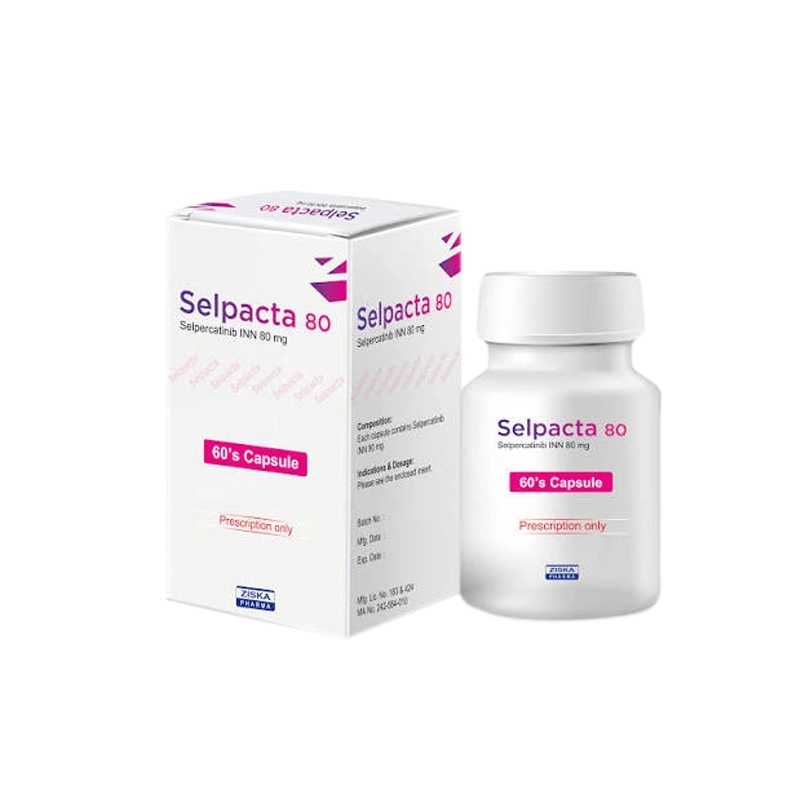
Selpacta 80mg (Selpercatinib) Capsules 60’s Pack
- Used for: Selpacta 80mg is a generic formulation of selpercatinib, a targeted kinase inhibitor used to treat certain lung, thyroid, and other solid tumor cancers driven by alterations in the RET (rearranged during transfection) gene.
- Availability: In Stock
- Shipping: Express Global Shipping (7-14 days depending on region).
- Requirement: Valid prescription from a licensed healthcare provider required.
✓ WHO GMP Certified
✓ Reviewed By Medical Expert
✓ Batch Examined in Lab
Need Patient Access Support?
Our team provides verified global sourcing assistance to help you navigate international shipping and prescription requirements safely.
Selpacta 80mg is a generic formulation of selpercatinib, a targeted kinase inhibitor used to treat certain lung, thyroid, and other solid tumor cancers driven by alterations in the RET (rearranged during transfection) gene. Ziska Pharmaceuticals Ltd. manufactures it under WHO-GMP compliant conditions, and it is supplied through Named Patient Program (NPP) frameworks for patients outside markets where the originator brand, Retevmo, is registered.
Most generic selpercatinib listings online cover the 40mg strength only. That leaves a gap, because selpercatinib dosing is based on body weight rather than diagnosis, and adult patients weighing 50 kg or more are treated with 160mg twice daily, built from two 80mg capsules per dose. For most adults on this therapy, the 80mg capsule is the one they actually take. Selpacta 80mg covers that strength directly.
What Is Selpercatinib?
Selpercatinib is a selective, oral small-molecule inhibitor of the RET kinase. In a subset of cancers, the RET gene becomes abnormally activated, either through a gene fusion, where RET joins with an unrelated gene, or through an activating point mutation. Either change keeps RET signaling switched on, pushing cancer cells to grow and divide without the usual restraints.
Tumors that depend heavily on this single altered pathway are described as having “oncogene addiction” to RET, and it’s this dependency that makes them unusually responsive to a targeted inhibitor rather than to chemotherapy, which affects rapidly dividing cells more broadly.
The drug also shows activity against VEGFR1 and VEGFR3, though its clinical use centers on RET-driven disease. Treatment selection requires confirmed RET gene fusion or mutation status using an FDA-approved diagnostic test; there is no established benefit in RET-negative tumors.
FDA-Approved Indications
Retevmo (selpercatinib, Eli Lilly and Company) first received accelerated approval in 2020 and now holds four separate approvals:
- RET fusion-positive non-small cell lung cancer (NSCLC) for adult patients with locally advanced or metastatic disease, as detected by an FDA-approved test.
- RET-mutant medullary thyroid cancer (MTC) for adult and pediatric patients 2 years of age and older with advanced or metastatic disease requiring systemic therapy.
- RET fusion-positive thyroid cancer for adult and pediatric patients 2 years of age and older who require systemic therapy and are radioactive iodine-refractory, where radioactive iodine would otherwise be appropriate. Converted from accelerated to traditional approval in June 2024.
- RET fusion-positive solid tumors, tumor-agnostic, for adult and pediatric patients 2 years of age and older with locally advanced or metastatic solid tumors carrying a RET gene fusion, whose disease has progressed on prior systemic therapy or who have no satisfactory alternative treatment. Received full traditional approval on July 14, 2026, upgraded from the accelerated approval first granted to adults in 2022 and extended to pediatric patients in 2024.
The fourth indication doesn’t depend on where the cancer started. Any solid tumor carrying a RET fusion can qualify, regardless of the organ of origin, once standard treatment options are exhausted. Few cancer therapies are approved this way, on a genetic marker rather than a tumor site.
Clinical Efficacy Data
RET fusion-positive NSCLC
In the final LIBRETTO-001 (NCT03157128) analysis, selpercatinib produced an objective response rate of 62% in patients previously treated with platinum-based chemotherapy (n=247) and 83% in treatment-naive patients (n=69). Median duration of response was 31.6 months in the pretreated group and 20.3 months in the treatment-naive group, with median progression-free survival of 26.2 and 22.0 months, respectively. Among 26 patients with measurable brain metastases at baseline, the intracranial response rate reached 85%, with a median CNS response duration of 9.4 months, indicating meaningful activity against brain involvement, a common complication in RET-driven NSCLC.
RET-mutant medullary thyroid cancer and RET fusion-positive thyroid cancer
The most recent LIBRETTO-001 update (data cutoff January 2023) reported an objective response rate of 82.5% in patients with RET-mutant MTC who had not previously received cabozantinib or vandetanib, and 77.6% in those who had. For RET fusion-positive thyroid cancer, response rates reached 95.8% in treatment-naive patients and 85.4% in previously treated patients.
Tumor-agnostic RET fusion-positive solid tumors
The July 2026 traditional approval rested on a cohort of 75 previously treated patients with RET fusion-positive solid tumors outside NSCLC and thyroid cancer. Overall response rate was 47% (95% CI, 35-59%), with a median duration of response of 24.5 months (95% CI, 11.2-49.1 months). Responses spanned colorectal, pancreatic, cholangiocarcinoma, sarcoma, salivary gland, neuroendocrine, breast, ovarian, small intestine, and skin cancers, along with cancers of unknown primary origin. Pediatric and young-adult data from LIBRETTO-121 (NCT03899792) additionally showed responses in congenital infantile fibrosarcoma, spindle cell sarcoma, and RET fusion-positive thyroid cancer.
Dosage and Administration
Dosing depends on body weight, not on which of the four approved indications is being treated:
| Body weight | Recommended dose |
|---|---|
| Less than 50 kg | 120mg orally, twice daily |
| 50 kg or greater | 160mg orally, twice daily |
A patient weighing 50 kg or more takes the 160mg dose as two 80mg capsules at each administration. Treatment continues until disease progression or unacceptable toxicity.
Capsules are taken by mouth roughly every 12 hours, with or without food, and should be swallowed whole rather than opened, crushed, or chewed. If a dose is missed, take it as soon as remembered, unless it is within 6 hours of the next scheduled dose, in which case skip the missed dose and resume the normal schedule; do not double up. If vomiting occurs after taking a dose, do not take a replacement capsule. Wait for the next scheduled dose instead.
Hepatic and renal impairment. No dose adjustment is needed for mild or moderate hepatic impairment (Child-Pugh A or B). Severe hepatic impairment (Child-Pugh C) calls for a fixed dose of 80mg twice daily, regardless of body weight, making the 80mg capsule the standard dose for this group as well. No dosage adjustment is required across mild, moderate, or severe renal impairment; selpercatinib has not been studied in end-stage renal disease or dialysis patients.
Dose reductions for adverse reactions. Toxicity is managed with staged dose reductions before treatment is discontinued outright. The starting dose determines the reduction path:
| Current dose | First reduction | Second reduction | Third reduction |
|---|---|---|---|
| 160mg twice daily | 120mg twice daily | 80mg twice daily | 40mg twice daily |
| 120mg twice daily | 80mg twice daily | 40mg twice daily | 40mg once daily |
| 80mg twice daily | 40mg twice daily | 40mg once daily | Permanently discontinue |
| 40mg three times daily | 40mg twice daily | 40mg once daily | Permanently discontinue |
Treatment is permanently discontinued in patients unable to tolerate three dose reductions. For a standard adult patient starting at 160mg twice daily, the reduction path runs through 120mg, then 80mg, then 40mg twice daily, making the 80mg capsule relevant at more than one point in typical adult management, not just at the starting dose.
Drug Interactions
Three categories of commonly prescribed medications affect how selpercatinib is absorbed and cleared, which makes a full medication review an important step before starting treatment.
Acid-reducing agents. Selpercatinib has pH-dependent solubility and absorbs less well as stomach pH rises. Proton pump inhibitors, H2 receptor antagonists, and locally-acting antacids can each reduce selpercatinib exposure and, with it, its anti-tumor activity. Where a PPI can’t be avoided, selpercatinib should be taken with food. Where an H2 blocker or antacid is needed, its timing should be separated from selpercatinib administration.
CYP3A inhibitors and inducers. The drug is metabolized through CYP3A. Strong or moderate CYP3A inhibitors raise selpercatinib plasma concentrations and, with them, the risk of adverse reactions including QT prolongation; these combinations should generally be avoided, and where unavoidable, the dose should be reduced with more frequent ECG monitoring. Strong or moderate CYP3A inducers have the opposite effect, lowering selpercatinib concentrations enough to potentially reduce its effectiveness.
QT-prolonging medications. Selpercatinib already carries a QT prolongation risk on its own, so combining it with other QT-prolonging drugs compounds that risk and warrants closer monitoring.
Warnings and Precautions
There is no FDA boxed warning attached to selpercatinib, but its label lists a number of risks that require active monitoring:
- Hepatotoxicity. Increased AST occurred in 59% of patients (Grade 3/4 in 11%) and increased ALT in 55-56% (Grade 3/4 in 12%) across LIBRETTO-001. Check ALT and AST before starting treatment, every 2 weeks for the first 3 months, and monthly after that.
- Interstitial lung disease (ILD) / pneumonitis. Occurred in under 2% of patients, including rare fatal cases. Watch for new or worsening pulmonary symptoms such as shortness of breath or cough.
- Hypertension. Occurred in 41% of patients, including Grade 3 in 20%. Blood pressure should be controlled before starting treatment; selpercatinib should not be initiated in patients with uncontrolled hypertension. Monitor after the first week and at least monthly after that.
- QT interval prolongation. QTcF increased to over 500 ms in 7% of patients and by at least 60 ms over baseline in 20%. Assess QT interval, electrolytes, and thyroid-stimulating hormone at baseline and periodically during treatment, with added vigilance in patients at elevated cardiac risk.
- Hemorrhagic events. Grade 3 or higher bleeding occurred in about 3% of patients, including fatal events (cerebral hemorrhage among them) in roughly 0.5%. Discontinue permanently after a severe or life-threatening bleed.
- Hypersensitivity reactions. Occurred in about 6% of patients (Grade 3 in roughly 2%), sometimes including severe skin reactions. Most cases resolve with corticosteroids and a temporary dose reduction, after which many patients are able to resume treatment.
- Tumor lysis syndrome. Occurred in about 0.6% of medullary thyroid cancer patients, who tend to carry a higher tumor burden than other treated groups.
- Impaired wound healing. Withhold selpercatinib for at least 7 days before elective surgery, and for at least 2 weeks after major surgery until adequate healing.
- Hypothyroidism. Occurred in about 13% of patients, with all reported cases Grade 1 or 2. Thyroid function should be checked at baseline and monitored periodically alongside the QT-related electrolyte panel above.
- Embryo-fetal toxicity. Animal data indicate selpercatinib can cause fetal harm. Patients who could become pregnant should be counseled on this risk before starting treatment.
- Slipped capital femoral epiphysis (SCFE). Reported in a small number of pediatric patients across the pediatric trial population, relevant given selpercatinib’s approved use down to age 2.
Who Is a Candidate for Selpacta?
Candidacy comes down to confirmed RET gene fusion or mutation status in the tumor, identified through an FDA-approved diagnostic test. This isn’t a formality: selpercatinib has no established benefit in RET-negative disease, and biomarker testing results should be documented and on hand before requesting access through the Upload Prescription process below.
Selpacta vs. Retevmo
| Selpacta (Ziska Pharmaceuticals) | Retevmo (Eli Lilly) | |
|---|---|---|
| Active ingredient | Selpercatinib | Selpercatinib |
| Strength | 40mg, 80mg capsules | 40mg, 80mg capsules; 40mg, 80mg, 120mg, 160mg tablets |
| Manufacturing standard | WHO-GMP certified | FDA-approved originator manufacturing |
| Access pathway | Named Patient Program (NPP), for markets where Retevmo is not registered or accessible | Direct prescription in markets where approved |
| Regulatory status | Not independently FDA-approved | FDA-approved |
Retevmo itself moved to an additional tablet formulation in 2024 alongside its original capsules; Selpacta is currently supplied as a capsule only, matching the original Retevmo formulation.
Common Side Effects
Adverse reactions reported in 25% or more of patients on selpercatinib across LIBRETTO-001 included edema, diarrhea, fatigue, dry mouth, hypertension, abdominal pain, constipation, rash, nausea, and headache. Serious adverse reactions occurred in 44% of patients, most often pneumonia, pleural effusion, abdominal pain, hemorrhage, hypersensitivity, dyspnea, and hyponatremia. Permanent discontinuation due to an adverse reaction occurred in 8% of patients, most commonly for elevated liver enzymes.
Patients should contact their treating physician promptly if side effects are severe or persistent, and should not adjust their own dose in response to side effects without medical guidance.
About Ziska Pharmaceuticals Ltd.
Ziska Pharmaceuticals Ltd. is a Bangladesh-based pharmaceutical manufacturer with over 35 years in operation. Its oncology and biotech division runs a dedicated manufacturing facility with OEB-4 containment, built with consultancy support from Rob Walker & Associates, a UK-based GMP consultancy. The facility produces oral solids, pre-filled syringes, liquid vials, and lyophilized products from USDMF and COS-grade raw materials, with both cold-chain and ambient distribution maintained across its patient service network depending on the product. Selpacta itself, an oral capsule, is stored and shipped at controlled room temperature rather than requiring cold-chain handling; the facility’s 2-8°C cold-chain capability applies to Ziska’s injectable and biologic product lines.
How to Access Selpacta 80mg
genericoncology.com facilitates access to Selpacta and other WHO-GMP certified oncology generics for patients outside the markets where these medicines are directly available, under Named Patient Program frameworks.
- Upload a valid prescription along with documented RET fusion or RET mutation testing results via our Upload Prescription page.
- Our team confirms availability and next steps.
- Reach us directly via WhatsApp at +8801792288474 or by email at [email protected] with any questions before or during the process.
Frequently Asked Questions
Is Selpacta the same as Retevmo?
Both contain the same active ingredient, selpercatinib. Selpacta is manufactured separately by Ziska Pharmaceuticals Ltd. under WHO-GMP conditions and, unlike Retevmo, is not itself an FDA-approved product; it is supplied as a generic formulation under NPP access frameworks.
Why does the 80mg strength matter?
Because selpercatinib dosing is weight-based, adults weighing 50 kg or more take 160mg twice daily as two 80mg capsules per dose, and patients with severe hepatic impairment are dosed at a fixed 80mg twice daily regardless of weight. Most competing generic listings only cover the 40mg strength, leaving this one under-documented.
Does Selpacta require a prescription?
Yes. Selpercatinib is prescription-only and requires documented RET fusion or mutation testing before treatment can begin.
Can Selpacta be used for cancers other than lung cancer and thyroid cancer?
In a defined circumstance, yes. Selpercatinib holds a tumor-agnostic FDA approval, granted full traditional status in July 2026, for RET fusion-positive solid tumors regardless of where the cancer originated, provided the patient has progressed on prior therapy or has no satisfactory alternative available.