Prescription required. We facilitate access to medicines already prescribed by your treating physician. We do not provide medical advice or diagnoses.


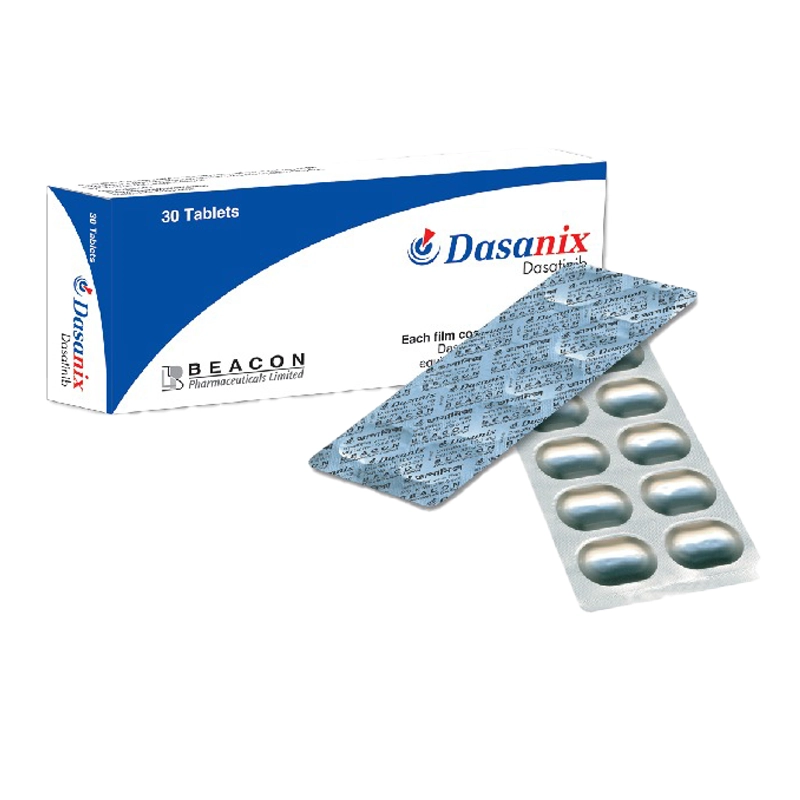
Dasanix 20 mg, 50 mg & 100 mg (Dasatinib)
- Used for: Used for patients whose CML had stopped responding to imatinib
- Availability: In Stock
- Shipping: Express Global Shipping (7-14 days depending on region).
- Requirement: Valid prescription from a licensed healthcare provider required.
✓ WHO GMP Certified
✓ Reviewed By Medical Expert
✓ Batch Examined in Lab
Need Patient Access Support?
Our team provides verified global sourcing assistance to help you navigate international shipping and prescription requirements safely.
Dasanix is a generic version of dasatinib, made by Beacon Pharmaceuticals in Bangladesh. It is a tablet taken once daily, from the same drug class as imatinib but engineered to work against a broader range of BCR-ABL mutations, including some that stop responding to imatinib. As a Sprycel alternative supplied through the Named Patient Program, it is available to patients outside Bangladesh who hold a valid prescription. This page covers its use in CML and includes a direct comparison against imatinib, since both are on this site and the trial that compared them head to head is informative.
Dasanix vs Imaxen: What the Head-to-Head Trial Showed
Dasatinib and imatinib, both on this site, were compared directly in DASISION, a trial of 519 newly diagnosed chronic phase CML patients randomised to dasatinib 100 mg once daily or imatinib 400 mg once daily. This isn’t two separate drugs each claiming good results; it’s one trial measuring the actual difference.
| Dasatinib | Imatinib | |
|---|---|---|
| Confirmed complete cytogenetic response at 12 months | 76.8% | 66.2% |
| Major molecular response | 52.1% | 33.8% |
| Median time to cytogenetic response | 3.1 months | 5.6 months |
| Progressed to accelerated phase or blast crisis | 5 patients | 9 patients |
Dasatinib produced deeper, faster responses in this trial. That doesn’t automatically make it the better choice for every patient: dasatinib carries its own distinct risks, particularly around fluid in the lungs and a rare but serious lung blood pressure condition, described below, that imatinib does not carry in the same way. Response depth and speed matter in CML, but so does a side-effect profile that fits your other health conditions. This is a decision for your oncologist informed by your specific situation, not something to conclude from a table alone.
Dasatinib is also specifically approved for CML that has already stopped responding to imatinib or become intolerable, which imatinib obviously cannot offer for itself.
What Is Dasanix (Dasatinib)?
Dasanix contains dasatinib, the same active ingredient as the originator product Sprycel. It is manufactured by Beacon Pharmaceuticals in Bangladesh under WHO-GMP quality standards and supplied internationally under Named Patient Program (NPP) frameworks.
Dasatinib was first approved by the U.S. FDA in 2006, initially for patients whose CML had stopped responding to imatinib, and later expanded to newly diagnosed patients as well. That approval history belongs to the originator molecule and to branded products such as Sprycel. Dasanix itself is not an FDA-approved product; it is a generic manufactured to WHO-GMP standards and made available through the Named Patient route to patients in countries where it is not locally registered.
Available Strengths: Full Coverage Through Combination
The originator product comes in six strengths (20, 50, 70, 80, 100, and 140 mg). Beacon supplies three: 20 mg, 50 mg, and 100 mg.
This covers both standard doses. The 100 mg chronic-phase CML dose is a single tablet. The 140 mg dose used for accelerated phase, blast phase, or Ph+ ALL is reached by combining tablets, for example one 100 mg tablet plus two 20 mg tablets. There is no gap here; your pharmacy simply uses the combination of available tablets that adds up to your prescribed dose.
How Dasatinib Works
Like imatinib, dasatinib blocks the abnormal BCR-ABL protein that drives CML, but it binds more tightly and across a wider range of shapes the protein can take, including several mutated forms that develop resistance to imatinib. It also blocks a related family of enzymes (SRC-family kinases) and a couple of other receptors (KIT, PDGFRβ) that imatinib affects less strongly.
This broader, tighter binding is why dasatinib works in a meaningful share of patients whose CML has stopped responding to imatinib, and why the DASISION trial showed faster, deeper responses even in patients who had never been treated before.
Dasatinib Uses: What Dasanix Treats
Newly diagnosed adults with Philadelphia chromosome positive (Ph+) chronic phase CML.
Adults with chronic, accelerated, or blast phase Ph+ CML whose disease has resisted or become intolerant to prior therapy, including imatinib.
Adults with Philadelphia chromosome positive acute lymphoblastic leukemia (Ph+ ALL) whose disease has resisted or become intolerant to prior therapy.
The DASISION trial figures are summarised in the comparison table above. In patients whose CML had already stopped responding to or become intolerant to imatinib (a separate trial population from DASISION), dasatinib 100 mg once daily produced a complete hematologic response in 92% of patients, a major cytogenetic response in 63%, and a complete cytogenetic response in 50%, with an estimated 2-year progression-free survival of 80% and overall survival of 91%.
These are originator-drug trial results. Beacon has not published independent bioequivalence data for Dasanix that we have been able to verify. As a generic containing the same active ingredient at the same strength, manufactured to WHO-GMP standards, it is expected to perform comparably. We make no bioequivalence claim.
Dasatinib Dosage and Administration
| Setting | Dose |
|---|---|
| Chronic phase CML | 100 mg once daily |
| Accelerated phase, blast phase CML, or Ph+ ALL | 140 mg once daily |
Take with or without food, either in the morning or evening, at about the same time each day. Swallow tablets whole; do not crush or cut them. Treatment continues until the disease progresses or becomes intolerable.
If you don’t achieve an adequate response at the standard dose, your oncologist may consider a dose increase (to 140 mg for chronic phase, or 180 mg for advanced phase or Ph+ ALL), based on your specific blood and cytogenetic results.
Dose Adjustment for Low Blood Counts
If neutrophils or platelets fall too low, treatment is withheld and, depending on how quickly counts recover and whether it recurs, restarted at the same or a step-down dose. This follows a structured schedule that differs by disease phase; your oncologist manages it directly rather than something to interpret from this page.
Dosing in Kidney or Liver Impairment
| Organ function | Adjustment |
|---|---|
| Liver impairment (any severity) | None needed, though caution is advised since blood levels are somewhat altered |
| Kidney impairment | No dedicated studies; under 4% of the drug is cleared by the kidneys, so a major effect isn’t expected |
Warnings and Precautions
Dasatinib does not carry an FDA boxed warning and has no listed contraindications.
Low blood counts. Severe drops in platelets, neutrophils, or red blood cells can occur, more often in advanced-phase disease. Blood counts are checked weekly for the first two months, then monthly.
Bleeding. Serious bleeding, including in the brain or digestive tract, has occurred, usually linked to low platelet counts. Use caution combining dasatinib with blood thinners or medicines that affect platelet function, and mention any of these to your oncologist.
Fluid around the lungs (pleural effusion). This is dasatinib’s signature fluid-retention pattern, distinct from the more peripheral swelling typically seen with imatinib. Report new breathlessness or a persistent dry cough; a chest X-ray is used to check for fluid, and it’s managed with supportive care, sometimes a diuretic or short course of steroids, and can require a dose adjustment.
Heart rhythm changes (QT prolongation). Uncommon, but more likely if you have low potassium or magnesium, an inherited long QT condition, or take other heart-rhythm medicines. Electrolytes are typically corrected before starting.
Heart failure or reduced heart function. Reported in a small percentage of patients. Report new shortness of breath, swelling, or unusual fatigue.
Pulmonary arterial hypertension (PAH). This is a rare but serious risk specific to dasatinib: raised blood pressure in the lung’s own arteries, which can occur at any point during treatment, including after more than a year. Symptoms include breathlessness, fatigue, and low oxygen levels. It’s usually reversible if dasatinib is stopped once identified, which is why ongoing awareness of new or worsening breathlessness matters throughout treatment, not just early on.
Harm to an unborn child. Dasatinib can cause fetal harm. Effective contraception is advised throughout treatment, and pregnancy should be avoided while taking this medicine.
Dasatinib Side Effects
Common in newly diagnosed CML (10% or more): fluid retention (including pleural effusion), diarrhea, headache, muscle or bone pain, and rash.
Common in patients previously treated with imatinib (20% or more): fluid retention, diarrhea, headache, breathlessness, skin rash, fatigue, nausea, and bleeding. Side effects tend to be more frequent and more severe in advanced-phase disease than in chronic phase.
This is not a complete list. Report new or worsening symptoms to your treating physician rather than adjusting your dose yourself.
Drug Interactions
Avoid strong CYP3A4 inhibitors (such as ketoconazole), which increased dasatinib exposure roughly five-fold in a dedicated study. If one can’t be avoided, your oncologist may reduce your dose and monitor you closely.
Avoid strong CYP3A4 inducers (such as rifampin), which reduced dasatinib exposure by more than 80% in a dedicated study, and could undercut how well the medicine works. St. John’s Wort has a similarly unpredictable reducing effect and should also be avoided.
Acid-reducing medicines lower dasatinib absorption more than they do with many other cancer medicines. Dasatinib needs an acidic stomach environment to dissolve properly. Antacids reduce absorption if taken at the same time, so they should be spaced at least 2 hours apart from your dose. H2 blockers and proton pump inhibitors (common heartburn and reflux medicines such as omeprazole) reduce absorption more substantially and are not recommended in combination with dasatinib at all; antacids are the suggested alternative if acid suppression is needed. If you currently take a PPI for reflux or ulcer prevention, raise this with your oncologist before starting Dasanix.
Dasatinib can raise levels of other medicines processed by CYP3A4, including some with a narrow safety margin (certain immunosuppressants, some heart rhythm medicines, some pain and cholesterol medicines). Give your oncologist and pharmacist your complete medication list.
Storage
Store below 30°C in a dry place. Protect from light. Keep out of the reach of children. Store at room temperature, away from children.
Dasanix vs Sprycel: How This Generic Sprycel Alternative Compares
| Dasanix (supplied here) | Sprycel (originator) | |
|---|---|---|
| Active ingredient | Dasatinib | Dasatinib |
| Strengths | 20 mg, 50 mg, 100 mg | 20, 50, 70, 80, 100, 140 mg |
| Manufacturer | Beacon Pharmaceuticals, Bangladesh | Bristol Myers Squibb |
| Regulatory position | Manufactured to WHO-GMP standards; supplied under Named Patient Program | FDA and EMA approved |
| Typical access route | International patients, via prescription upload and NPP import | Pharmacy dispensing where registered |
Provided for orientation only. This is not a claim of bioequivalence, and Dasanix is not represented as an FDA-approved product.
Frequently Asked Questions
Is dasatinib better than imatinib?
In the trial that compared them directly in newly diagnosed patients, dasatinib produced deeper and faster responses. That doesn’t automatically make it the right choice for everyone: dasatinib carries its own distinct risks, including a specific lung blood pressure condition and a stronger tendency toward fluid around the lungs, that need to be weighed against your individual health history. This is a decision for your oncologist.
Can dasatinib work if imatinib has stopped working for me?
Yes, that’s one of its core approved uses. Dasatinib is specifically approved for CML that has resisted or become intolerant to imatinib.
Why can’t I take my usual heartburn medicine with this?
Dasatinib needs an acidic stomach to dissolve and absorb properly. Proton pump inhibitors and H2 blockers reduce stomach acid enough to substantially cut how much dasatinib you absorb, so they’re not recommended together. Antacids, taken at least 2 hours apart from your dose, are the suggested alternative if you need acid relief.
What is pulmonary arterial hypertension, and should I worry about it?
It’s a rare condition where blood pressure rises specifically in the arteries of the lungs, and it’s a known but uncommon risk of dasatinib that can appear at any point during treatment. It’s usually reversible if caught and dasatinib is stopped. Report new or worsening breathlessness at any stage of treatment, not just when you start.
Related products

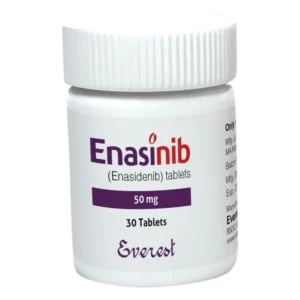
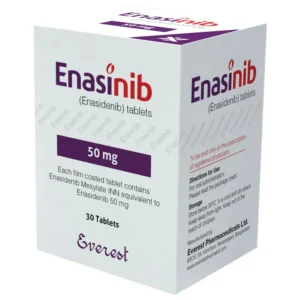
Enasinib 50 mg (Enasidenib) 30 Tablet: Global Patient Access, Price, & Clinical Safety Guide
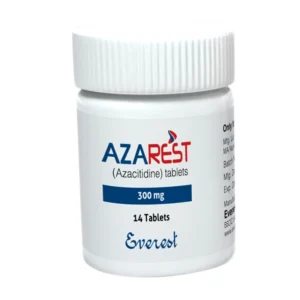
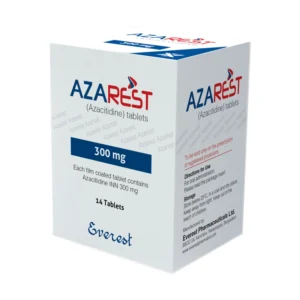
Request PriceAzarest 300mg (Azacitidine): Onureg Alternative & Safety Guide
Request PriceVentech 100 mg (Venetoclax)| 60 Tablets | Global Acces & Safety Guide
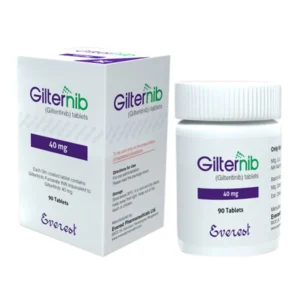
Request PriceGilternib 40 mg Tablet (Gilteritinib) | FLT3 Mutation Inhibitor
Request Price