Prescription required. We facilitate access to medicines already prescribed by your treating physician. We do not provide medical advice or diagnoses.


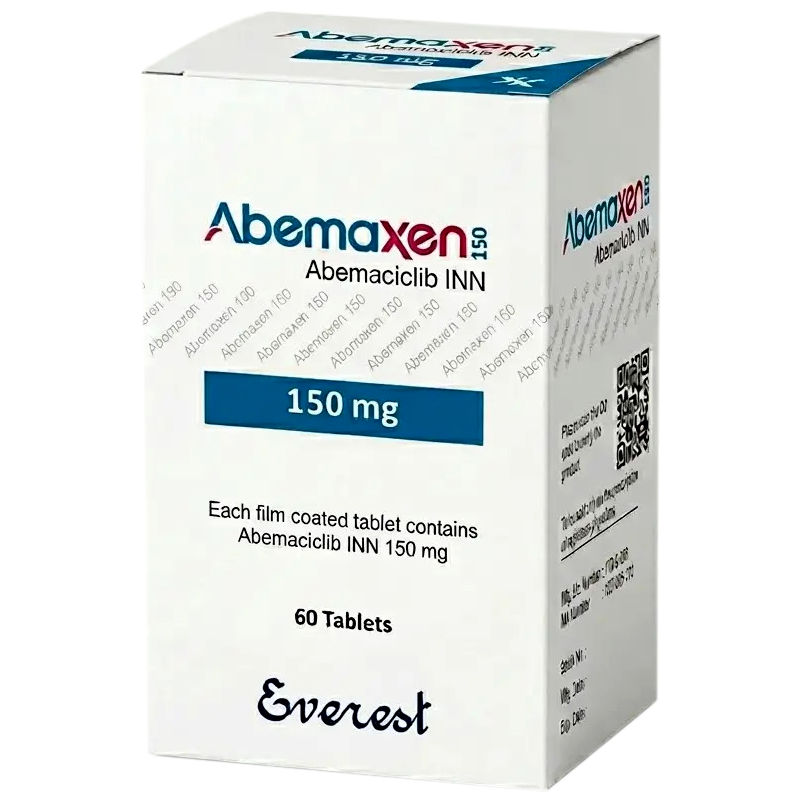
Abemaxen 150 mg Tablets
- Used for: Abemaxen 150 mg is an oral targeted therapy used to treat certain types of advanced or metastatic breast cancer.
- Availability: In Stock
- Shipping: Express Global Shipping (7-14 days depending on region).
- Requirement: Valid prescription from a licensed healthcare provider required.
✓ WHO GMP Certified
✓ Reviewed By Medical Expert
✓ Batch Examined in Lab
Need Patient Access Support?
Our team provides verified global sourcing assistance to help you navigate international shipping and prescription requirements safely.
Manufactured by Everest Pharmaceuticals | Last updated: June 2026 | Next scheduled review: June 2027 or upon label change
| IMPORTANT: Abemaxen 150 mg is a prescription-only antineoplastic agent. It must be prescribed, |
| administered, and monitored exclusively by a qualified medical oncologist. Do not start, change, or |
| stop this medication without direct clinical supervision and regular blood and liver test monitoring. |
“Most patients on abemaciclib will get diarrhea — it happens in roughly 8 or 9 out of 10 people, usually within the first week or two. The good news is it responds well to early action. I tell every patient: the moment your stools loosen, start loperamide and call us. Don’t wait it out. Catching it early is what keeps people on this medicine long-term.”
Salma Mamdouh Elreedy— Reviewing oncology guidance based on FDA and EMA prescribing information for abemaciclib
What is Abemaxen?
Abemaxen is a targeted cancer therapy used to treat certain types of breast cancer. Its active ingredient is abemaciclib, a CDK4/6 inhibitor. Abemaxen is manufactured by Everest Pharmaceuticals using the same active ingredient as the originator brand, Verzenio (sold as Verzenios in Europe).
Unlike some other CDK4/6 inhibitors, abemaciclib is approved for use both together with hormone therapy and, in one specific setting, on its own.
Who is Abemaxen for?
Abemaxen is approved for adults with hormone receptor-positive (HR+), HER2-negative breast cancer, across three situations:
- Early breast cancer: combined with tamoxifen or an aromatase inhibitor, for patients whose cancer has spread to nearby lymph nodes and carries a high risk of returning. Treatment is given for 2 years.
- Advanced or metastatic breast cancer, first treatment: combined with an aromatase inhibitor, as the first hormone-based treatment.
- Advanced or metastatic breast cancer, after prior hormone therapy: combined with fulvestrant if the cancer has progressed on previous hormone treatment.
- Advanced or metastatic breast cancer, on its own (monotherapy): for patients whose cancer has progressed after hormone therapy and after chemotherapy.
| Your oncologist will confirm your HR+ and HER2− status through tumor testing before starting Abemaxen. |
| This step is required to confirm the medicine is right for your specific cancer. |
How does Abemaxen work?
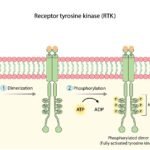
In HR+ breast cancer, estrogen tells two enzymes — CDK4 and CDK6 — to switch on. Think of these enzymes as the ignition switch that lets a cancer cell copy its DNA and divide.
Abemaciclib blocks CDK4 and CDK6 directly. This stops the cancer cell from completing its division cycle, trapping it in a resting phase before it can copy its DNA.
Your hormone therapy partner (tamoxifen, an aromatase inhibitor, or fulvestrant) lowers the estrogen signal at the same time abemaciclib blocks the machinery that signal would have switched on. Used together, this combination is more effective than either treatment alone, and abemaciclib is also approved to be used by itself once hormone therapy and chemotherapy have already been tried.
How to take Abemaxen 150 mg
Your dosing schedule
Abemaxen is taken twice a day, every day, with no planned breaks. This is different from some other CDK4/6 inhibitors, which use a 3-week-on, 1-week-off cycle. Abemaxen is continuous.
| Use | Dose |
| With fulvestrant, tamoxifen, or an aromatase inhibitor | 150 mg by mouth, twice daily |
| On its own (monotherapy) | 200 mg by mouth, twice daily |
Taking your tablet correctly
- Take with or without food — Abemaxen does not need to be taken with a meal.
- Take both daily doses at approximately the same times each day, roughly 12 hours apart.
- Swallow tablets whole. Do not chew, crush, or split them.
- Do not take a tablet that is broken, cracked, or not intact.
- Avoid grapefruit and grapefruit products while taking Abemaxen.
If you miss or vomit a dose
Do not take an extra dose. Simply take your next dose at its regular scheduled time.
How long will I take it?
For early breast cancer, Abemaxen is taken for 2 years, or until the cancer returns or side effects become unmanageable. For advanced or metastatic breast cancer, treatment continues until the cancer progresses or side effects become unmanageable.
Blood tests and monitoring
Abemaxen affects fast-dividing cells throughout the body, not only cancer cells. Regular blood and liver tests let your oncologist catch problems early, before they become serious.
| When | What is checked | Why |
| Before starting | Full blood count (CBC) | Confirm it is safe to begin treatment |
| Every 2 weeks for the first 2 months | Full blood count (CBC) | Catch low white cell counts (neutropenia) early |
| Monthly for the next 2 months, then as needed | Full blood count (CBC) | Continue monitoring as treatment continues |
| Before starting | Liver function tests (ALT, AST, bilirubin) | Establish a baseline before treatment |
| Every 2 weeks for the first 2 months, then monthly for 2 months, then as needed | Liver function tests (ALT, AST, bilirubin) | Detect liver irritation (hepatotoxicity) early |
| Every visit | Respiratory symptoms (cough, breathlessness) | Watch for signs of lung inflammation (ILD/pneumonitis) |
| Every visit | Symptoms of blood clots (limb swelling or pain, chest pain, breathlessness) | Watch for venous thromboembolism (VTE) |
| URGENT: If you develop a fever, especially with signs of infection, contact your oncology team |
| immediately. Low white blood cell counts (neutropenia) combined with fever can become a medical |
| emergency very quickly. Do not wait for your next scheduled appointment. |
Dose adjustments
Dose reductions are a normal, planned part of managing Abemaxen — not a sign that treatment has failed. There are several dose steps depending on whether you take Abemaxen with hormone therapy or alone.
| Starting dose | 1st reduction | 2nd reduction | 3rd reduction |
| 150 mg twice daily (with hormone therapy) | 100 mg twice daily | 50 mg twice daily | Not applicable — discontinue if 50 mg is not tolerated |
| 200 mg twice daily (monotherapy) | 150 mg twice daily | 100 mg twice daily | 50 mg twice daily |
| Side effect | What happens |
| Diarrhea, Grade 1 | Continue at the same dose. Start antidiarrheal treatment right away. |
| Diarrhea, Grade 2, not resolving within 24 hours | Pause until it improves to Grade 1 or better; no dose reduction needed the first time |
| Diarrhea, Grade 2 recurring, or Grade 3/4, or requiring hospital care | Pause until improved, then resume at the next lower dose |
| Low blood counts, Grade 1 or 2 | Continue at the same dose |
| Low blood counts, Grade 3 | Pause until improved to Grade 2 or better; no dose reduction needed the first time |
| Low blood counts, Grade 3 recurring, or Grade 4 | Pause until improved, then resume at the next lower dose |
| Liver enzyme rise, Grade 1 or mild Grade 2 | Continue at the same dose |
| Liver enzyme rise, persistent Grade 2, or Grade 3 | Pause until improved, then resume at the next lower dose |
| Liver enzyme rise, Grade 4, or rise with high bilirubin | Permanently stop Abemaxen |
| Lung inflammation (ILD/pneumonitis), Grade 1 or 2 | Continue, or pause and reduce dose if it persists |
| Lung inflammation (ILD/pneumonitis), Grade 3 or 4 | Permanently stop Abemaxen |
Never adjust your dose yourself. All changes must be directed by your oncologist based on your lab results and symptoms.
Side effects
Very common (more than 1 in 5 patients)
- Diarrhea — the most common side effect, affecting roughly 8 to 9 out of 10 patients. Usually starts within the first 1 to 2 weeks. Start an antidiarrheal medicine like loperamide at the first loose stool and drink more fluids.
- Low white blood cells (neutropenia) — affects about 4 in 10 patients; monitored closely with blood tests.
- Nausea and vomiting — eat smaller, more frequent meals and stay hydrated.
- Fatigue
- Abdominal pain
- Infections — avoid crowded spaces and people who are unwell.
- Low red blood cells (anemia)
- Decreased appetite
- Headache
- Hair thinning (alopecia) — generally mild, not complete hair loss.
Serious side effects — seek immediate medical attention
- Severe diarrhea: Grade 3 or 4 diarrhea, or diarrhea requiring hospital care, needs urgent medical contact.
- Fever with low white blood cells (febrile neutropenia): can become life-threatening quickly. Report any fever immediately.
- Interstitial lung disease / pneumonitis: new or worsening cough, shortness of breath, or low oxygen levels. This has caused fatalities in rare cases and needs urgent evaluation.
- Liver problems (hepatotoxicity): yellowing of skin or eyes, dark urine, unusual tiredness, or pain in the upper right abdomen.
- Blood clots (venous thromboembolism): swelling or pain in an arm or leg, sudden shortness of breath, chest pain, or a fast heartbeat. Seek emergency care.
Medicines and foods to avoid
Abemaciclib is broken down by a liver enzyme called CYP3A4. Substances that block or speed up this enzyme can raise or lower the amount of drug in your bloodstream.
| Interacting substance | Effect | What to do |
| Ketoconazole | Can raise abemaciclib levels by up to 16-fold | Avoid completely |
| Other strong CYP3A4 inhibitors (e.g. clarithromycin, certain antifungals, certain HIV medicines) | Significantly raises abemaciclib levels | Dose typically reduced; discuss with your oncologist |
| Moderate CYP3A4 inhibitors (e.g. verapamil, diltiazem) | Raises abemaciclib levels | Monitored closely; dose may be reduced |
| Strong or moderate CYP3A4 inducers (e.g. rifampin, certain seizure medicines) | Lowers abemaciclib levels, reducing effectiveness | Avoid; alternative medicines considered |
| Grapefruit and grapefruit products | Can raise abemaciclib levels | Avoid completely during treatment |
Always tell your oncologist and pharmacist about every medicine, supplement, and herbal product you take, including over-the-counter remedies. Review this list at every appointment.
Special populations
| Situation | Guidance |
| Pregnancy | Abemaxen can cause serious harm to a developing baby. Do not become pregnant while taking this medicine. Your oncologist will confirm you are not pregnant before starting treatment. |
| Contraception — females | Use effective contraception during treatment and for at least 3 weeks after the last dose. |
| Fertility — males | Abemaxen may reduce fertility in men, based on animal studies. |
| Breastfeeding | Do not breastfeed during treatment or for at least 3 weeks after the last dose. |
| Children under 18 | Safety and effectiveness have not been established. |
| Older adults (65+) | No overall difference in safety or effectiveness compared to younger patients. |
| Mild or moderate kidney impairment | No dose adjustment required. Effects in severe kidney impairment or dialysis are not known. |
| Mild or moderate liver impairment (Child-Pugh A or B) | No dose adjustment required. |
| Severe liver impairment (Child-Pugh C) | Reduce dosing frequency to once daily instead of twice daily. |
Clinical evidence
Abemaciclib’s approval is supported by several large Phase 3 trials evaluated by both the FDA and the European Medicines Agency.
| Trial | Setting | Result |
| monarchE | Early breast cancer: abemaciclib plus hormone therapy vs. hormone therapy alone, in node-positive, high-risk patients | At 4 years, 85.5% of patients on abemaciclib plus hormone therapy were free of invasive disease, compared with 78.6% on hormone therapy alone |
| MONARCH 3 | First-line advanced/metastatic: abemaciclib plus an aromatase inhibitor vs. aromatase inhibitor alone | Median progression-free survival: 28.2 months (abemaciclib) vs. 14.8 months (aromatase inhibitor alone) |
| MONARCH 2 | After prior hormone therapy: abemaciclib plus fulvestrant vs. fulvestrant alone | Median progression-free survival: 16.4 months (abemaciclib) vs. 9.3 months (fulvestrant alone) |
| MONARCH 1 | Monotherapy after prior hormone therapy and chemotherapy | 20% of patients had their tumor shrink (objective response rate), with response lasting a median of 8.6 months |
| Abemaxen does not cure metastatic breast cancer. It is a highly effective management therapy designed |
| to delay disease progression and help patients maintain quality of life for as long as possible. |
Generic vs. brand: what’s the same, what’s different
Abemaxen contains the same active ingredient, abemaciclib, at the same strength as the originator brand, Verzenio (marketed as Verzenios in the European Union).
| Question | Answer |
| Same active ingredient and strength? | Yes. Abemaxen 150 mg contains 150 mg of abemaciclib, identical to Verzenio 150 mg. |
| Same mechanism of action? | Yes. Both block CDK4 and CDK6 in the same way, as abemaciclib is the shared active ingredient. |
| Published bioequivalence study (matched Cmax/AUC/Tmax in human trials) comparing Abemaxen to Verzenio? | Not confirmed in the material reviewed for this page. Same active ingredient and strength is not the same as a confirmed pharmacokinetic bioequivalence study. Ask your pharmacist or Everest Pharmaceuticals directly whether such a study has been published for Abemaxen specifically before assuming the two products perform identically in the body. |
| How is Abemaxen legally manufactured while Verzenio is still patent-protected in many countries? | Bangladesh, where Everest Pharmaceuticals is based, has operated under a World Trade Organization TRIPS waiver for least-developed countries (LDCs), which has allowed Bangladeshi manufacturers to produce patented medicines, including cancer drugs, without paying royalties to the patent holder. This waiver is scheduled to end alongside Bangladesh’s planned LDC graduation on 24 November 2026, though industry groups have requested an extension to 2033 and a government request for a 3-year deferment to 2029 is pending. Confirm the current status with Everest Pharmaceuticals, as this directly affects the legal basis for future production. |
| Regulatory oversight of the manufacturer | Everest Pharmaceuticals states it operates under the Directorate General of Drug Administration (DGDA), Bangladesh’s national medicines regulator, which licenses pharmaceutical manufacturing facilities in the country, including oncology production. [Confirm Abemaxen’s specific DGDA registration/license number directly with Everest Pharmaceuticals or DGDA before publishing, so readers can verify it independently.] |
| Typically lower cost than the brand? | Generic versions of cancer medicines are often priced lower than the originator brand, but exact pricing varies by country and pharmacy. Confirm current pricing with your pharmacy before assuming a specific savings amount. |
If you are considering switching between Abemaxen and Verzenio, or starting either for the first time, discuss this with your oncologist so your treatment plan and monitoring schedule stay consistent.
About the manufacturer: Everest Pharmaceuticals
Everest Pharmaceuticals manufactures Abemaxen under current Good Manufacturing Practice (cGMP) standards, the internationally recognized framework for ensuring pharmaceutical products are consistently produced and controlled to quality standards.
In the manufacturer’s own words:
“Our strict adherence to cGMP and relentless efforts to achieve the best quality standard with our exclusive people and process help us provide the finest products to improve the quality of life.”
Everest Pharmaceuticals describes its quality commitment as built on five ongoing efforts:
- Continual research to provide innovative products and dosage forms
- Continual research to improve product quality, process, and technology
- Continual research to protect the integrity of the environment
- Continual efforts to protect and improve the quality of human resources
- Commitment to quality regardless of commercial consequences
| A manufacturer’s general quality philosophy and cGMP commitment are not the same as a product-specific |
| bioequivalence study or a stated regulatory registration number. Both matter for trust, but they answer |
| different questions — see the table above for what is and is not yet confirmed for Abemaxen specifically. |
How to store Abemaxen 150 mg
- Store at controlled room temperature: 20°C to 25°C (68°F to 77°F). Brief excursions between 15°C and 30°C are permitted.
- Keep tablets in the original blister packaging until you are ready to take them.
- No refrigeration is required.
- Do not use tablets past the expiry date printed on the packaging.
- Dispose of unused or expired tablets according to your local pharmaceutical waste guidance — not in household rubbish, as Abemaxen is classified as a cytotoxic medicine.
Patient FAQ
Can I take Abemaxen without an aromatase inhibitor or fulvestrant?
It depends on your treatment setting. For early breast cancer and most advanced breast cancer situations, Abemaxen is combined with hormone therapy. It is the only CDK4/6 inhibitor also approved to be used on its own, but only after a patient has already tried hormone therapy and chemotherapy. Your oncologist will tell you which approach applies to you.
Why do I have so much diarrhea on this medicine?
Diarrhea is the single most common side effect of abemaciclib, affecting roughly 8 to 9 out of 10 patients, usually starting in the first 1 to 2 weeks. Start an antidiarrheal medicine like loperamide at the very first loose stool, drink more fluids, and tell your oncologist. Early action usually keeps it manageable and lets you stay on treatment.
Will I lose my hair?
Hair thinning is common but typically mild. Complete hair loss is uncommon with abemaciclib, unlike traditional chemotherapy. Discuss any concerns with your oncology team.
What should I do if I get a fever?
Contact your oncology team immediately, even outside clinic hours. Fever combined with low white blood cell counts can become a medical emergency quickly. Do not wait for your next scheduled visit.
Can I adjust my own dose if side effects are bothering me?
No. Dose reductions are a standard, planned part of treatment, but every change must be directed by your oncologist based on your symptoms and test results. Adjusting your dose without guidance could reduce how well the medicine works or increase your risk of side effects.
Are there foods or supplements I should avoid?
Avoid grapefruit and grapefruit products, as they can raise abemaciclib levels in your blood. Tell your oncology team about every supplement, herbal product, and over-the-counter medicine you take, since several can interact with this drug.
Does Abemaxen cure my cancer?
Advanced or metastatic breast cancer is generally considered a long-term manageable condition rather than a curable one. Abemaxen is designed to delay disease progression and maintain quality of life for as long as possible. For early breast cancer, the goal is to reduce the chance the cancer comes back after surgery.
Is the generic version of abemaciclib as effective as the brand name?
Abemaxen contains the same active ingredient and strength as the brand-name Verzenio. A formal published bioequivalence study comparing the two has not been confirmed in the material reviewed for this page — ask your pharmacist or prescriber whether such data exists for Abemaxen specifically before assuming the two are pharmacokinetically identical.
What are the warning signs of a blood clot?
Seek emergency care for swelling or pain in an arm or leg, sudden shortness of breath, chest pain, or a rapid heartbeat. Abemaciclib has been associated with an increased risk of blood clots.
Medical Disclaimer
The information on this page is for educational purposes and does not constitute medical advice. Abemaxen 150 mg must be prescribed and supervised by a qualified medical oncologist. Treatment decisions should always be made in consultation with your healthcare team based on your individual clinical situation. This page was prepared using FDA prescribing information and EMA SmPC data for abemaciclib; consult the current full prescribing information for complete details.
Reporting side effects: If you experience a side effect, tell your oncologist or pharmacist. You can also report suspected side effects directly to your national regulatory authority (for example, the FDA at 1-800-FDA-1088 or www.fda.gov/medwatch in the United States, or your country’s medicines regulator).