Sourcing Disclosure: Licensed Bangladesh Global Sourcing Specialist facilitating global access under Named Patient Regulations.
Expert-reviewed clinical data for prescription-only medicine.


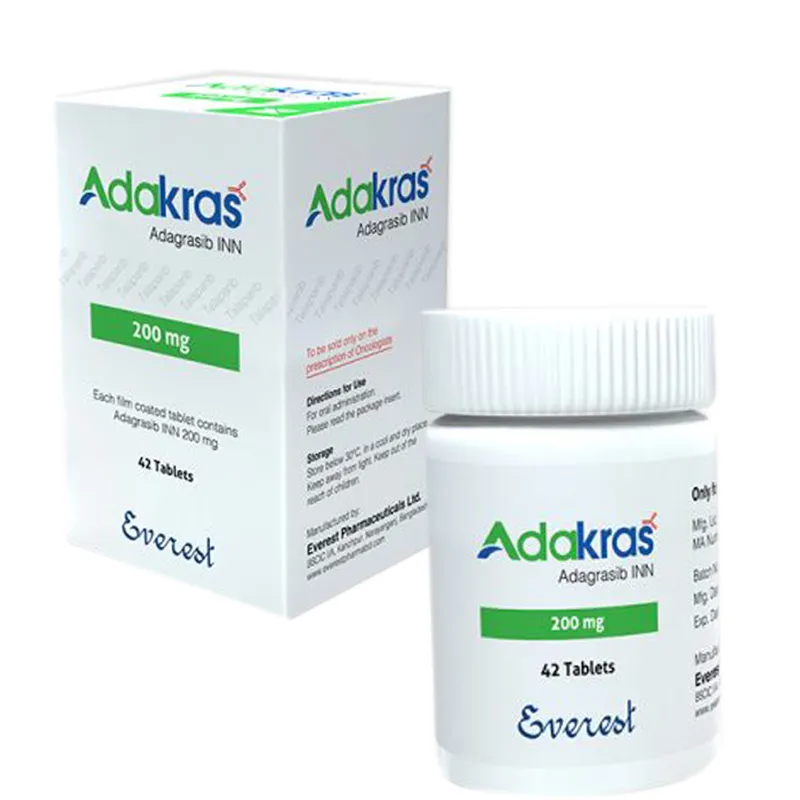
Adakras (Adagrasib) 200 mg Tablets | KRAS G12C Inhibitor
Brand Name: Adakras
Generic Name: Adagrasib
Therapeutic Class: KRAS G12C Inhibitor
Clinical Indications: KRAS G12C Mutated NSCLC, and Colorectal Cancer
Available Strength: 200 mg
Pack Size: 42 Tablets
- WHO GMP Certified
- Reviewed By Medical Expert
- Batch Examined in Lab
Disclaimer: The following information is for educational and informational purposes only and is not intended as a substitute for professional medical advice, diagnosis, or treatment. Always seek the guidance of your oncologist or other qualified healthcare provider with any questions you may have regarding a medical condition or treatment plan. (Medically Reviewed by: Dr. Salma Elreedy)
Adakras 200 mg, containing the active pharmaceutical ingredient Adagrasib, is a highly specialized targeted therapy designed for patients whose tumors harbor a specific genetic mutation known as KRAS G12C. As the generic equivalent of the innovator brand Krazati, Adakras belongs to a class of medications called KRAS inhibitors. For a long time, the KRAS mutation was considered “undruggable” because of its smooth surface, but breakthroughs in precision oncology have allowed for the development of molecules like Adagrasib that can “trap” the mutated protein in an inactive state. This medication is primarily used for advanced non-small cell lung cancer (NSCLC) and colorectal cancer (CRC) when other treatments have not been sufficient.
Understanding the Clinical Data
What are the primary clinical indications for Adakras 200 mg?
Medical guidelines, including those from the FDA and EMA, authorize the use of Adagrasib for two main scenarios:
Non-Small Cell Lung Cancer (NSCLC): It is indicated for adults with KRAS G12C-mutated locally advanced or metastatic NSCLC who have received at least one prior systemic therapy (such as chemotherapy or immunotherapy).
Colorectal Cancer (CRC): It is used in combination with cetuximab for adults with KRAS G12C-mutated metastatic CRC who have previously been treated with standard chemotherapy (fluoropyrimidine-, oxaliplatin-, and irinotecan-based regimens).
How does Adakras target cancer at a molecular level?
Normally, the KRAS protein acts like a light switch that controls cell growth. In a healthy state, it turns “on” and “off.” However, the G12C mutation acts like a broken switch that is stuck in the “on” position, causing uncontrolled cell division.
Adagrasib is a covalent, irreversible inhibitor. It specifically binds to the cysteine residue of the KRAS G12C protein, locking it into its inactive GDP-bound conformation. By trapping the protein in this “off” state, Adakras interrupts the signaling pathways that fuel tumor growth and survival.
What is the recommended dosage and administration?
The standard clinical dosage is 600 mg (three 200 mg tablets) taken orally twice daily.
Administration: You can take it with or without food, but it should be taken at the same time every morning and evening.
Precautions: Tablets must be swallowed whole. Do not crush, chew, or break them.
What if I miss a dose? If you miss a dose by less than 4 hours, take it as soon as you remember. If it has been more than 4 hours, skip the dose and wait for your next scheduled time. Do not take an extra dose to make up for a missed one.
What does the clinical evidence show?
The efficacy of Adagrasib was primarily evaluated in the KRYSTAL-1 trial (NCT03785249), as documented on ClinicalTrials.gov. In this study involving pretreated NSCLC patients:
The Objective Response Rate (ORR) was approximately 43%, with many patients seeing a significant reduction in tumor size.
The Duration of Response (DOR) was notably sustained, with a median of 8.5 months.
In colorectal cancer cohorts (combined with cetuximab), the ORR was reported between 34% and 43% in heavily pretreated patients.
Safety, Side Effects, and Monitoring
What are the common side effects observed?
Based on safety reporting from the American Cancer Society and FDA labels, common adverse reactions (occurring in over 25% of patients) include:
Gastrointestinal issues: Diarrhea, nausea, and vomiting are the most frequent.
Constitutional: Fatigue and musculoskeletal pain.
Laboratory changes: Elevated liver enzymes (ALT/AST), decreased appetite, and renal impairment (changes in kidney function).
Are there serious risks I should be aware of?
Yes, targeted therapies require active monitoring for specific serious conditions:
Hepatotoxicity: Adagrasib can cause liver injury. Your care team will perform blood tests to check liver function (AST, ALT, and bilirubin) before starting and monthly for the first few months.
QTc Prolongation: This is a heart rhythm change that can be seen on an EKG. It’s important to correct electrolyte imbalances (like potassium or magnesium) before starting.
Interstitial Lung Disease (ILD): Rare but serious lung inflammation. Tell your doctor immediately if you develop a new cough, fever, or shortness of breath.
Storage and Pharmaceutical Integrity
How should Adakras be stored?
Unlike some biologics, Adakras 200 mg does not require cold chain refrigeration. It should be stored at controlled room temperature between 20°C and 25°C (68°F to 77°F).
Keep the medication in its original, labeled container.
Store in a dry location away from moisture and direct heat.
Avoid using pillboxes; keep the tablets in the original bottle to ensure stability.
Manufacturer and Quality Assurance
Who produces Adakras and how is quality maintained?
Adakras is manufactured by Everest Pharmaceuticals, a leading pharmaceutical company based in Bangladesh. Everest Pharmaceuticals operates under the stringent World Health Organization Good Manufacturing Practices (WHO GMP) standards. This certification ensures that the generic version of Adagrasib is produced in a facility that undergoes rigorous quality audits, ensuring molecular purity, stability, and clinical bioequivalence to the innovator brand (Krazati).
Global Access to Adagrasib
How can a patient access this medication?
Accessing specialized oncology medications internationally is a legally governed process. Patients can access Adakras 200 mg through verified pharmaceutical exporters under “Personal Use Importation” rules.
Valid Prescription: A formal medical prescription from a licensed oncologist is a mandatory legal requirement.
Importation: Most national health ministries or drug distribution authorities (such as the DGDA in Bangladesh) allow for the legal importation of life-saving generic medicines provided the patient has the necessary documentation. This ensures you receive the medicine while remaining under qualified medical supervision.
Frequently Asked Questions (FAQs)
Is Adakras 200 mg exactly the same as Krazati?
Yes. Adakras contains Adagrasib, the identical active ingredient found in Krazati. Because it is manufactured under WHO GMP standards, it is bioequivalent, meaning it binds to the KRAS G12C mutation with the same mechanism and potency.
Can I take this medicine with other drugs?
Adagrasib is a strong inhibitor of the CYP3A4 enzyme in the liver. This means it can interact with many other medications (like some blood thinners, statins, or acid-reducing agents). Always provide your oncology team with a full list of your medications and supplements.
Should I avoid any specific foods?
There are no specific food restrictions, but many patients find that eating five or six small meals a day helps manage the common nausea and diarrhea associated with treatment.
What happens if I vomit after taking my dose?
If you vomit shortly after taking Adakras, do not take an additional dose. Simply wait and take your next dose at the regularly scheduled time.
How long does it take for Adakras to work?
In clinical trials, steady-state drug levels were reached within about 8 days. While individual responses vary, oncologists usually check the first set of scans after 6 to 12 weeks to measure the drug’s effectiveness.
Related products

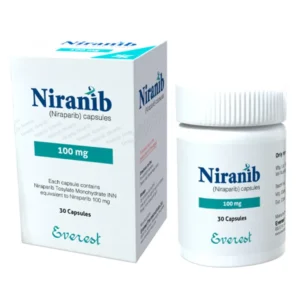
Niranib 100 mg Capsule (Niraparib) | Clinical Profile and Treatment Overview
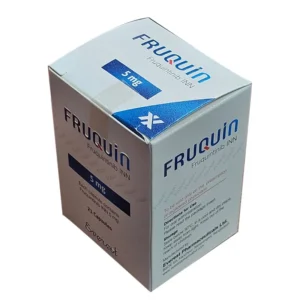
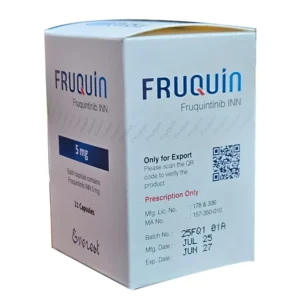
Consult Pharmacist for PriceFruquin 5 mg Tablet (Fruquintinib) | Metastatic Colorectal Cancer Therapy
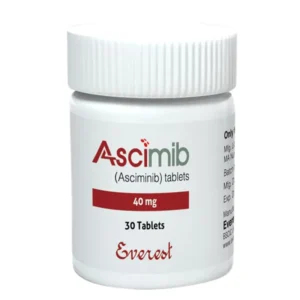
Consult Pharmacist for PriceAscimib 40 mg (Asciminib) Tablet | STAMP Inhibitor in PH+CML
Consult Pharmacist for PriceCapixet 500 mg Tablet (Capecitabine) | Oral Fluoropyrimidine Carbamate (Antimetabolite)
Consult Pharmacist for Price