Sourcing Disclosure: Licensed Bangladesh Global Sourcing Specialist facilitating global access under Named Patient Regulations.
Expert-reviewed clinical data for prescription-only medicine.


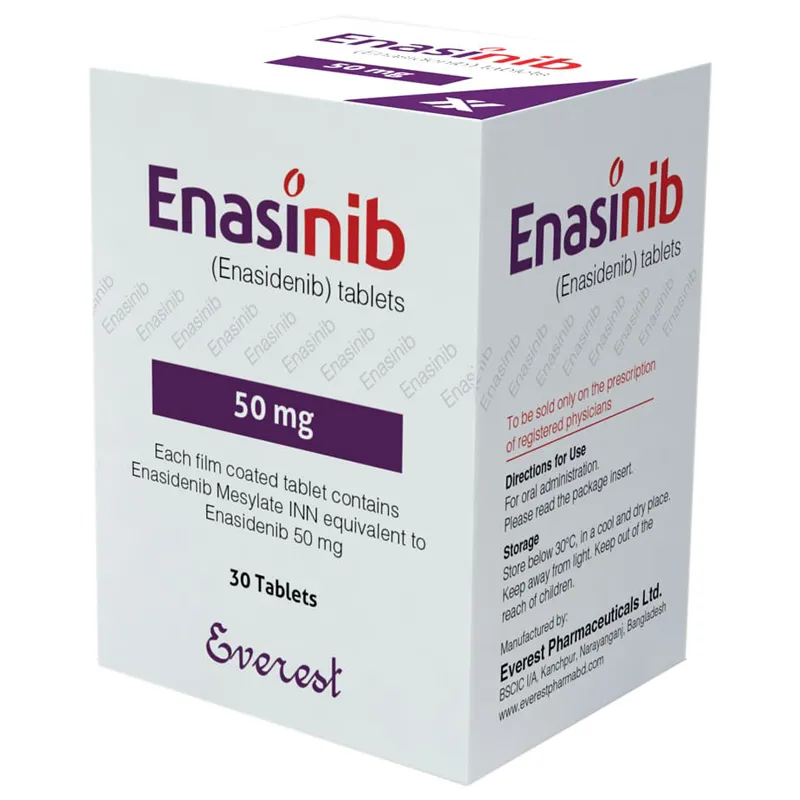
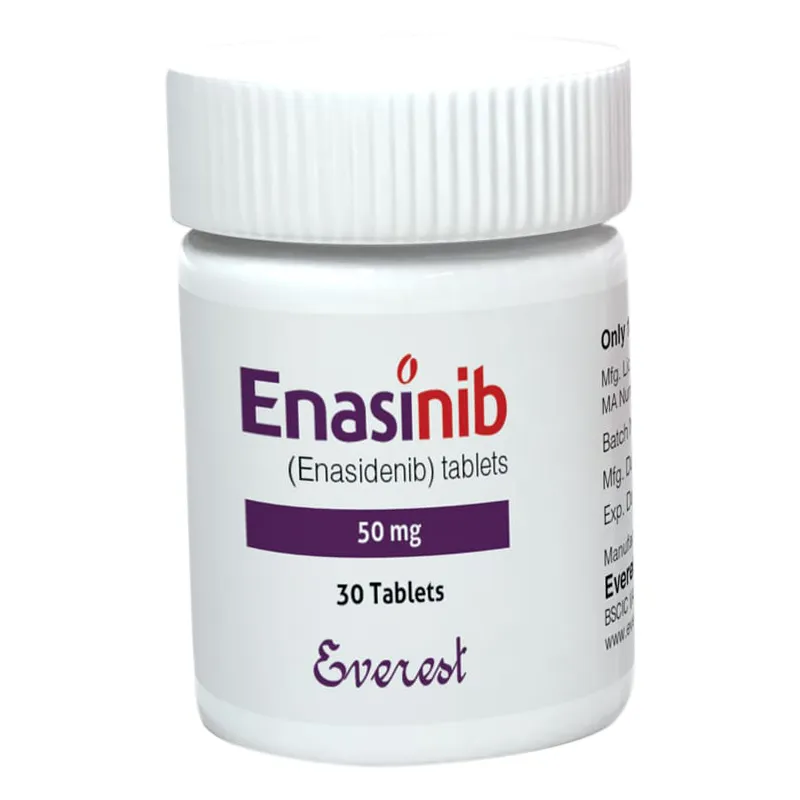
Enasinib 50 mg Tablet (Enasidenib) | IDH2 (isocitrate dehydrogenase-2) inhibitor in AML
Brand Name: Enasinib
Generic Name: Enasidenib
Pharmacological Class: Small-molecule Isocitrate Dehydrogenase-2 (IDH2) Inhibitor
Clinical Indication: IDH2-mutant Relapsed/Refractory AML
Available Strength: 50 mg
Pack Size: 30 Tablets
- WHO GMP Certified
- Reviewed By Medical Expert
- Batch Examined in Lab
Disclaimer: The following information is for educational and informational purposes only and is not intended as a substitute for professional medical advice, diagnosis, or treatment. Always seek the guidance of a hematologist, oncologist, or other qualified healthcare provider regarding medical conditions or treatment protocols. (Medically Reviewed by: Dr. Salma Elreedy)
Enasinib 50 mg (Enasidenib): Clinical Profile and Treatment Overview
Enasinib 50 mg Tablet, containing the active pharmaceutical ingredient Enasidenib, is the generic equivalent of the innovator brand IDHIFA. It is a targeted oncology medication classified as an IDH2 (isocitrate dehydrogenase-2) inhibitor.
Clinical Indications
Enasidenib is indicated for adult patients diagnosed with acute myeloid leukemia (AML) that is either relapsed (disease has returned after prior treatment) or refractory (disease failed to respond to standard induction chemotherapy).
Clinical protocol requires confirmation of a specific genetic mutation—the IDH2 mutation—prior to initiating therapy. This is verified through an FDA-approved diagnostic blood or bone marrow assay. Enasidenib is not indicated for AML patients who do not possess the IDH2 mutation.
Mechanism of Action
In healthy cellular function, white blood cells mature to effectively fight infection. However, the mutated IDH2 enzyme produces toxic levels of an oncometabolite known as 2-hydroxyglutarate (2-HG). This accumulation blocks cellular differentiation, freezing leukemia cells in an immature, rapidly multiplying state (blasts).
Enasidenib is a targeted small-molecule inhibitor. It binds directly to the mutant IDH2 enzyme, suppressing the production of 2-HG. By removing this metabolic block, Enasidenib induces differentiation, forcing the immature leukemia blasts to mature into functional white blood cells. This targeted process reduces the leukemic burden in the bone marrow and restores healthy blood cell counts.
Dosage and Administration Protocols
Based on clinical guidelines from the FDA and the National Comprehensive Cancer Network (NCCN), the standard recommended dosage is 100 mg administered orally once daily. Utilizing the 50 mg formulation requires taking two tablets simultaneously each day.
Administration Guidelines:
- Enasinib 50 mg may be administered with or without food.
- Tablets must be swallowed whole with at least 8 ounces of water; they should not be crushed, chewed, or split to maintain proper pharmacokinetic absorption.
- Administration should occur at approximately the same time daily to ensure steady systemic drug concentrations.
- Clinical guidelines recommend continuing therapy for a minimum of 6 months to accurately assess clinical response, provided the medication is tolerated and disease progression does not occur.
Clinical Efficacy and Safety Data
The clinical efficacy of Enasidenib is documented in major databases, including ClinicalTrials.gov (Study AG221-C-001), with data peer-reviewed in journals such as Blood and The Lancet Oncology.
In pivotal trials for relapsed or refractory IDH2-mutated AML, Enasidenib demonstrated an overall response rate (ORR) of approximately 40%, with roughly 19% of patients achieving complete remission (CR). A significant clinical milestone noted in the data is transfusion independence; among trial patients dependent on red blood cell or platelet transfusions at baseline, 34% achieved independence after initiating Enasidenib therapy.
Adverse Effects and Safety Profile
Adverse event reporting from FDA prescribing data and institutional records (e.g., Mayo Clinic, ASCO) outlines a specific safety profile requiring routine hematological and metabolic monitoring:
Commonly Reported Effects: Frequent adverse reactions (observed in ≥20% of patients) include nausea, vomiting, diarrhea, decreased appetite, and elevated indirect bilirubin.
Significant Clinical Risks:
- Differentiation Syndrome (Black Box Warning): As leukemia blasts rapidly mature, they can trigger a severe systemic inflammatory response. Symptoms include unexplained fever, sudden weight gain, peripheral edema, dyspnea (shortness of breath), and pulmonary infiltrates. This is a medical emergency managed promptly with systemic corticosteroids (e.g., dexamethasone) and hemodynamic monitoring.
- Noninfectious Leukocytosis: Rapid cellular differentiation can cause a spike in white blood cell counts. Complete blood counts (CBC) require close monitoring, and cytoreductive therapies (like hydroxyurea) may be initiated temporarily to manage elevated counts.
- Tumor Lysis Syndrome (TLS): The rapid breakdown of leukemia cells releases intracellular contents into the bloodstream, posing a risk of renal impairment. Standard protocols include hydration and monitoring of uric acid and electrolyte levels.
Precautions and Special Populations
- Reproductive Toxicity: Animal reproduction studies indicate Enasidenib causes embryo-fetal toxicity. It is contraindicated during pregnancy. Both male and female patients of reproductive potential must utilize highly effective contraception during treatment and for a minimum of 2 months following the final dose. Lactation must be avoided during therapy.
- Pharmacokinetic Interactions: Enasidenib interacts with liver and transport enzymes (including CYP enzymes, OATP1B1, and P-glycoprotein). It can alter the metabolism of concurrent medications, including hormonal contraceptives and statins. Comprehensive medication reviews are mandatory prior to initiation.
Storage and Handling Protocols
Enasinib 50 mg tablets maintain stability at room temperature and do not require strict 2°C to 8°C cold chain refrigeration. Manufacturer specifications dictate storage between 20°C to 25°C (68°F to 77°F). Tablets must remain in their original container with the provided desiccant canister to protect the active pharmaceutical ingredient (API) from moisture degradation.
During international distribution, certified pharmaceutical exporters utilize climate-controlled logistics to prevent exposure to extreme thermal fluctuations in cargo transit, ensuring API integrity upon delivery.
Manufacturer Quality Assurance
Enasinib 50 mg is manufactured by Everest Pharmaceuticals. For YMYL (Your Money or Your Life) search compliance, verifying the manufacturing standard is critical. Everest Pharmaceuticals operates under rigorous World Health Organization Good Manufacturing Practices (WHO GMP). This certification mandates continuous facility auditing and strict batch-testing for API purity, stability, and clinical bioequivalence. This protocol ensures the generic formulation performs with the exact clinical efficacy as the innovator brand (IDHIFA).
Global Access and Importation Compliance
Accessing targeted leukemia therapies internationally requires strict adherence to regulatory frameworks. Patients globally can legally access Enasinib 50 mg through verified pharmaceutical exporters, provided the national health ministry or local drug distribution authority permits the importation of personal medication.
A valid prescription from a licensed hematologist or oncologist is legally mandated to process any order. Dispensing pharmacies verify prescriptions to ensure accurate dispensing, correct dosing, and confirmation that the patient remains under active, qualified medical supervision.
Frequently Asked Questions (FAQs)
Is Enasinib 50 mg clinically equivalent to IDHIFA?
Yes. Enasinib contains Enasidenib, the identical active pharmaceutical ingredient found in IDHIFA. Manufactured under WHO GMP standards, it is clinically bioequivalent, ensuring the pharmacokinetic absorption and inhibition of the mutant IDH2 enzyme perform identically in a clinical setting.
What is the medical protocol for a missed dose?
If a dose is missed, it should be administered as soon as remembered on the same day. If the missed dose is not remembered until the following day, the missed dose must be skipped, and the normal daily schedule resumed. Two doses must never be taken simultaneously to compensate for a missed administration.
Why does Enasidenib cause elevated bilirubin or mild jaundice?
Clinical trials frequently observe elevated indirect bilirubin levels in patients taking Enasidenib, which can manifest as mild jaundice. This occurs because the drug inhibits UGT1A1, an enzyme responsible for processing bilirubin. It is typically a benign pharmacokinetic effect rather than an indicator of intrinsic liver toxicity, though liver function panels are routinely monitored to ensure hepatic stability.
Is Enasidenib a curative treatment for AML?
Enasidenib is not classified as a standalone curative therapy. It is a targeted intervention designed to induce remission, restore healthy hematopoiesis, and reduce transfusion dependency in relapsed or refractory patients. For certain eligible patients, achieving remission with Enasidenib may bridge the gap to a potentially curative allogeneic hematopoietic stem cell transplant.
Related products

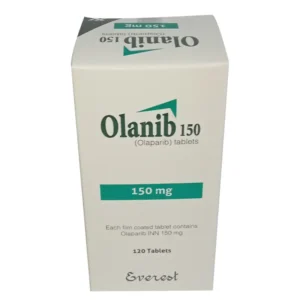
Olanib 150 mg Tablet (Olaparib) | Clinical Overview Of A PARP Inhibitor
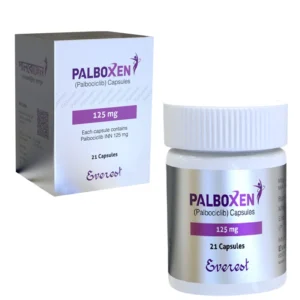
Consult Pharmacist for PricePalboxen 125 mg Capsule (Palbociclib) | Clinical Guide & Patient Safety Information
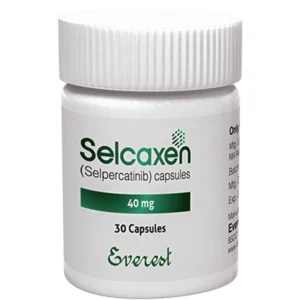
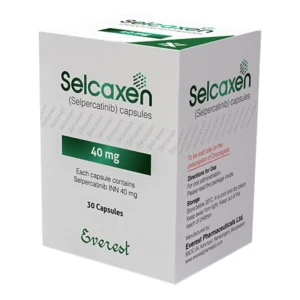
Consult Pharmacist for PriceSelcaxen 40 mg Capsule (Selpercatinib): Clinical Profile and Treatment Overview
Consult Pharmacist for PricePonaxen 45 mg Tablet (Ponatinib) | CML Tyrosine Kinase Inhibitor
Consult Pharmacist for Price