Prescription required. We facilitate access to medicines already prescribed by your treating physician. We do not provide medical advice or diagnoses.


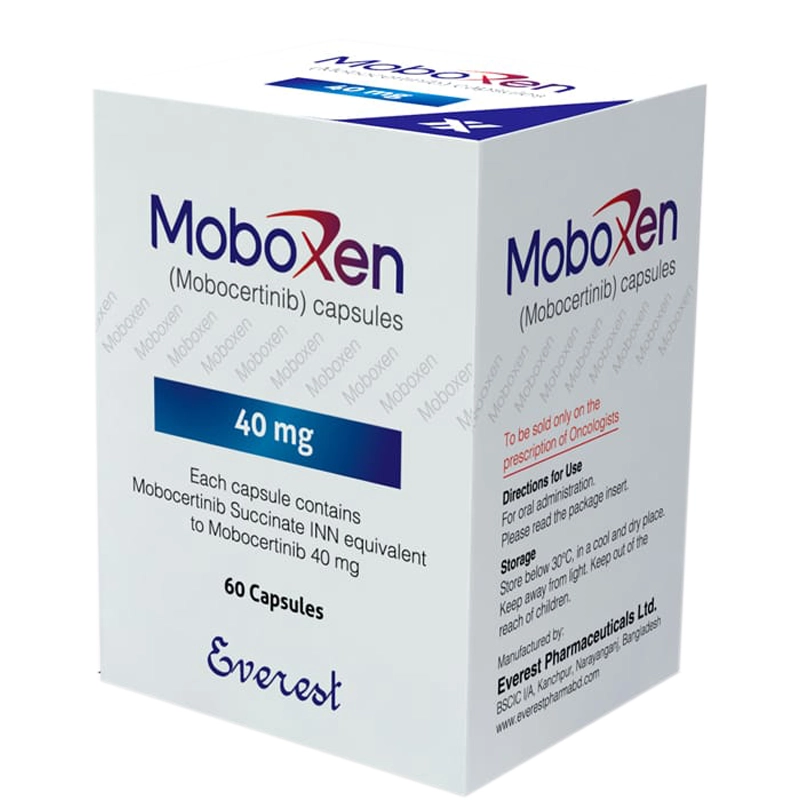
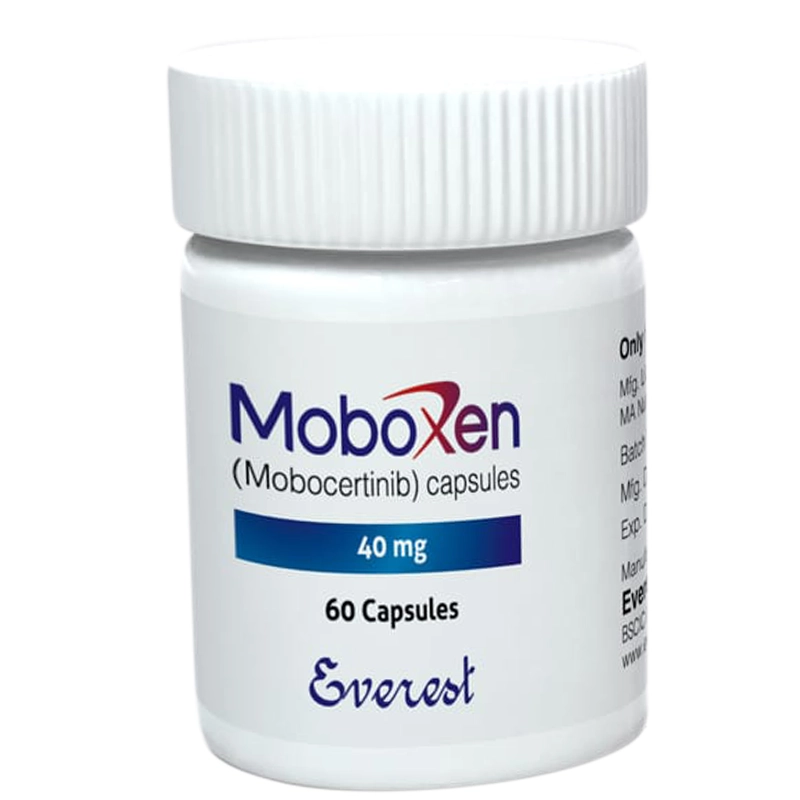
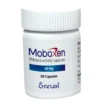
Moboxen 40 mg (Mobocertinib) 60 Capsule: Patient Access & Price
- Used for: adult patients with locally advanced or metastatic EGFR Exon 20 insertion-positive non-small cell lung cancer (NSCLC).
- Availability: In Stock
- Shipping: Express Global Shipping (7-14 days depending on region).
- Requirement: Valid prescription from a licensed healthcare provider required.
✓ WHO GMP Certified
✓ Reviewed By Medical Expert
✓ Batch Examined in Lab
Need Patient Access Support?
Our team provides verified global sourcing assistance to help you navigate international shipping and prescription requirements safely.
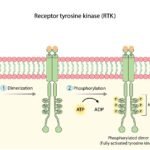
Moboxen 40 mg (Mobocertinib) is a highly specialized, orally bioavailable, irreversible tyrosine kinase inhibitor (TKI). It is designed to specifically target and inhibit epidermal growth factor receptor (EGFR) harboring Exon 20 insertion mutations at lower concentrations than wild-type EGFR. It is strictly indicated for the treatment of adult patients with locally advanced or metastatic non-small cell lung cancer (NSCLC) with confirmed EGFR Exon 20 insertion mutations, whose disease has progressed on or after platinum-based chemotherapy. By irreversibly binding to the kinase domain, Moboxen halts the downstream signaling pathways responsible for aggressive tumor proliferation in a highly specific patient subset that is historically resistant to first- and second-generation EGFR TKIs.
Important Clinical & Regulatory Update: In late 2023, the innovator brand of mobocertinib (Exkivity) was voluntarily withdrawn globally following the EXCLAIM-2 trial. Consequently, Moboxen 40 mg is not initiated for newly diagnosed patients. Access is strictly facilitated under Compassionate Use and Continuation of Therapy protocols specifically for patients who are already receiving clinical benefit from mobocertinib and require uninterrupted supply to prevent disease flare or progression.
Medical Expert Insight
“Historically, the management of refractory, highly mutated malignancies—whether overcoming androgen receptor resistance in prostate cancer or addressing acquired kinase mutations in thoracic oncology—has presented a formidable clinical challenge. For years, patients with EGFR Exon 20 insertion mutations in NSCLC were effectively orphaned, demonstrating poor responses to conventional EGFR inhibitors and relying entirely on heavy, cytotoxic chemotherapy.
The advent of specifically engineered targeted therapies like mobocertinib represents a definitive paradigm shift, directly attacking the steric hindrance that made these tumors resistant. However, the immense financial barrier of the innovator brand restricts continuous, life-saving access. Integrating high-quality, bioequivalent generics like Moboxen is a critical clinical strategy. It allows oncologists to secure immediate, uninterrupted molecular blockade, ensuring that therapeutic decisions are driven by tumor biology and precise diagnostics, rather than geographic or economic limitations.”
Clinical Guide and Safety Management Protocol
Moboxen is not indicated for common EGFR mutations (such as Exon 19 deletions or L858R). Initiation of therapy requires absolute diagnostic confirmation:
- Target Indication: Locally advanced or metastatic NSCLC.
- Biomarker Requirement: Confirmed EGFR Exon 20 insertion mutation via an FDA-approved companion diagnostic test (e.g., validated Next-Generation Sequencing [NGS] of tumor tissue or circulating tumor DNA [ctDNA]).
Mechanism of Action & Pharmacokinetics (ADME)
Mobocertinib forms a covalent, irreversible bond with the cysteine 797 residue in the EGFR kinase domain. This permanent binding specifically targets the altered conformation caused by Exon 20 insertions.
- Absorption: Median time to peak concentration (Tmax) is 4 hours. It can be administered with or without food, as standard meals do not yield a clinically significant change in systemic exposure.
- Distribution: Highly bound to human plasma proteins (approximately 99%).
- Metabolism: Primarily hepatic, predominantly mediated by the CYP3A4 and CYP3A5 enzymes. It produces two active metabolites (AP32960 and AP32914) that maintain equipotent inhibitory activity.
- Excretion: Fecal excretion accounts for approximately 76% of the administered dose, with minimal renal clearance (4%). The mean terminal half-life is 18 hours.
Dosage & Administration
The administration of Moboxen requires a consistent daily schedule to maintain therapeutic levels in the blood:
- Standard Dosage: The recommended dose is 160 mg taken orally once daily. Since each capsule is 40 mg, this usually means taking four capsules at once.
- Administration: Tablets may be taken with or without food. They must be swallowed whole; do not open, chew, or dissolve the contents.
- Timing: Take the dose at approximately the same time every day.
- Missed Doses: If a dose is missed by more than 6 hours, skip that dose and resume the next day. If vomiting occurs after taking a dose, do not take an extra one; simply wait for the next scheduled dose.
Adverse Event Management and Dosage Reduction Protocol
| Toxicity / Adverse Event | Grade Severity | Clinical Protocol & Dose Modification |
|---|---|---|
| QTc Prolongation (Boxed Warning) | QTc > 500 ms or > 60 ms change from baseline | Withhold Moboxen until QTc recovers to < 481 ms or baseline. Resume at a reduced dose (120 mg daily). Permanently discontinue if accompanied by life-threatening arrhythmia or Torsades de Pointes. |
| Interstitial Lung Disease (ILD) / Pneumonitis | Any Grade | Withhold for suspected ILD. Permanently discontinue Moboxen if ILD or pneumonitis is confirmed. Do not attempt dose reduction. |
| Severe Diarrhea | Grade 3 or 4 (Unresponsive to antidiarrheals) | Diarrhea is nearly universal. Initiate early loperamide prophylaxis. For severe grades, withhold until recovery to ≤ Grade 1, then resume at the same or a reduced dose (120 mg or 80 mg daily). |
| Cardiac Toxicity (Decreased LVEF) | Grade 3 or symptomatic | Withhold until LVEF recovers to baseline or ≥ 50%. Resume at a reduced dose. Discontinue permanently for Grade 4. |
Clinical Efficacy & Real-World Data
The clinical integrity of mobocertinib was established in the EXCLAIM trial parameters:
- Phase 1/2 EXCLAIM Cohort: In previously treated patients with EGFR Exon 20 insertion+ NSCLC, mobocertinib demonstrated a confirmed Objective Response Rate (ORR) of 28% per independent review committee.
- Durability: The median Duration of Response (DoR) was highly significant at 17.5 months, providing sustained disease control in a previously untreatable patient population.
- Overall Survival (OS): The median Overall Survival reached 24.0 months, a substantial improvement over historical benchmarks for this specific mutation.
- Real-World Evidence (RWE): Post-marketing data underscores the critical nature of proactive diarrhea management. Patients who receive aggressive, early intervention for GI toxicities maintain higher dose intensities, directly correlating with extended progression-free intervals.
Drug-Drug Interaction Matrix
| Co-administered Drug Class | Examples | Clinical Interaction | Management Protocol |
|---|---|---|---|
| Strong CYP3A Inhibitors | Ketoconazole, Itraconazole, Clarithromycin | Significantly increases mobocertinib plasma concentrations, escalating the risk of severe QTc prolongation and toxicities. | Avoid concurrent use. If unavoidable, reduce Moboxen dose by approximately 50% (e.g., 160 mg to 80 mg). |
| Strong/Moderate CYP3A Inducers | Rifampin, Phenytoin, Carbamazepine, St. John’s Wort | Decreases mobocertinib plasma concentrations, leading to loss of antineoplastic efficacy. | Avoid concurrent use. Do not attempt to offset by increasing the Moboxen dose. |
| QTc Prolonging Agents | Amiodarone, Haloperidol, Sotalol | Additive effect on ventricular repolarization, severely increasing the risk of fatal arrhythmias. | Avoid co-administration. Conduct rigorous, frequent ECG monitoring and electrolyte correction (K+, Mg++) if use is strictly necessary. |
Precautions & Special Populations
- Pregnancy: Mobocertinib can cause severe embryo-fetal toxicity. Females of reproductive potential must use highly effective non-hormonal contraception during treatment and for 1 month following the final dose. Males with female partners of reproductive potential must use effective contraception during treatment and for 1 week after the last dose.
- Lactation: Breastfeeding is strictly contraindicated during treatment and for 1 week after the final dose.
- Hepatic Impairment: No dose adjustment is recommended for mild hepatic impairment. It has not been heavily studied in severe hepatic impairment; monitor closely for toxicities.
- Renal Impairment: No dose adjustment is required for mild to moderate renal impairment.
- Storage Logistics: Store at 20°C to 25°C (68°F to 77°F). Excursions permitted to 15°C to 30°C. Cold-chain transport is not required.
Global Access, Quality Assurance, & Brand vs Generic Comparison
Global Access & Personal Importation (NPP)
For patients residing in jurisdictions where Moboxen is not commercially registered, specialized access is facilitated through the Named Patient Program (NPP) or corresponding Personal Importation laws. This framework ensures legal, regulated procurement of critical medicines.
- Medical Verification: The patient must provide a valid, physically signed prescription from a licensed medical oncologist.
- Clinical Justification: A formal Letter of Medical Necessity must be submitted, detailing the confirmed EGFR Exon 20 insertion status and the exhaustion of prior systemic therapies.
- Customs & Ministry of Health (MOH) Clearance: Certified global medical exporters manage all local regulatory documentation, ensuring legal, transparent, and direct transit of the medication to the patient or treating oncology center.
Assurance of Manufacturing Quality
Moboxen is produced by Everest Pharmaceutical, a specialized oncology manufacturer operating state-of-the-art, secure facilities. Production processes are strictly governed by World Health Organization Good Manufacturing Practices (WHO-GMP) and rigorous ISO quality standards. To guarantee clinical parity with the innovator brand, Everest executes comprehensive bioequivalence testing, ensuring that the active pharmaceutical ingredient (API) matches exact dissolution kinetics and systemic absorption parameters, thereby preserving the narrow therapeutic index required for safe oncological dosing.
Brand vs Generic Comparison
| Metric | Exkivity (Innovator) | Moboxen (Generic) |
|---|---|---|
| Active Pharmaceutical Ingredient | Mobocertinib | Mobocertinib |
| Dosage Form & Strength | 40 mg Oral Capsule | 40 mg Oral Capsule |
| Therapeutic Indications | EGFR Exon 20+ NSCLC | EGFR Exon 20+ NSCLC |
| Target Mechanism | Irreversible EGFR Kinase Inhibition | Irreversible EGFR Kinase Inhibition |
| Bioequivalence Level | Originator Standard | Therapeutically Equivalent |
Frequently Asked Questions (FAQs)
How is Moboxen different from older EGFR inhibitors like erlotinib or osimertinib?
Traditional EGFR inhibitors are highly effective against common mutations (like Exon 19 deletions), but they are structurally unable to bind effectively to the “Exon 20 insertion” mutation due to a tightened active site in the cancer cell’s protein. Moboxen is specifically engineered to fit into this altered site and irreversibly block the cancer’s growth signals.
Are diarrhea side effects guaranteed, and how do I manage them?
Gastrointestinal distress, specifically diarrhea, is very common with Moboxen and can become severe. Do not wait for it to resolve on its own. Your oncologist will likely instruct you to have loperamide (Imodium) on hand before starting treatment and to begin taking it at the very first sign of loose stools to prevent dehydration and dose interruptions.
Why do I need frequent ECGs while taking this medication?
Moboxen carries a risk of QTc prolongation, which is an alteration in the electrical activity of your heart that can lead to dangerous, irregular heartbeats. Your medical team will perform baseline and routine electrocardiograms (ECGs) and monitor your blood electrolyte levels (potassium, magnesium) to ensure your heart remains stable throughout treatment.
Does it matter if I take Moboxen with food?
No. You can take the 160 mg dose (four 40 mg capsules) with or without food. However, it is critical to take the capsules at the same time every day and to swallow them whole—do not open, chew, or dissolve them.
What should I do if I develop a sudden cough or shortness of breath?
You must contact your oncologist immediately. Moboxen carries a risk of a severe lung condition called Interstitial Lung Disease (ILD) or pneumonitis. Sudden, unexplained respiratory symptoms require immediate medical evaluation, and your treatment may need to be permanently stopped.
What is the price of Moboxen 40 mg globally?
Moboxen is formulated as a high-quality generic alternative to Exkivity, positioning it at a highly accessible price point to alleviate the financial toxicity of targeted cancer care. The exact pricing depends on the patient’s geographic location, customs regulations, and the specific logistics of the Named Patient Program (NPP). Patients must coordinate with their verified global exporter for an exact, case-specific quotation.