Sourcing Disclosure: Licensed Bangladesh Global Sourcing Specialist facilitating global access under Named Patient Regulations.
Expert-reviewed clinical data for prescription-only medicine.


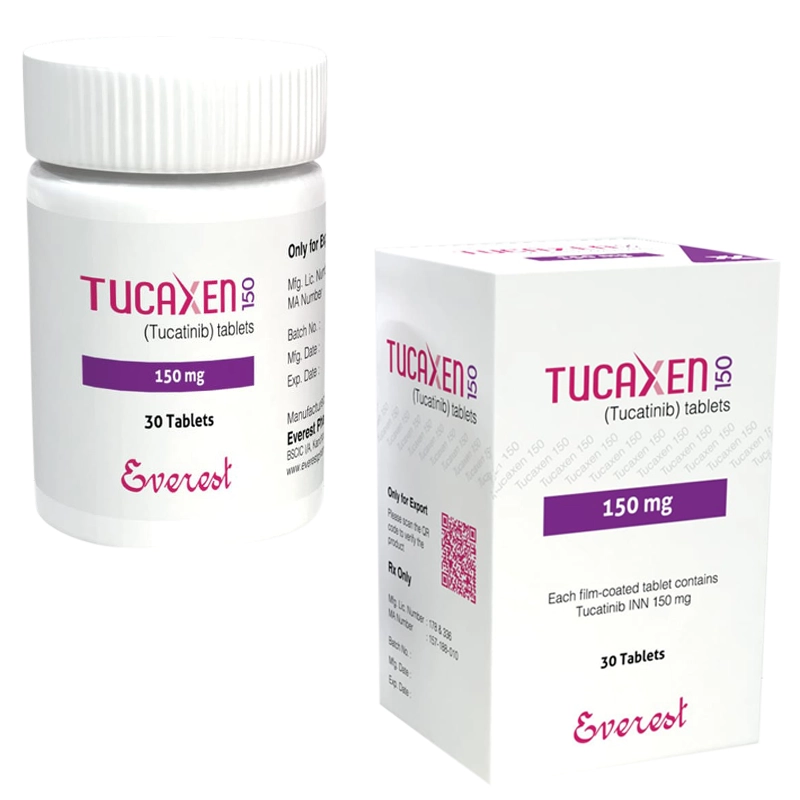
Tucaxen 150 mg (Tucatinib) | Price, Clinical Guide, & Safety Protocol
Brand Name: Tucaxen
Generic Name: Tucatinib
Manufacturer: Everest pharmaceutical
Dosage Form: 150 mg
Tablet Contains: 30
- WHO GMP Certified
- Reviewed By Medical Expert
- Batch Examined in Lab
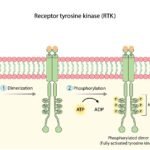
Tucaxen 150 mg is a selective, oral, small-molecule tyrosine kinase inhibitor (TKI) directed specifically against human epidermal growth factor receptor 2 (HER2). Unlike dual-inhibitors, tucatinib binds internally to the kinase domain of HER2 with minimal inhibition of epidermal growth factor receptor (EGFR), substantially reducing the severe cutaneous and gastrointestinal toxicities associated with broader TKIs. It is primarily indicated in combination with trastuzumab and capecitabine for adult patients with advanced unresectable or metastatic HER2-positive breast cancer, explicitly including patients with active or progressing brain metastases. Furthermore, it is indicated for RAS wild-type, HER2-positive metastatic colorectal cancer.
Health Care Provider Insight on Tucaxen
“Managing HER2-positive breast cancer with central nervous system (CNS) involvement presented a severe clinical challenge. The blood-brain barrier effectively blocked many large-molecule monoclonal antibodies, leaving patients with limited systemic options once brain metastases developed.
The introduction of tucatinib fundamentally altered our treatment sequencing. Because it is a small molecule that efficiently penetrates the CNS, we finally have a highly active agent that not only controls extracranial disease but actively treats and stabilizes intracranial lesions. Clinically, I also appreciate its high selectivity for HER2. By sparing EGFR, my patients experience significantly less severe rash and mucositis compared to older generation TKIs, which allows them to maintain their dose intensity and, crucially, their quality of life. The availability of high-quality, bioequivalent generics like Tucaxen by Everest Pharmaceuticals is vital. It democratizes access to this life-extending therapy, ensuring patients globally can afford standard-of-care combinations without crippling financial toxicity.“
Tucaxen 150 mg (Tucatinib): Tablet Uses and Clinical Indications
Precise Indications & Companion Diagnostics
- Breast Cancer: Advanced unresectable or metastatic HER2-positive breast cancer, including patients with brain metastases, who have received one or more prior anti-HER2-based regimens in the metastatic setting.
- Colorectal Cancer: HER2-positive, RAS wild-type unresectable or metastatic colorectal cancer that has progressed following treatment with fluoropyrimidine-, oxaliplatin-, and irinotecan-based chemotherapy.
- Biomarker Requirements: HER2 overexpression or amplification must be confirmed via an FDA/EMA-approved companion diagnostic test (e.g., Immunohistochemistry [IHC] 3+ or In Situ Hybridization [ISH] positive).
Mechanism & Pharmacokinetics (ADME)
- Mechanism: Reversible inhibition of HER2 kinase. Downstream inhibition of MAPK and PI3K/AKT cellular signaling pathways, preventing tumor cell proliferation and inducing apoptosis.
- Absorption: Median time to peak plasma concentration (Tmax) is approximately 2.0 hours.
- Distribution: 27.1% bound to human plasma proteins.
- Hepatic Metabolism: Extensively metabolized by the liver, primarily via CYP2C8 and to a lesser extent via CYP3A.
- Excretion: Predominantly eliminated in feces (86%) and minimally in urine (14%). Mean half-life (t½) is roughly 8.5 hours.
Baseline Dosing
- Standard Dose: 300 mg (two 150 mg tablets) taken orally twice daily, with or without food.
Table 01: Dosage & Adverse Event (AE) Management
| Toxicity / Adverse Event | Severity Grade (CTCAE) | Dose Modification Protocol |
|---|---|---|
| Diarrhea | Grade 3 (without anti-diarrheal) | Initiate loperamide. Maintain tucatinib dose. |
| Grade 3 (with anti-diarrheal) | Withhold Tucaxen until ≤ Grade 1. Resume at the next lower dose level (e.g., 250 mg BID). | |
| Grade 4 | Permanently discontinue Tucaxen. | |
| Hepatotoxicity (ALT/AST Elevation) | Grade 3 (>5 to 20x ULN) | Withhold Tucaxen until ≤ Grade 1. Resume at the next lower dose level. |
| Grade 4 (>20x ULN) | Permanently discontinue Tucaxen. | |
| Bilirubin Elevation | Grade 3 (>3 to 10x ULN) | Withhold Tucaxen until ≤ Grade 1. Resume at the next lower dose level. |
| Grade 4 (>10x ULN) | Permanently discontinue Tucaxen. |
Clinical Efficacy: HER2CLIMB Landmark Trial Data
The efficacy of tucatinib was established in the randomized, double-blind HER2CLIMB trial.
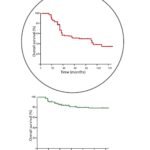
- Median Overall Survival (OS): 21.9 months (Tucatinib arm) vs. 17.4 months (Placebo arm).
- Hazard Ratio (HR) for Death: 0.66 (95% CI: 0.50, 0.87; p=0.0048).
- Progression-Free Survival (PFS) in Brain Metastases Subgroup: 7.6 months vs. 5.4 months (HR = 0.48).
- Real-World Evidence (RWE): Post-marketing registries reflect clinical trial outcomes, showing significant durable responses in heavily pretreated patient cohorts, specifically validating its protective role against progressive neurological decline in patients with active CNS disease.
Table 02: Prescription Safety & Compatibility
| Drug Class / Interacting Agent | Interaction Mechanism | Clinical Action / Management |
|---|---|---|
| Strong CYP2C8 Inhibitors (e.g., Gemfibrozil) | Decreases tucatinib clearance, increasing systemic toxicity risk. | Avoid concurrent use. If unavoidable, reduce Tucaxen to 100 mg BID. |
| Strong CYP3A Inducers (e.g., Rifampin, Phenytoin) | Accelerates tucatinib clearance, reducing clinical efficacy. | Avoid concurrent use. |
| CYP3A Substrates (e.g., Midazolam, Simvastatin) | Tucatinib is a strong CYP3A inhibitor; increases concentration of substrates. | Reduce dosage of CYP3A substrates where minimal concentration changes lead to serious toxicity. |
| P-gp Substrates (e.g., Digoxin) | Tucatinib inhibits P-glycoprotein, increasing substrate absorption. | Monitor for toxicity of the P-gp substrate; reduce dose if necessary. |
Who Should Take Extra Care?
- Pregnancy & Embryo-Fetal Toxicity: Tucatinib can cause fetal harm based on animal findings. Advise pregnant women of the potential risk. Females of reproductive potential must use effective contraception during treatment and for at least 1 week following the last dose.
- Lactation: Breastfeeding is not recommended during treatment and for 1 week after the final dose.
- Hepatic Impairment: For patients with severe hepatic impairment (Child-Pugh C), clearance is reduced. The starting dose must be decreased to 200 mg orally twice daily. No adjustment is required for mild or moderate impairment.
- Storage Logistics: Store at 20°C to 25°C (68°F to 77°F). Excursions permitted between 15°C and 30°C (59°F and 86°F). Dispense in original packaging to protect from moisture. No cold-chain transport is required.
Trusted Sources, Clinical Rigor, Global Reach
Everest Pharmaceuticals: Manufacturing Excellence
Everest Pharmaceuticals operates strictly under World Health Organization Good Manufacturing Practices (WHO-GMP) and holds current ISO certifications. The production of Tucaxen undergoes rigorous, multi-stage liquid chromatography–mass spectrometry (LC-MS) testing to ensure absolute parity with the innovator brand’s API purity, dissolution rates, and pharmacokinetic profiles.
Global Access (Named Patient Program)
Due to varying global approval timelines, many patients cannot access critical oncology drugs locally. The Named Patient Program (NPP) permits the legal, ethical importation of unapproved medications for personal use. Required Importation Documentation:
- Letter of Medical Necessity: A formal letter from the treating oncologist detailing the patient’s diagnosis and the exhaustion of local alternatives.
- Valid Prescription: A signed, localized prescription specifying Tucaxen 150 mg.
- Patient Identity Verification: Passport or national ID matching the prescription.
- Import License/NOC: Issued by the destination country’s Ministry of Health or local customs authority (if applicable).
Table 03: Brand (Tukysa) vs Generic (Tucaxen) Comparison
| Metric | Innovator Brand (Tukysa®) | Generic Equivalent (Tucaxen) |
|---|---|---|
| Active Pharmaceutical Ingredient | Tucatinib | Tucatinib |
| Dosage Strengths | 50 mg, 150 mg | 150 mg |
| Therapeutic Target | HER2 Kinase Domain | HER2 Kinase Domain |
| Indications | HER2+ Breast & Colorectal | HER2+ Breast & Colorectal |
| Bioequivalence | Originator | Clinically Bioequivalent |
Tucaxen 150 mg Price and Regional Availability
The Tucaxen 150 mg price is structured to be significantly more accessible than the innovator brand (Tukysa), facilitating broader patient access to HER2-targeted therapy.
- Tucaxen 150 mg price in Pakistan: While manufactured in Bangladesh by Everest Pharmaceuticals, Tucaxen is available for patients in Pakistan through the Named Patient Program (NPP). The cost in Pakistan may vary based on current exchange rates and importation logistics. Patients are advised to consult with a verified global oncology provider for an official quote and to ensure compliance with the Drug Regulatory Authority of Pakistan (DRAP) guidelines for personal-use importation.
Tucaxen 150 mg: What to Expect
What is the difference between Tucaxen and Tukysa?
Tucaxen contains the exact same active pharmaceutical ingredient (tucatinib) as the innovator brand, Tukysa. It is a therapeutically equivalent generic manufactured under WHO-GMP standards, offering the same clinical efficacy and safety profile at a more accessible price point.
Does tucatinib cross the blood-brain barrier to treat brain metastases?
What are the most common side effects of Tucaxen 150 mg?
How should I take Tucaxen daily?
How can I import Tucaxen if it is not approved in my country?
Do I need to take Tucaxen with other medications?
Related products

Velpanex (Sofosbuvir + Velpatasvir) 100 mg + 400 mg | HCV Direct Acting Antiviral
Consult Pharmacist for PriceDaclaxen 60 mg Tablet (Daclatasvir) | NS5A inhibitor for Chronic Hepatitis C (HCV)
Consult Pharmacist for PriceCapivast (Capivasertib) 200 mg Tablets | Advanced Breast Cancer Therapy in AKT Mutation
Consult Pharmacist for PriceCapixet 500 mg Tablet (Capecitabine) | Oral Fluoropyrimidine Carbamate (Antimetabolite)
Consult Pharmacist for Price

Reviews
There are no reviews yet.