Prescription required. We facilitate access to medicines already prescribed by your treating physician. We do not provide medical advice or diagnoses.


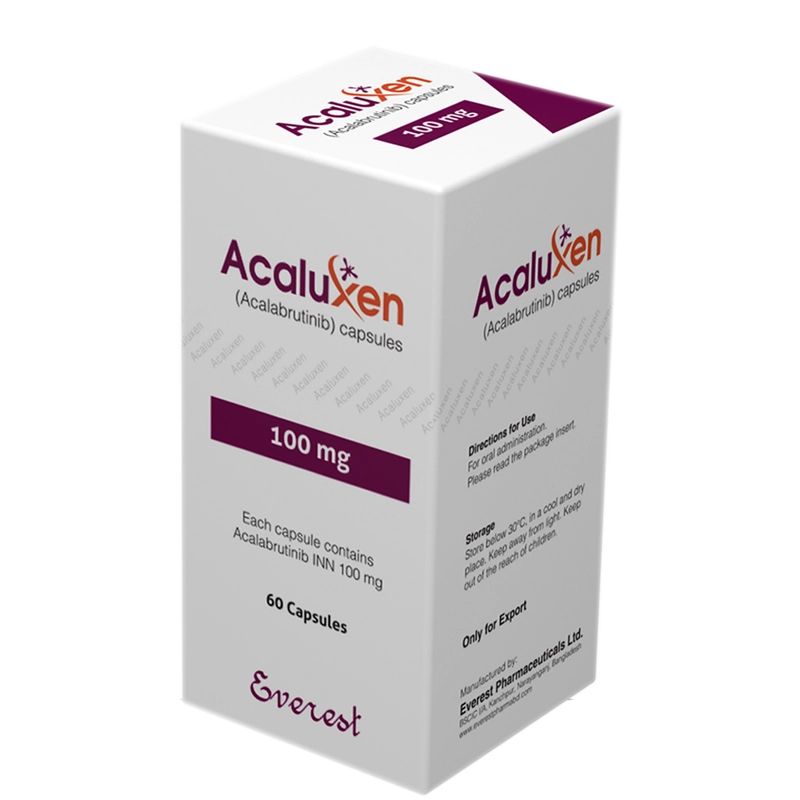
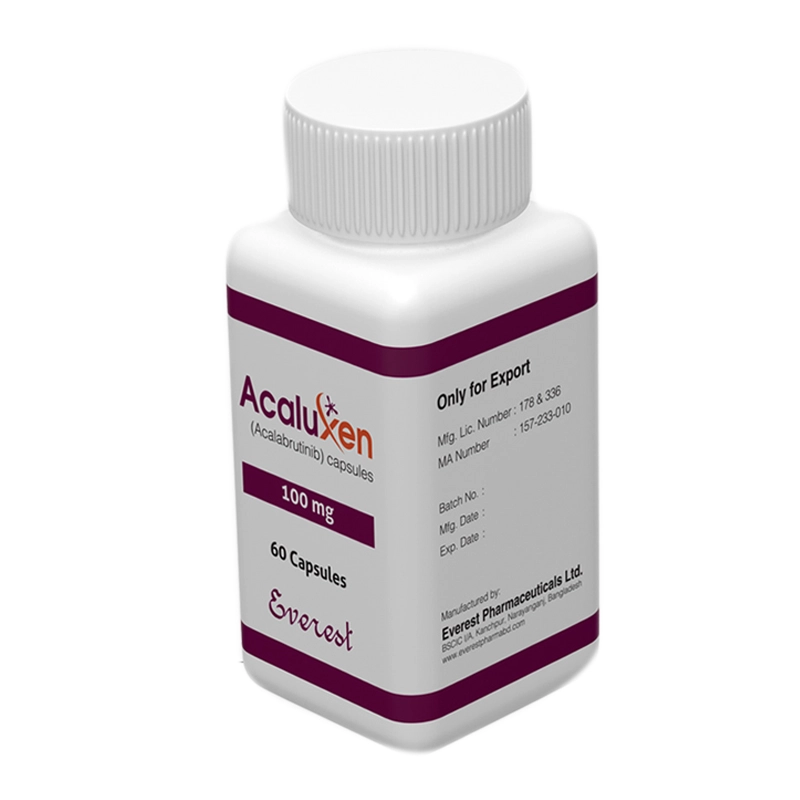
Acaluxen 100mg (Acalabrutinib): Calquence Alternative & Price Guide
- Used for: Acaluxen 100mg (Acalabrutinib) — a BTK inhibitor for CLL/SLL (with or without obinutuzumab, or with venetoclax) and mantle cell lymphoma after prior therapy or untreated in combination with bendamustine and rituximab.
- Availability: In Stock
- Shipping: Express Global Shipping (7-14 days depending on region).
- Requirement: Valid prescription from a licensed healthcare provider required.
✓ WHO GMP Certified
✓ Reviewed By Medical Expert
✓ Batch Examined in Lab
Need Patient Access Support?
Our team provides verified global sourcing assistance to help you navigate international shipping and prescription requirements safely.
Description
Looking for an acalabrutinib generic, or researching a Calquence alternative? Acaluxen is an oral capsule containing acalabrutinib, the same active molecule sold under the brand name Calquence. Everest Pharmaceuticals manufactures it in Bangladesh, in 100mg capsules.
Acalabrutinib is a Bruton’s tyrosine kinase (BTK) inhibitor, the same target as ibrutinib (Ibruxen), also in our catalog. It was developed as a more selective successor: by binding BTK more precisely and affecting fewer unrelated proteins, it was designed to keep ibrutinib’s anti-cancer effect while reducing some of ibrutinib’s most troublesome side effects, particularly heart rhythm problems and high blood pressure.
A head-to-head trial against ibrutinib confirmed most of this design goal, though not every side effect went in acalabrutinib’s favor. Both directions are covered honestly below.
Acalabrutinib’s regulatory history is worth knowing plainly. Its mantle cell lymphoma indication began as an accelerated approval in 2017, based on early response-rate data. In January 2025, that approval was converted to full, traditional approval after a Phase III confirmatory trial verified the clinical benefit.
This matters by comparison: ibrutinib’s mantle cell lymphoma and marginal zone lymphoma indications were withdrawn in December 2023 after failing to confirm benefit in their own trials. Acalabrutinib’s confirmatory trial succeeded where ibrutinib’s did not.
Before you read the interaction guidance on this page, one thing to check. Acalabrutinib exists in two formulations worldwide: an original capsule, whose absorption depends on stomach acidity, and a newer tablet with different absorption behaviour. The guidance on this page describes the capsule. If you have previously taken acalabrutinib as a tablet, or your prescription specifies one, confirm with your pharmacist which form you are receiving before assuming the antacid and heartburn-medication guidance below applies to you.
Clinical Expert Insight
“I think of acalabrutinib as the drug I reach for when a patient’s heart history makes me nervous about ibrutinib. The two work the same way, but acalabrutinib was built to be more selective, and the head-to-head trial showed real advantages: less atrial fibrillation, lower blood pressure, at similar disease control. It isn’t a free upgrade in every direction, though. Headache is more common with acalabrutinib than with ibrutinib, and I tell patients upfront to expect it in the first few weeks. It’s rarely serious and it settles, but nobody should be caught off guard by it.
The interaction I make sure every patient understands is the one with acid-reducing medications. This is not like most drug interactions, where you adjust a dose and move on. A proton pump inhibitor taken alongside acalabrutinib can meaningfully reduce how much of the drug the body actually absorbs, silently, without any symptom to flag it. I ask about heartburn medication at every visit, because patients often don’t think to mention an over-the-counter antacid unless asked directly.”
— Dr. Salma Mamdouh Elreedy, Clinical Oncologist, Sphinx Cure Oncology Center
Acaluxen Uses and Clinical Safety Protocols
Precise Indications & Approval Status
Each indication is tagged with its approval basis, since that distinction has real consequences, as ibrutinib’s withdrawn indications demonstrate.
- Chronic lymphocytic leukemia (CLL) or small lymphocytic lymphoma (SLL), as monotherapy or with obinutuzumab. Traditional approval (November 2019).
- CLL/SLL in combination with venetoclax. Traditional approval (February 2026) — the newest addition to acalabrutinib’s label.
- Mantle cell lymphoma (MCL), single agent, after at least one prior therapy. Traditional approval (January 2025, upgraded from the original 2017 accelerated approval after confirmatory trial data).
- Mantle cell lymphoma, previously untreated, with bendamustine and rituximab, for patients ineligible for stem cell transplant. Traditional approval (January 2025).
How Genetic Testing Shapes This Decision in CLL
If your diagnosis is CLL, your oncologist will likely have ordered tests that influence whether a BTK inhibitor is the right first choice. Three markers matter most:
- Deletion 17p and TP53 mutation. These indicate that chemotherapy-based approaches are unlikely to work well. BTK inhibitors, including acalabrutinib, remain effective in this group, which is a substantial part of why they replaced chemoimmunotherapy as first-line treatment for these patients.
- IGHV mutation status. Patients with unmutated IGHV historically did poorly on chemotherapy. Again, BTK inhibitors are not limited by this in the same way.
This is why a patient may be offered a BTK inhibitor rather than chemotherapy even as an initial treatment. If you have been given results mentioning any of these markers and are unsure how they affect your options, that is a direct and reasonable question to bring to your oncologist.
Mechanism of Action, Pharmacokinetics & Administration
Acalabrutinib binds covalently and irreversibly to a specific site on BTK (the C481 residue), blocking a signal B-cells depend on to survive and multiply. It is more selective for BTK than ibrutinib, with less activity against unrelated kinases, which is the molecular basis for its improved cardiovascular safety profile.
- Absorption: absolute oral bioavailability approximately 25%. Solubility decreases as stomach pH rises, the drug’s most distinctive pharmacokinetic feature and the basis of the interaction covered below.
- Half-life: approximately 1 hour for acalabrutinib, approximately 7 hours for its active metabolite (ACP-5862). This is why dosing is twice daily, and why the anticancer effect far outlasts such a short plasma half-life: the binding to BTK is irreversible, so the effect outlives the drug’s presence in the blood.
- Metabolism: predominantly CYP3A. ACP-5862 typically reaches 2 to 3 times the plasma exposure of acalabrutinib itself and contributes meaningfully to overall BTK inhibition.
- Elimination: primarily feces (~84%), smaller portion urine (~12%).
- Administration: 100mg capsules swallowed whole with water, roughly 12 hours apart, with or without food. Do not open, break, or chew.
- Missed dose: if more than 3 hours late, skip it and resume at the next scheduled time. Do not double up.
- Hepatic impairment: exposure increases at every level of liver impairment, most substantially in severe impairment.
- Renal impairment: no dedicated studies. Patients with mild to moderate impairment were included in trials without adjustment. Severe impairment and dialysis are not established.
- Age: patients 65 and older had higher rates of serious and Grade 3+ reactions in trials. No dose change on age alone, but monitoring may need to be closer.
Adverse Event Management
| Toxicity | Incidence | Threshold | Action |
|---|---|---|---|
| Hepatotoxicity (drug-induced liver injury) | Reported, including severe and fatal cases | Suspected DILI | Withhold; evaluate; resume only if benefit outweighs risk after confirmation |
| Atrial fibrillation / flutter | 9.4% vs 16.0% with ibrutinib (ELEVATE-RR); a separate real-world analysis found 5.8% vs 11.7% | Symptomatic (palpitations, dizziness, fainting, breathlessness) | Evaluate and manage; dose modification or discontinuation by severity |
| Hypertension | 9.4% vs 23.2% with ibrutinib (ELEVATE-RR) | New or worsening | Standard antihypertensive management |
| Headache | 34.6% vs 20.2% with ibrutinib (ELEVATE-RR); broader literature range 22–51%. Mostly Grade 1–2, around 1% Grade 3+. Concentrated in the first cycle and generally settles | Persistent or severe | Standard analgesia; rarely requires interruption |
| Second primary malignancies | ~6% in pooled monotherapy data, skin cancer most common; reported as a serious adverse reaction in 7% in the bendamustine/rituximab combination trial | Any | Sun protection; regular skin checks (see below) |
| Serious or opportunistic infections | Common; pneumonia and sepsis reported, more frequent in combination regimens | Grade 3+ or opportunistic | Withhold; treat; consider prophylaxis in high-risk patients |
| Neutropenia | Grade 4 in around 12% | Grade 3–4 | Monitor CBC regularly; interrupt, reduce, or discontinue as needed |
| Hemorrhage | Bruising and bleeding common; serious bleeding uncommon | Serious bleeding | Withhold; assess; see procedural guidance below |
| Tumor lysis syndrome | Reported, uncommon | Suspected | Monitor high-tumor-burden patients closely |
Table-01: Adverse Event Management
Most common reactions (single-agent MCL trial, ≥20%): anemia, thrombocytopenia, headache, neutropenia, diarrhea, fatigue, myalgia, bruising. In combination with bendamustine and rituximab (untreated MCL), the pattern shifts toward infection: pneumonia, COVID-19 and febrile neutropenia were the most frequent serious reactions, and 43% of patients discontinued treatment permanently due to adverse reactions in that trial.
What a skin check actually involves. Because skin cancer is the most commonly reported second cancer on this drug, monitoring is practical rather than abstract. Check your own skin roughly monthly, looking for a mole that changes shape, size or colour, a sore that does not heal within a few weeks, or a new rough or scaly patch. Ask your oncologist about a dermatology review at least annually. Use broad-spectrum sunscreen and cover exposed skin. A caregiver can help check areas you cannot see easily, particularly the back and scalp.
Around surgery and invasive procedures. Consider withholding Acaluxen 3 to 7 days before and after a procedure, depending on the type of surgery and bleeding risk. Tell your surgical team about this medication well in advance.
Acalabrutinib vs Ibrutinib: Comparing Acaluxen and Ibruxen
Both are BTK inhibitors, both are in our catalog, and both are reasonable choices depending on the situation. Here is what the direct head-to-head trial (ELEVATE-RR, previously treated high-risk CLL) found, stated plainly in both directions:
| Measure | Acaluxen (Acalabrutinib) | Ibruxen (Ibrutinib) |
|---|---|---|
| Dosing frequency | Twice daily, ~12 hours apart | Once daily |
| Progression-free survival (median) | 38.4 months | 38.4 months (non-inferior) |
| Atrial fibrillation, any grade | 9.4% | 16.0% |
| Hypertension, any grade | 9.4% | 23.2% |
| Headache, any grade | 34.6% | 20.2% |
| Discontinuation due to adverse events | 14.7% | 21.3% |
| MCL indication regulatory status | Traditional approval (upgraded 2025) | Withdrawn (December 2023) |
Table-02: Acalabrutinib vs ibrutinib, from the ELEVATE-RR trial
What the dosing difference means day to day. Twice-daily dosing requires two fixed points in your day roughly 12 hours apart, and on this drug it also means planning around any heartburn medication, since those need separating by at least 2 hours. Once-daily dosing is simpler to maintain. For some patients this is trivial; for others managing multiple medications, work schedules or memory difficulties, it genuinely affects whether doses get taken reliably, which in turn affects how well the treatment works. It is a fair thing to raise with your oncologist rather than something to absorb silently.
Acalabrutinib comes out ahead on cardiovascular tolerability and overall discontinuation. Ibrutinib comes out ahead on headache frequency and dosing simplicity. Neither is categorically better.
Clinical Efficacy
- Head-to-head against ibrutinib (ELEVATE-RR). (Hillmen P, Eichhorst B, Brown JR, et al. Journal of Clinical Oncology, 2023.) Full results in the comparison table above.
- Treatment-naive CLL (ELEVATE-TN). (Sharman JP, et al. The Lancet, 2020. DOI: 10.1016/S0140-6736(20)30262-2.) Versus chlorambucil plus obinutuzumab, acalabrutinib reduced the risk of progression or death by 90% combined with obinutuzumab and 81% as monotherapy. At 48 months, progression-free survival was 87.0%, 77.9% and 25.1% respectively. (6-year follow-up published in Leukemia, 2025.)
- Relapsed or refractory CLL (ASCEND). (Ghia P, et al. Journal of Clinical Oncology, 2020.) 42-month progression-free survival 62% versus 19% for idelalisib-rituximab or bendamustine-rituximab.
- Untreated MCL in combination (ECHO). The confirmatory Phase III trial behind the January 2025 conversion to traditional approval; acalabrutinib with bendamustine and rituximab extended progression-free survival by roughly 18 months over bendamustine and rituximab alone.
Drug Interaction Matrix
Acalabrutinib’s interaction with stomach-acid-reducing medication is its most distinctive and most easily missed. Because absorption depends on gastric acidity, this is not a typical “monitor closely” interaction; it directly reduces how much drug the body takes in, with no symptom to signal it. This guidance describes the capsule formulation — see the note at the top of this page if you are unsure which form you have.
| Interacting agent | Effect | Guidance |
|---|---|---|
| Proton pump inhibitors (omeprazole, esomeprazole, lansoprazole and others) | Reduced acalabrutinib exposure by roughly 43% in a formal study | Avoid concurrent use entirely |
| H2-receptor antagonists (famotidine and similar) | Reduces absorption if taken too close together | Take Acaluxen at least 2 hours before the H2-blocker |
| Antacids (including calcium carbonate) | Reduced exposure by roughly 53% in a formal study | Separate from Acaluxen by at least 2 hours, either direction |
| Strong CYP3A4 inhibitors (ketoconazole, clarithromycin, ritonavir) | Can raise exposure substantially, up to roughly 5-fold in one study | Avoid where possible; if unavoidable, reduce to 100mg once daily |
| Strong CYP3A4 inducers (rifampin, carbamazepine, St John’s Wort) | Can lower exposure and reduce efficacy | Avoid where possible; increase dose only under close supervision |
| Antiplatelet agents and anticoagulants | Additive bleeding risk | Monitor closely; see procedural guidance above |
| CYP1A2 substrates (theophylline, caffeine-containing medications) | Acalabrutinib may lower their levels | Monitor for reduced effect of the other drug |
Table-03: Drug Interaction Considerations
Ask specifically about heartburn or indigestion medication at every visit. Patients frequently don’t mention an over-the-counter antacid unless asked directly, and this is the interaction most likely to go unnoticed.
Precautions & Special Populations
- Pregnancy. May cause fetal harm based on animal studies. Effective contraception is advised during treatment.
- Elderly patients. Higher rates of serious and Grade 3+ reactions in those 65 and older; monitoring intensity may need to be higher.
- Hepatic impairment. See pharmacokinetics above — an open item pending exact figures, not a “no adjustment” claim.
- Storage. Room temperature, 20–25°C. No cold-chain requirement.
Certified Quality & International Distribution
Acaluxen (Everest) and Calquence (Originator) Compared
| Metric | Acaluxen (Everest) | Calquence (Originator) |
|---|---|---|
| Active substance | Acalabrutinib | Acalabrutinib |
| Regulatory status | WHO-GMP manufactured, Bangladesh | FDA-approved and EMA-approved originator |
| Formulation | Capsule | Capsule (original) and tablet (newer, different absorption) |
| Presentation | 100mg capsule | 100mg capsule or tablet |
Table-04: Product Comparison
Everest Pharmaceuticals Manufacturing
Everest Pharmaceuticals produces Acaluxen in a WHO-GMP certified facility.
Global Access: Named Patient Program (NPP)
- Prescription. Valid prescription and treatment summary from the treating oncologist.
- Documentation. Letter of Medical Necessity and patient identification.
- Import permit. Our team handles the personal-use import permit application with the relevant local drug authority.
- Logistics. Standard shipping; no cold-chain requirement.
Frequently Asked Questions (FAQs)
Is there a generic or alternative to Calquence?
Acalabrutinib is the active ingredient in Calquence, and Acaluxen contains that same molecule, manufactured by Everest Pharmaceuticals under WHO-GMP standards. Whether it suits your situation depends on your regulatory environment and your oncologist’s assessment.
Acalabrutinib vs ibrutinib: which is better?
Neither is better across the board. Acalabrutinib causes less atrial fibrillation and less hypertension, and has a more secure regulatory position for mantle cell lymphoma. Ibrutinib causes less headache and needs only one dose a day. The comparison table above shows the trial figures side by side. Which matters more depends on your cardiac history, your other medications, and your diagnosis.
Is Acaluxen the same as Calquence?
Same active ingredient and mechanism, confirmed bioequivalent through dissolution testing. The originator also comes in a tablet form with different absorption properties in some markets; Acaluxen is a capsule, so the interaction guidance here applies.
Will acalabrutinib give me a headache?
Often, especially in the first few weeks. In the trial comparing it directly with ibrutinib, roughly a third of patients on acalabrutinib reported headache, more than with ibrutinib. It is usually mild, typically eases as treatment continues, and standard pain relief is generally enough. Tell your oncologist if it is severe or does not improve.
Can I take this with a heartburn medication?
Not with a proton pump inhibitor — avoid that combination entirely, since it can meaningfully reduce how much acalabrutinib your body absorbs. If you need an H2-blocker or antacid, take Acaluxen at least 2 hours apart from either.
What happens if I miss a dose?
If less than 3 hours have passed, take it when you remember. If more than 3 hours, skip it and take the next dose at its normal time. Never double up.
What does Acaluxen cost?
Pricing varies by region and quantity. Send us your location on WhatsApp for a specific figure.
What happens if acalabrutinib stops working? Understanding BTK inhibitor resistance
Resistance can develop over time, and it has a known mechanism. Acalabrutinib works by binding permanently to a specific spot on the BTK protein called C481. In many patients whose disease returns after a covalent BTK inhibitor, the cancer has developed a mutation at that exact site (most commonly C481S) which prevents the drug from attaching.
This is why the next step is often a structurally different drug rather than a higher dose. Non-covalent BTK inhibitors such as pirtobrutinib bind elsewhere and are unaffected by C481 mutations, and have shown meaningful response rates in patients previously treated with covalent BTK inhibitors. Venetoclax-based combinations are another route.
In practice this means that if your disease progresses, your oncologist may test for specific resistance mutations to guide the next choice. Progression on this drug is not the end of the treatment pathway.
Related products

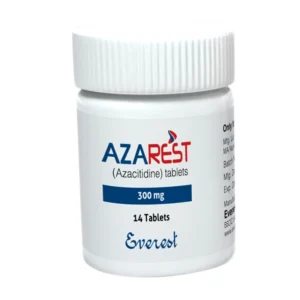
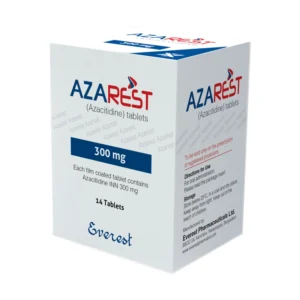
Azarest 300mg (Azacitidine): Onureg Alternative & Safety Guide
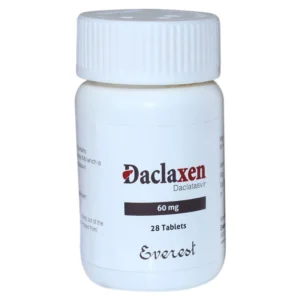
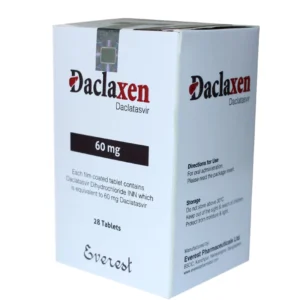
Request PriceDaclaxen 60 mg (Daclatasvir) 28 Tablets
Request PriceVelpanex (Sofosbuvir + Velpatasvir) 100 mg + 400 mg | HCV Direct Acting Antiviral
Request PriceEnasinib 50 mg (Enasidenib) 30 Tablet: Global Patient Access, Price, & Clinical Safety Guide
Request Price