Sourcing Disclosure: Licensed Bangladesh Global Sourcing Specialist facilitating global access under Named Patient Regulations.
Expert-reviewed clinical data for prescription-only medicine.


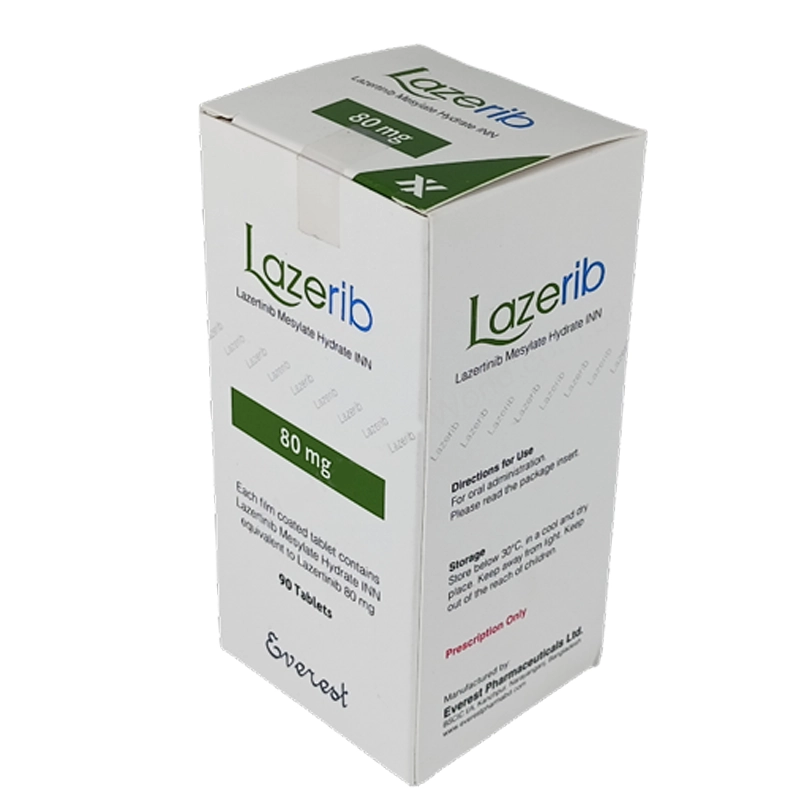
Lazerib 80 mg Tablet (Lazertinib) | Third-Generation EGFR TKI
Author: Salma Abdel
Brand Name: Lazerib
Generic Name: Lazertinib
Therapeutic Class: EGFR Tyrosine Kinase Inhibitor
Clinical Indication: Exon 19 deletions or L858R mutations
Available strength: 80 mg
Pack size: 90 Tablets
- WHO GMP Certified
- Reviewed By Medical Expert
- Batch Examined in Lab
Medically Reviewed by: Salma Elreedy (Clinical Oncologist, Sphinx Cure Oncology Center)
Last Updated: March 7, 2026
Classification: Prescription-Only Medicine (POM)
Prescription-Only Notice: Lazerib (Lazertinib) is a highly potent targeted therapy. Unauthorized or unsupervised use can result in severe, potentially life-threatening clinical complications, including venous thromboembolism and interstitial lung disease
Lazerib (Lazertinib 80 mg) is an advanced, third-generation epidermal growth factor receptor (EGFR) tyrosine kinase inhibitor (TKI). It is highly selective, engineered specifically to target and suppress tumor growth in non-small cell lung cancer (NSCLC) driven by specific genetic alterations—namely EGFR Exon 19 deletions and Exon 21 L858R substitution mutations. Unlike earlier-generation therapies, Lazertinib is highly brain-penetrant and effectively targets the T790M resistance mutation while minimizing toxicity to healthy, wild-type EGFR cells. Manufactured by Everest Pharmaceuticals, Lazerib serves as a critical first-line or subsequent intervention to achieve durable disease control in molecularly pre-selected patients.
Clinical Consultation: An Oncologist’s Guide to Lazerib
Who is the specific candidate for Lazerib therapy?
In clinical practice, we do not prescribe Lazerib 80 mg broadly for all lung cancers. It is indicated strictly for adult patients with locally advanced or metastatic non-small cell lung cancer (NSCLC) whose tumors harbor specific EGFR mutations (Exon 19 deletions or L858R mutations). We confirm this via a tissue biopsy or a blood-based liquid biopsy prior to initiating treatment. Recently, Lazertinib has become a preferred first-line option, often utilized in combination with bispecific antibodies like amivantamab, to maximize the duration of progression-free survival before the cancer can adapt.
How does this medication halt tumor growth at the cellular level?
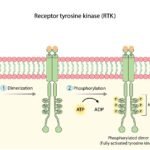
To understand how it works, picture the EGFR protein on the surface of your cells as an engine switch. In healthy cells, this switch turns on and off as needed for normal repair. In your cancer, a mutation has permanently jammed the switch into the “ON” position, causing the cells to multiply uncontrollably.
Lazerib is an irreversible inhibitor. It binds directly to the ATP-binding pocket of this mutated EGFR protein, effectively cutting off the fuel and forcing the switch “OFF.” What makes this a “third-generation” drug is its precision: it aggressively targets the mutated proteins (and the tricky T790M mutation) but largely ignores the normal, “wild-type” EGFR in your healthy skin and gastrointestinal tract, which significantly improves tolerability.
What is the standard dosing and administration protocol?
The standard therapeutic dose for Lazertinib is 240 mg taken orally once daily. Since Lazerib is formulated as an 80 mg tablet, this means taking three tablets together at the same time each day.
Dietary Requirements: You can take the tablets with or without food. Swallow them whole with a glass of water.
Missed Doses: If you miss a dose, take it as soon as you remember—unless your next scheduled dose is less than 12 hours away. If you are within that 12-hour window, skip the missed dose entirely. Never double your dose to catch up.
What do the clinical trials say about its effectiveness?
The efficacy of Lazertinib is grounded in rigorous data. In the landmark MARIPOSA Phase 3 trial (published in The New England Journal of Medicine), the combination of Lazertinib and amivantamab demonstrated a median Progression-Free Survival (PFS) of 23.7 months, compared to 16.6 months for patients receiving the previous standard of care, osimertinib. Furthermore, the LASER201 study highlighted its exceptional central nervous system (CNS) penetration, showing high intracranial response rates for patients whose cancer had metastasized to the brain.
How do we manage the side effects of Lazerib?
While targeted, Lazerib does present specific side effects that require proactive management:
Skin and Nail Reactions (Very Common): You may experience an acne-like rash, dry skin, or inflammation around the nail beds (paronychia).
Actionable Advice: Use alcohol-free, thick emollients daily. Avoid hot showers and harsh soaps. Keep your nails trimmed short and wear gloves when doing manual tasks.
Gastrointestinal (Common): Mild to moderate diarrhea.
Actionable Advice: Maintain high oral hydration with electrolyte solutions. Keep an over-the-counter anti-diarrheal like loperamide on hand, but notify your clinic if it persists for more than 48 hours.
Venous Thromboembolism (Serious): Clinical trials observed an increased risk of blood clots (VTE), particularly during the first few months of therapy. We will frequently prescribe a prophylactic blood thinner to mitigate this risk.
ADVERSE EVENT WARNING: Seek emergency medical care if you experience sudden swelling in one leg, localized chest pain, or acute shortness of breath. Adverse reactions should be reported immediately to your treating physician and the manufacturer’s pharmacovigilance unit.
Precautions & Special Populations
Pregnancy & Lactation: Lazertinib can cause severe fetal harm. Female patients of reproductive potential must use highly effective non-hormonal contraception during treatment and for at least 3 weeks following the final dose. Breastfeeding is strictly contraindicated during therapy.
Organ Function: No initial dose adjustments are required for patients with mild to moderate renal or hepatic impairment. However, we will monitor your liver enzymes (ALT/AST) closely during the first few cycles of treatment.
Storage Data: Lazerib does not require cold-chain logistics. Store the medication at standard room temperature, between 20°C and 25°C (68°F to 77°F). Keep the tablets in their original blister packaging to protect the molecular integrity from moisture and direct light.
Manufacturer Quality Assurance & Global Access
Manufacturing Standards: Lazerib is manufactured by Everest Pharmaceuticals, a prominent pharmaceutical manufacturer based in Bangladesh. The production facility operates under strict WHO-GMP (World Health Organization Good Manufacturing Practice) guidelines. Every batch of Lazerib undergoes rigorous high-performance liquid chromatography (HPLC) and in-vitro dissolution testing to ensure WHO-GMP standards and pharmaceutical quality benchmarks.. This guarantees that the pharmacokinetic profile—how the drug is absorbed and processed—performs to global clinical standards.
Global Access Pathways: For international patients residing in regions where Lazertinib is not yet locally approved or accessible, Lazerib can be obtained through legal personal importation pathways. Run from Bangladesh, genericoncology.com provides clinical information to assist patients in navigating these frameworks. Under the “Named Patient Basis,” most national health ministries allow individuals to import life-saving oncology medications for personal use, provided they possess a valid prescription and medical justification from a licensed oncologist.
Frequently Asked Questions (FAQs)
Can Lazerib cross the blood-brain barrier?
Yes. One of the primary advantages of this third-generation TKI is its highly lipophilic nature, which allows it to cross the blood-brain barrier effectively. This makes it an excellent therapeutic option for treating and preventing brain metastases in EGFR-mutated lung cancer.
Does Lazerib interact with other daily medications?
Lazertinib is metabolized in the liver, primarily by the CYP3A4 enzyme. Taking it with strong CYP3A4 inducers (such as Rifampin, phenytoin, or St. John’s Wort) can significantly decrease its effectiveness. Always provide your oncologist with a complete list of your current medications and herbal supplements.
Will Lazertinib cause me to lose my hair?
Unlike traditional cytotoxic chemotherapy that attacks all rapidly dividing cells, Lazerib is targeted. While you may notice some changes in hair texture or mild thinning, complete hair loss (alopecia) is very rare with this class of medication.
Can I take antacids or heartburn medication with Lazerib?
The absorption of Lazertinib is generally not severely impacted by gastric pH, but it is always safest to separate the dosing of TKIs and potent acid-reducing agents (like proton pump inhibitors) by a few hours to ensure maximum absorption. Discuss your specific antacid routine with your care team.
General Medical Disclaimer: This clinical monograph is for informational and educational purposes only. It does not constitute professional medical advice, diagnosis, or a treatment recommendation. Management of oncology medications must be strictly directed by a licensed oncology specialist.
Related products

Encoraf (Encorafenib 75 mg) Capsule | BRAF Kinase Inhibitor
Consult Pharmacist for PriceLorbrexen 100 mg Tablet (Lorlatinib)
Consult Pharmacist for PricePonaxen 45 mg Tablet (Ponatinib) | CML Tyrosine Kinase Inhibitor
Consult Pharmacist for PriceNiranib 100 mg Capsule (Niraparib) | Clinical Profile and Treatment Overview
Consult Pharmacist for Price

Reviews
There are no reviews yet.