Sourcing Disclosure: Licensed Bangladesh Global Sourcing Specialist facilitating global access under Named Patient Regulations.
Expert-reviewed clinical data for prescription-only medicine.


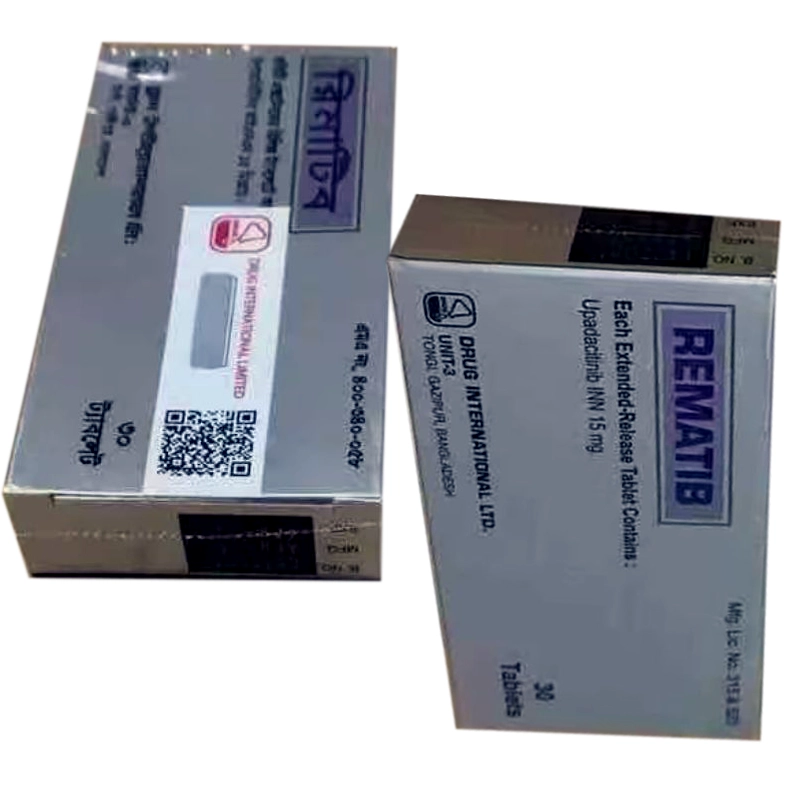
Rematib 15 mg (Upadacitinib) | Selective Janus Kinase 1 (JAK1) Inhibitor
Brand name: Rematib
Generic Name: Upadacitinib
Therapeutic Class: Selective Janus Kinase 1 (JAK1) Inhibitor / tsDMARD
Clinical Indication: Rheumatoid Arthritis, Atopic Dermatitis, Psoriatic Arthritis, Axial Spondyloarthritis
Available strength: 15 mg
Pack size: 30 Extended-Release Tablets
- WHO GMP Certified
- Reviewed By Medical Expert
- Batch Examined in Lab
Clinical Clarification: While advanced biologics and targeted therapies are prominent in oncology, Upadacitinib belongs to a highly specialized class of immunology therapeutics. It is not an antineoplastic (anti-cancer) agent.
Rematib contains 15 mg of the active pharmaceutical ingredient Upadacitinib. It is a targeted synthetic small molecule classified as a highly selective Janus Kinase 1 (JAK1) inhibitor. Rematib is formulated to treat severe, chronic immune-mediated inflammatory diseases. By interrupting the specific intracellular signaling pathways that trigger hyperactive immune responses, Upadacitinib rapidly reduces systemic inflammation, prevents structural joint damage in arthritic conditions, and clears severe cutaneous manifestations in dermatological conditions.
Clinical Data and Safety Management
Who is the specific candidate for Rematib (Upadacitinib)?
According to the FDA guideline Rematib 15 mg (extended release) is strictly indicated for adult and specific pediatric patients (12 years and older) who suffer from refractory autoimmune conditions. It is primarily utilized in the following clinical settings:
Rheumatoid Arthritis (RA): For adults with moderately to severely active RA who have had an inadequate response or intolerance to methotrexate or other TNF blockers.
Atopic Dermatitis (AD): For adults and pediatric patients (12+) with refractory, moderate to severe eczema whose disease is not adequately controlled with topical prescription therapies.
Psoriatic Arthritis (PsA) & Ankylosing Spondylitis (AS): For adults with active disease who have failed prior conventional systemic therapies.
How does Upadacitinib work at the molecular level?
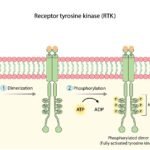
In autoimmune diseases, the body produces an excess of inflammatory cytokines (like IL-6, IL-4, and interferon-gamma). These cytokines attach to receptors on cell surfaces, sending distress signals into the nucleus via a pathway called the JAK/STAT signaling cascade.
Upadacitinib is a reversible inhibitor that specifically binds to the JAK1 enzyme inside the cell. By blocking JAK1, it physically prevents the phosphorylation and activation of STAT proteins. This effectively “shuts off” the cellular signal that causes the hyperactive inflammatory response, leading to rapid disease remission.
What are the strict dosage and administration protocols?
The standard recommended starting dosage for RA, PsA, AS, and AD is one 15 mg extended-release tablet taken orally once daily.
Administration: It can be taken with or without food. Tablets must be swallowed whole with water. Do not crush, split, or chew the tablets, as this destroys the extended-release mechanism.
Missed Doses: If a dose is missed, take it as soon as remembered. If it is close to the time for the next dose, skip the missed dose and resume your regular schedule. Do not double the dose.
What is the expected safety profile and how are side effects managed?
Because Upadacitinib modulates the immune system, it alters the body’s ability to fight off infections.
Highly Common (>10%): Upper respiratory tract infections (URTI), nausea, cough, pyrexia (fever), and acne (particularly in atopic dermatitis patients).
Actionable Advice: For mild nausea, take the medication with a substantial meal. To mitigate URTI risks, practice stringent hand hygiene and avoid crowded areas during peak flu/viral seasons.
Severe Adverse Events & Black Box Warnings: * Serious Infections: Increased risk of tuberculosis (TB), invasive fungal infections, and severe viral infections like Herpes Zoster (Shingles).
Major Adverse Cardiovascular Events (MACE): Higher risk of cardiovascular events, particularly in patients over 50 with existing cardiovascular risk factors.
Thrombosis: Deep vein thrombosis (DVT) and pulmonary embolism (PE) have been reported. Seek immediate emergency care for sudden leg swelling, chest pain, or acute shortness of breath.
What is the clinical trial integrity behind Upadacitinib?
The clinical efficacy of Upadacitinib is validated by extensive, peer-reviewed global phase 3 trials:
The SELECT-COMPARE Trial (The Lancet): Evaluated patients with Rheumatoid Arthritis on background methotrexate. Upadacitinib 15mg demonstrated superior clinical remission rates and significantly higher ACR20/ACR50 response rates compared to both placebo and adalimumab (a standard biologic) at week 12.
The MEASURE UP 1 & 2 Trials (The Lancet): In moderate-to-severe Atopic Dermatitis, Upadacitinib 15mg and 30mg showed rapid and unprecedented clearance of skin lesions (EASI 75) and significant reduction in severe itch (pruritus) as early as week 1 compared to placebo.
Precautions & Special Populations
Pregnancy & Lactation: Upadacitinib is known to be teratogenic (capable of causing fetal harm) based on animal studies. Female patients of reproductive potential must use highly effective contraception during treatment and for at least 4 weeks following the final dose. Breastfeeding is strictly contraindicated during therapy and for 6 days after the final dose.
Pediatric & Geriatric Populations: Approved for pediatric patients 12 years of age and older weighing at least 40 kg exclusively for Atopic Dermatitis. In geriatric patients (65 and older), there is a statistically higher incidence of adverse events, including infections and MACE; utilize with caution.
Renal & Hepatic Impairment: No dose adjustment is required for mild to moderate renal or hepatic impairment. It is not recommended for patients with severe hepatic impairment.
Storage Requirements: Rematib must be stored between 2°C and 25°C (36°F to 77°F). Store in the original moisture-resistant packaging to protect the chemical stability of the extended-release matrix.
Manufacturer Trust & Global Access
Manufacturer Quality Assurance & Regulatory Approval:
Rematib 15 mg is manufactured by Drug International LTD, a highly reputable pharmaceutical corporation based in Bangladesh, and is fully approved by the Directorate General of Drug Administration (DGDA). The manufacturing facility strictly adheres to WHO-GMP (World Health Organization – Good Manufacturing Practices) guidelines. Through rigorous pharmacokinetic and bioequivalence testing, Drug International ensures that Rematib delivers the exact identical Active Pharmaceutical Ingredient (API) and clinical dissolution rate as the innovator brand, Rinvoq.
Pharmacoeconomic Impact: Chronic autoimmune conditions require lifelong therapy. By offering a structurally identical, highly regulated generic alternative to the innovator brand, Rematib mitigates extreme financial toxicity, ensuring patients can sustain their prescribed targeted therapy without facing catastrophic financial barriers.
Global Access & Named Patient Importation:
For patients residing in jurisdictions where generic Upadacitinib is not locally approved or is financially inaccessible, Rematib may be sourced via “Named Patient” import regulations. Many global health ministries permit individuals to legally import a three-month supply of life-saving prescription medication for personal use, provided they hold a valid prescription and a Letter of Medical Necessity from a board-certified specialist. Patients must verify and strictly adhere to their local customs and importation laws prior to procurement.
1. Upload valid prescription,
2. Provide Letter of Medical Necessity,
3. Our pharmacy team verifies documentation,
4. Secure shipment dispatched from Bangladesh.
N.B: users must consult their local customs and border protection agencies, as importing restricted pharmaceuticals is heavily regulated and can lead to confiscation or legal action.
Frequently Asked Questions (FAQs)
Can I receive vaccines while taking Rematib 15 mg?
You should avoid the use of live vaccines (such as the MMR or Yellow Fever vaccine) during treatment with Upadacitinib, as your suppressed immune system may not be able to safely process a live attenuated virus. Non-live vaccines (like the seasonal flu shot or mRNA COVID-19 vaccines) are generally safe and highly recommended. Ensure your vaccinations are up to date before initiating therapy.
Will I need regular blood tests while taking this medication?
Yes. Upadacitinib can cause dose-dependent changes in your laboratory parameters. Your specialist will order routine blood work to monitor for absolute neutrophil counts (neutropenia), lymphocyte counts, hemoglobin levels (anemia), liver enzyme elevations, and lipid profile changes (increased cholesterol).
Is Rematib considered a “Biologic” drug?
No. While it treats the same conditions as biologics (like Humira or Enbrel), Upadacitinib is a “small molecule” drug. Biologics are massive, complex proteins that must be injected or infused because the digestive system would destroy them. Because Upadacitinib is a small molecule, it can easily survive digestion and be taken conveniently as a once-daily oral tablet.
Are there major drug interactions I should avoid?
Yes. Upadacitinib is metabolized in the liver primarily by the CYP3A4 enzyme. Co-administering it with strong CYP3A4 inhibitors (like ketoconazole or grapefruit juice) can increase the drug’s concentration in your blood, raising the risk of severe side effects. Conversely, strong CYP3A inducers (like rifampin) will reduce its efficacy.
Related products

Niranib 100 mg Capsule (Niraparib) | Clinical Profile and Treatment Overview
Consult Pharmacist for PricePonaxen 45 mg Tablet (Ponatinib) | CML Tyrosine Kinase Inhibitor
Consult Pharmacist for PriceRutinib Cream (Ruxolitinib) 1.5% | Topical Janus Kinase Inhibitor
Consult Pharmacist for PriceQuizar 17.7 mg (Quizartinib) Tablet | FLT3-ITD Tyrosine Kinase Inhibitor in AML
Consult Pharmacist for Price

Reviews
There are no reviews yet.